Bottom ARC vs. top ARC: When to use which type
JUL 28, 2025 |
ARC welding is a widely used process in the fabrication industry, known for its versatility and strength. Within ARC welding, two common types are bottom ARC and top ARC. Each has its unique applications, advantages, and limitations. Understanding when to use each type is crucial for achieving optimal results in welding projects.
What is Bottom ARC Welding?
Bottom ARC welding, also known as downhand welding, involves welding from the bottom upwards. This technique is often employed when working on horizontal surfaces or when welding vertically in an upward direction. Bottom ARC is particularly beneficial when dealing with heavier and thicker materials because it allows for better control of the weld pool.
Advantages of Bottom ARC Welding
1. **Increased Control:** Bottom ARC welding provides greater control over the weld pool, reducing the risk of defects such as undercutting or porosity.
2. **Stronger Welds:** The upward welding action helps in achieving deeper penetration, resulting in robust and durable welds.
3. **Ideal for Heavy Materials:** When welding thicker materials, bottom ARC offers more control over heat input and filler material deposition, ensuring a high-quality weld.
Limitations of Bottom ARC Welding
1. **Limited Accessibility:** Not suitable for overhead or confined spaces due to its directional nature.
2. **Requires Skilled Operators:** The technique demands a higher skill level to maintain control and ensure quality.
Top ARC Welding Explained
Top ARC welding, commonly referred to as overhead welding, involves welding from the top downwards. This method is often used when access to the bottom side of the workpiece is restricted or when welding overhead structures.
Benefits of Top ARC Welding
1. **Versatility in Positioning:** Top ARC allows welders to work in various positions, making it ideal for complex and inaccessible areas.
2. **Ease of Access:** Particularly useful in overhead welding scenarios where bottom access is not possible.
3. **Reduced Workpiece Manipulation:** Minimizes the need for moving the workpiece, saving time and effort.
Challenges of Top ARC Welding
1. **Gravity's Impact:** The downward flow of molten metal can lead to potential issues like excessive spatter or slag inclusion.
2. **Requires Precise Technique:** Operators must be adept in controlling the weld pool to prevent defects.
Deciding Between Bottom ARC and Top ARC
When determining whether to use bottom ARC or top ARC welding, consider the following factors:
1. **Position and Accessibility:** If the weld needs to be performed in a position where the underside is accessible, bottom ARC is preferable. For overhead or hard-to-reach areas, top ARC is the better option.
2. **Material Thickness:** For thicker materials, bottom ARC may offer better penetration and control. Conversely, for thinner materials or when minimal heat input is required, top ARC can be effective.
3. **Skill Level:** Assess the skill level of the welder. Skilled professionals may manage the challenges of top ARC more effectively, while less experienced welders might find bottom ARC easier to handle.
Conclusion
Choosing between bottom ARC and top ARC welding depends on various factors, including the position of the weld, material thickness, and the welder's skill level. Both methods have their unique advantages and limitations, making them suitable for different situations. Understanding these distinctions can help in making informed decisions, ultimately leading to successful welding outcomes.
As photolithography continues to push the boundaries of nanoscale patterning, from EUV and DUV advancements to multi-patterning and maskless lithography, innovation cycles are accelerating—and the IP landscape is becoming more complex than ever.
Patsnap Eureka, our intelligent AI assistant built for R&D professionals in high-tech sectors, empowers you with real-time expert-level analysis, technology roadmap exploration, and strategic mapping of core patents—all within a seamless, user-friendly interface.
Whether you're optimizing lithography depth of focus or exploring new materials for sub-3nm nodes, Patsnap Eureka empowers you to make smarter decisions, faster—combining AI efficiency with domain-specific insight.
💡 Start your free trial today and see how Eureka transforms how you discover, evaluate, and act on innovation in photolithography—from idea to impact.
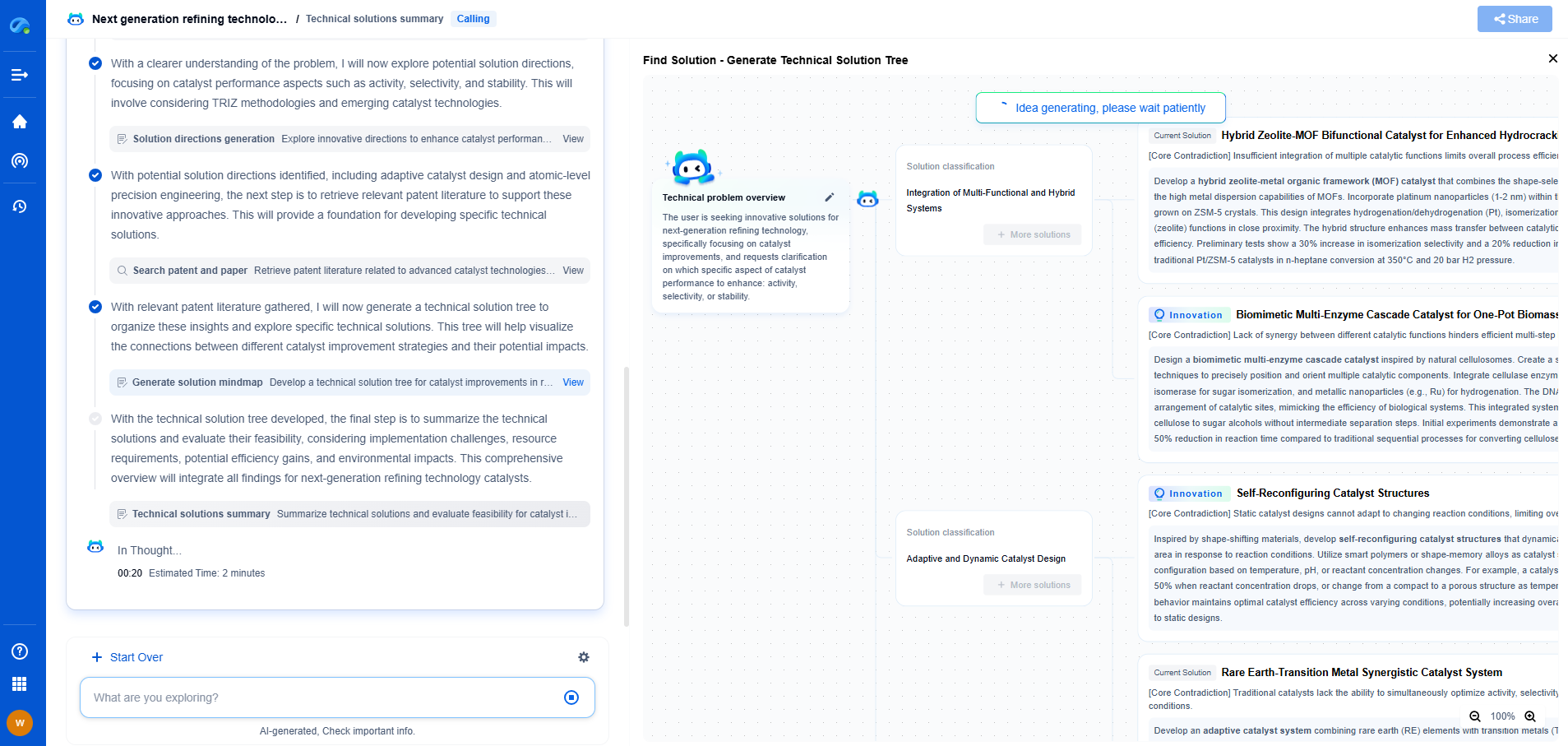
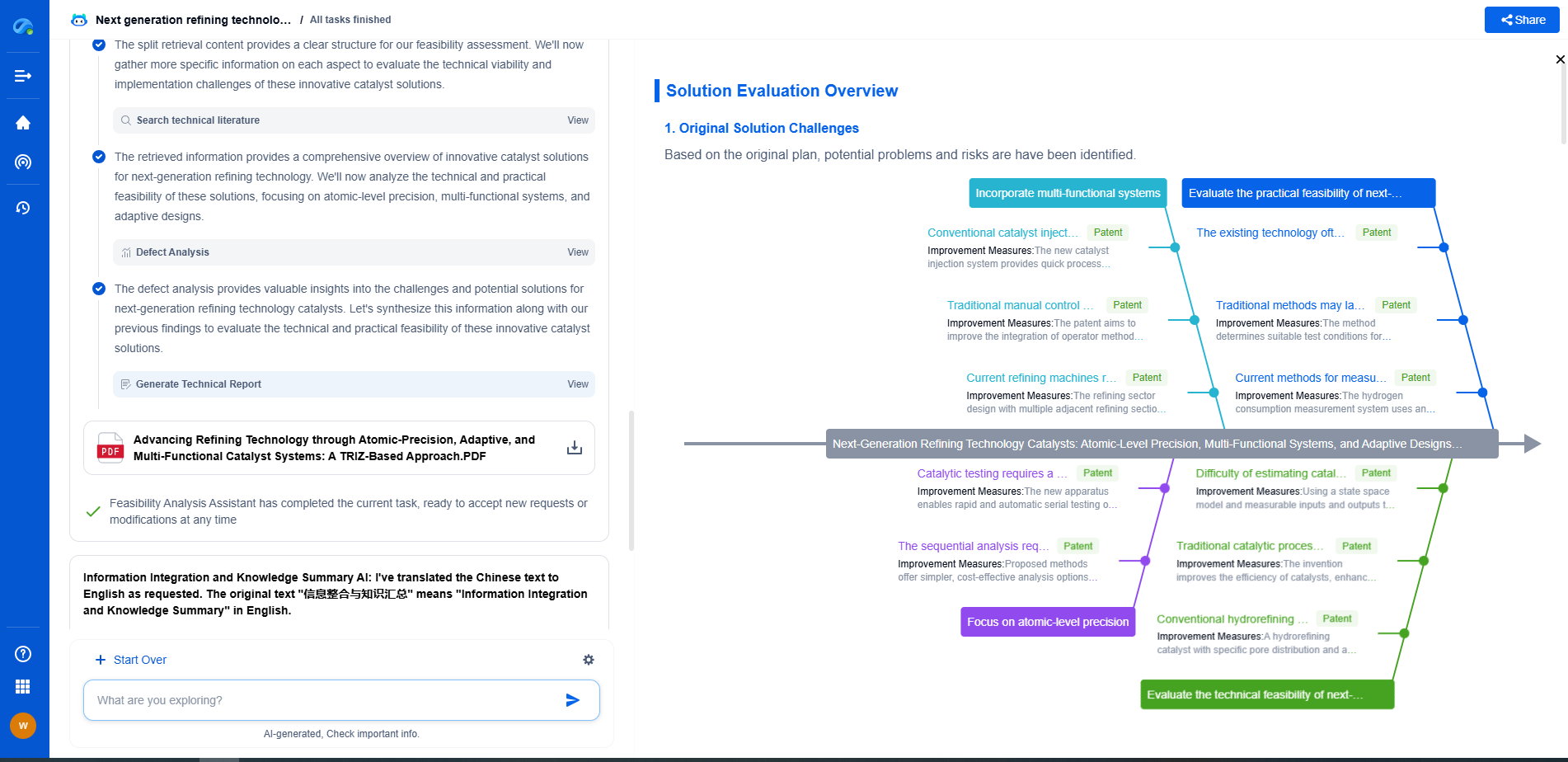

PatSnap Eureka turns technology decisions into work you can execute. Powered by our Innovation Knowledge Graph, it runs expert workflows across engineering, life sciences, materials and intellectual property. Get your review-ready output in minutes.


