Comparing wireline logging vs logging while drilling
JUN 20, 2025 |
In the oil and gas industry, understanding the geological formations encountered during drilling is crucial for both exploration and production. Two primary methods used to collect data about these formations are wireline logging and logging while drilling (LWD). Both techniques have their advantages and limitations, and choosing the appropriate method depends on various factors, such as cost, time, and the specific requirements of the drilling operation. This article delves into the details of wireline logging and logging while drilling, highlighting their differences, advantages, and challenges.
Wireline Logging
Wireline logging is a technique where a series of measurement tools are lowered into a borehole on the end of a wireline cable. These tools collect data about the subsurface formations, which helps in understanding the geology, determining the presence of hydrocarbons, and making informed decisions regarding further drilling and production.
Advantages of Wireline Logging
Wireline logging offers several benefits, primarily related to the quality and range of data acquired. Since the tools are introduced into the well after drilling has stopped, they can be specifically designed to measure a variety of parameters, such as resistivity, porosity, density, and sonic velocity. This enables comprehensive analysis and interpretation of the geological formations. Additionally, wireline logging typically provides higher resolution data compared to LWD, as the tools are not subject to the vibrations and other mechanical stresses experienced during drilling.
Challenges of Wireline Logging
While wireline logging provides detailed and accurate data, it has its own set of challenges. The process requires halting drilling operations, which can lead to increased costs and longer drilling times. Moreover, it is not always feasible in highly deviated or horizontal wells, where gravity alone may not be sufficient to move the tools to the desired depth. In such scenarios, the risk of stuck tools also increases, potentially causing delays and additional expenses.
Logging While Drilling (LWD)
Logging while drilling is a technique that integrates measurement tools into the bottom hole assembly (BHA) of the drill string. As the drilling progresses, these tools continuously gather data about the formation, providing real-time insights that can be used to make immediate decisions.
Advantages of Logging While Drilling
The major advantage of LWD is its ability to provide real-time data, allowing for immediate decision-making during drilling operations. This real-time capability can significantly reduce the risk of drilling into hazardous formations and optimize the drilling path. LWD is particularly beneficial in complex wellbore trajectories, such as extended reach or horizontal wells, where wireline logging might be impractical. Additionally, by combining data acquisition with drilling, LWD can minimize non-productive time and ultimately reduce operational costs.
Challenges of Logging While Drilling
Despite its advantages, LWD also has limitations. The tools used in LWD are exposed to harsh drilling conditions, such as high temperatures, pressures, and vibrations, which can affect the accuracy and resolution of the data collected. Furthermore, the range of measurements available with LWD is generally narrower than that of wireline logging, potentially limiting the depth of analysis that can be conducted. Lastly, while LWD reduces the need to stop drilling, it does not completely eliminate the risk of operational delays, as tool failures or malfunctions can occur.
Comparison and Conclusion
Both wireline logging and logging while drilling have their unique strengths and weaknesses. Wireline logging is ideal for detailed subsurface analysis when high-resolution data is required, and the well conditions allow for tool deployment. On the other hand, logging while drilling excels in providing real-time data, which is crucial for making immediate decisions in complex drilling scenarios.
The choice between the two methods often depends on the specific objectives of the drilling project, the geological environment, and economic considerations. In many cases, a combination of both techniques may be employed to leverage the benefits of each, ensuring a comprehensive understanding of the subsurface and optimizing the overall drilling process.
In summary, comparing wireline logging and logging while drilling reveals that each method offers unique advantages that can be strategically utilized depending on the operational requirements and constraints. As technology continues to advance, the capabilities of both logging methods are likely to improve, further enhancing their role in the exploration and production of oil and gas.
Navigating the Complexities of Drilling Innovation? Let AI Do the Heavy Lifting
In an industry where subsurface conditions, materials science, and drilling dynamics evolve rapidly, staying ahead of technical innovation and protecting your intellectual property can be overwhelming.
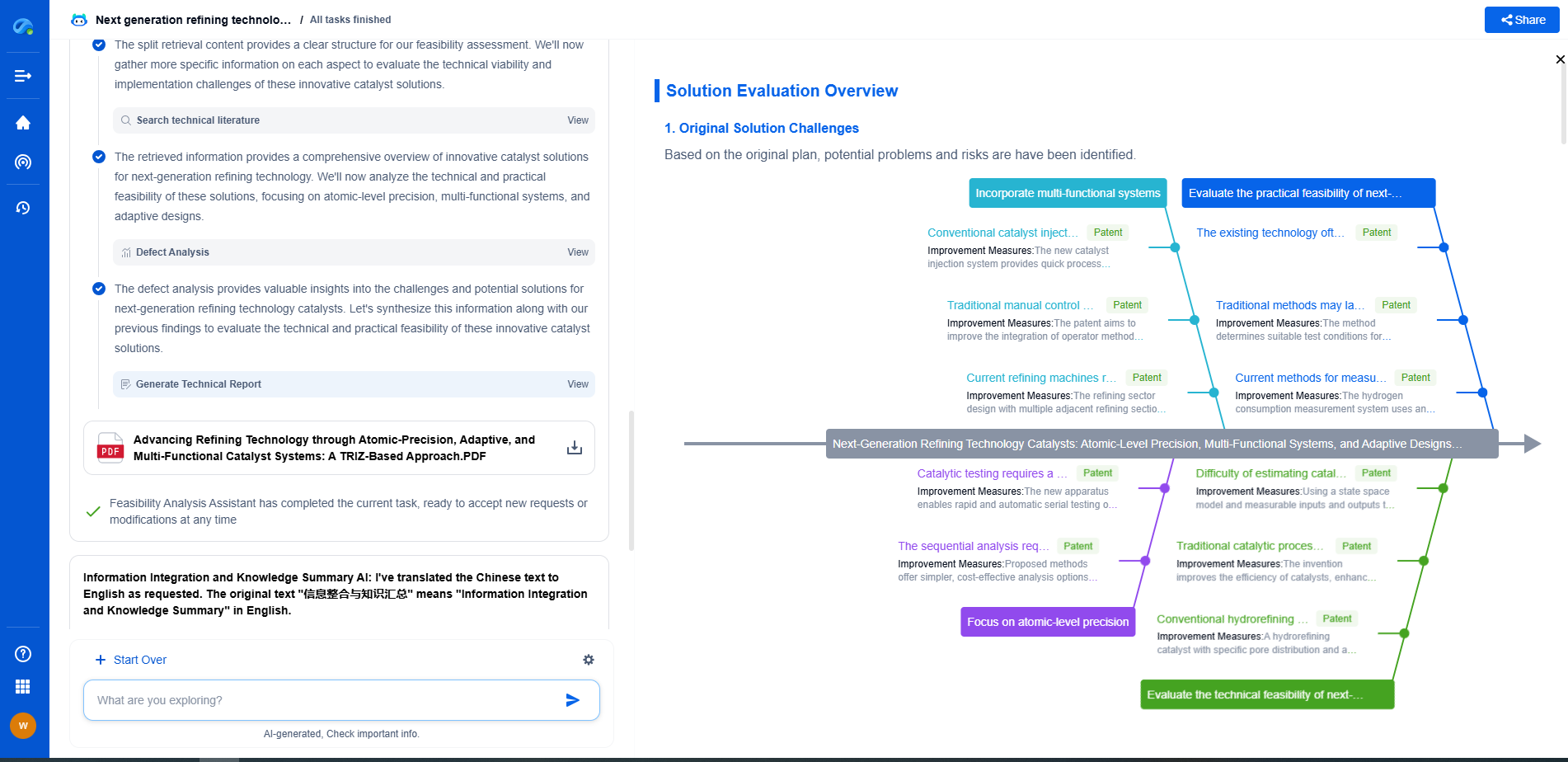
Patsnap Eureka, our cutting-edge AI assistant, is built for R&D and IP professionals in high-tech industries like drilling technologies. Whether you're optimizing rotary steerable systems, evaluating high-temperature materials, or exploring next-gen automation in directional drilling, Eureka enables real-time analysis of the latest patents, technology landscapes, and competitive movements—all from one intelligent, intuitive platform.
Ready to accelerate your development cycle and make strategic decisions with confidence? Explore Patsnap Eureka today—where smart drilling starts with smarter insights.