Explained: Key performance parameters in petroleum refining
JUN 19, 2025 |
Petroleum refining is a vital component of the global energy infrastructure, transforming crude oil into a variety of valuable products such as gasoline, diesel, jet fuel, and petrochemicals. The refining process is complex, involving multiple stages, each with its own set of performance parameters. Understanding these key performance indicators (KPIs) is essential for optimizing operations, ensuring safety, and maximizing profitability. This blog explores the critical KPIs that drive efficiency and productivity in petroleum refining.
Crude Oil Quality
The quality of the crude oil feedstock significantly impacts refining operations. Crude quality is assessed based on several parameters, including API gravity, sulfur content, and the presence of impurities like metals and water. Higher API gravity indicates lighter crude, which is generally more desirable for producing high-value products like gasoline. Conversely, higher sulfur content necessitates more intensive processing, increasing operational costs and environmental considerations. Thus, understanding crude oil quality is crucial for refining strategy.
Operational Efficiency
Operational efficiency in refining is measured by several KPIs, such as throughput, yield, and energy consumption. Throughput refers to the amount of crude oil processed within a specific timeframe, impacting the refinery's output capacity. Yield is the proportion of high-value products obtained from the crude oil, while energy consumption measures the energy used per unit of output. Balancing these parameters ensures that the refinery operates at maximum efficiency, reducing costs and minimizing environmental impact.
Process Optimization
Process optimization focuses on enhancing the efficiency of individual refining units, such as distillation columns, catalytic crackers, and reformers. Key performance parameters include unit throughput, conversion rates, and product selectivity. Conversion rates measure the efficiency of transforming feedstock into desired products, while product selectivity assesses the proportion of specific products generated. By optimizing these processes, refineries can increase product yield, improve quality, and reduce waste.
Safety and Environmental Impact
Safety and environmental considerations are paramount in petroleum refining. Key performance indicators in this area include incident rates, emissions levels, and waste management efficiency. Incident rates track the frequency of accidents and near-misses, guiding improvements in safety protocols. Emissions levels measure the release of pollutants like sulfur oxides and nitrogen oxides, critical for compliance with environmental regulations. Efficient waste management minimizes the environmental footprint, reducing costs associated with waste disposal.
Economic Performance
Economic performance indicators are essential for assessing the financial health of a refinery. Key parameters include margin per barrel, return on investment (ROI), and net cash flow. Margin per barrel measures the difference between the sale price of refined products and the cost of raw materials and processing. ROI evaluates the profitability relative to the investment cost, while net cash flow assesses the liquidity and financial stability of the refinery. Monitoring these KPIs helps refineries navigate market fluctuations and enhance profitability.
Technological Advancements
Technological advancements play a crucial role in improving refinery performance. Innovations such as advanced process control, real-time data analytics, and automation enhance operational efficiency, safety, and product quality. Advanced process control systems optimize refining operations by adjusting parameters in real-time, while data analytics provides insights into performance trends and opportunities for improvement. Automation reduces human error, increases safety, and streamlines operations, contributing to overall efficiency.
Conclusion
Understanding and effectively managing key performance parameters is critical for optimizing petroleum refining operations. By focusing on crude quality, operational efficiency, process optimization, safety, economic performance, and technological advancements, refineries can enhance their productivity, reduce costs, and meet environmental and safety standards. Continuous monitoring and improvement of these KPIs ensure that refineries remain competitive in the ever-evolving energy landscape.
Discover Patsnap Eureka: AI Agents Built for Scientific Innovation
Whether you're designing the next generation of refining technologies or analyzing catalysts and process flows, keeping up with rapidly evolving research and IP data in petroleum processing is no easy task.
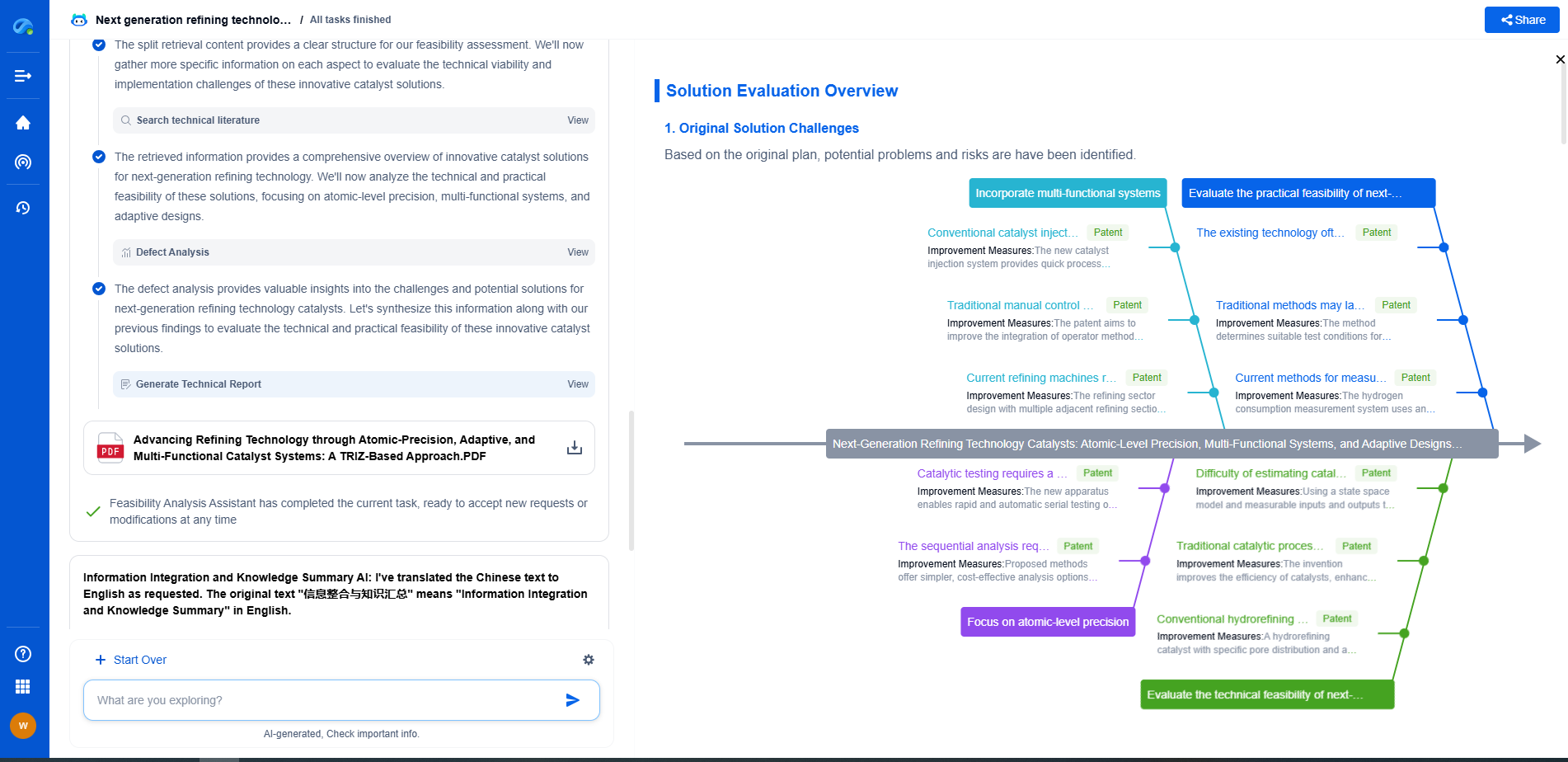
Patsnap Eureka, our intelligent AI assistant built for R&D professionals in high-tech sectors, empowers you with real-time expert-level analysis, technology roadmap exploration, and strategic mapping of core patents—all within a seamless, user-friendly interface.
Ready to accelerate your innovation process and make smarter, faster decisions? Discover Patsnap Eureka today and unlock the full power of confident, AI-driven innovation.