Future of low-sulfur fuel regulations and their impact on feed selection
JUN 19, 2025 |
Understanding Low-Sulfur Fuel Regulations
Low-sulfur fuel regulations are primarily driven by the International Maritime Organization’s (IMO) mandate, which significantly reduces the allowable sulfur content in marine fuels. The 2020 IMO sulfur cap lowered the limit from 3.5% to 0.5%, prompting a shift towards cleaner alternatives. While some vessels have opted for installing scrubbers to continue using high-sulfur fuel, the majority are transitioning to low-sulfur options such as marine gas oil (MGO) and very low sulfur fuel oil (VLSFO).
Impact on Feedstock Selection
The move towards low-sulfur fuels has profound implications for feedstock selection by fuel producers. Refiners are increasingly prioritizing crude oils with naturally lower sulfur content to minimize the need for extensive desulfurization processes. This shift not only affects the sourcing strategies of refiners but also influences global crude oil market dynamics. Crudes like Ural and Forties, known for their relatively lower sulfur content, have gained prominence in this new regulatory environment.
Technological Innovations in Fuel Production
To meet the demands of low-sulfur fuels, the refining industry is investing in advanced technologies. Hydrocracking and hydrotreating processes are increasingly adopted to reduce sulfur levels efficiently. These innovations not only enhance the quality of marine fuels but also ensure compliance with international standards. Fuel producers are exploring catalysis and other chemical processes to optimize desulfurization, reducing both costs and environmental impact.
Economic Implications for the Maritime Industry
The transition to low-sulfur fuels involves significant economic implications for the maritime industry. While the initial cost of compliance may be substantial, the long-term benefits of reduced environmental impact and compliance with global standards are invaluable. Shipping companies face increased operational costs linked to fuel prices and potential retrofitting of vessels, necessitating strategic planning and investment.
Challenges and Adaptation Strategies
Despite the benefits, the shift to low-sulfur fuels presents several challenges, including supply chain complexities and fluctuating fuel prices. Shipping companies and fuel producers must collaborate to ensure a steady supply of compliant fuels without compromising quality. This requires a comprehensive approach, including diversifying fuel sources, investing in infrastructure, and leveraging technology to optimize operations.
Future Outlook and Sustainable Practices
Looking ahead, the evolution of low-sulfur fuel regulations will likely continue to influence feedstock selection and fuel production practices. The industry is expected to embrace sustainable practices, such as the development of alternative fuels like liquefied natural gas (LNG) and biofuels. These innovations promise to further reduce emissions and pave the way for a greener maritime sector.
In conclusion, the future of low-sulfur fuel regulations presents an intricate landscape with challenges and opportunities for stakeholders across the maritime industry. As regulations evolve, so too will the strategies for feedstock selection and fuel production, driving technological innovation and fostering sustainable practices. By adapting to these changes, the industry can not only comply with environmental standards but also position itself for long-term success in an increasingly eco-conscious global market.
Discover Patsnap Eureka: AI Agents Built for Scientific Innovation
Whether you're designing the next generation of refining technologies or analyzing catalysts and process flows, keeping up with rapidly evolving research and IP data in petroleum processing is no easy task.
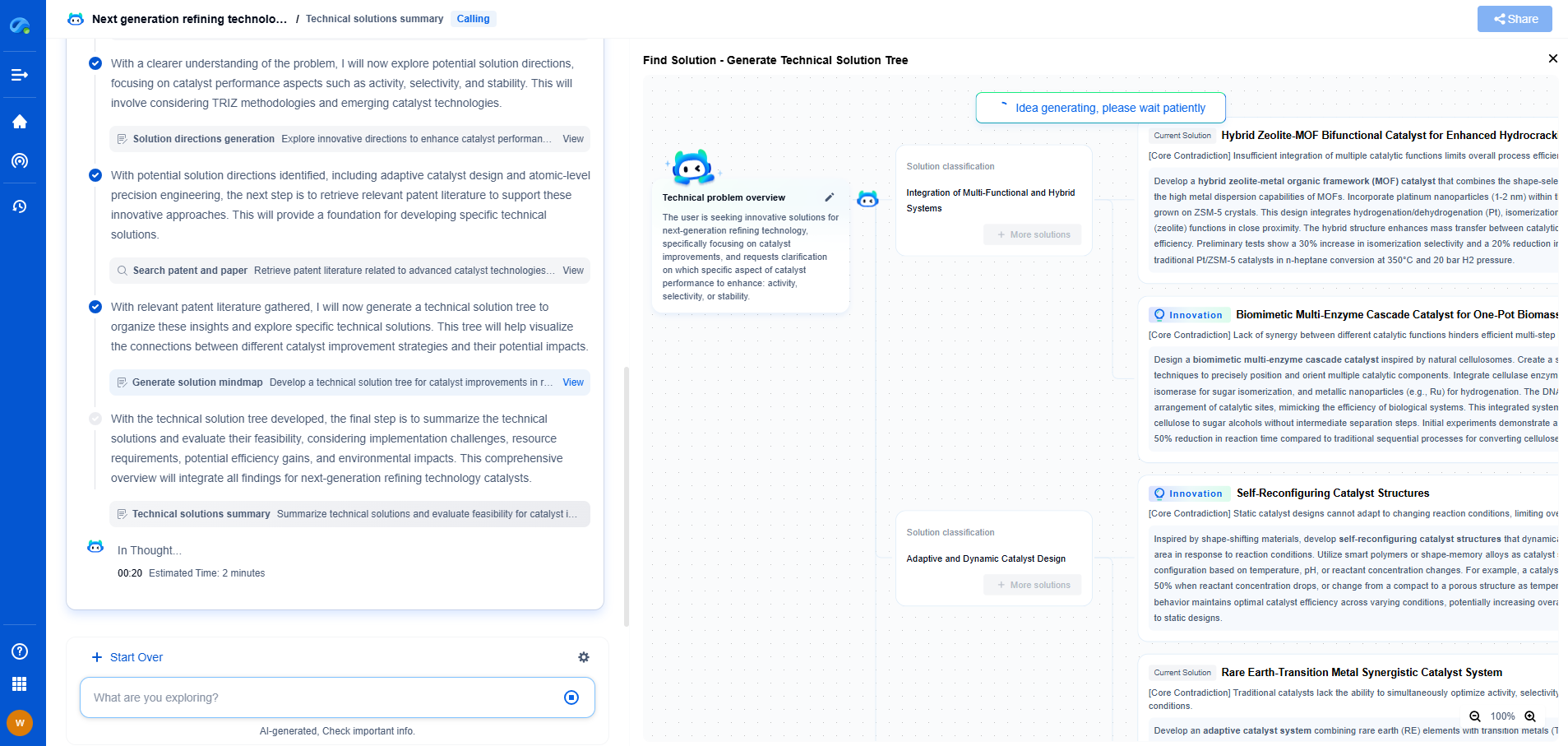
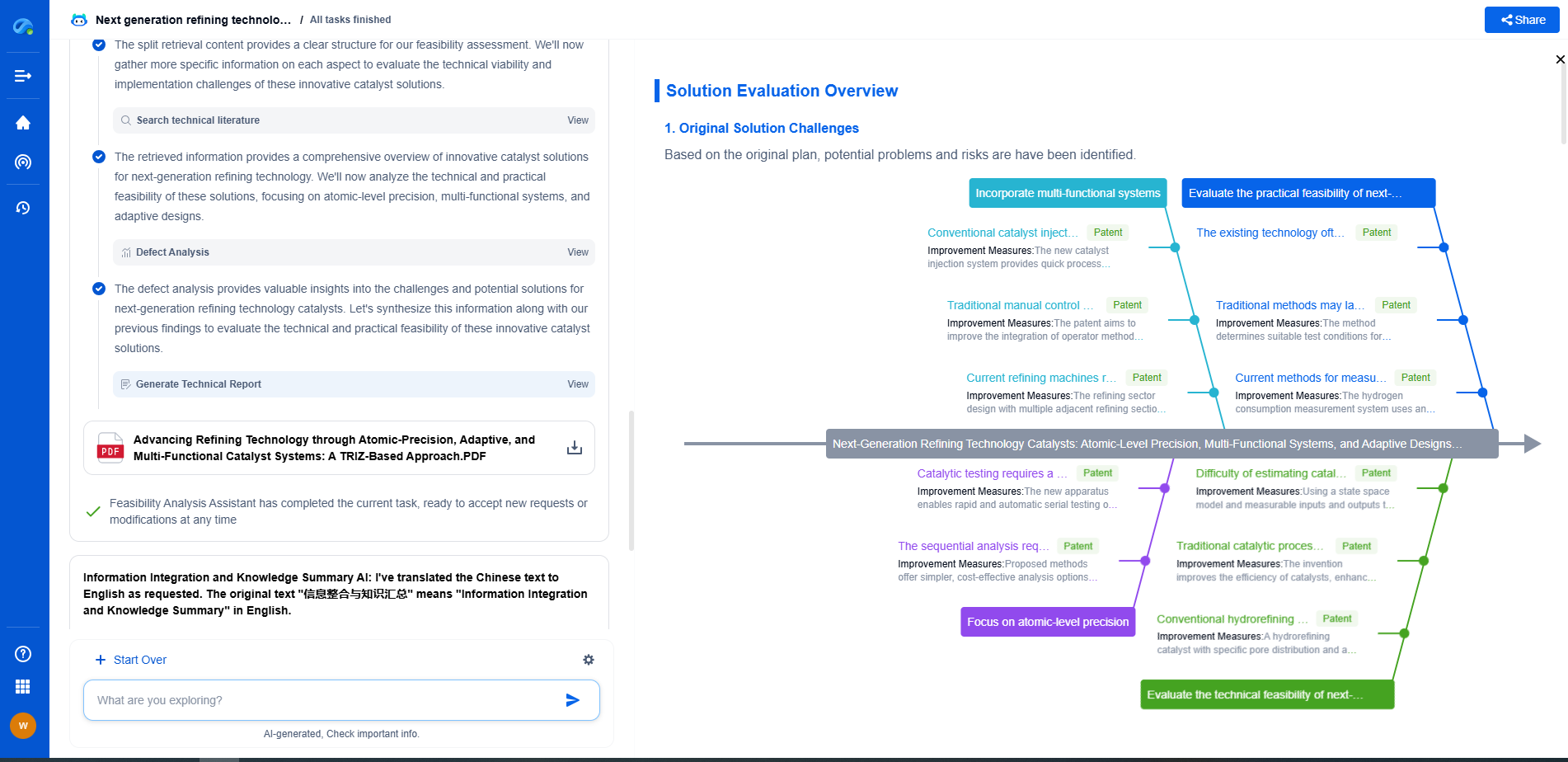
Patsnap Eureka, our intelligent AI assistant built for R&D professionals in high-tech sectors, empowers you with real-time expert-level analysis, technology roadmap exploration, and strategic mapping of core patents—all within a seamless, user-friendly interface.
Ready to accelerate your innovation process and make smarter, faster decisions? Discover Patsnap Eureka today and unlock the full power of confident, AI-driven innovation.
Features
- R&D
- Intellectual Property
- Life Sciences
- Materials
- Tech Scout
Why Patsnap Eureka
- Unparalleled Data Quality
- Higher Quality Content
- 60% Fewer Hallucinations
Social media
Patsnap Eureka Blog
Learn More Browse by: Latest US Patents, China's latest patents, Technical Efficacy Thesaurus, Application Domain, Technology Topic, Popular Technical Reports.
© 2025 PatSnap. All rights reserved.Legal|Privacy policy|Modern Slavery Act Transparency Statement|Sitemap|About US| Contact US: help@patsnap.com