How to minimize pressure drop in distillation columns
JUN 19, 2025 |
Distillation is a widely-used separation technique in chemical processes, where components of a liquid mixture are separated based on differences in their boiling points. However, one of the challenges faced in the operation of distillation columns is the pressure drop across the column. Minimizing pressure drop is crucial for enhancing efficiency, reducing energy consumption, and optimizing operational costs. Understanding and addressing the factors that contribute to pressure drop can significantly improve the performance of distillation columns.
Understanding Pressure Drop
Pressure drop in a distillation column refers to the reduction in pressure as the vapor flows from the bottom to the top of the column. It is primarily caused by frictional losses, gravity, and acceleration. High pressure drop can lead to increased energy requirements and decreased separation efficiency. Therefore, it is essential to analyze the contributing factors to mitigate these losses effectively.
Key Factors Affecting Pressure Drop
Several factors play a role in the pressure drop within distillation columns. These include the design and configuration of the column, the type and size of trays or packing used, fluid dynamics, and the physical properties of the liquid and vapor phases.
Column Design and Configuration
The design of the distillation column significantly influences the pressure drop. Columns designed with a larger diameter generally result in lower pressure drops due to increased cross-sectional area that reduces vapor velocity. Likewise, the height of the column impacts pressure drop; taller columns can incur higher drops due to increased travel distance for vapor. Proper design consideration and optimization during the initial stages can prevent excessive pressure losses.
Tray and Packing Selection
The internal components of a distillation column, such as trays and packing, play a critical role in determining pressure drop. Tray design, including the type of trays (e.g., sieve, valve, or bubble cap trays) and their spacing, can affect fluid dynamics within the column. Similarly, the choice of packing materials and their arrangement, whether structured or random, impacts pressure drop. Low-pressure-drop trays and high-efficiency packing should be considered to minimize energy losses.
Fluid Dynamics and Flow Regimes
The fluid dynamics within the column, including vapor and liquid flow rates, directly influence pressure drop. Turbulent flow regimes tend to increase frictional losses, while laminar flow is associated with lower pressure drop. Maintaining optimal flow rates and avoiding excessive vapor velocities can help reduce pressure losses. Flow regime analysis should be conducted to ensure the column operates under conditions that favor minimal pressure drop.
Physical Properties of Phases
The physical properties of the liquid and vapor phases, such as density, viscosity, and surface tension, affect pressure drop in distillation columns. Components with higher viscosities or densities typically result in greater pressure losses. Selecting operating conditions and column internals suited to the physical properties of the feed mixture is crucial for minimizing pressure drop.
Strategies to Minimize Pressure Drop
To effectively minimize pressure drop in distillation columns, several strategies can be employed:
1. Design Optimization: Carefully consider column diameter, height, and internals during the design phase to ensure minimal pressure drop.
2. Tray and Packing Selection: Utilize low-pressure-drop trays and efficient packing materials to enhance fluid distribution and reduce losses.
3. Flow Rate Management: Maintain optimal vapor and liquid flow rates to prevent excessive velocities and turbulence.
4. Regular Maintenance: Conduct routine inspections and maintenance to prevent fouling or malfunctions that can increase pressure drop.
5. Process Simulation: Utilize advanced simulation tools to predict pressure drop behavior under various operating conditions and make necessary adjustments.
Conclusion
Minimizing pressure drop in distillation columns is essential for efficient operation and cost savings. By understanding the factors contributing to pressure drop and employing targeted strategies, operators can optimize column performance, ensuring effective separation while reducing energy consumption. Through design optimization, judicious selection of internal components, and proper flow management, pressure drop can be significantly reduced, leading to improved column efficiency and process profitability.
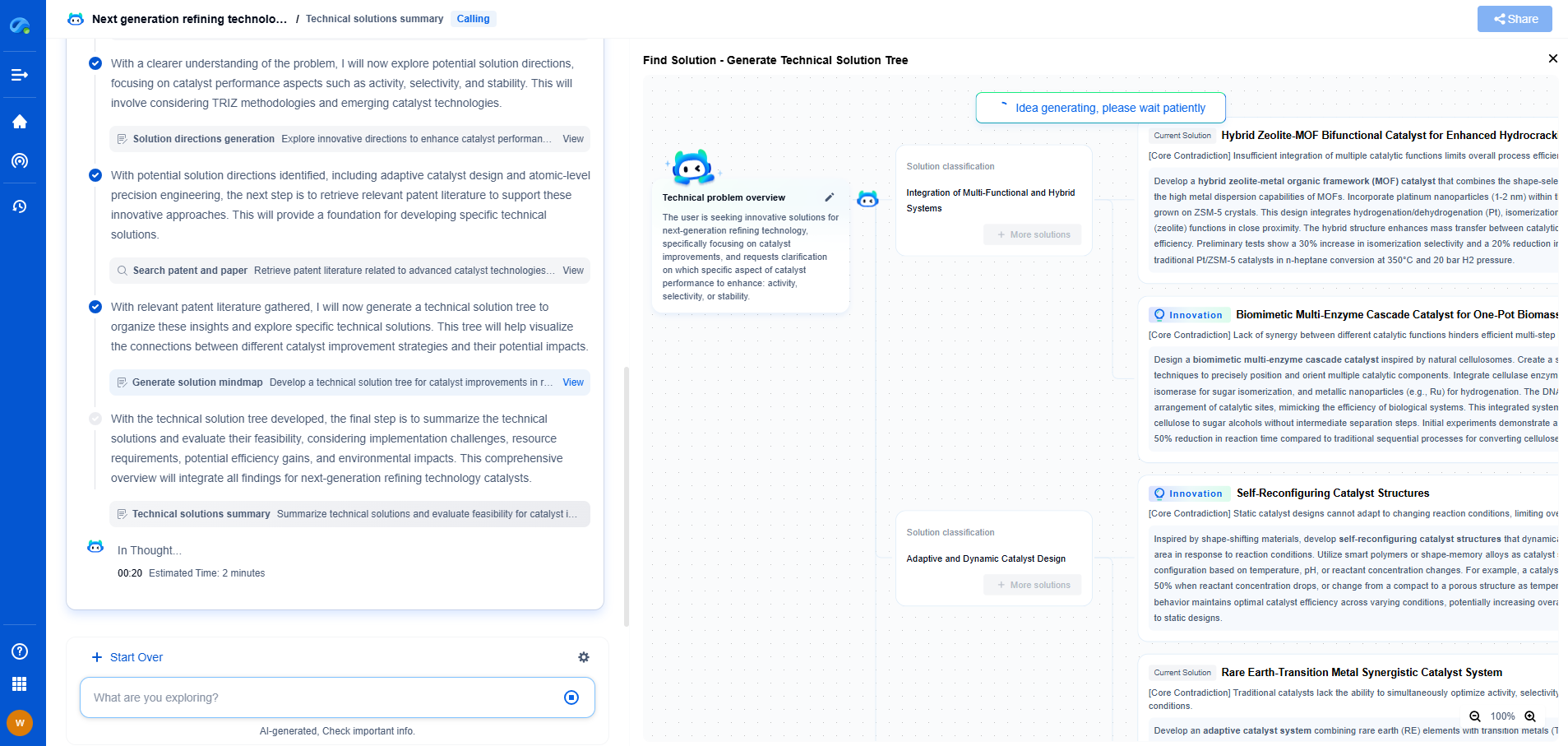
Discover Patsnap Eureka: AI Agents Built for Scientific Innovation
Whether you're designing the next generation of refining technologies or analyzing catalysts and process flows, keeping up with rapidly evolving research and IP data in petroleum processing is no easy task.
Patsnap Eureka, our intelligent AI assistant built for R&D professionals in high-tech sectors, empowers you with real-time expert-level analysis, technology roadmap exploration, and strategic mapping of core patents—all within a seamless, user-friendly interface.
Ready to accelerate your innovation process and make smarter, faster decisions? Discover Patsnap Eureka today and unlock the full power of confident, AI-driven innovation.