Metal-Acid Site Balance: The Key to High Octane Isomerization Catalysts
JUN 19, 2025 |
Isomerization is a chemical process that plays a crucial role in the refining industry, particularly in the production of high-octane fuels. It involves the rearrangement of atoms within a molecule to form isomers, compounds that have the same molecular formula but different structural arrangements. This process is vital for converting linear alkanes into branched isomers, which significantly enhance the octane rating of gasoline. High octane fuels burn more efficiently and reduce engine knocking, making them essential for modern internal combustion engines.
The Role of Catalysts in Isomerization
Catalysts are indispensable in the isomerization process, as they increase the rate of reaction and improve selectivity towards the desired isomers. Traditional isomerization catalysts are bifunctional, comprising both metal and acid sites. The metal sites facilitate the dehydrogenation and hydrogenation processes, while the acid sites promote the skeletal rearrangement of hydrocarbons. The synergy between these two functionalities is critical for optimizing the isomerization process.
Metal-Acid Site Balance: A Delicate Equilibrium
The effectiveness of isomerization catalysts is largely determined by the balance between their metal and acid sites. An optimal balance ensures that the catalyst can efficiently dehydrogenate the hydrocarbon feed, rearrange the molecular structure, and subsequently hydrogenate the product to stabilize the desired isomer. This balance is influenced by several factors, including the type of metal used, the acidity level, and the distribution of active sites.
1. Metal Sites: Transition metals such as platinum and palladium are commonly used in isomerization catalysts due to their excellent hydrogenation and dehydrogenation capabilities. The metal sites must be finely dispersed to maximize surface area and ensure effective interaction with the hydrocarbons.
2. Acid Sites: The acid sites are typically provided by a support material like zeolites or chlorinated alumina. The strength and concentration of these acid sites are critical for facilitating the skeletal rearrangement of hydrocarbons. However, excessive acidity can lead to undesirable side reactions, such as cracking, which reduces the yield of high-octane isomers.
3. Balancing Act: Achieving the right metal-acid site balance is a complex task, often requiring precise control over catalyst preparation and modification techniques. For instance, the addition of promoters or modifiers can enhance the activity and stability of the catalyst by adjusting the electronic and geometric properties of the active sites.
Advancements in Catalyst Design
Recent advancements in catalyst design have focused on improving the metal-acid site balance to enhance catalyst performance. Researchers are exploring novel support materials, such as mesoporous silicas or metal-organic frameworks, which offer unique structural properties that can be tailored to optimize the distribution of metal and acid sites. Additionally, nanoscale engineering techniques are being applied to precisely control the size and dispersion of metal particles, further enhancing the catalytic activity.
The Role of Computational Modeling
Computational modeling has emerged as a powerful tool for designing and optimizing isomerization catalysts. By simulating the interactions between hydrocarbons and the catalyst's active sites, researchers can gain insights into the reaction mechanisms and identify optimal metal-acid site configurations. These models can predict the performance of new catalyst formulations, reducing the need for extensive experimental testing and accelerating the development process.
Conclusion: The Future of High Octane Isomerization
The quest for high octane fuels continues to drive innovation in isomerization catalyst design. The delicate balance between metal and acid sites remains the key to achieving superior catalyst performance. By leveraging advancements in materials science, computational modeling, and nanoscale engineering, researchers are developing catalysts that not only enhance the efficiency of the isomerization process but also meet the evolving demands of the energy industry. As the pursuit of cleaner and more efficient fuels intensifies, the importance of metal-acid site balance in high octane isomerization catalysts will only continue to grow.
Discover Patsnap Eureka: AI Agents Built for Scientific Innovation
Whether you're designing the next generation of refining technologies or analyzing catalysts and process flows, keeping up with rapidly evolving research and IP data in petroleum processing is no easy task.
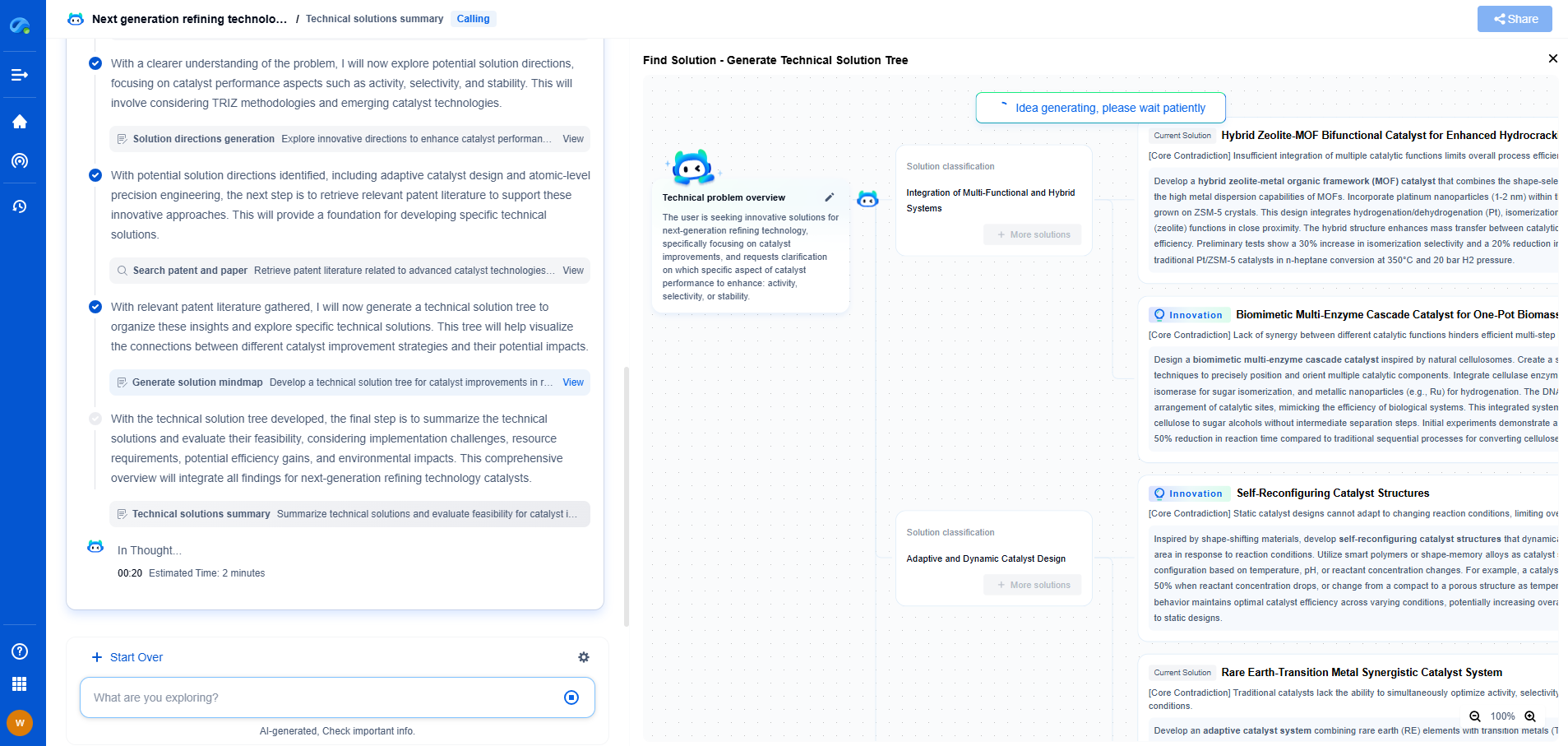
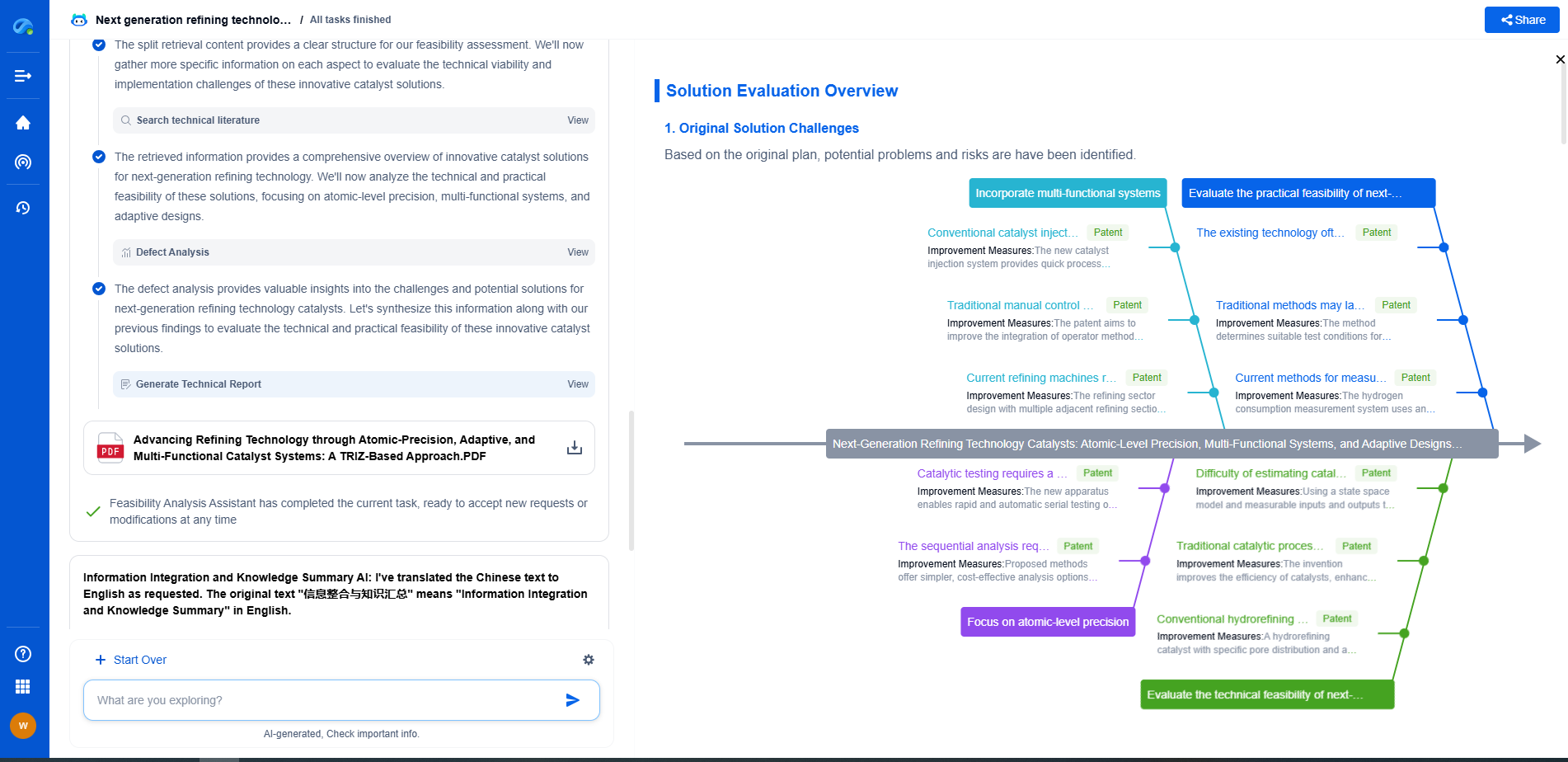
Patsnap Eureka, our intelligent AI assistant built for R&D professionals in high-tech sectors, empowers you with real-time expert-level analysis, technology roadmap exploration, and strategic mapping of core patents—all within a seamless, user-friendly interface.
Ready to accelerate your innovation process and make smarter, faster decisions? Discover Patsnap Eureka today and unlock the full power of confident, AI-driven innovation.
Features
- R&D
- Intellectual Property
- Life Sciences
- Materials
- Tech Scout
Why Patsnap Eureka
- Unparalleled Data Quality
- Higher Quality Content
- 60% Fewer Hallucinations
Social media
Patsnap Eureka Blog
Learn More Browse by: Latest US Patents, China's latest patents, Technical Efficacy Thesaurus, Application Domain, Technology Topic, Popular Technical Reports.
© 2025 PatSnap. All rights reserved.Legal|Privacy policy|Modern Slavery Act Transparency Statement|Sitemap|About US| Contact US: help@patsnap.com