The Evolution of FPUs: From Coprocessors to Integrated Units
JUL 4, 2025 |
Understanding the Basics of FPUs
Floating Point Units (FPUs) have been crucial components in computing systems, providing the ability to handle complex mathematical calculations that involve real numbers. These units are specialized processors designed to perform arithmetic operations on floating-point numbers, which are numbers with decimal points. The need for FPUs arose from the limitations of integer arithmetic in handling precise calculations, especially in scientific computations, graphical applications, and areas where precision is paramount.
The Era of Coprocessors
In the early days of computing, FPUs were not integrated into the main processor. Instead, they existed as separate entities known as coprocessors. These coprocessors worked alongside the CPU to offload tasks that involved floating-point arithmetic. One of the most notable examples was the Intel 8087, introduced in 1980, which worked in conjunction with the Intel 8086 and 8088 processors. This coprocessor significantly enhanced computational efficiency by handling arithmetic operations more swiftly than the main CPU could on its own.
The use of FPUs as coprocessors allowed computers to perform more complex calculations without burdening the main processor, leading to advancements in fields such as computer graphics, simulations, and scientific research. However, the reliance on separate coprocessors also meant additional costs and complexity in computer architecture.
Integration into the Main CPU
As technology advanced, the push for more integrated and efficient computing systems led to the merging of FPUs into the main CPU. This integration began in earnest in the late 1980s and early 1990s. The inclusion of FPUs in CPUs allowed for more seamless and efficient processing of floating-point calculations, reducing the need for external components and simplifying computer architecture.
Intel's introduction of the 80486 processor in 1989 marked a significant milestone in this evolution. The 80486 was one of the first processors to incorporate an FPU directly within the CPU die, eliminating the need for an external coprocessor. This integration brought several advantages, including lower system costs, reduced physical space requirements, and improved processing speeds due to the elimination of data transfer bottlenecks between the CPU and FPU.
Advancements in FPU Technology
Over the years, FPUs have continued to evolve, becoming more sophisticated and powerful. Modern processors boast advanced FPU capabilities, supporting a wide range of operations beyond basic arithmetic. These include complex mathematical functions, vector operations, and parallel processing capabilities.
One of the key advancements has been the development of SIMD (Single Instruction, Multiple Data) FPUs, which allow for the simultaneous processing of multiple data points. This parallelism is particularly beneficial in graphics processing, multimedia applications, and scientific simulations, significantly boosting performance.
FPUs have also benefitted from advancements in semiconductor technology, allowing for more transistors to be packed into smaller spaces. This has led to the development of multi-core processors, where each core may have its own FPU, enabling even greater computational power and efficiency.
The Role of FPUs in Modern Computing
Today, FPUs are integral to almost every modern computing device, from desktops and laptops to smartphones and embedded systems. Their ability to handle complex calculations quickly and efficiently makes them indispensable in a wide range of applications. In graphics processing, FPUs are central to rendering images and videos with high precision and speed. In scientific and engineering fields, they enable the simulation and analysis of complex systems and phenomena.
Moreover, the rise of artificial intelligence and machine learning has further underscored the importance of FPUs. Many AI algorithms require extensive matrix and vector calculations, tasks that FPUs are particularly well-suited to handle. This has led to the development of specialized processing units, such as GPUs (Graphics Processing Units) and TPUs (Tensor Processing Units), which incorporate advanced FPU designs tailored for AI workloads.
The Future of FPUs
As computing demands continue to grow, the role of FPUs will undoubtedly expand. Future advancements may focus on further enhancing their parallel processing capabilities, energy efficiency, and integration with other processor components. Additionally, the development of new materials and technologies, such as quantum computing, could revolutionize FPU design and functionality.
In conclusion, the evolution of FPUs from standalone coprocessors to integrated units within the CPU has been a journey of technological innovation and adaptation. Their continued development promises to play a crucial role in the future of computing, driving advancements across various fields and applications. As we look ahead, the potential for FPUs to revolutionize computational processes remains immense, heralding a new era of efficiency and capability in computing technology.
Accelerate Breakthroughs in Computing Systems with Patsnap Eureka
From evolving chip architectures to next-gen memory hierarchies, today’s computing innovation demands faster decisions, deeper insights, and agile R&D workflows. Whether you’re designing low-power edge devices, optimizing I/O throughput, or evaluating new compute models like quantum or neuromorphic systems, staying ahead of the curve requires more than technical know-how—it requires intelligent tools.
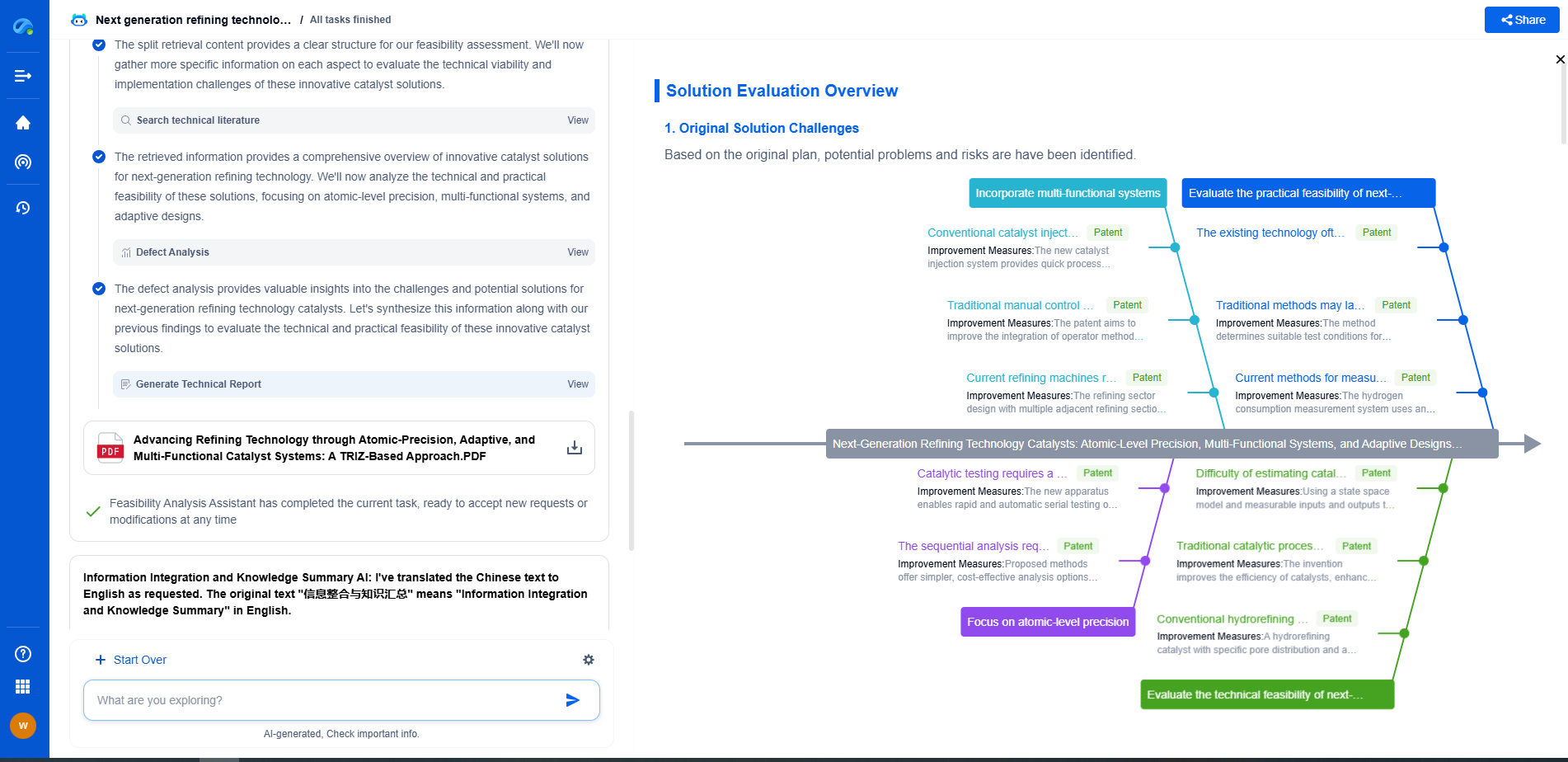
Patsnap Eureka, our intelligent AI assistant built for R&D professionals in high-tech sectors, empowers you with real-time expert-level analysis, technology roadmap exploration, and strategic mapping of core patents—all within a seamless, user-friendly interface.
Whether you’re innovating around secure boot flows, edge AI deployment, or heterogeneous compute frameworks, Eureka helps your team ideate faster, validate smarter, and protect innovation sooner.
🚀 Explore how Eureka can boost your computing systems R&D. Request a personalized demo today and see how AI is redefining how innovation happens in advanced computing.

Features
- R&D
- Intellectual Property
- Life Sciences
- Materials
- Tech Scout
Why Patsnap Eureka
- Unparalleled Data Quality
- Higher Quality Content
- 60% Fewer Hallucinations
Social media
Patsnap Eureka Blog
Learn More Browse by: Latest US Patents, China's latest patents, Technical Efficacy Thesaurus, Application Domain, Technology Topic, Popular Technical Reports.
© 2025 PatSnap. All rights reserved.Legal|Privacy policy|Modern Slavery Act Transparency Statement|Sitemap|About US| Contact US: help@patsnap.com