Introduction to Solvent Deasphalting
Solvent deasphalting (SDA) is a vital process in the oil refining industry, aimed at separating heavier asphaltic components from the valuable lighter hydrocarbons in crude oil. This separation is essential for producing cleaner fuels and higher-quality lubricants. As the demand for efficient refining processes grows, understanding SDA becomes crucial for industry professionals and enthusiasts alike.
The Basics of Solvent Deasphalting
Solvent deasphalting works on the principle of solubility differences. In this process, a solvent, typically propane, butane, pentane, or a combination, is introduced to the heavy oil feedstock. Due to the varying solubility of different hydrocarbons, the lighter, more valuable components dissolve in the solvent while the heavier asphaltic fractions do not. This allows for a cleaner separation of the two components.
Key Components of SDA Units
An SDA unit typically consists of several key components. The feedstock enters a contactor where it is mixed with the solvent. The resulting mixture then moves to a separator, where the lighter deasphalted oil (DAO) is recovered from the solvent. The remaining asphalt-rich phase is sent to a stripper or a flash drum, where the solvent is evaporated and recycled back into the system. The DAO is further processed or blended into products, while the separated asphalt is often used in road construction or other industrial applications.
Advantages of Solvent Deasphalting
One of the primary advantages of solvent deasphalting is its ability to improve the yield of lighter, more valuable products from crude oil. By efficiently removing the heavier fractions, refiners can enhance the quality of the DAO, making it suitable for additional conversion processes like hydrocracking or catalytic cracking. Furthermore, the process contributes to cleaner fuel production by reducing sulfur and metal content in the DAO.
Another significant benefit is the flexibility of the process. By altering the type and amount of solvent used, refiners can adjust the quality and quantity of the DAO and asphalt produced. This adaptability allows for optimization based on the specific characteristics of the crude oil being processed.
Challenges and Considerations
Despite its advantages, solvent deasphalting does present certain challenges. The selection of the appropriate solvent is critical, as it influences the efficiency of separation and the quality of the resulting products. Additionally, SDA units require careful design and operation to minimize solvent losses and ensure optimal energy efficiency.
Economic considerations also play a significant role in the decision to implement SDA. The initial investment and operational costs, including solvent recycling and energy consumption, must be weighed against the potential benefits of improved yields and product quality.
The Future of Solvent Deasphalting
As the oil refining industry continues to evolve, solvent deasphalting is likely to gain more prominence. With the increasing focus on sustainability and environmental regulations, SDA offers a pathway to cleaner fuel production and better utilization of heavy crude oils. Advances in solvent selection, process optimization, and integration with other refining technologies may further enhance the efficiency and appeal of SDA in the future.
Conclusion
Solvent deasphalting stands as a crucial process in the refining industry, offering significant benefits in terms of product yield and quality. While challenges exist, the advantages of cleaner fuel production and flexibility in operations make SDA an attractive option for refiners worldwide. As the industry moves towards more sustainable practices, understanding and optimizing solvent deasphalting will remain a key focus for achieving efficient and environmentally friendly refining operations.
What is solvent deasphalting (SDA) in refining?
JUN 19, 2025 |
Discover Patsnap Eureka: AI Agents Built for Scientific Innovation
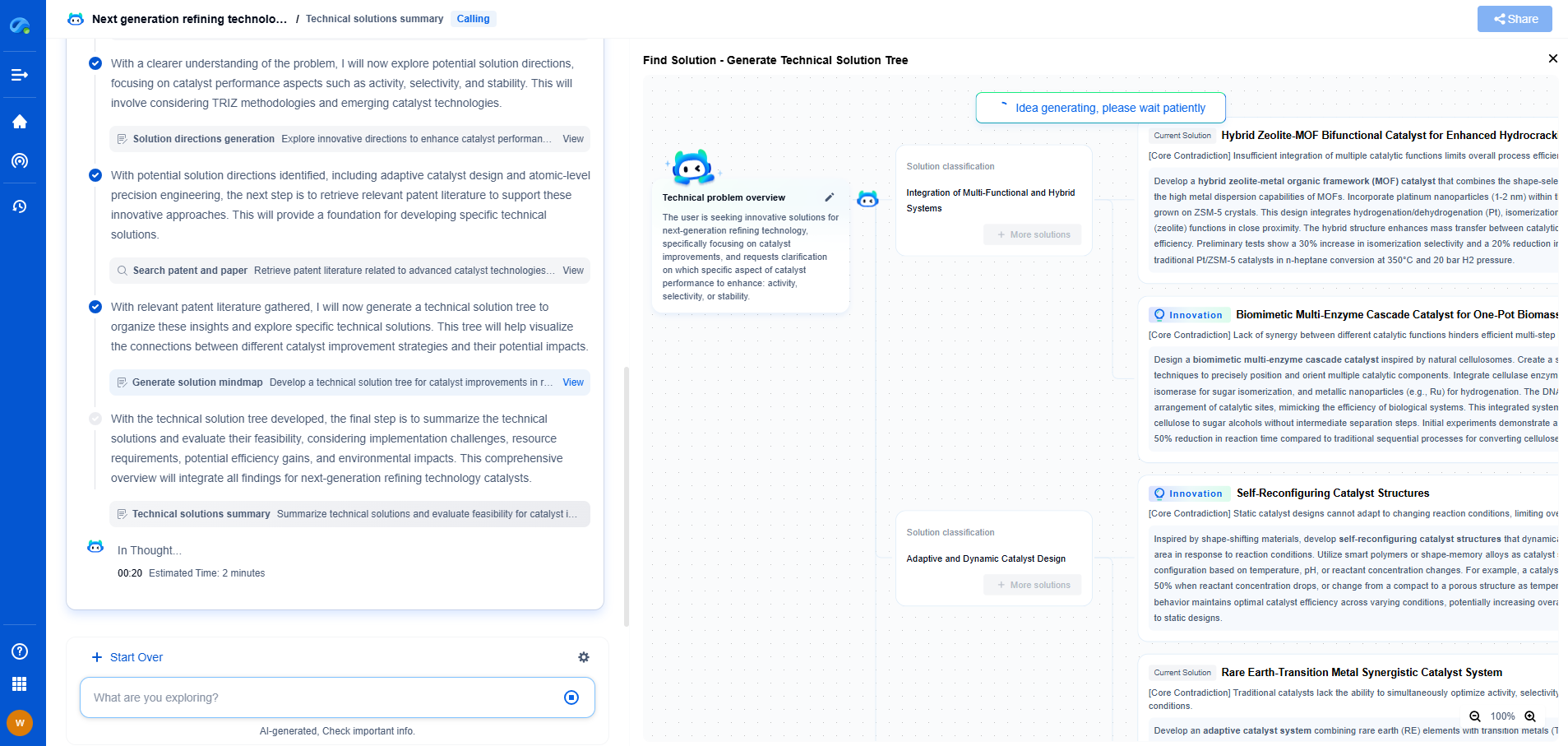
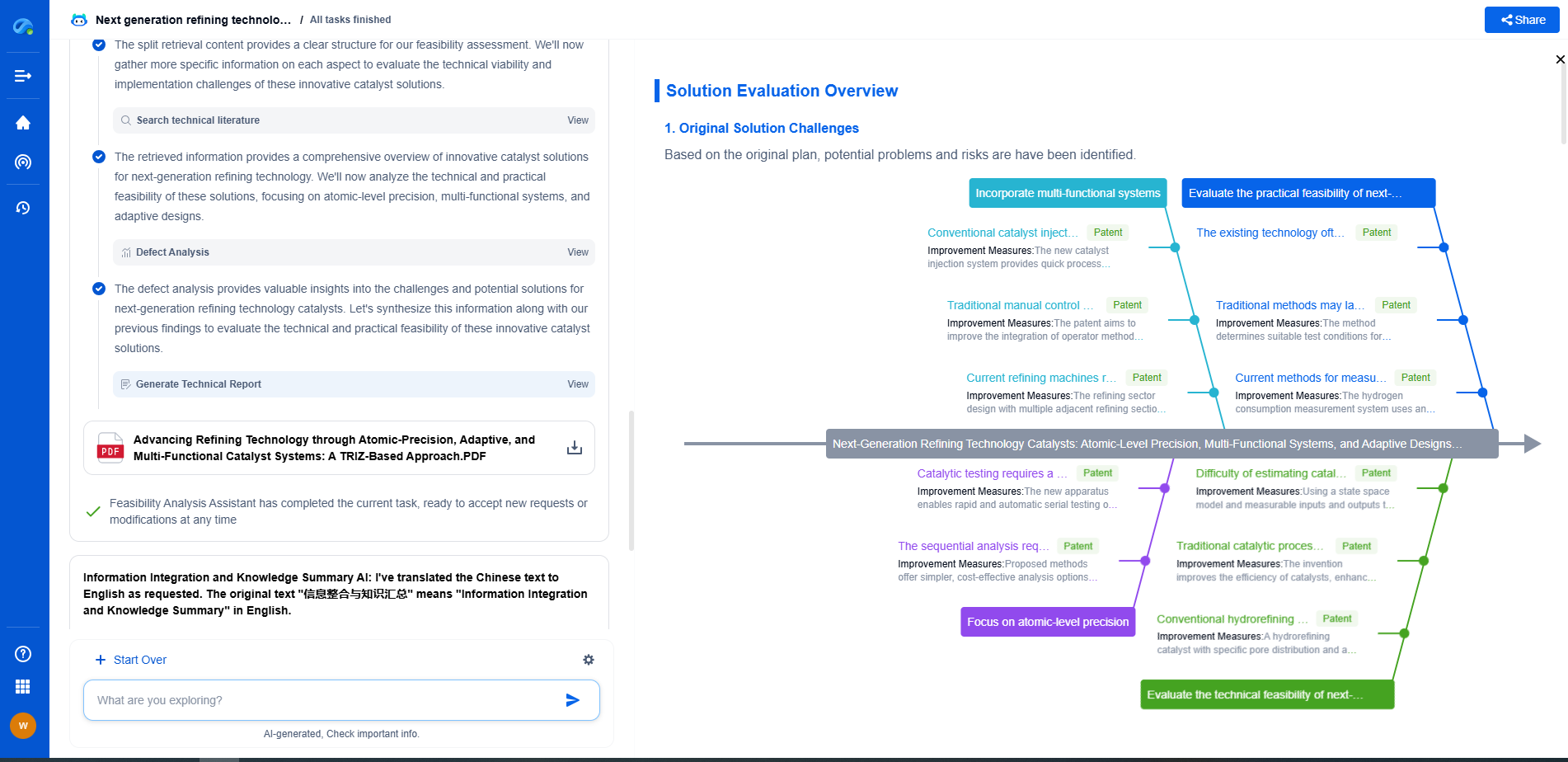
Whether you're designing the next generation of refining technologies or analyzing catalysts and process flows, keeping up with rapidly evolving research and IP data in petroleum processing is no easy task.
Patsnap Eureka, our intelligent AI assistant built for R&D professionals in high-tech sectors, empowers you with real-time expert-level analysis, technology roadmap exploration, and strategic mapping of core patents—all within a seamless, user-friendly interface.
Ready to accelerate your innovation process and make smarter, faster decisions? Discover Patsnap Eureka today and unlock the full power of confident, AI-driven innovation.
- R&D
- Intellectual Property
- Life Sciences
- Materials
- Tech Scout
- Unparalleled Data Quality
- Higher Quality Content
- 60% Fewer Hallucinations
Browse by: Latest US Patents, China's latest patents, Technical Efficacy Thesaurus, Application Domain, Technology Topic, Popular Technical Reports.
© 2025 PatSnap. All rights reserved.Legal|Privacy policy|Modern Slavery Act Transparency Statement|Sitemap|About US| Contact US: help@patsnap.com