


What Is CNC Programming?
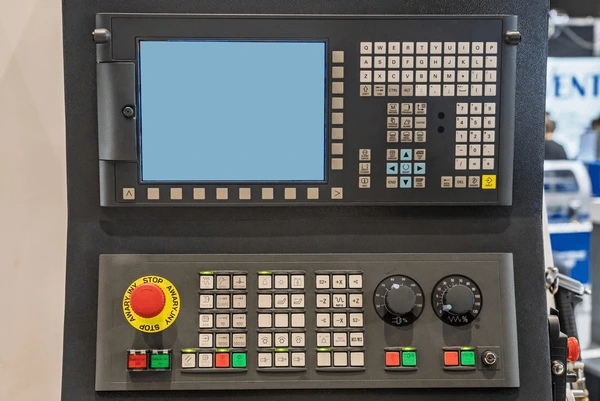
CNC (Computer Numerical Control) programming is the process of creating a set of instructions to control the movements and operations of a CNC machine tool. The prevalent language for CNC programs is G-code, a computer language that comprises instructions for tool selection, workpiece movement, and machine operations.
How CNC Programming Works
- Analyze the Part Design: Understand the part geometry, material, and required operations from the engineering drawings or CAD models.
- Determine Machining Processes: Based on the part requirements, select the appropriate machining processes, such as milling, turning, drilling, or grinding.
- Select Tools and Toolpaths: Choose the appropriate cutting tools and generate toolpaths that define the tool movements to remove material and create the desired part features.
- Generate G-code: Using CAM (Computer-Aided Manufacturing) software, translate the toolpaths into G-code, a set of numerical control instructions that the CNC machine can interpret.
- Simulate and Verify: Simulate the G-code program to verify the toolpaths, detect potential collisions, and ensure the program’s accuracy.
- Post-Process and Transfer: Post-process the G-code to make it compatible with the specific CNC machine controller, and transfer the program to the CNC machine for execution.
- Set up and Run: Load the workpiece, tools, and G-code program into the CNC machine, and run the program to manufacture the part.
Languages Used in CNC Programming
- G-code: A numerical control programming language that contains instructions for controlling the movements and operations of CNC machines. It is the fundamental language for CNC programming, consisting of alphanumeric codes (G-codes, M-codes, etc.) that represent specific commands for actions like linear and circular interpolation, tool changes, spindle speed, and coolant control. 5815
- CAM Software Languages: Computer-Aided Manufacturing (CAM) software packages often use their proprietary programming languages or scripting languages to generate G-code programs from CAD models. Examples include APT (Automatically Programmed Tools) and CLDATA (Cutter Location Data).
- High-Level Languages: Some advanced CNC systems allow programming in high-level languages like C, C++, or Pascal, which can provide more flexibility and control over the machining process. These languages are typically used for developing custom CNC applications or post-processors.
Types of CNC Programming
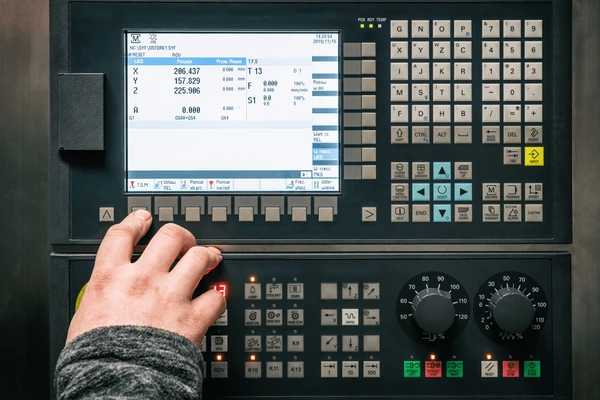
- G-code Programming: The most common and widely supported programming language for CNC machines. G-codes are a set of instructions that control the movement and operations of the machine tools.
- APT (Automatically Programmed Tools): A higher-level programming language that generates G-code instructions. It is less popular but can simplify complex operations.
- CAM (Computer-Aided Manufacturing): CAM software is used to generate toolpaths and CNC programs based on CAD models and machining parameters. Popular CAM software includes CATIA, NX, and MasterCAM.
- Macro Programming: Macros are pre-programmed routines that can be called within a CNC program to perform specific operations, simplifying programming for complex shapes.
Key Components of CNC Programming
- Control Unit: The brain of the CNC system, interpreting the program instructions and controlling the machine’s movements.
- Drive System: Converts the control unit’s signals into mechanical motion, typically using servomotors or stepper motors.
- Machine Tool: The physical component that performs the cutting or shaping operations, such as a mill, lathe, or drill.
- Feedback Devices: Sensors that monitor the machine’s position and provide feedback to the control unit for accurate positioning.
- Programming Language: The code used to communicate instructions to the CNC machine, typically G-code or a higher-level language like APT.
Advantages of CNC Programming
- Consistent and Precise Results: It ensures consistent and precise machining of parts, minimizing human error and allowing for tight tolerance ranges. This is particularly advantageous in industries like aerospace, where precision is critical.
- Complex Geometry Capabilities: CNC machines can efficiently generate parts with complex geometries, significantly reducing the cost of manufacturing intricate components.
- Automation and Reduced Labor: It enables automation, reducing the need for human labor and increasing production efficiency.
- Flexibility and Versatility: CNC machines can be programmed to perform various operations and processes, making them highly versatile and adaptable to different manufacturing requirements.
- Repeatability and Consistency: CNC programs can be easily replicated, ensuring consistent production of parts in large quantities.
Challenges in CNC Programming
- Programming Complexity: Despite the availability of CAD/CAM software, CNC programmers often face complexity, uncertainty, and inconsistency when writing NC program code, especially when dealing with interchangeable tools and multiple processes.
- Incorporating Best Practices: Integrating predetermined best practices and optimum parameters into CNC programming can be cumbersome and limited, as programmers often rely on external guidelines and manual data entry.
- Skilled Workforce Requirements: It requires skilled and trained personnel, which can be challenging and time-consuming to develop.
- Optimization and Efficiency: Achieving optimal machining efficiency and accuracy can be challenging, as it requires careful consideration of various parameters, such as cutting forces, tool paths, and feed rates.
- Adaptability and Flexibility: CNC programs may need to be adapted or modified to accommodate changes in manufacturing requirements, product designs, or process conditions, which can be time-consuming and require significant effort.
Applications of CNC Programming
Manufacturing Industry
- Machining of mechanical components for industries like automotive, aerospace, and heavy machinery
- Production of high-precision parts for electronics and telecommunication devices
- Fabrication of molds and dies for plastic injection molding and metal casting processes
Aerospace and Defense
- Machining of critical aircraft components such as engine parts, hydraulic systems, and structural elements
- Production of precision components for satellites, missiles, and other defense systems
Medical and Dental Industries
- Implants and prosthetics with intricate geometries and high biocompatibility requirements
- Surgical instruments and dental restoration components with complex shapes and tight tolerances
Architectural and Construction
- Fabrication of decorative wall panels, artificial stone materials, and architectural elements
- Production of custom-designed furniture and interior components with unique shapes and patterns
Research and Prototyping
- Fabrication of specialized equipment and instruments for scientific research
- Prototyping of new product designs and concepts in various industries
Latest Technical Innovations in CNC Programming
CNC Programming Model
To enable interoperability and integration in CNC systems, a model based on XML Web Services has been proposed. This model consists of three layers: Web Services requester, Web Services provider, and Web Services monitor. It establishes CNC system data structures and function models using XML Schema, facilitating seamless integration and collaborative operation of numerical control equipment across platforms and regions.
CNC Macro Programming
CNC macro programming simplifies programming and enhances flexibility, enabling complex machined surfaces that are difficult to achieve with ordinary programming. It plays a crucial role in improving CNC machining program processing efficiency and part quality.
CNC Data Synchronization
To ensure consistency between CNC machines and PCs or among multiple CNC machines, a method has been developed to selectively transmit only the data types (options, parameters, NC programs, macro programs, macro variables, workpiece origin offsets, tool offsets, tool shape data, tool management data) that have changed since the last synchronization. This approach reduces data transfer volume and processing time compared to transmitting all data types.
Process Comprehension for CNC Interoperability
A Universal Process Comprehension interface (UPCi) has been proposed to enable interoperability between CNC machines and CAx systems (CAD, CAPP, CAM). UPCi comprehends a system-generic process plan from a low-level part program, facilitating bidirectional communication between CNC machines and CAx resources. This extensible architecture accommodates different CNC types by defining a semantic dictionary of programming rules.
FAQs
- What is the purpose of G-code in CNC programming?
G-code directs the machine’s movements, specifying actions like cutting, positioning, and speed. - How does CAM software simplify CNC programming?
CAM software automates code generation, converting designs into toolpaths and reducing manual coding. - Is CNC programming hard to learn?
It requires a mix of coding and machining knowledge but becomes easier with practice and familiarity. - Can CNC programming be used for 3D printing?
Yes, many 3D printers use G-code to control movements and extrusion paths. - What industries rely most on CNC programming?
Industries like aerospace, automotive, medical, and electronics heavily depend on CNC programming for precision manufacturing.
To get detailed scientific explanations of CNC programming, try Patsnap Eureka.
