


In the world of database management, OLTP vs. OLAP is a key comparison that can help businesses choose the right system for their needs. OLTP (Online Transaction Processing) and OLAP (Online Analytical Processing) serve very different functions: OLTP is optimized for managing real-time transactions and daily operations, while OLAP is designed for complex data analysis and reporting. Understanding the differences between OLTP and OLAP is crucial for selecting the right solution based on factors like speed, scalability, and data complexity. This article will delve into the core distinctions between these two approaches, helping you make an informed decision.
What is OLTP (Online Transaction Processing)?
OLTP Systems: Key Features and Characteristics
OLTP systems are built to handle transaction-based applications like online banking, shopping, and order processing. They are optimized for high-volume, concurrent transactions while ensuring data integrity and consistency.
- Concurrency: OLTP systems allow multiple users to access and modify data simultaneously without compromising integrity.
- Atomicity: A transaction is either completed fully or not at all, which helps maintain data consistency.
- High Throughput: These systems are designed to process large volumes of transactions quickly, often in milliseconds.
- Data Integrity: OLTP systems maintain a specific order of transactions, preventing simultaneous changes that could create inconsistencies.
What is OLAP (Online Analytical Processing)?
OLAP enables businesses to analyze data across multiple dimensions like time, geography, products, and financial metrics. This ability supports various analyses, including trend analysis, financial reporting, and sales forecasting, driving better decision-making.
- Multidimensional Data Analysis: OLAP organizes data into cubes, categorizing it by dimensions (e.g., customers, time) and measures (e.g., sales, costs).
- Interactive Analysis: Users can perform operations like roll-up, drill-down, slicing, dicing, and pivoting to explore data interactively.
- Speed and Efficiency: OLAP systems enhance analysis speed by pre-summarizing data into cubes, offering faster query responses than traditional databases.
Key Differences Between OLTP and OLAP
Purpose and Functionality
OLTP: OLTP systems are designed for real-time transaction processing. They focus on ensuring low latency and high consistency in operations like sales orders, banking transactions, and other business processes.
OLAP: OLAP systems support complex data analysis and business intelligence. They enable multidimensional analysis, helping users perform operations like consolidation, drill-down, and slice-and-dice to gain insights from large datasets.
Data Model
OLTP: OLTP uses a relational data model, often in third normal form. This model prioritizes data integrity, consistency, and minimizing redundancy. It supports complex queries but is not optimized for analytical tasks.
OLAP: OLAP employs a multidimensional data model, organizing data into cubes with dimensions and measures. This structure speeds up analysis and reporting, though it may require domain knowledge for effective design.
System Architecture
OLTP: OLTP systems are optimized for handling large volumes of short transactions with minimal response times. They support concurrent user operations while maintaining data security and integrity.
OLAP: OLAP systems focus on read-heavy operations. They often use columnar storage, data compression, and parallel processing to speed up analytical queries. Though separate from OLTP, hybrid systems are emerging.
Data Processing and Storage
OLTP: OLTP systems frequently manipulate data, requiring complex setups for consistency and concurrency control.
OLAP: OLAP systems handle less frequent data manipulation but prioritize efficient retrieval and aggregation. They often rely on data warehousing and ETL/ELT processes to prepare data for analysis.
Performance Considerations
OLTP: Performance is measured by response time, throughput, and handling concurrent transactions. OLTP systems optimize write operations and data integrity.
OLAP: Performance in OLAP systems is measured by query speed, retrieval efficiency, and handling complex analytical queries. These systems optimize read operations and data compression to save memory.

Use Cases for OLTP (Online Transaction Processing)
- Real-Time Transaction Processing: OLTP systems handle real-time transactions, making them ideal for applications like banking. They process and record transactions instantly, ensuring timely updates.
- Customer Relationship Management (CRM): In CRM systems, OLTP manages customer interactions, tracks information, and handles orders and inquiries. This ensures smooth customer service and data accuracy.
- Enterprise Resource Planning (ERP): OLTP plays a key role in ERP systems, managing core business processes like finance, supply chain, and HR. It ensures departments access and update data in real time.
- E-commerce Platforms: OLTP supports e-commerce platforms by handling real-time transactions, such as product orders, payments, and inventory updates. This ensures smooth operations and customer satisfaction.
- Healthcare Systems: OLTP systems are essential in healthcare for managing patient records, scheduling appointments, and processing billing and insurance claims. They ensure accurate and timely data handling.
Use Cases for OLAP (Online Analytical Processing)
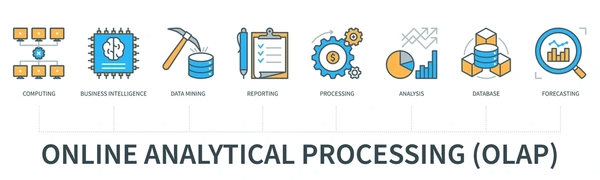
- Business Intelligence and Analytics: OLAP systems analyze data from data warehouses to generate reports and insights. These help in decision-making, such as sales analysis and market research.
- Data Mining and Predictive Analytics: OLAP supports data mining, allowing users to explore large datasets for patterns and trends. This aids in predictive analytics and identifies business opportunities.
- Financial Reporting: OLAP systems are crucial for generating financial reports, budgeting, and forecasting. They analyze historical data to help make informed financial decisions.
- Customer Segmentation and Analysis: OLAP helps segment customers based on various criteria, analyzing behavior for targeted marketing. This improves customer satisfaction and engagement.
- Supply Chain Optimization: OLAP aids supply chain management by analyzing inventory levels, demand forecasts, and logistics. This optimization reduces costs and improves operational efficiency.
Choosing Between OLTP and OLAP for Your Business
The choice between OLTP vs. OLAP depends on your business’s specific needs. If your primary concern is processing and recording transactions quickly and accurately, OLTP is the better choice. On the other hand, if your focus is on analyzing data to uncover trends and make strategic decisions, OLAP will be more beneficial.
In many cases, businesses use both systems in tandem—OLTP for real-time transaction handling and OLAP for in-depth data analysis and reporting. This hybrid approach can provide the best of both worlds, optimizing operations and supporting data-driven decisions.
By evaluating your needs—whether it’s handling high-volume transactions or analyzing complex data—you can choose the best system to support your business objectives.
To get detailed scientific explanations of OLTP vs. OLAP, try Patsnap Eureka.
