


When shopping for a smartphone or wearable device, you’ll often come across terms like AMOLED and Super AMOLED. While both use the same core OLED technology, manufacturers—especially Samsung—use “Super AMOLED” to highlight improvements in performance, integration, and user experience. So, what’s the real difference between AMOLED and Super AMOLED? This article explains their technical distinctions, visual performance, and what they mean for consumers.
AMOLED vs. Super AMOLED – What’s the real difference? Eureka Technical Q&A explains how Super AMOLED integrates touch sensors directly into the screen for better brightness, thinner design, and improved outdoor visibility—helping you choose the right display for your needs.

What Is AMOLED?
AMOLED stands for Active Matrix Organic Light-Emitting Diode. It refers to a display technology where each pixel emits its own light and is controlled by a thin-film transistor (TFT) matrix.
Key Characteristics:
- Deep blacks due to pixel-level lighting control
- High contrast ratios
- Fast response times
- Energy-efficient when displaying dark content
- Widely used in mid-range to premium smartphones, smartwatches, and VR headsets
However, standard AMOLED displays have a separate touch-sensitive layer placed on top of the screen, which can reflect light and reduce visibility in bright environments.
What Is Super AMOLED?
Super AMOLED is a term introduced by Samsung to describe an advanced version of AMOLED that integrates the touch layer directly into the screen rather than as a separate layer.
Key Improvements Over AMOLED:
- Integrated touch panel for thinner and lighter design
- Better sunlight visibility due to reduced reflection
- More responsive touch input
- Slightly improved power efficiency
- Enhanced color vibrancy and brightness (on newer models)
Super AMOLED is primarily used in Samsung’s smartphones but has also appeared in wearables, tablets, and select OLED panels from other manufacturers.
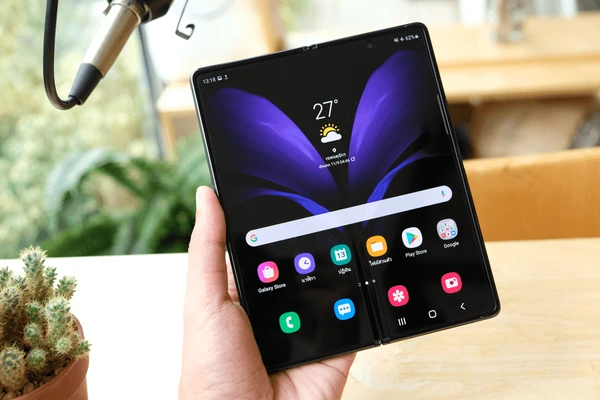
AMOLED vs. Super AMOLED: Side-by-Side Comparison
Brightness and Sunlight Visibility
Super AMOLED performs better in direct sunlight. It reduces screen glare and boosts brightness for improved outdoor visibility.
Durability and Protection
Super AMOLED features added protection like tempered glass and anti-smudge coatings. Standard AMOLED usually lacks these built-in layers.
Touchscreen Technology
Super AMOLED integrates capacitive touchscreens directly into the display. This offers better sensitivity than resistive touchscreens found in some AMOLED screens.
Conclusion
Super AMOLED improves upon standard AMOLED by offering better outdoor readability, stronger durability, and more responsive touch controls.
| Feature | AMOLED | Super AMOLED |
|---|---|---|
| Touch Layer | Separate from display panel | Integrated into display panel |
| Thickness | Slightly thicker | Thinner and more compact |
| Sunlight Visibility | Good | Better due to reduced reflection |
| Power Efficiency | Efficient | Slightly more efficient |
| Touch Responsiveness | Standard | More responsive |
| Color Quality | Rich and vibrant | Often more saturated and bright |
| Manufacturer Usage | Widely used by multiple brands | Mostly by Samsung |
Benefits of Super AMOLED
- Enhanced Outdoor Readability: With less reflection, the display remains clearer under direct sunlight.
- Better Touch Experience: The integrated layer provides quicker and more accurate touch response.
- Thinner Devices: Without a separate touch panel, the screen can be thinner, allowing for slimmer phones.
- Battery Optimization: Slight power savings over standard AMOLED, particularly in always-on and dark mode usage.
Are There Any Drawbacks?
While Super AMOLED offers improvements, it may come with:
- More saturated colors, which some users may find unnatural.
- Slightly higher manufacturing cost, often passed on in premium devices.
- Burn-in risk, which remains a shared issue with all OLED-based displays if static content is shown for long periods.
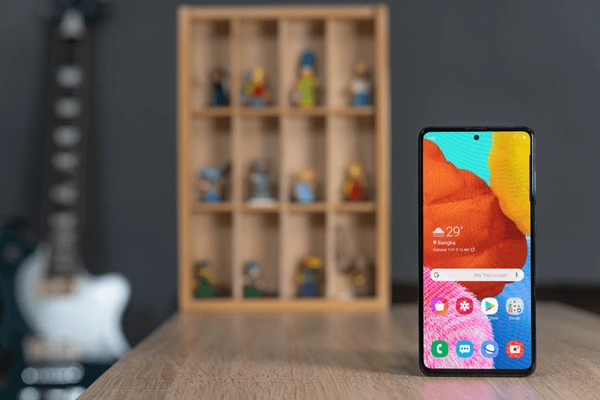
Real-World Use Cases
AMOLED
Found in:
- Mid-range smartphones (e.g., Xiaomi, OnePlus Nord series)
- Entry-level Samsung phones
- Budget smartwatches and fitness bands
Super AMOLED
Found in:
- Samsung Galaxy S and A series
- High-end wearables like Galaxy Watch
- AMOLED panels marketed with “Super” branding, especially for enhanced visual performance
FAQs About AMOLED vs. Super AMOLED
Is Super AMOLED just a marketing term?
Not entirely. While “Super” is branding, it reflects real engineering improvements like integrated touch layers and better outdoor visibility.
Do Super AMOLED displays use less power?
Yes, slightly—especially in dark mode, where each pixel can turn off completely. The integrated design also contributes to marginal power savings.
Can I see a difference between AMOLED and Super AMOLED?
Yes, particularly in direct sunlight and in touch responsiveness. Super AMOLED tends to look more vivid and feel more fluid in use.
Which one is better for gaming or media consumption?
Super AMOLED often provides better contrast, higher brightness, and faster response—ideal for gaming and video.
Are all Samsung phones Super AMOLED?
No. While many Samsung mid-range and flagship devices use Super AMOLED, some budget models still use standard AMOLED or PLS LCD.
Conclusion
Both AMOLED and Super AMOLED offer excellent visuals, deep blacks, and energy efficiency, but Super AMOLED takes it a step further with integrated touch layers, improved brightness, and better outdoor performance. If you’re choosing a device and prioritize display clarity, touch responsiveness, and sleek design, Super AMOLED is usually the better option. However, standard AMOLED still delivers great performance and can be a more budget-friendly choice.
To get detailed scientific explanations of AMOLED vs. Super AMOLED, try Patsnap Eureka.
