


Introduction: Cat5e vs Cat6 – What’s the Difference?
When deciding between Cat5e vs Cat6, understanding their differences is essential for building an efficient network. Cat5e (Category 5e) is a reliable, cost-effective choice for basic internet needs, while Cat6 (Category 6) offers higher speeds, better bandwidth, and reduced interference for more demanding setups. Let’s dive into their features and find out which is the right Ethernet cable for your project.
What Is Cat5e?
Cat5e cables have a maximum frequency of 100 MHz and are primarily used for Gigabit Ethernet (1000 Mbps) networks. They feature:
- Improved crosstalk and noise immunity compared to Cat5 cables
- Higher Attenuation-to-Crosstalk Ratio (ACR) and Signal-to-Noise Ratio (SNR)
- Lower delay skew for better performance
What Is Cat6?
Cat6 cables have a maximum frequency of 250 MHz and are suitable for applications with data rates exceeding 1 Gbps. Key features include:
- Improved crosstalk and return loss performance compared to Cat5e
- Optimized for full-duplex, high-speed networks
- Structured cabling with a maximum permanent link length of 90 meters
- Enhanced insulation and tighter pair twisting for better signal integrity
Key Differences Between Cat5e and Cat6
Bandwidth and Data Transfer Rates
Cat5e cables support a maximum bandwidth of 100 MHz, allowing for data transfer rates up to 1 Gigabit per second (Gbps) over a distance of 100 meters. In contrast, Cat6 cables have a higher bandwidth of 250 MHz, enabling data transfer rates of up to 10 Gbps over the same distance. This increased bandwidth and data rate make Cat6 cables more suitable for high-speed applications, such as video streaming, cloud computing, and data center operations.
Crosstalk and Noise Interference
Crosstalk, which refers to the electromagnetic interference between adjacent pairs of wires within a cable, is a significant factor affecting cable performance. Cat6 cables have improved crosstalk specifications, with better shielding and tighter twisting of the wire pairs, resulting in reduced crosstalk and noise interference. This allows for more reliable data transmission, especially at higher frequencies.
Cable Construction and Shielding
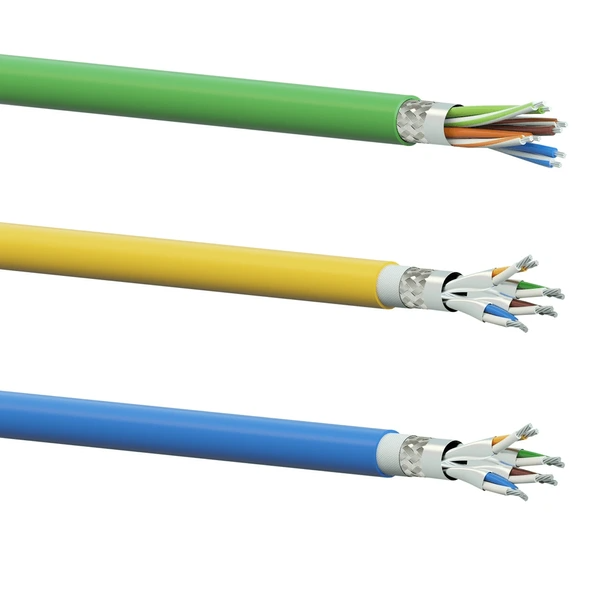
Cat6 cables have a more robust construction compared to Cat5e, with thicker insulation and tighter twisting of the wire pairs. Additionally, Cat6 cables often feature shielding, either in the form of a foil or braided shield, which helps to further reduce electromagnetic interference (EMI) and crosstalk. This shielding is particularly important in environments with high levels of electrical noise, such as industrial settings or data centers.
Power over Ethernet (PoE) Compatibility
Both Cat5e and Cat6 cables support Power over Ethernet (PoE) technology, which allows for the transmission of data and power over the same cable. However, Cat6 cables are better suited for PoE applications due to their higher bandwidth and reduced crosstalk, ensuring more efficient power delivery and data transmission.
Cost and Installation Considerations
Cat5e cables are generally less expensive than Cat6 cables, making them a more cost-effective choice for applications that do not require the higher bandwidth and performance of Cat6. However, for future-proofing and supporting emerging technologies, Cat6 cables may be a better long-term investment, especially in new installations or upgrades.

When to Choose Cat5e vs Cat6
- Use Cat5e cables for standard Gigabit Ethernet (1000BASE-T) networks over distances up to 100 meters, where data rates up to 1 Gbps are sufficient.
- Use Cat6 cables for higher-speed networks (up to 10 Gbps) over shorter distances (up to 37 meters), such as data center interconnects, high-performance workstations, and server farms.
- In environments with high electromagnetic interference or crosstalk, Cat6 cables are preferred due to their improved shielding and noise resistance.
- For PoE applications, Cat6 cables with a higher gauge copper wire (23 AWG) can provide better power delivery and lower voltage drops over longer distances.
- When future-proofing a network infrastructure, Cat6 cables are a better choice as they support higher data rates and have better performance headroom for emerging standards like 25G/40G Ethernet.
Cost Comparison: Cat5e vs Cat6
- Cat6 cables are generally more expensive than Cat5e cables due to their improved construction and performance. However, the cost difference has decreased as Cat6 cables have become more widely adopted.
- The installation cost for Cat6 cables may be higher than Cat5e cables due to the more stringent installation requirements and the need for specialized tools and techniques.
Conclusion: Choosing Between Cat5e and Cat6
Cat5e vs Cat6 boils down to your network requirements. For basic home or office setups, Cat5e offers great value. If you need faster speeds, reduced interference, or are preparing for future upgrades, Cat6 is the way to go. Choose the cable that meets your needs for a reliable and efficient network.
FAQs
- Can I use Cat6 cables with a Cat5e network?
Yes, Cat6 is backward-compatible with Cat5e, so you can mix and match them in a network. - Is Cat6 worth the extra cost over Cat5e?
If you need faster speeds, future-proofing, or reduced interference, Cat6 is worth the investment. - How does cable length affect Cat6 performance?
Cat6 supports 10 Gbps speeds up to 55 meters. Beyond that, speed drops to 1 Gbps over 100 meters. - Can Cat5e support gaming and streaming?
Yes, Cat5e supports up to 1 Gbps, which is sufficient for most gaming and streaming needs. - What’s the difference between unshielded and shielded Cat6 cables?
Shielded Cat6 cables have extra protection to reduce interference, ideal for environments with high electromagnetic noise.
To get detailed scientific explanations of cat5e vs. cat6, try Patsnap Eureka.

Learn more
Multiplexor: Efficient Data Selector for Electronics
Understanding STP Cable: Shielded Twisted Pair Explained
Understanding Twisted Pair Cable: Basics, Benefits, and Uses
JFET 101: A Beginner’s Guide to Junction Field-Effect Transistors
HDMI vs. DisplayPort: Which is Best for Your Monitor?