


Introduction: Meta Quest Pro vs Quest 3 – What’s the Difference?
When comparing Meta Quest Pro vs Quest 3, the distinction lies in their target audiences and features. The Quest Pro delivers advanced mixed reality and professional-grade capabilities, while the Quest 3 focuses on gaming and affordability. Your choice depends on whether you need a high-end professional tool or a versatile VR headset for everyday use.

What is Meta Quest Pro
The Meta Quest Pro is a groundbreaking virtual reality (VR) headset that offers an immersive and high-fidelity experience. It features a high-resolution local dimming LCD display paired with pancake lenses, providing an unparalleled visual experience. The Quest Pro’s “Infinite Display” architecture is designed to optimize key user experience metrics, such as resolution, field of view, and image quality.
What is Quest 3
The highly anticipated Quest 3 is set to be the successor to the wildly popular Quest 2 headset. Powered by Qualcomm’s Snapdragon XR2 Gen 2 chipset and boasting 8GB of RAM, the Quest 3 promises twice the graphics performance of its predecessor. It features a 1218 ppi LCD panel with a hybrid backplane technology combining CMOS-LTPS and IGZO TFTs, ensuring high resolution, high transmittance, and exceptional reliability.
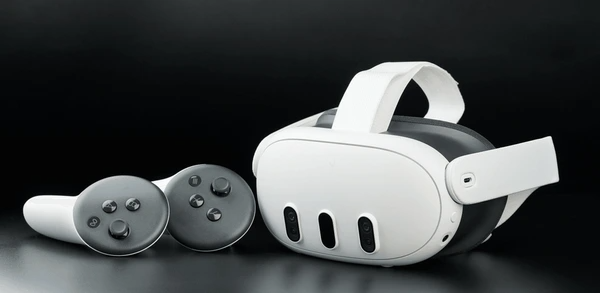
Key Differences: Meta Quest Pro vs Quest 3
Display and Optics
The Meta Quest Pro features an advanced “Infinite Display” architecture with high-resolution local dimming LCDs and pancake lenses, delivering an immersive visual experience. In contrast, the Quest 3 is expected to have a 2.48-inch LCD panel with a staggering 1218 ppi resolution, enabled by a hybrid backplane technology combining CMOS-LTPS and IGZO TFTs. This hybrid TFT structure achieves high resolution and transmittance while ensuring reliability, as demonstrated by successful mass production and 1000-hour aging tests.
Mixed Reality and Passthrough
One of the key advantages of the Quest Pro is its enhanced mixed reality capabilities, facilitated by improved passthrough video quality. While specific details are not available, the Quest 3 is expected to offer a significant upgrade in passthrough resolution, potentially reaching 18 PPD, compared to the Quest 2’s relatively low passthrough quality.
Processing Power and Performance
Both headsets are likely to feature substantial performance improvements over their predecessors, although specific details are not yet known. The Quest Pro is expected to leverage advanced processors and graphics capabilities to enable seamless mixed reality experiences and high-fidelity rendering. Similarly, the Quest 3 will likely incorporate cutting-edge hardware to deliver improved graphics, higher frame rates, and more immersive experiences.
Tracking and Input
The Quest Pro introduces advanced hand tracking and controller-free interactions, enabling more natural and intuitive control within virtual environments. While details on the Quest 3’s tracking capabilities are scarce, it is reasonable to expect improvements in hand and controller tracking accuracy and responsiveness compared to previous generations.
Mixed Reality and AR Features
Meta Quest Pro offers advanced mixed reality (MR) and augmented reality (AR) capabilities, allowing users to seamlessly blend virtual and real-world environments. It features full-color pass-through, utilizing external cameras to capture the user’s surroundings and overlay digital content onto the real-world environment. This enables immersive “mixed reality” experiences, where virtual objects interact with physical surroundings.
In contrast, the Quest 3 is primarily focused on virtual reality (VR) experiences, providing a fully immersive digital environment. While it may offer some AR capabilities, its strengths lie in delivering high-resolution VR content and gaming experiences.
Battery Life and Charging
Battery life and charging capabilities are crucial factors for extended mixed reality and VR sessions. However, specific details regarding the battery life and charging mechanisms of the Quest Pro and Quest 3 are not explicitly mentioned in the provided search results.
Price and Value
The Quest Pro is positioned as a premium mixed reality headset, likely carrying a higher price tag to accommodate its advanced features and capabilities. Meta aims to target professional and enterprise users with this device, offering a compelling value proposition for industries like engineering, design, and healthcare.
On the other hand, the Quest 3 is expected to be a more consumer-focused VR headset, potentially offering a more affordable entry point into high-quality VR experiences for gaming and entertainment purposes
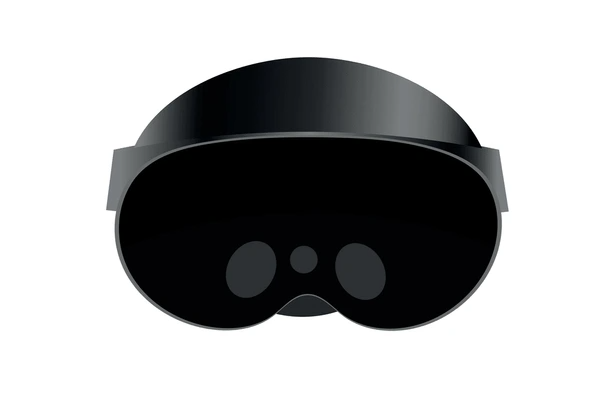
Conclusion: Meta Quest Pro vs Quest 3 – Which One Should You Choose?
In the debate of Meta Quest Pro vs Quest 3, the Quest Pro stands out for professionals needing advanced features, while the Quest 3 is perfect for gamers and casual users. Choose based on your priorities—whether it’s affordability or cutting-edge mixed reality.
FAQs
- Which is better for gaming: Meta Quest Pro or Quest 3?
Quest 3 is better optimized for gaming with its higher refresh rate and affordability. - Does Quest 3 support professional applications like the Pro?
It supports some apps but lacks the advanced AR and multitasking features of Quest Pro. - What are the major display differences between the two headsets?
The Quest Pro uses mini-LED for better color and contrast, while Quest 3 relies on LCD for clarity and sharpness. - Is the Quest 3 a significant upgrade over Quest 2?
Yes, Quest 3 offers better display, processing power, and mixed reality features compared to Quest 2. - How does the pricing compare between Quest Pro and Quest 3?
Quest Pro is significantly more expensive, targeting professionals, while Quest 3 is budget-friendly for general users.
To get detailed scientific explanations of meta quest pro vs. quest 3, try Patsnap Eureka.
