


Introduction to Mini LED and QLED Technologies
Mini LED and Quantum Dot LED (QLED) are two cutting-edge display technologies revolutionizing how we experience visuals. Both offer significant improvements over traditional LCD and OLED displays, delivering brighter images, richer colors, and enhanced contrast. This article will explore the differences between Mini LED vs. QLED, highlighting their unique features, benefits, and ideal use cases to help you decide which technology suits your needs.
What Is Mini LED? Features and Advantages
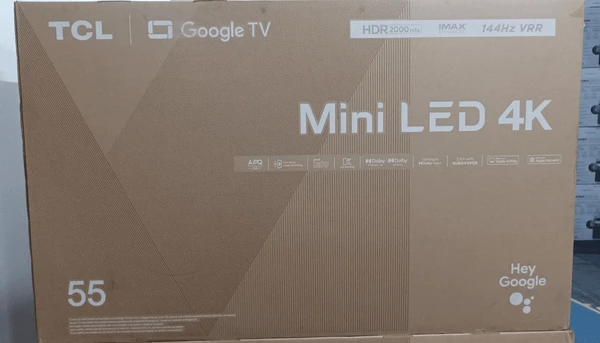
Mini LED, short for sub-millimeter light-emitting diode, is an advanced display technology. Its LED chips range in size from 100 to 300 micrometers, making it a transitional step between traditional LED and micro-LED displays. Mini LED bridges the gap by offering smaller chip sizes with fewer manufacturing challenges, making it a practical and efficient choice for modern displays.
Key Features of Mini LED Displays
Exceptional Brightness and Contrast
Mini LED displays deliver high efficiency, impressive brightness, and outstanding contrast. They can reach peak brightness levels of over 1,000 nits and achieve contrast ratios exceeding 1,000,000:1. These features make Mini LED ideal for delivering superior HDR (high dynamic range) performance.
Ultra-High Resolution
With their smaller chip sizes, Mini LEDs allow for higher pixel density. These displays can achieve resolutions of up to 1,500 pixels per inch (PPI). This level of detail is approximately five times greater than what current OLED displays offer, resulting in sharper and more detailed images.
Wide Color Gamut
Mini LED displays reproduce a broader color range compared to standard LCDs. They deliver color performance that rivals OLED and quantum dot displays, making visuals more vibrant and true to life.
Energy Efficiency
Mini LED technology is highly energy-efficient. It consumes only about 10% of the power used by LCDs and roughly 50% of the power required by OLEDs. This efficiency comes from their self-emissive nature and the use of local dimming, which reduces energy waste.
Fast Response Time
Like traditional LEDs, Mini LEDs offer incredibly fast response times. This eliminates motion blur and image smearing, making them perfect for gaming and fast-moving content.
What Is QLED? Features and Advantages
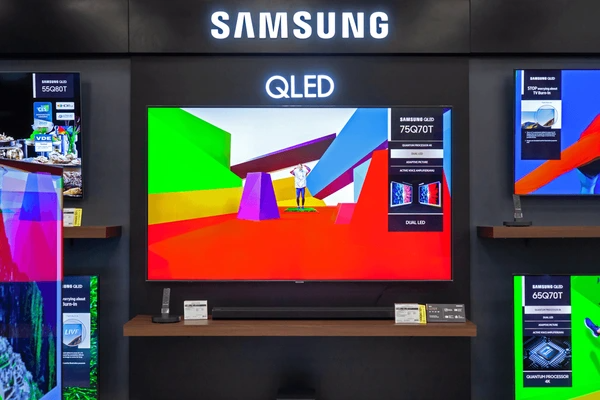
A quantum dot light-emitting diode (QLED) display uses quantum dots as the electroluminescent material in its emissive layer. The QLED structure includes a substrate, an anode, a hole transport layer, a quantum dot emissive layer, an electron transport layer, and a cathode. When an electric current flows, holes and electrons from the anode and cathode combine in the quantum dot layer, producing light.
Key Features and Benefits of QLED Displays
Wide Color Gamut and Exceptional Color Purity
Quantum dots emit light across the visible spectrum with precise wavelengths, achieving narrow emission linewidths of around 20 nm. This enables QLED displays to deliver a wide color gamut, up to 140% NTSC. In comparison, OLED covers 100% NTSC, and LCD achieves 72% NTSC. As a result, QLED displays produce more accurate and vibrant colors, enhancing overall image quality.
High Brightness and Energy Efficiency
QLED technology achieves impressive brightness levels with low power requirements. Modern QLED displays can reach peak luminance efficiencies of over 50 cd/A and luminous power efficiencies greater than 20 lm/W. These advancements allow QLEDs to deliver brilliant visuals while maintaining energy efficiency.
Deep Blacks and High Contrast
As a self-emissive technology, QLED displays can control individual pixels, resulting in deep blacks and superior contrast ratios. This feature makes QLED displays a significant improvement over traditional backlit LCDs, providing more immersive and dynamic visuals.
Ultra-Thin and Flexible Design
QLED displays support the creation of ultra-thin and flexible screens. Similar to OLED technology, this capability allows for innovative product designs, including foldable and rollable displays, expanding possibilities for modern devices.
Long Lifespan and Low Power Consumption
QLED displays offer exceptional durability, with operational lifetimes exceeding 300 hours at 1,000 nits of brightness. Their self-emissive nature also reduces power consumption compared to backlit displays, making them a sustainable choice for consumers.
Mini LED vs QLED: Key Differences
Light Source
- Mini LED: Uses miniaturized LED chips ranging from 100 to 200 micrometers in size. These chips emit blue light, which a phosphor layer converts into white light.
- QLED: Combines a blue LED backlight with quantum dots. The quantum dots convert the blue light into pure red and green light, creating a wider color gamut.
Color Reproduction
- Mini LED: Offers a wide color gamut, typically covering about 90% of the Rec. 2020 standard. This is achieved through its phosphor conversion layer.
- QLED: Delivers an even broader color gamut, exceeding 110% of the Rec. 2020 standard. This is due to the precise emission spectra of quantum dots, making colors more vivid and accurate.
Manufacturing and Cost
- Mini LED: Requires the precise transfer and assembly of thousands of miniaturized LED chips. This process increases manufacturing complexity and costs, making it a premium option.
- QLED: Involves applying a quantum dot film over a blue LED backlight. This simpler process makes QLED displays more cost-effective compared to Mini LED technology.
Applications
- Mini LED: Ideal for high-end displays like TVs, monitors, and laptops. It excels in brightness, contrast, and local dimming, making it perfect for premium devices.
- QLED: Commonly used in premium TVs and VR headsets. It is highly valued for its exceptional color accuracy and wider color gamut, making it a favorite for content-rich applications.
Choosing Between Mini LED and QLED for Your Needs
Mini LED: Best for High Brightness and Local Dimming
Mini LED displays are perfect for those who prioritize exceptional brightness and contrast. With advanced local dimming capabilities, Mini LED delivers deeper blacks and higher dynamic range, making it ideal for:
- Home theaters: Enjoy stunning visuals with sharp contrast and rich detail.
- Professional monitors: Achieve precise brightness and color control for editing or design work.
- Gaming setups: Experience enhanced visuals with fast response times and vibrant images.
However, keep in mind that Mini LED displays often come with higher price tags due to their complex manufacturing process.
QLED: Best for Vibrant Colors and Cost Efficiency
QLED displays excel in delivering vibrant, accurate colors and a wider color gamut. Their cost-effective production process makes them more affordable while still offering high-end features. QLED is ideal for:
- Premium TVs: Watch movies and shows with vivid colors and impressive clarity.
- VR headsets: Immerse yourself in realistic environments with true-to-life visuals.
- Everyday use: Enjoy an affordable yet high-quality display for general entertainment.
QLED may not match Mini LED in local dimming and deep blacks but shines in color reproduction and cost efficiency.
Which One Should You Choose?
- Choose Mini LED if you value brightness, contrast, and top-tier HDR performance.
- Choose QLED if you want stunning color accuracy and a more affordable premium display.
To get detailed scientific explanations of Mini LED vs. QLED, try Patsnap Eureka.
