


What Is a PoE Injector?
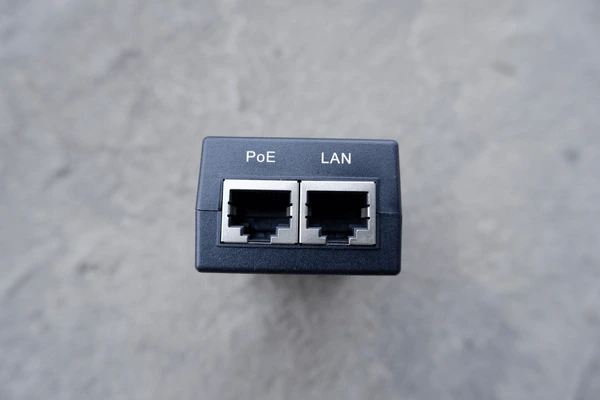
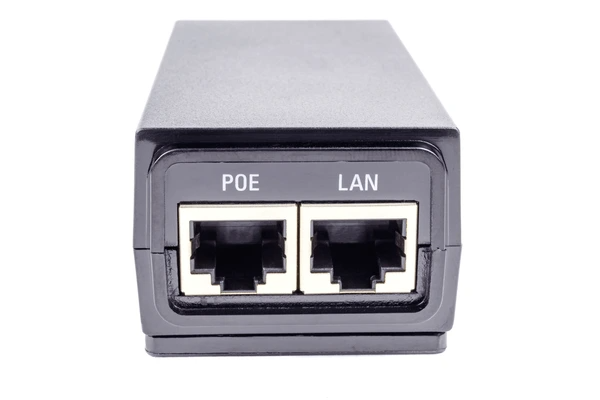
A PoE (Power over Ethernet) injector is a device that enables power delivery over Ethernet cabling to remote powered devices (PDs) like IP phones, wireless access points, and IP cameras. It acts as a midspan power sourcing equipment (PSE) that injects DC power onto the Ethernet cable’s unused wire pairs. This allows powering PDs without requiring AC outlets at the device location, simplifying installation.
How a PoE Injector Works
The injector contains power supply circuitry that extracts power from an AC or DC source. It then couples this power onto the Ethernet cable’s spare pairs using an injection circuit, while the data pairs remain undisturbed for network connectivity. At the PD end, a PoE splitter separates the power from data for device usage.
Types of PoE Injectors
PoE Injector Types
- Endspan PoE Injectors: These integrate the Ethernet switch and PSE into one unit, delivering data and power over the same cable.
- Midspan PoE Injectors: Separate standalone units that inject power into an existing Ethernet cable run between a non-PoE switch and PD.
Power Sourcing Types
- Single-Port Injectors: Provide power to a single PD over one Ethernet port.
- Multi-Port Injectors: Can power multiple PDs simultaneously through several PoE ports.
PoE Standards and Power Levels
PoE Standards and Classifications
- Type 1 (IEEE 802.3af): Up to 15.4W of power per port
- Type 2 (IEEE 802.3at): Up to 30W of power per port
The newer IEEE 802.3bt standard, introduced in 2018, adds higher power levels:
- Type 3 (IEEE 802.3bt): Up to 60W per port
- Type 4 (IEEE 802.3bt): Up to 90W per port
These standards ensure interoperability and define power management, detection, and negotiation mechanisms between PoE devices.
Supported Power Levels
PoE injectors and switches typically support the following power levels based on the IEEE standards:
- IEEE 802.3af (Type 1): 4-15.4W per port
- IEEE 802.3at (Type 2): 16-30W per port
- IEEE 802.3bt (Type 3): 31-60W per port
- IEEE 802.3bt (Type 4): 61-90W per port
Benefits of Using a PoE Injector
- Flexibility and Ease of Installation: PoE injectors allow powering devices over existing Ethernet cabling, eliminating the need for separate power cables and outlets. This provides flexibility in device placement and simplifies installation.
- Cost Savings: By leveraging existing network infrastructure, PoE injectors reduce the cost of running new electrical wiring and conduits.
- Safety: PoE operates at low voltages, reducing the risk of electrical hazards compared to traditional high-voltage power systems.
Choosing the Right PoE Injector
Port Count: PoE injectors are available in various port configurations, ranging from single-port to multi-port options (2, 4, 8, 12, or 16 ports). Choose a port count that matches the number of PDs you need to power, with an additional 1-2 ports as a backup for future expansion.
Power Standard Compatibility: Ensure that the PoE injector and the connected PDs operate at the same voltage level. Common standards include IEEE 802.3af/at (44-57V DC) and IEEE 802.3bt (up to 90W). Non-standard PoE devices typically operate at 18-48V DC. Mismatched voltages can potentially damage the devices.
Power Budget: Consider the power requirements of your PDs and select a PoE injector with a sufficient power budget to support them. PoE injectors are available in various power ratings, such as 15W, 30W, 60W, and 90W, to accommodate different power needs.
Benefits of PoE Injectors a. Easy Installation: PoE injectors simplify installation by allowing you to connect non-PoE switches and PDs using Ethernet cables, eliminating the need for separate power cables.
Cost-Effective Expansion: By leveraging existing non-PoE network infrastructure, PoE injectors enable cost-effective expansion of PoE capabilities without the need for replacing entire switches.
Versatile Applications: PoE injectors find applications in various scenarios, including wireless networking, IP surveillance, VoIP phone systems, and other low-power device deployments where power outlets are limited or inconvenient.
Applications of PoE Injector
Powering IP Cameras and Wireless Access Points
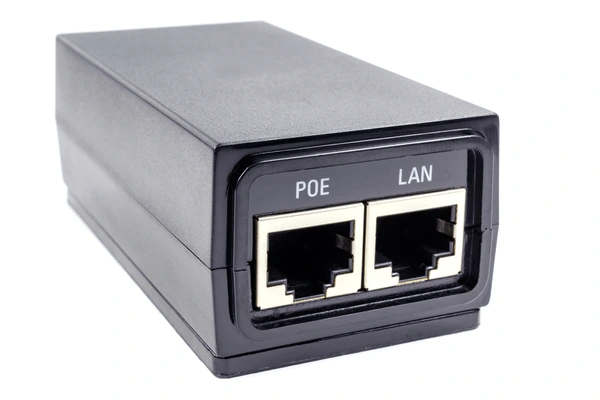
PoE injectors are widely used to power IP cameras, wireless access points, and other network devices in locations without nearby electrical outlets. This enables flexible installation and eliminates the need for separate power cables, reducing clutter and installation costs.
Extending Network Reach in Industrial Settings
In industrial environments, PoE injectors can power remote sensors, controllers, and other equipment over long cable runs, simplifying wiring and enabling data and power transmission over a single Ethernet cable. This is particularly useful in hazardous areas where electrical wiring is challenging.
Powering VoIP Phones and Conference Room Systems
PoE injectors are commonly used to power VoIP phones, video conferencing systems, and other collaboration devices in office settings. This allows for a centralized and organized deployment, reducing the need for individual power adapters and outlets.
Enabling Smart Building Automation
In smart building automation systems, PoE injectors can power various sensors, controllers, and actuators for lighting, HVAC, access control, and other building management functions. This simplifies installation and reduces the need for separate power wiring throughout the building.
Outdoor Deployments and Harsh Environments
PoE injectors can power outdoor devices like security cameras, wireless access points, and environmental sensors in harsh conditions or remote locations where traditional power sources are unavailable or impractical. This enables reliable and cost-effective monitoring and connectivity solutions.
Temporary or Portable Network Setups
For temporary or portable network deployments, such as trade shows, events, or construction sites, PoE injectors offer a convenient way to power network devices without the need for permanent electrical infrastructure, enabling quick and flexible setups.
Application Cases
| Product/Project | Technical Outcomes | Application Scenarios |
|---|---|---|
| Catalyst Compact PoE Switches | Provide up to 30W PoE+ power per port to support high-power devices like IP cameras, wireless APs, and video phones. | Powering IP cameras, wireless APs, and VoIP phones in office/enterprise networks. |
| PoE Injectors | Compact design, plug-and-play, support IEEE 802.3af/at PoE standards, up to 30W power output. | Extending network reach to remote PoE devices in industrial/outdoor settings. |
| UniFi Switch PoE | Support 802.3bt PoE++ with up to 60W per port, energy-efficient, Layer 2/3 switching capabilities. | Powering high-power wireless access points, IP cameras, and other PoE devices in large-scale deployments. |
| ProSAFE PoE Injectors | Gigabit Ethernet ports, support IEEE 802.3af/at, up to 30W PoE power budget, plug-and-play installation. | Adding PoE capability to non-PoE network switches for powering IP cameras, VoIP phones, and wireless APs. |
| PoE+ Injectors | Support IEEE 802.3at PoE+ standard, up to 30W power output, compact metal housing, DIP switches for configuration. | Enabling PoE for IP surveillance cameras, wireless APs, and other devices in SMB/SOHO environments. |
Latest Technical Innovations in PoE Injector
Power Delivery Enhancements
- Higher Power Levels: The IEEE 802.3bt standard, released in 2018, enables PoE to deliver up to 90W of power, significantly increasing the range of devices that can be powered over Ethernet. This opens up new possibilities for powering devices like laptops, displays, and even thin clients.
- Extended Range: Advancements in PoE extender technology allow power to be delivered over longer cable lengths, beyond the traditional 100m limit. This enables PoE deployment in larger facilities and outdoor environments.
Intelligent Power Management
- Dynamic Power Allocation: Intelligent PoE injectors can dynamically allocate power based on the actual consumption of connected devices, optimizing power usage and enabling more devices to be supported.
- Remote Monitoring and Control: Advanced PoE systems incorporate remote monitoring and control capabilities, allowing administrators to monitor power consumption, configure power budgets, and troubleshoot issues remotely.
Integration and Interoperability
- Unified Power and Data Management: PoE injectors are being integrated with network management systems, enabling unified management of power and data across the network infrastructure.
- Multi-Port Support: PoE injectors with multiple ports and load balancing capabilities are becoming more prevalent, simplifying deployment and management in multi-device environments.
Energy Efficiency and Sustainability
- Energy-Efficient Power Conversion: Innovations in power conversion circuitry and topologies have improved the energy efficiency of PoE injectors, reducing energy consumption and heat dissipation.
- Renewable Energy Integration: Some PoE injectors are designed to integrate with renewable energy sources like solar panels, enabling sustainable and off-grid power delivery.
FAQs
- What is the difference between a PoE switch and a PoE injector?
A PoE switch has multiple ports and integrates power injection, while a PoE injector adds power to a single Ethernet cable for one device. - Can I use a PoE injector with non-PoE devices?
Yes, with the help of a splitter to separate power and data for devices that aren’t PoE-compatible. - How do I know if my device is PoE-compatible?
Check the device specifications for compliance with PoE standards like IEEE 802.3af/at/bt. - Are PoE injectors safe for my network?
Yes, they use regulated power output and adhere to safety standards to prevent damage. - What’s the maximum cable length for PoE injectors?
Typically, PoE injectors support Ethernet cable lengths of up to 100 meters (328 feet).
To get detailed scientific explanations of PoE injectors, try Patsnap Eureka.
