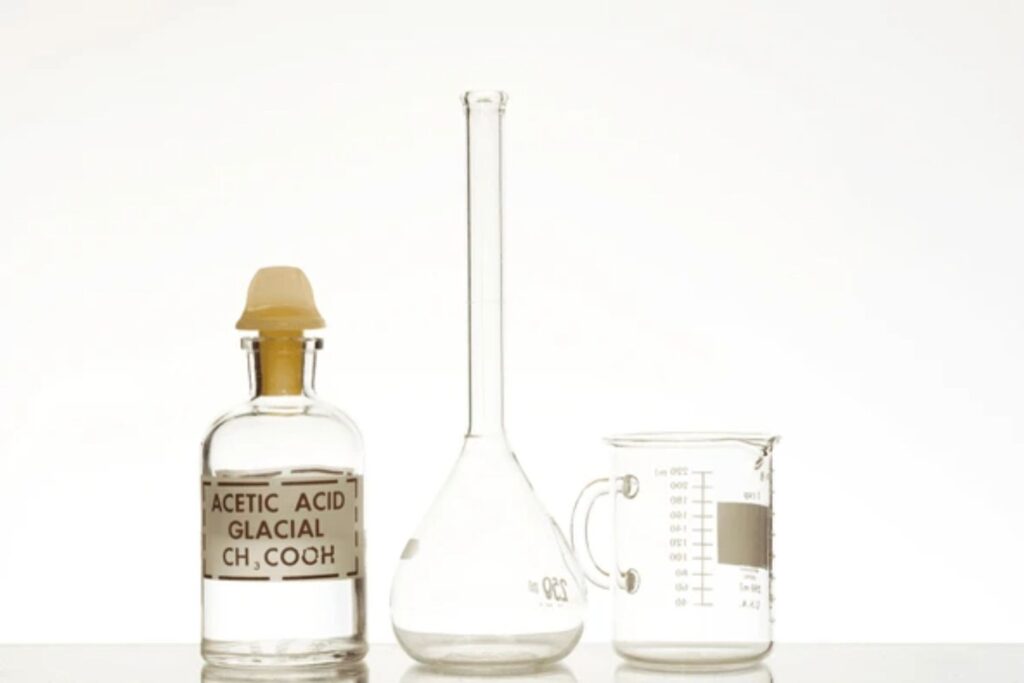
Glacial acetic acid (GAA) is a concentrated form of acetic acid, a key organic chemical widely used in industry. Named “glacial” because it solidifies into ice-like crystals below 16.6°C, GAA is valued for its purity and strong acidity.
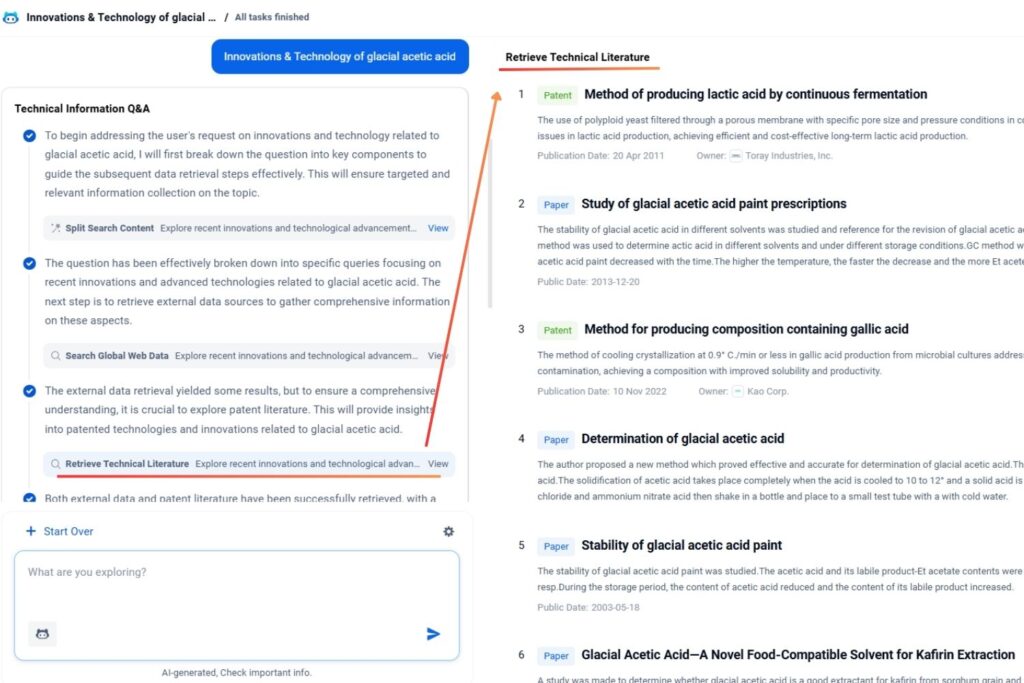
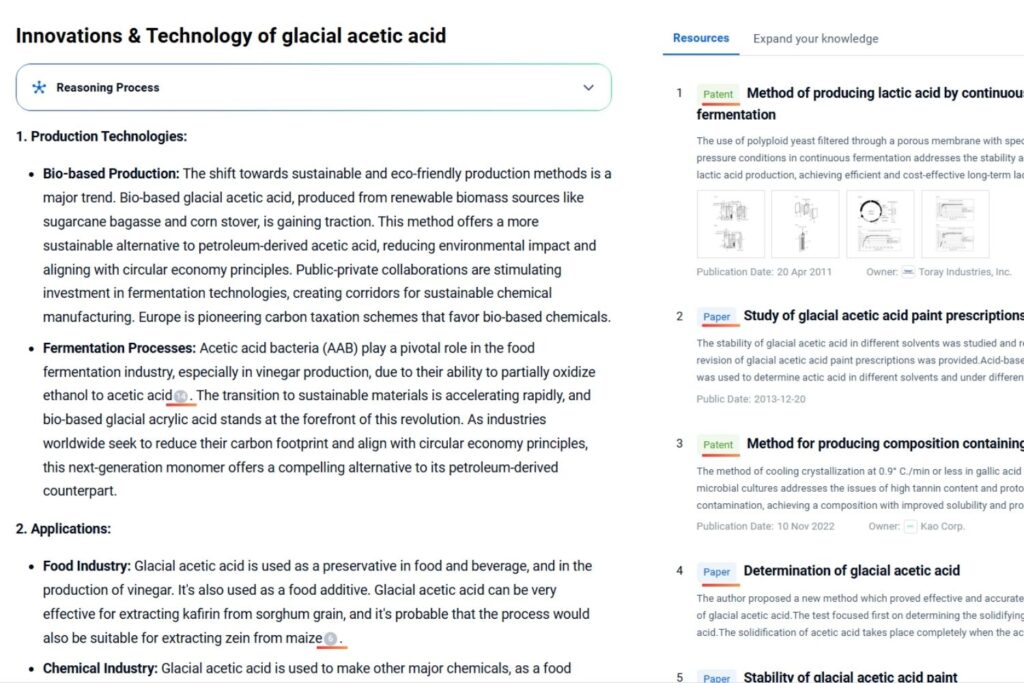
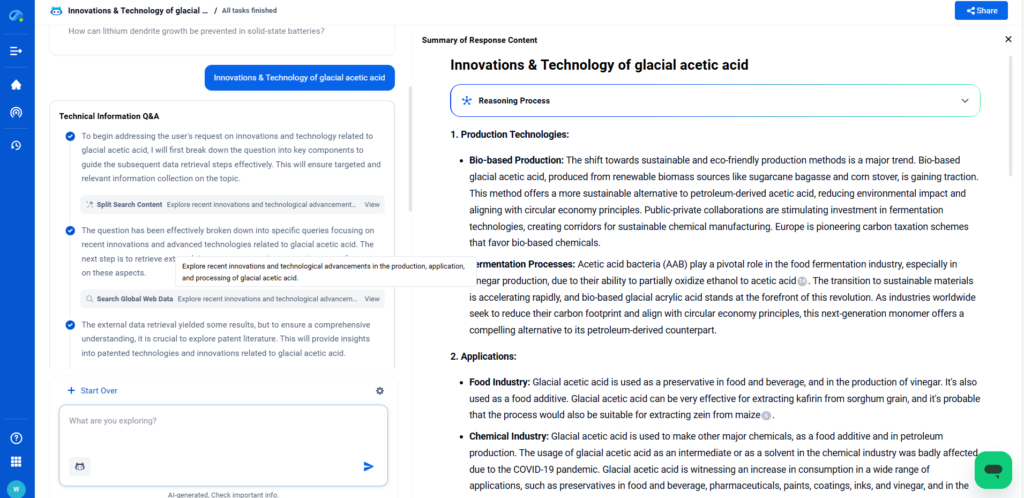
This blog explores glacial acetic acid’s chemical nature, performance characteristics, common applications, grades, safety considerations, and technological advancements. We’ll also highlight how PatSnap Eureka AI Agent supports innovation tracking in chemical industries.
Ask Patsnap Eureka AI
Patsnap Eureka AI provides instant, trusted answers to any technical questions.
Glacial acetic acid is pure acetic acid with minimal water content (typically less than 1%). It is a colorless liquid with a pungent vinegar-like odor and is corrosive.
Composition & Properties
Chemical formula: CH₃COOH
CAS number: 64-19-7
Purity: ≥ 99.7% (glacial grade)
Density: 1.05 g/cm³ at 25°C
Melting point: 16.6°C (solidifies below this)
Boiling point: 117.9°C
pH: Approximately 2.4 (1M aqueous solution)
Solubility: Miscible with water, ethanol, ether
Key Functional Properties
Strong acidity enables use as a solvent and reagent
Acts as a catalyst in esterification and chemical synthesis
Effective as a preservative and antimicrobial agent
High volatility requires careful handling
Material Grades & Designations
Grade
Purity (%)
Water Content (%)
Typical Use
Standards/Specs
Industrial Grade
≥ 99.5
≤ 1.0
General chemical synthesis
ASTM D1613, GB 446
Glacial Grade
≥ 99.7
≤ 0.5
Pharmaceutical, food grade
USP, EP
Reagent Grade
≥ 99.8
≤ 0.3
Laboratory, analytical use
ACS, ISO standards
Equivalent standards may vary by region (e.g., JP, BP).
Application Landscape
Major Industries
Chemical Manufacturing: Precursor for vinyl acetate monomer, acetic anhydride, and esters
Food Industry: Used as acidity regulator and preservative (E260)
Pharmaceuticals: Solvent in drug synthesis and processing
Textiles: Dyeing and printing processes
Plastics: Production of polyethylene terephthalate (PET)
Laboratories: Analytical reagent and solvent
Real-World Use Cases
Production of cellulose acetate for photographic films and textiles
Food packaging coatings to prevent microbial growth
Synthesis of aspirin and other pharmaceuticals
Cleaning agent for metal surface preparation
Application Trends
Increased demand in bio-based chemical production
Use in greener solvent systems replacing more hazardous chemicals
Regulations driving higher purity and lower impurity levels
Glacial Acetic Acid vs Other Acetic Acid Forms
Feature
Glacial Acetic Acid
Diluted Acetic Acid (5-10%)
Acetate Salts
Purity
≥ 99.7%
5-10%
Variable
Corrosiveness
High
Moderate
Low
Application Scope
Industrial, pharma
Food additives, cleaning
Buffer solutions, food
Handling Precautions
Requires strict PPE
Easier handling
Minimal
Advantages of Glacial Acetic Acid
High Purity Ensures Consistent Reactivity Glacial acetic acid’s purity of over 99.7% means fewer impurities that can interfere with chemical reactions. This makes it ideal for sensitive syntheses in pharmaceuticals and fine chemicals.
Strong Solvent with Versatile Compatibility It dissolves a wide range of organic and inorganic compounds, making it a preferred solvent in various industrial processes including esterification, acetylation, and polymer production.
Excellent Catalyst and Reactant Properties Its acidic nature allows it to act as both a catalyst and a reactant in chemical processes. This dual function improves reaction efficiency, reducing the need for additional chemicals.
Effective Antimicrobial and Preservative Action The strong acidity and concentration give it antimicrobial properties, useful in food preservation and preventing microbial growth in coatings and packaging materials.
Cost-Effective and Widely Available Compared to many specialty solvents, glacial acetic acid is relatively affordable and easily sourced globally, ensuring steady supply for large-scale industrial applications.
Supports Green Chemistry Initiatives It can replace more hazardous organic solvents in many processes, reducing environmental and health risks. Additionally, bio-based production routes further enhance its sustainability profile.
High Boiling and Low Freezing Points These physical properties allow for easier handling and storage in industrial settings, especially where temperature control is critical.
Facilitates Efficient Recovery and Recycling Due to its distinct boiling point and miscibility with water, it can be separated and recycled effectively in chemical manufacturing, minimizing waste.
Wide Range of Industrial and Laboratory Uses Its versatility extends from large-scale manufacturing to precise analytical applications, making it indispensable in research and quality control.
Chemical Stability and Storage Life Glacial acetic acid is chemically stable under proper storage conditions, retaining its properties for extended periods, which is crucial for supply chain reliability.
Innovations & Technology
Advanced Production Methods
Bio-Based Synthesis: New biotechnological processes use renewable feedstocks such as biomass and agricultural waste to produce acetic acid sustainably, reducing reliance on fossil fuels.
Catalytic Improvements: Innovative catalysts, including metal-organic frameworks (MOFs) and heterogeneous catalysts, enhance yield and selectivity in acetic acid synthesis, lowering energy consumption and waste generation.
Purification and Quality Control
Membrane Separation Techniques: Cutting-edge membrane technologies allow more efficient purification of glacial acetic acid, improving purity levels and reducing environmental footprint.
Real-Time Analytical Monitoring: Integration of AI-driven sensors in production lines enables real-time quality control, ensuring consistent product standards and minimizing batch-to-batch variability.
Application Innovations
Green Solvent Replacement: Research focuses on using glacial acetic acid as an eco-friendly alternative solvent in pharmaceutical and polymer manufacturing, replacing more toxic or volatile organic solvents.
Functionalized Derivatives: Development of acetic acid derivatives with enhanced properties expands its use in specialty chemicals, such as biodegradable polymers and advanced coatings.
Process Intensification
Continuous Flow Reactors: Adoption of continuous flow technology in acetic acid production increases process efficiency, scalability, and safety compared to traditional batch methods.
Energy-Efficient Distillation: New distillation designs reduce energy consumption during purification, aligning production with stricter sustainability targets.
Waste Minimization and Recycling
Closed-Loop Systems: Industrial innovations focus on capturing and recycling acetic acid vapors and wastewater streams to minimize emissions and raw material loss.
Byproduct Utilization: Advanced methods convert byproducts from acetic acid production into valuable chemicals, improving overall process economics.
🔍 Power Your R&D with PatSnap Eureka AI Agent
Map innovation pathways of glacial acetic acid
Benchmark leading patent portfolios
Forecast material behavior across conditions
PatSnap Eureka AI Agents Insights
Conclusion
Glacial acetic acid remains an essential chemical across multiple industries due to its purity, acidity, and versatility. Ongoing innovations in sustainable production and application methods continue to enhance its role in green chemistry and industrial processes. With proper safety and handling, glacial acetic acid provides a reliable foundation for modern chemical manufacturing.
FAQs
What is the difference between glacial and diluted acetic acid?
Glacial acetic acid is nearly pure (>99.7%) and highly corrosive, while diluted forms contain 5–10% acetic acid in water and are less hazardous.
Why is it called “glacial” acetic acid?
Because it crystallizes into ice-like solids below 16.6°C, resembling glaciers.
Is glacial acetic acid safe to handle?
It requires strict safety precautions including gloves, goggles, and proper ventilation due to its corrosiveness and vapor hazards.
What are the common industrial uses of glacial acetic acid?
It is used in manufacturing plastics, pharmaceuticals, food preservatives, and chemical synthesis.
Can glacial acetic acid be produced sustainably?
Yes, bio-based methods and advanced purification technologies are enabling greener production.
Want to explore more about glacial acetic acid innovations, supplier trends, or patents in high-energy oxidizers? 👉Unlock deep technical insights with PatSnap Eureka AI Agent to forecast performance, compare grades, and benchmark global leaders—faster and smarter.