


What Is an LSX Engine?
The LSX engine is a high-performance small-block V8 developed by General Motors, designed to deliver exceptional power and durability. Built on the foundation of the renowned LS engine family, the LSX includes key enhancements that make it a favorite for performance vehicles and aftermarket applications. Known for its robust construction and versatility, the LSX is a go-to choice for enthusiasts looking to maximize engine performance across various platforms. This article explores the unique features, benefits, and applications of the LSX engine.
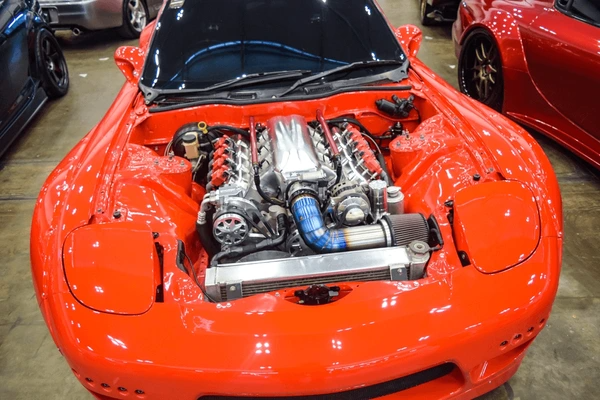
Key Features of the LSX Engine
- Displacement Range
The LSX engine offers displacement options from 5.3L to 7.0L, meeting a variety of performance needs. - Durable Aluminum Block
Its deep-skirt aluminum block enhances rigidity and durability, making it suitable for high-stress applications. - High-Flow Cylinder Heads
Rectangular-port cylinder heads with optimized intake and exhaust ports improve airflow for better performance. - Reinforced Internal Components
A forged steel crankshaft, powdered metal connecting rods, and hypereutectic pistons with anodized ring grooves ensure strength and reliability under extreme conditions. - Performance-Oriented Camshaft
High-lift camshaft profiles and roller rocker arms enable efficient high-rpm operation and compatibility with forced induction systems.
Performance Potential and Modifications
- Aftermarket Cylinder Heads and Camshafts
Upgrading cylinder heads and camshafts increases airflow and enhances engine output. - Forced Induction Systems
Adding superchargers or turbochargers significantly boosts power, taking performance to the next level. - High-Flow Intake and Exhaust Systems
Improved intake and exhaust systems enhance engine efficiency and power delivery. - Upgraded Fuel System Components
Enhancing injectors, pumps, and regulators supports the higher fuel demands of modified engines. - Engine Tuning and Calibration
Fine-tuning the engine management system optimizes performance and ensures compatibility with modifications.
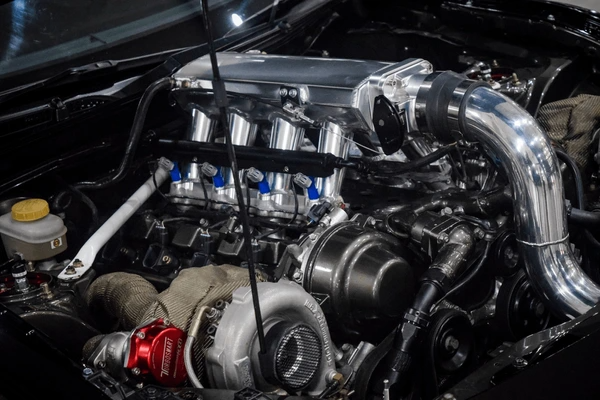
Comparison: LSX Engine vs LS1, LS3, and Other Models
Performance Comparison
- The LSX engine stands out as a high-performance variant of the LS family, tailored for hot rods, muscle cars, and demanding applications. Compared to the LS1 and LS3, the LSX offers several key advantages:
- Increased Displacement
The LSX boasts a displacement range of 6.0L to 7.0L, surpassing the 5.7L LS1 and 6.2L LS3. This larger displacement delivers higher torque and greater power potential. - Higher Compression Ratio
With a compression ratio between 10.7:1 and 11.5:1, the LSX achieves more efficient combustion than the LS1 (10.1:1) and LS3 (10.7:1). This results in improved power output and engine performance. - Enhanced Airflow
The LSX features larger intake and exhaust valves, high-flow cylinder heads, and optimized manifolds. These enhancements improve airflow and maximize power potential compared to its LS counterparts.
Specifications and Applications
The LS1 and LS3 were primarily designed for production vehicles, while the LSX is purpose-built for high-performance needs:
- LS1 (5.7L)
Introduced in 1997, the LS1 powered vehicles like the Chevrolet Corvette C5 and Pontiac Firebird. It delivered approximately 345 hp and 350 lb-ft of torque, making it a benchmark for its era. - LS3 (6.2L)
Debuting in 2008, the LS3 found its place in models like the Corvette C6 and Camaro SS. It offered around 430 hp and 424 lb-ft of torque, combining reliability with impressive performance. - LSX (6.0L–7.0L)
Built for performance enthusiasts, the LSX excels in drag racing, hot rods, and custom builds. It offers flexible displacement options and power outputs, with some builds exceeding 700 hp, making it a favorite for aftermarket modifications.
Customizing an LSX Engine for Maximum Power
Engine Modifications for Enhanced Performance
- Cylinder Head Porting: Porting cylinder heads improves airflow and efficiency by reshaping and smoothing intake and exhaust ports. This modification allows more air and fuel to enter the combustion chambers, increasing power output.
- Camshaft Upgrades: Installing a high-performance camshaft with increased lift and duration enhances the engine’s breathing capacity. This upgrade results in higher horsepower and improved performance across the RPM range.
- Forced Induction: Adding a supercharger or turbocharger dramatically boosts air density entering the engine. This increase enables more fuel to burn efficiently, delivering significant power gains.
Fuel System Upgrades
- High-Flow Fuel Injectors: Upgrading to larger fuel injectors ensures adequate fuel delivery to match increased airflow from engine modifications, preventing lean conditions.
- Fuel Pump Upgrade: Installing a high-capacity fuel pump maintains consistent fuel pressure and volume, critical for high-demand situations.
Ignition System Enhancements
- High-Performance Ignition System: Upgrading ignition coils and spark plugs ensures a strong, reliable spark for complete combustion, particularly at higher RPMs.
- Engine Management System: Using an aftermarket engine management system or tuning the factory ECU optimizes fuel and ignition timing maps. This ensures the engine operates efficiently with the new modifications.
Exhaust System Upgrades
- High-Flow Headers: Replacing factory manifolds with high-flow headers reduces backpressure, improving exhaust scavenging and allowing the engine to exhale more efficiently.
- Performance Exhaust System: Installing a free-flowing exhaust system with mandrel-bent tubing and high-flow mufflers further reduces backpressure and enhances exhaust flow.
Supporting Modifications
- Engine Cooling System Upgrades: Upgrading the cooling system with a high-capacity radiator, electric fans, and an improved water pump ensures optimal cooling under increased power and thermal loads.
- Lubrication System Upgrades: Using high-performance synthetic oils and an upgraded oil pump enhances lubrication and reduces friction, protecting the engine during high RPM operation.
Real-World Applications of LSX Engines
Automotive Applications
LSX engines dominate high-performance automotive applications due to their robust design and exceptional power potential. They are especially popular in the aftermarket and racing sectors, powering:
- Muscle cars and hot rods for enhanced performance and reliability
- Drag racing vehicles requiring immense horsepower for competitive edge
- Road racing cars where speed and agility are crucial
- Off-road and desert racing vehicles that demand durability and torque
Marine Applications
The power density and durability of LSX engines also make them a top choice for marine applications. These engines excel in:
- High-performance boats designed for speed and agility
- Offshore racing boats competing in extreme conditions
- Recreational marine vehicles, including personal watercraft, for superior performance on the water
Industrial and Stationary Power Applications
Beyond vehicles, LSX engines adapt seamlessly to industrial and stationary power uses. Their reliability and output capabilities are ideal for:
- Generators and backup power systems ensuring consistent energy supply
- Pumping and compressor systems handling demanding industrial tasks
- Industrial machinery and equipment where high power is essential
| Product/Project | Technical Outcomes | Application Scenarios |
|---|---|---|
| LSX Crate Engines | High power density, lightweight design, and enhanced durability for performance applications. | Drag racing, road racing, and high-performance street vehicles. |
| LS9 Engine | Supercharged 6.2L V8 engine with 638 hp and 604 lb-ft of torque, designed for the Corvette ZR1. | High-performance sports cars and supercars. |
To get detailed scientific explanations of the LSX engine, try Patsnap Eureka.
