


What Is an LS7 Engine?
The LS7 is a 7.0-liter (427 cubic inches) high-performance V8 engine developed by General Motors. Introduced in 2006, it became iconic in models like the Chevrolet Corvette C6 Z06 and Camaro Z/28. As part of GM’s Gen IV small-block engine family, the LS7 incorporates advanced engineering to deliver exceptional power, precision, and performance, making it a favorite among automotive enthusiasts.

Key Specifications and Features of the LS7 Engine
- Displacement: 7.0 liters (427 cubic inches)
- Bore and Stroke: 4.125 x 4.000 inches (104.8 x 101.6 mm)
- Compression Ratio: 11.0:1
- Valvetrain: Overhead valve with two valves per cylinder
- Fuel System: Sequential fuel injection for precise fuel delivery
- Redline: 7,000 RPM for high-revving performance
- Lubrication System: Advanced dry sump system for enhanced oil control
Performance Highlights
The LS7 was built for speed and power, delivering exceptional performance in high-end vehicles like the Corvette Z06. In this model, the engine achieves:
- Maximum Power: 505 horsepower (377 kW) at 6,300 RPM
- Maximum Torque: 470 lb-ft (637 Nm) at 4,800 RPM
Engineering Excellence
These impressive numbers are the result of cutting-edge engineering, including:
- Lightweight Components: Titanium intake valves and sodium-filled exhaust valves reduce weight and improve response.
- High-Flow Heads: Large cylinder heads with straight intake ports optimize airflow for greater efficiency.
- Dry Sump Lubrication: This system maintains oil control, even during aggressive driving at high speeds.
- Composite Intake Manifold: Designed for optimal airflow, boosting engine power and efficiency.
Applications of the LS7 Engine in Vehicles
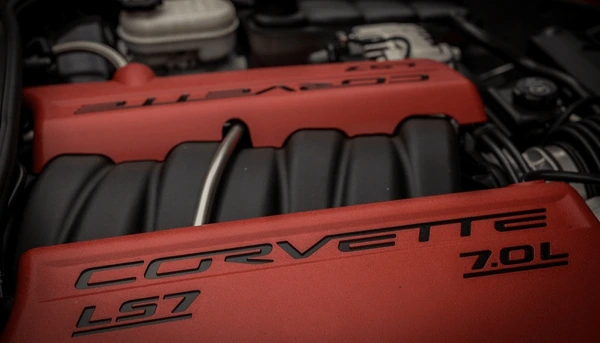
Chevrolet Corvette
The LS7 engine debuted in the 2006 Chevrolet Corvette Z06, showcasing its 7.0-liter displacement and 505 horsepower output. Paired with 470 lb-ft of torque, this engine transformed the Corvette Z06 into one of the fastest production cars of its era. With a top speed exceeding 190 mph, it set a benchmark for high-performance sports cars.
Cadillac Performance Models
High-performance Cadillac models like the CTS-V and XLR-V also utilized the LS7 engine. These vehicles combined the engine’s power with Cadillac’s luxury, offering exceptional acceleration and refined driving dynamics. This blend of performance and comfort appealed to drivers seeking an elevated driving experience.
Aftermarket and Tuning Applications
The LS7 engine’s robust construction and tunable nature have made it a favorite in the aftermarket community. Enthusiasts and performance shops use the LS7 as a foundation for building high-power engines. These modified engines are popular in drag racing, road racing, and custom performance builds, demonstrating the LS7’s versatility and reliability.
Off-Road and Specialty Vehicles
The LS7 engine’s compact design and high power output make it a popular choice for off-road and specialty vehicles. It has been fitted into rock crawlers, sand rails, and other off-road vehicles, where its torque and performance enhance handling in rugged terrains. This adaptability makes the LS7 a sought-after option for challenging applications.
Application Cases
| Product/Project | Technical Outcomes | Application Scenarios |
|---|---|---|
| Scorpio Mahindra & Mahindra Ltd. | The engine control system enables multi-mode operation, optimizing fuel injection and engine performance for efficient fuel use and productivity in varying terrain and load conditions. | Off-road vehicles operating in challenging terrain and load conditions. |
| TGX MAN Truck & Bus SE | The self-igniting internal combustion engine with ether fumigation of the combustion air reduces nitrogen oxide and carbon black emissions by converting alkanol fuels into ethers within the engine, eliminating the need for additional ignition aids and maintaining conventional systems, achieving efficient and cost-effective emission reduction. | Heavy-duty trucks and buses requiring efficient emission reduction systems. |
LS7 Engine vs Other LS Engine Models
LS7: Power and Performance
The LS7 outshines other LS engines like the LS3 and LS2 with its superior power output and advanced cylinder head design. Its lightweight components contribute to exceptional performance, making it ideal for high-performance applications. However, this comes with trade-offs, such as increased complexity, higher production costs, and slightly reduced fuel efficiency.
LS3: A Balance of Power and Efficiency
The LS3 strikes a balance between performance and efficiency, delivering strong power output while remaining fuel-efficient. Its versatility makes it a popular choice for performance-oriented vehicles, appealing to those who value both power and practicality.
LS2: Affordable and Reliable
The LS2 focuses on affordability and durability, offering a cost-effective option for those seeking reliability over peak performance. While it sacrifices some power compared to the LS7 and LS3, it remains a dependable choice for various applications, blending value with robust engineering.
To get detailed scientific explanations of the LS7 Engine, try Patsnap Eureka.
