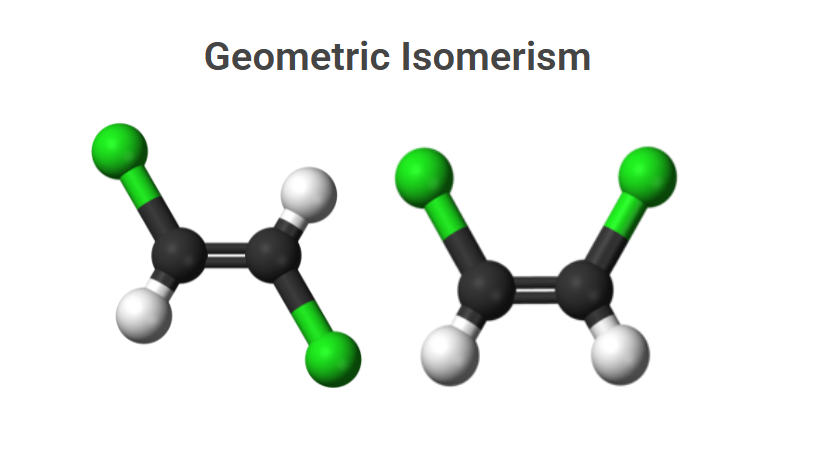
Geometric isomers are molecules with the same formula but different spatial arrangements due to restricted rotation around a bond, typically a double bond or ring structure. These differences significantly affect the chemical and physical properties of substances.
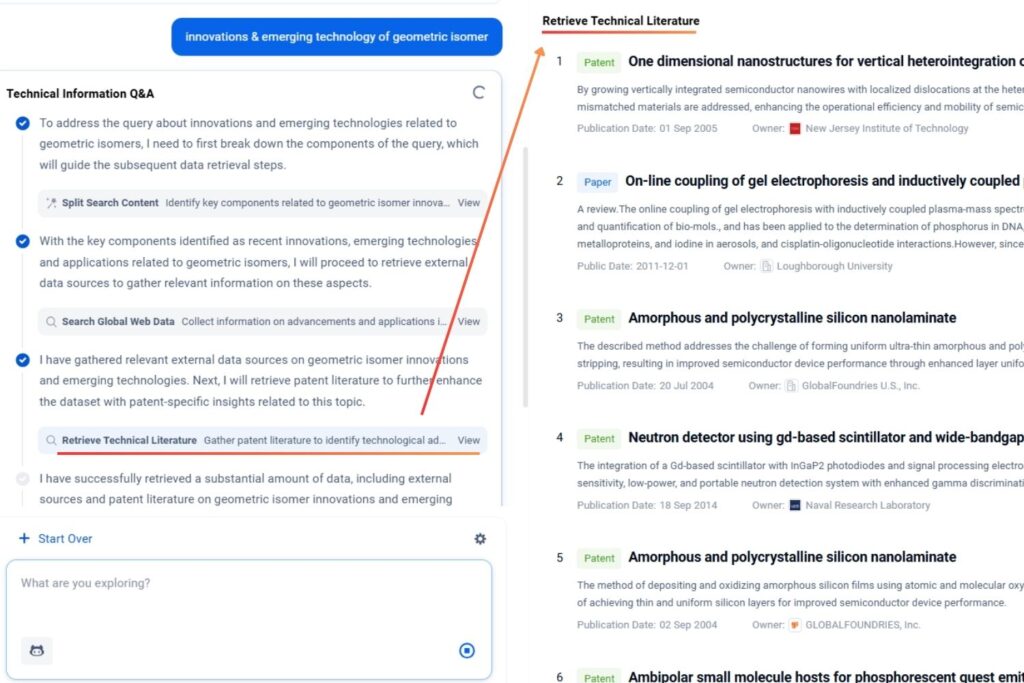
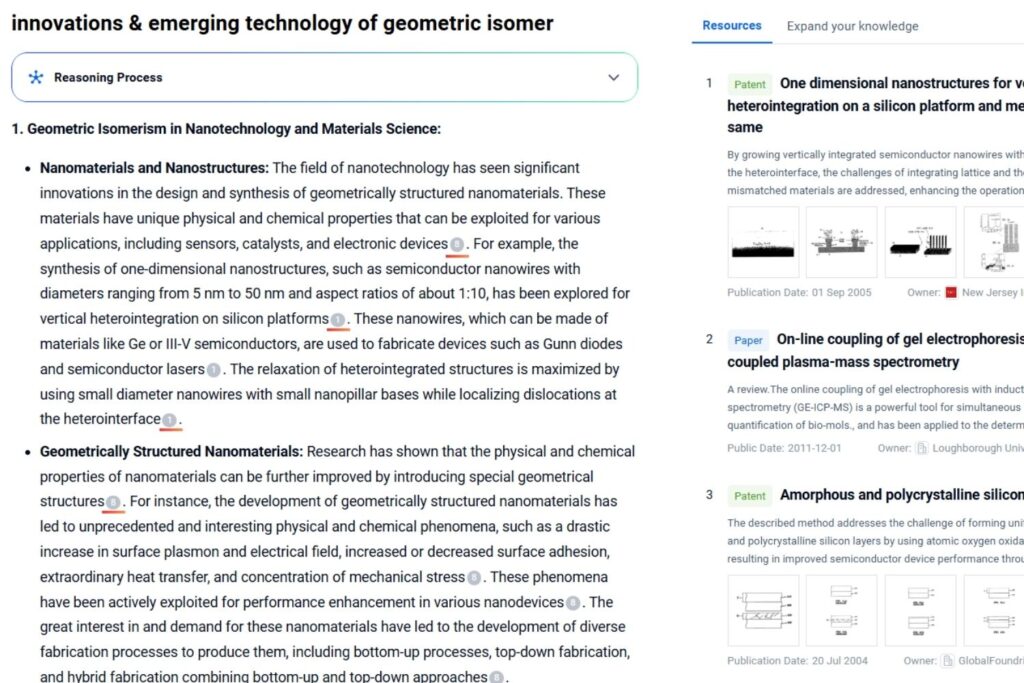
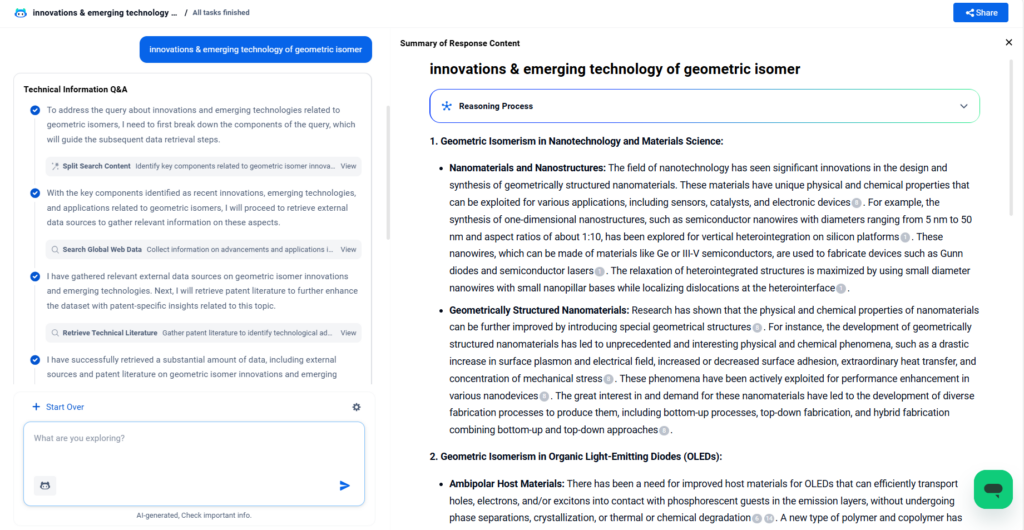
This blog aims to explore the fundamentals of geometric isomers, their performance characteristics, applications across various industries, and recent technological advancements. Additionally, discover how PatSnap Eureka AI Agent supports researchers in uncovering competitive insights and accelerating innovation in this field.
Ask Patsnap Eureka AI
Patsnap Eureka AI provides instant, trusted answers to any technical questions.
Geometric isomers, also known as cis-trans isomers, occur when two groups attached to a double bond or ring structure occupy different spatial orientations. The two main types are:
Cis-isomers: Groups are on the same side.
Trans-isomers: Groups are on opposite sides.
This arrangement leads to variations in molecular polarity, melting points, boiling points, and biological activity.
Composition & Properties / Performance
Chemical & Structural Data
Molecular formula varies by compound but shares the same atomic composition for isomers.
Common in alkenes, cycloalkanes, and some coordination complexes.
CAS numbers depend on the specific compound, e.g., cis-2-butene (590-18-1), trans-2-butene (624-64-6).
Physical & Chemical Properties
Melting and boiling points: Trans-isomers generally have higher melting points due to better packing.
Polarity: Cis-isomers are usually more polar, affecting solubility and reactivity.
Stability: Trans-isomers often exhibit greater thermodynamic stability.
Biological activity: Cis-trans differences impact drug binding and efficacy.
Functional Characteristics
Influence on molecular interactions such as hydrogen bonding and Van der Waals forces.
Affect chemical reactivity and degradation pathways.
Material Grades & Designations
While geometric isomers are molecular phenomena rather than industrial grades, standard nomenclature and identification protocols exist in chemical registries and pharmacopeias.
Application Landscape
Key Industries
Pharmaceuticals: Different isomers can have drastically different therapeutic effects or toxicity profiles.
Agriculture: Pesticides and herbicides often rely on specific isomers for effectiveness.
Plastics & Polymers: Polymer properties can vary based on isomeric composition of monomers.
Food Industry: Flavor compounds often exist as geometric isomers with distinct tastes and aromas.
Cosmetics: Stability and efficacy of ingredients can depend on isomeric forms.
Real-World Examples
Drug formulations: Thalidomide’s tragic history underscored the importance of isomer-specific effects.
Olefin polymerization: Controlling cis-trans ratios influences polymer elasticity and strength.
Application Trends
Enhanced separation and analysis techniques for isomer purity.
Innovation in isomer-specific synthesis and catalysis.
Geometric Isomers vs Other Isomers
Feature
Geometric Isomers
Structural Isomers
Optical Isomers
Spatial Difference
Restricted rotation around bond
Different connectivity
Non-superimposable mirror images
Polarity Impact
Significant
Varies
Usually chiral centers only
Applications
Pharmaceuticals, polymers
Broad chemical applications
Drug activity, chirality
Advantages of Geometric Isomers
Tailored Chemical Properties: Geometric isomers allow chemists to design molecules with specific physical and chemical characteristics. For example, the difference in polarity between cis and trans isomers can be exploited to improve solubility or reactivity in targeted environments.
Enhanced Biological Activity: Many biological molecules interact differently with the cis and trans forms of a compound. This selectivity enables the development of drugs with higher efficacy and fewer side effects by using the more active isomer.
Improved Material Performance: In polymer chemistry, controlling the ratio of geometric isomers can significantly influence the flexibility, strength, and melting points of polymers. For example, a higher cis-content in rubber leads to greater elasticity.
Optimized Pharmacokinetics: The absorption, distribution, metabolism, and excretion (ADME) profiles of cis and trans isomers can vary substantially. This allows pharmaceutical formulations to be optimized for better therapeutic outcomes.
Selective Reactivity: Geometric isomers can undergo different chemical reactions or degradation pathways, providing opportunities for selective synthesis and controlled material degradation.
Environmental and Safety Benefits: Using the appropriate isomer can reduce unwanted side effects in agrochemicals and pharmaceuticals, leading to safer environmental profiles and less chemical waste.
Regulatory Compliance: Understanding and controlling geometric isomers helps meet stringent regulatory requirements, ensuring product safety and quality, especially in pharmaceuticals and food additives.
Innovations & Technology
Recent Advances
Chiral and geometric isomer synthesis: New catalysts enable precise control over isomer formation, improving yield and selectivity.
Advanced separation techniques: Chromatography and spectroscopy innovations allow better isolation and identification of isomers.
Computational modeling: AI and machine learning predict isomer stability, reactivity, and biological activity.
Isomer-specific drug development: Focused research on cis/trans forms for improved safety and efficacy.
Sustainable synthesis: Green chemistry methods reduce waste and energy in isomer production.
🔍 Power Your R&D with PatSnap Eureka AI Agent
Map innovation pathways of geometric isomer
Benchmark leading patent portfolios
Forecast material behavior across conditions
Sustainability & Environmental Impact
Reduced Chemical Waste: Precise synthesis and separation of specific geometric isomers minimize the production of unwanted isomers and byproducts. This leads to lower chemical waste, reducing environmental contamination during manufacturing processes.
Lower Toxicity Profiles: Some geometric isomers may be less toxic or more biodegradable than their counterparts. By selecting or engineering isomers with favorable environmental profiles, industries can reduce the ecological footprint of chemicals used in pharmaceuticals, agriculture, and manufacturing.
Energy-Efficient Production: Advances in catalytic and enzymatic processes now enable the selective formation of desired geometric isomers under milder conditions. These methods consume less energy and reduce greenhouse gas emissions compared to traditional synthesis routes.
Improved Drug Safety and Environmental Persistence: Using the biologically active isomer reduces the overall dosage needed, which decreases the amount of pharmaceutical residues released into water systems, thereby limiting ecological disruption and bioaccumulation.
Sustainable Agrochemical Practices: Geometric isomers with targeted activity allow for lower application rates of pesticides and herbicides. This precision reduces runoff and soil contamination, promoting healthier ecosystems and biodiversity.
Regulatory and Eco-label Compliance: Understanding the environmental behavior of each isomer helps manufacturers meet regulations such as REACH (Registration, Evaluation, Authorization, and Restriction of Chemicals) and RoHS (Restriction of Hazardous Substances). It also supports eco-label certifications, enhancing market acceptance and consumer trust.
Lifecycle Assessment Integration: Incorporating isomer-specific data into lifecycle assessments (LCA) enables a more accurate evaluation of a product’s environmental impact, guiding greener product design and sustainable innovation strategies.
Conclusion
Geometric isomers play a vital role across chemistry, materials science, and pharmaceuticals. Their unique spatial configurations influence key properties and performance in diverse applications. Advances in synthesis, separation, and computational tools are unlocking new possibilities for leveraging these isomers. With platforms like PatSnap Eureka AI Agent, researchers can accelerate innovation and maintain a competitive edge in this dynamic field.
FAQs
What causes geometric isomerism?
Restricted rotation around double bonds or ring structures leads to cis and trans configurations.
Why do cis and trans isomers have different properties?
Their spatial arrangement affects polarity, stability, and molecular interactions.
How are geometric isomers separated?
Techniques include chromatography, crystallization, and spectroscopy.
Are all drugs sensitive to geometric isomerism?
Not all, but many drugs show significant differences in activity or toxicity between isomers.
Want to explore more about Geometric isomers? 👉Unlock deep technical insights with PatSnap Eureka AI Agent to forecast performance, compare grades, and benchmark global leaders—faster and smarter.