Hypochlorous acid (HOCl) has emerged as a game-changing disinfectant and oxidizing agent due to its exceptional antimicrobial efficacy and biocompatibility. Naturally produced by the human immune system, HOCl is now synthesized industrially and leveraged across sectors ranging from healthcare and food safety to wastewater treatment and electronics. With increasing demand for non-toxic, environmentally friendly solutions, HOCl stands out for its versatility, fast action, and safety profile.
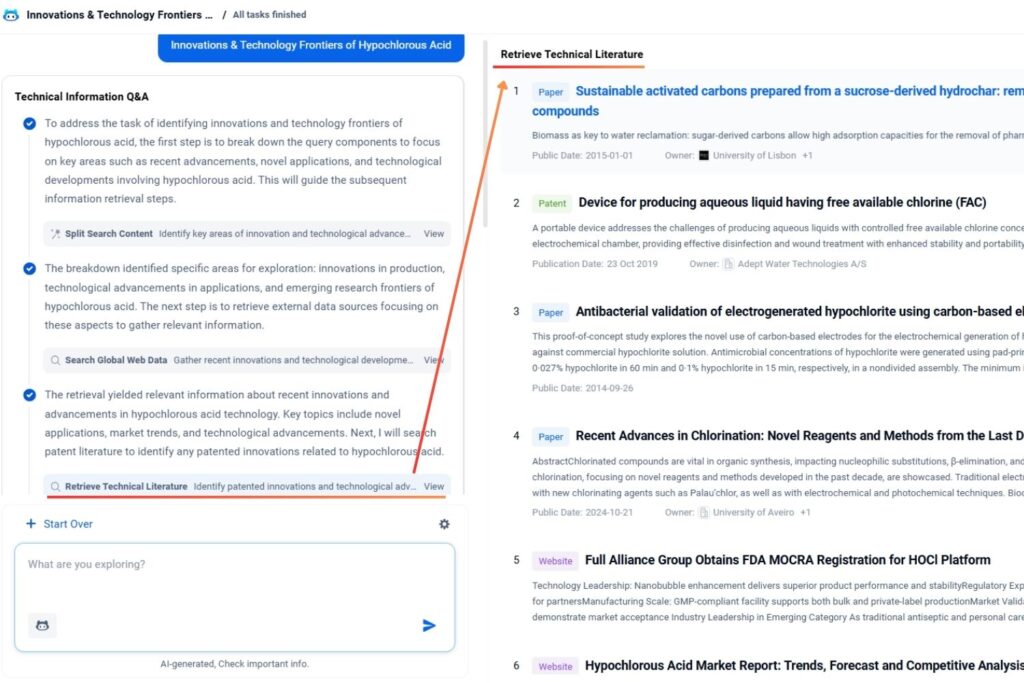
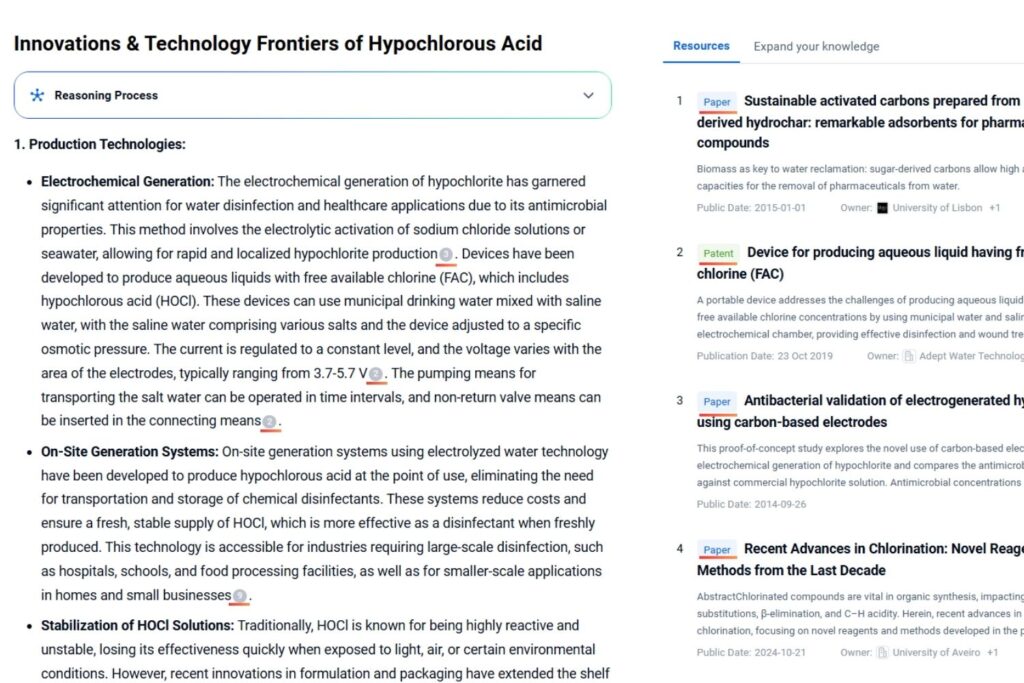
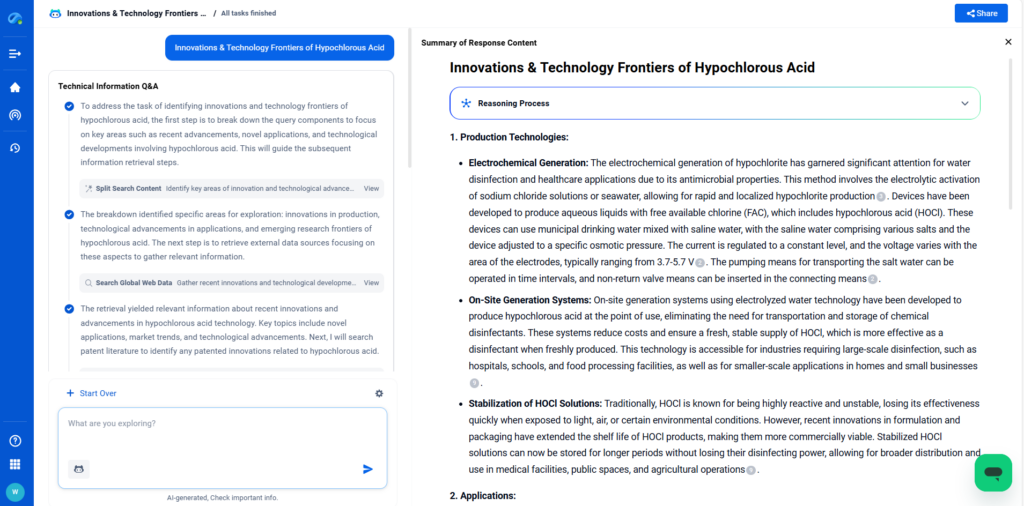
This article explores its molecular structure, commercially available grades, key performance attributes, and cross-sector innovations transforming how HOCl is deployed through PatSnap Eureka AI Agent.
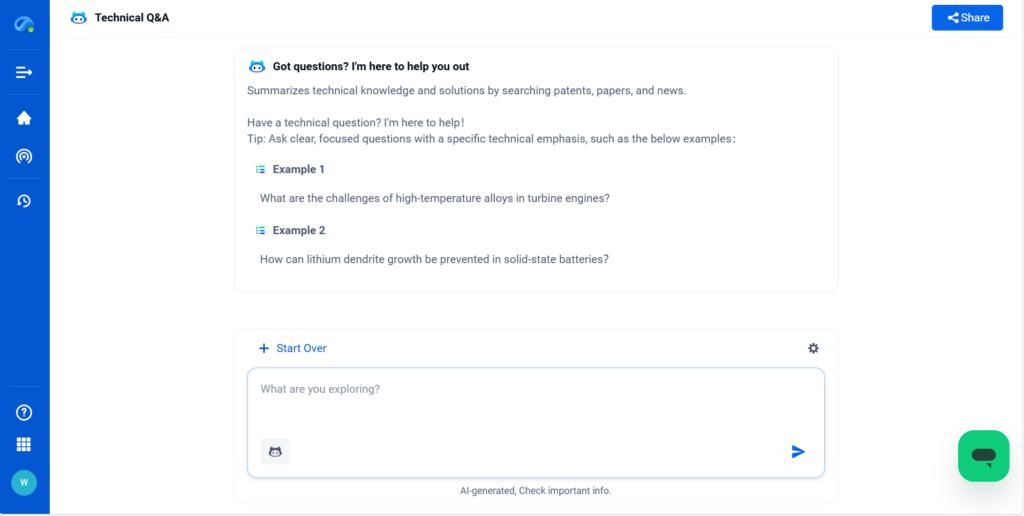
Ask Patsnap Eureka AI
Patsnap Eureka AI provides instant, trusted answers to any technical questions.
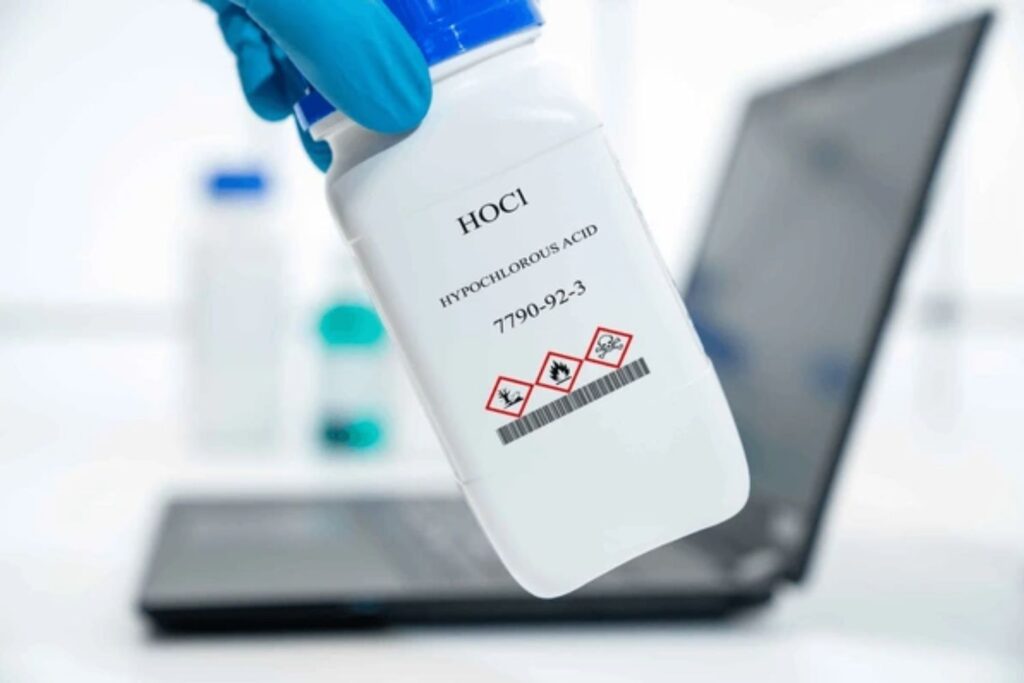
Hypochlorous acid (chemical formula: HOCl) is a weak acid formed when chlorine dissolves in water and partially dissociates. It is a powerful, yet non-corrosive, oxidizing agent that disrupts cell walls of pathogens by denaturing proteins and DNA. Unlike chlorine bleach (NaOCl), HOCl is significantly safer for skin, mucous membranes, and delicate surfaces.
In healthcare and semiconductor environments where sterility and material compatibility are critical, HOCl’s selective oxidative action and pH-neutral formulations provide a superior alternative to conventional disinfectants. Furthermore, as industries shift toward low-VOC, biodegradable chemistries, HOCl’s low toxicity and on-site generation capabilities make it a cornerstone of sustainable chemical systems.
Material Composition and Grade Data
Hypochlorous acid is typically produced by electrolysis of salt water (NaCl + H₂O) using specialized electrochemical cells. Commercial formulations vary in concentration, pH control, and stabilizers.
Common HOCl Grades & Suppliers:
Supplier
Product Name
HOCl Concentration
pH Range
Application Focus
Briotech
Pure HOCl
200 ppm
5.0–7.0
Wound care, medical disinfection
EcoloxTech
HOCl Solution
500 ppm
6.0–6.5
Surface disinfection, food safety
GenEon Technologies
InstaFlow
Up to 1000 ppm
5.5–6.5
Industrial-scale disinfection
SC Labs
SC HOCl
300 ppm
5.5–7.0
Veterinary and dental
Stability is a key factor; unbuffered HOCl degrades quickly in light or high temperatures. Some grades use proprietary buffering systems (e.g., citrate or phosphate blends) to extend shelf life to >12 months.
Key Properties That Define Hypochlorous Acid
Hypochlorous acid’s performance is rooted in its unique physicochemical profile:
Redox Potential: +1.48V (highly effective for microbial inactivation)
Broad-spectrum Antimicrobial Action: Effective against viruses, bacteria, spores, and fungi
Low Surface Tension: Enhances wettability and penetration into crevices
Non-cytotoxic at Functional Doses: Safe for wound irrigation and inhalation therapy
Biodegradability: Breaks down into saline and water with no persistent residues
These features make HOCl suitable for environments requiring simultaneous disinfection, material safety, and environmental compliance.
Core Applications Across Industries
Hypochlorous acid’s exceptional antimicrobial efficacy and low toxicity have positioned it as a vital material in a broad array of sectors. From clinical sterilization to cleanroom hygiene, it adapts across use cases that require both microbial control and surface compatibility. Below, we examine how HOCl is being adopted in several high-impact industries.
Healthcare and Clinical Disinfection
In the healthcare industry, hypochlorous acid for wound care and surgical site preparation is gaining rapid traction. Its biocompatibility allows it to be used directly on mucous membranes, burns, and open wounds without triggering inflammation or cytotoxic effects. Formulations in the range of 100–200 ppm are typically used in outpatient clinics and surgical centers.
For instance, Briotech HOCl has been widely adopted in dermatology and ophthalmic procedures where conventional antiseptics like povidone-iodine or alcohols may damage tissue or delay healing. Its rapid kill time and neutral pH make it ideal for high-frequency application in sensitive areas.
Food Processing and Safety Compliance
In food safety applications, hypochlorous acid disinfectants for food-contact surfaces are now preferred over traditional chlorine-based sanitizers. HOCl is approved by both the USDA and FDA for use on raw produce, poultry, meat, and food processing equipment, where it eliminates pathogens such as E. coli, Salmonella, and Listeria without altering taste or requiring rinsing.
Companies like EcoloxTech offer HOCl-based fogging systems for sanitizing food production lines, packaging areas, and cold storage. Because HOCl does not leave behind harmful residues, it helps facilities meet zero-tolerance microbial compliance without interrupting processing cycles.
Semiconductor and Cleanroom Environments
In the electronics sector, particularly semiconductor manufacturing and static-sensitive cleanroom environments, hypochlorous acid is used as a non-residual antimicrobial agent that doesn’t interfere with sensitive materials. Traditional alcohol- or peroxide-based cleaners can cause corrosion or ESD (electrostatic discharge) issues—challenges avoided by stabilized HOCl.
For example, ISO Class 5 cleanrooms deploy HOCl misting systems to maintain microbial load thresholds on equipment, gloves, and packaging materials. Its non-corrosive disinfection properties make it compatible with clean-in-place (CIP) protocols for high-purity components.
Municipal Water and Wastewater Treatment
In wastewater odor control and biofilm management, hypochlorous acid serves as a highly effective oxidative biocide. It is dosed into influent streams or used in misting chambers to oxidize hydrogen sulfide (H₂S) and neutralize anaerobic bacteria responsible for odor and pipe corrosion.
Unlike chlorine gas or sodium hypochlorite, HOCl provides effective microbial suppression at lower concentrations, which reduces chemical handling risks and byproduct formation. Japanese wastewater facilities have implemented HOCl systems to minimize volatile organic compound (VOC) release near urban residential zones.
Veterinary and Agricultural Hygiene
For livestock biosecurity and veterinary-grade pathogen control, hypochlorous acid is a safe yet potent solution. It is applied via aerial spraying, hoof baths, or surface misters in animal husbandry operations to reduce disease transmission without stressing animals.
In poultry farms, HOCl is used during feed processing and hatching to reduce microbial contamination. SC HOCl veterinary solutions have been integrated into farm sanitation protocols due to their ability to inactivate Avian Influenza, Newcastle Disease, and Clostridium perfringens with minimal ecological footprint.
Public Transportation and Indoor Air Safety
As part of post-pandemic hygiene measures, hypochlorous acid for public surface sanitation and HVAC disinfection has gained popularity. Its vaporized form is distributed through fogging systems in high-traffic areas like airport lounges, train cars, and office lobbies.
Companies like GenEon Technologies provide high-capacity HOCl generators that support transit agencies in reducing pathogen spread while complying with OSHA and EPA disinfection standards. Because HOCl is safe for skin contact and does not damage upholstery or electronics, it is ideal for continuous-use air and surface disinfection in enclosed public spaces.
How Hypochlorous Acid Compares to Similar Disinfectants
Parameter
Hypochlorous Acid
Sodium Hypochlorite
Hydrogen Peroxide
Alcohol-Based Solutions
Antimicrobial Range
Broad
Broad
Narrow
Broad
Corrosiveness
Low
Moderate–High
Low–Moderate
Moderate (especially on plastics)
Residuals
None
Chlorine residues
Oxygen byproducts
Volatile residues
Toxicity
Very low
Moderate
Low
High (especially inhalation)
Surface Compatibility
High
Poor (metals, rubbers)
Moderate
Variable
As a result, HOCl occupies a sweet spot for non-toxic, high-efficacy, surface-compatible disinfection.
Innovations & Technology Frontiers
The field of HOCl is rapidly advancing with innovations focused on generation methods, stability enhancement, and integration into high-tech systems:
On-Demand Electrolyzers: Compact, on-site HOCl generators using titanium-coated anodes for hospital and lab use
Smart Dispersion Systems: HOCl-integrated humidifiers, misters, and robots in smart factories and autonomous cleaning systems
Stabilized HOCl Nanogels: For targeted drug delivery and wound dressings in regenerative medicine
Biofilm-Sensing HOCl Delivery: Devices that release HOCl in response to biofilm growth on implants or catheters
Green Synthesis Pathways: Using solar-powered electrolysis and seawater to reduce production energy footprint
🔍 Power Your R&D with PatSnap Eureka AI Agent
Map innovation pathways of HOCl
Benchmark leading patent portfolios
Forecast material behavior across conditions
Track supplier trends and co-monomer pricing shifts in real time
PatSnap Eureka AI Agent Insights
Industry Challenges and Future Outlook
While HOCl offers multiple advantages, adoption is tempered by technical and regulatory hurdles:
Current Challenges:
Instability: Sensitive to UV, heat, and metal contamination, requiring buffered storage
Labeling Compliance: In some regions, HOCl faces regulatory classification issues (e.g., as a biocide or medical device)
Future Outlook:
Expect standardized ISO classifications for HOCl formulations across medical and industrial sectors
Growth in decentralized disinfection systems in disaster response and healthcare-on-the-go applications
Integration with AI-driven environmental monitoring to control HOCl dispensing based on airborne microbial load or contamination risk
Conclusion
Hypochlorous acid is redefining how industries approach disinfection—offering a rare balance of efficacy, safety, and sustainability. Whether enabling surgical sterility, protecting food systems, or maintaining ultra-clean electronics manufacturing environments, HOCl’s performance continues to outpace traditional oxidants. As stabilization and application technologies mature, HOCl is poised to become the gold standard for next-generation disinfection and oxidative chemistry.
FAQs
Q1: Is hypochlorous acid safe for skin contact?
A: Yes. Medical-grade HOCl is non-irritating and commonly used in wound care and ophthalmic rinses.
Q2: What is the shelf life of hypochlorous acid?
A: Typically 6–12 months for buffered, stabilized formulations stored in opaque containers.
Q3: Can HOCl replace bleach in all disinfection applications?
A: In many cases, yes—especially where safety and surface compatibility are priorities. However, bleach may still be preferred for heavy biofouling.
Q4: How is HOCl generated industrially?
A: Through electrolysis of a saline solution in a divided cell, producing HOCl at the anode and NaOH at the cathode.
Q5: What are the common concentrations used in commercial HOCl products?
A: 100–500 ppm for healthcare and 500–1000 ppm for industrial or food-contact surface use.
Want to explore stabilized HOCl patents, supplier innovations, or next-gen disinfection materials? 👉 Use PatSnap Eureka AI Agent to analyze global patent filings, regulatory pathways, and competitive intelligence—faster, smarter, and cleaner.