Introduction – What is Schumann Resonance and Why Does It Matter?
Schumann Resonance refers to a set of natural electromagnetic waves that occur in the space between the Earth’s surface and the ionosphere. These resonant frequencies—typically around 7.83 Hz—are generated by lightning activity and are influenced by atmospheric and ionospheric conditions. Often described as the Earth’s “heartbeat,” Schumann Resonance plays a vital role in geophysics, climate science, human biology, and even planetary monitoring. As scientific tools and research methods evolve, this natural phenomenon offers new possibilities for environmental, atmospheric, and interdisciplinary insights.

How Schumann Resonance Works – A Planet-Sized Tuning Fork
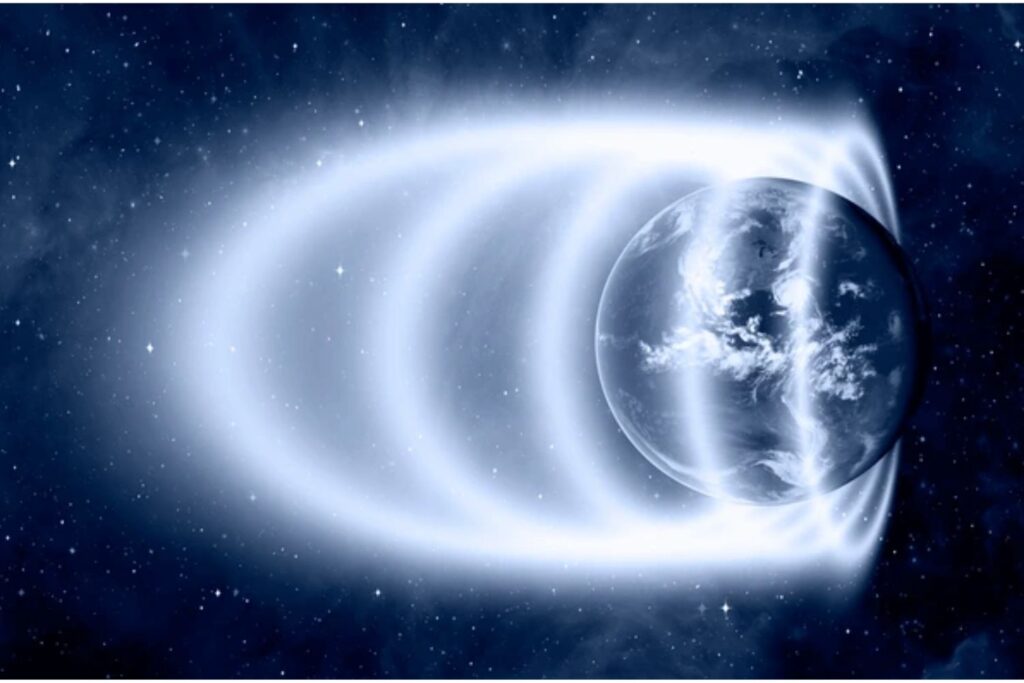
The Earth’s surface and the ionosphere form a resonant cavity. When lightning discharges release electromagnetic energy into this space, they trigger standing wave patterns. These low-frequency waves oscillate at very specific frequencies—7.83 Hz, 14.3 Hz, 20.8 Hz, and so on—based on the size and conductivity of the Earth-ionosphere cavity. These resonances are global in nature and can be measured at virtually any point on Earth using sensitive magnetometers.
Key Applications by Domain
To better understand the wide-ranging significance of Schumann Resonance, we’ve organized its major areas of application and research into five thematic domains. This structure highlights how this subtle yet powerful natural signal informs modern science and technology.
🔹 Atmospheric Science & Climate Research
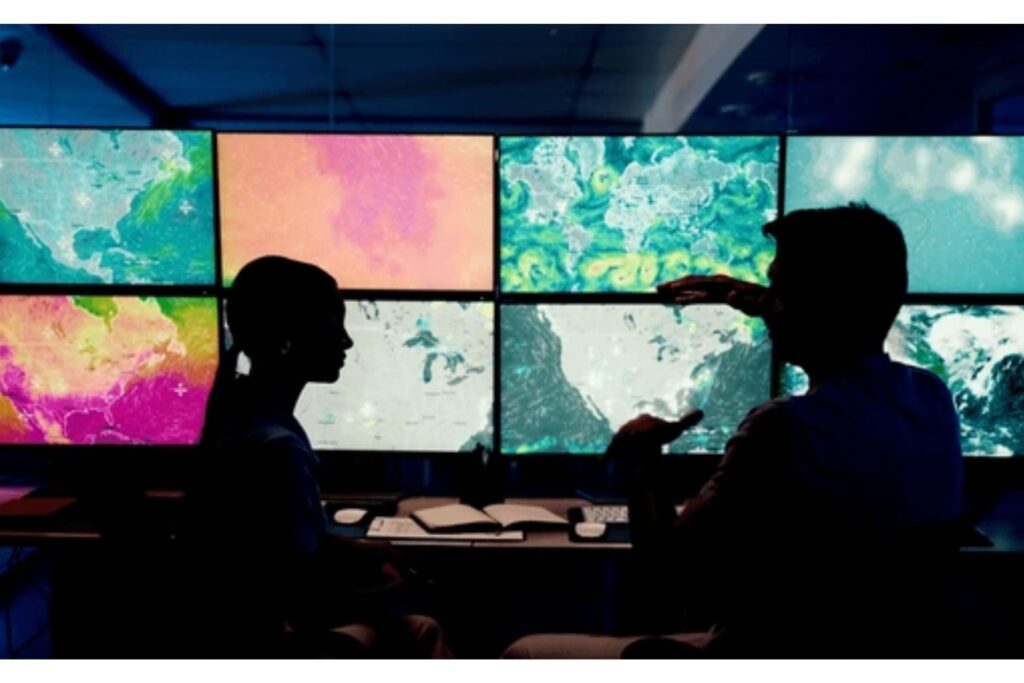
Schumann Resonance is a valuable tool for studying large-scale weather patterns and atmospheric dynamics. Because its frequencies are shaped by global lightning activity and ionospheric conditions, researchers use them as proxies for storm tracking, climate variability, and environmental monitoring.
As climate challenges grow more urgent, scientists are increasingly turning to Earth’s natural electromagnetic signals to gain deeper insights into atmospheric behavior. The following key questions highlight emerging directions in applying Schumann Resonance to climate and weather science:
- Unveiling Schumann Resonance Effects on Climate Patterns
- Exploring Schumann Resonance for Weather Prediction
- Using Schumann Resonance to Study Global Climate Change
- Schumann Resonance’s Role in Climatic Anomalies
- How to Refine Weather Forecasts With Schumann Resonance?
🔹 Geophysics & Earth Observation

As a natural geophysical phenomenon, Schumann Resonance helps scientists probe changes in Earth’s magnetic environment. It’s used in real-time environmental sensing, geophysical modelling, and cross-disciplinary Earth system monitoring.
Given its unique ability to reflect Earth’s electromagnetic state, Schumann Resonance has become an indispensable tool across geophysical and atmospheric sciences. The following topics explore the multifaceted applications and physical principles behind this phenomenon:
- Investigating Schumann Resonance in Earth Sciences
- Schumann Resonance and Its Role in Atmospheric Science
- Schumann Resonance Monitoring: Techniques and Tools
- Schumann Resonance: A Closer Look at its Physics
- Schumann Resonance’s Role in Earth’s Electromagnetic Field
🔹 Human Health & Bioelectromagnetics
Some studies suggest that Schumann Resonance frequencies may influence human physiological rhythms, particularly brainwave activity. Although still a subject of ongoing research, the 7.83 Hz fundamental frequency overlaps with alpha brainwave activity.
This intriguing possibility has sparked growing interest in exploring how Schumann Resonance might affect human health, cognition, and biological rhythms. The following questions highlight key areas where research is actively unfolding:
- Schumann Resonance Impact on Human Brainwaves
- Schumann Resonance and its Influence on Human Health
- Schumann Resonance’s Impact on Biological Rhythm Studies
- How to Study Schumann Resonance Effects on Human Well‑Being?
- How Does the Schumann Resonance Affect Humans?
🔹 Technology & Communication Systems

Due to its stable global presence, Schumann Resonance is being studied for use in communications, antenna calibration, and even space weather forecasting. It serves as a reference frequency for extremely low frequency (ELF) systems.
As researchers explore its potential, Schumann Resonance is opening new frontiers in space weather monitoring and communication system design. The following topics outline current and emerging areas of innovation:
- Schumann Resonance Applications in Space Weather Monitoring
- How to Enhance Antenna Design with Schumann Resonance?
- Schumann Resonance Influences on Global Communication Systems
- How to Research Schumann Resonance for Technological Innovations?
- How to Utilize Schumann Resonance for Predictive Analytics?
🔹 Cross-Disciplinary & Educational Research
As interest grows in Earth system science and sustainable research methods, Schumann Resonance offers rich opportunities for interdisciplinary exploration and educational engagement.
Researchers and educators alike are discovering new ways to analyze, monitor, and apply Schumann Resonance data across diverse scientific fields. The following questions highlight practical approaches and strategies for leveraging this phenomenon in research and education:
- How to Analyze Schumann Resonance Data for Research?
- How to Implement Schumann Resonance in Environmental Studies?
- How to Monitor Schumann Resonance in Real-Time?
- How to Integrate Schumann Resonance into Cross-Disciplinary Research?
- How to Analyze Schumann Resonance for Educational Purposes?
Future Outlook – Where Is Schumann Resonance Research Headed?
The future of Schumann Resonance research lies in enhanced sensing technology, machine-learning interpretation of signal fluctuations, and integration with global climate and space weather models. Researchers are also exploring how artificial electromagnetic noise may disrupt or mask these natural signals, raising important questions about environmental resilience in the digital age.
Conclusion – Listening to Earth’s Natural Signal
Schumann Resonance is more than a geophysical curiosity—it’s a global signal that bridges Earth sciences, atmospheric studies, human health, and electromagnetic technologies. As scientific instruments grow more precise and interdisciplinary research becomes the norm, Schumann Resonance provides a foundational frequency through which we can listen, learn, and adapt to the pulse of the planet.
For more scientific information of Schumann Resonance, try PatSnap Eureka AI Agent.