


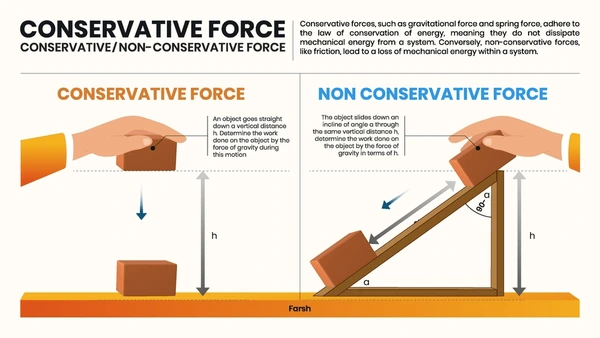
A conservative force is a force where the work done on an object moving between two points depends only on the initial and final positions, not on the path taken. These forces are fundamental in physics, especially in mechanics and energy conservation principles. In this article, we explore the definition, properties, examples, and applications of conservative forces.
What is a Conservative Force?
A force is conservative if the total work it does on an object moving in a closed path (returning to its starting point) is zero. This means that the energy associated with conservative forces is recoverable and can be stored as potential energy.
Mathematical Definition
A force F is conservative if: 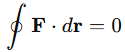
where dr is the displacement and  represents the work done along a closed path.
Alternatively, if a force F has a potential energy function U(x,y,z) such that: 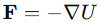
then F is a conservative force.
Properties of Conservative Forces
- Path Independence: The work done depends only on the initial and final positions, not the path taken.
- Energy Conservation: Mechanical energy (kinetic + potential) is conserved in a system where only conservative forces act.
- Existence of Potential Energy: A conservative force can always be expressed as the negative gradient of a potential energy function.
- Zero Work in a Closed Loop: If an object moves in a closed path under a conservative force, the net work done is zero.
Examples of Conservative Forces
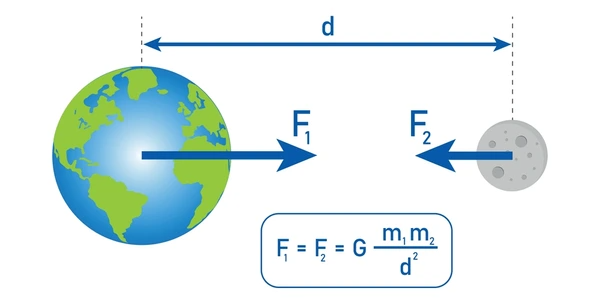
1. Gravitational Force
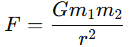
- The gravitational force acts radially and does work that depends only on height (not the path taken).
- Potential energy: U=mgh (near Earth’s surface) or
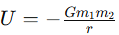 (general case).
2. Electrostatic Force

- The force between two charges follows Coulomb’s law and is conservative.
- Potential energy:

3. Spring Force (Hooke’s Law)

- A restoring force that obeys Hooke’s Law.
- Potential energy:

Want to understand conservative forces better? Eureka Technical Q&A provides expert insights into key examples like gravitational, electrostatic, and elastic forces, helping you grasp their fundamental principles and real-world applications.

Non-Conservative Forces vs. Conservative Forces
| Property | Conservative Force | Non-Conservative Force |
|---|---|---|
| Path Dependence | No (work depends on endpoints) | Yes (work depends on path) |
| Energy Recovery | Fully recoverable | Energy lost (e.g., heat) |
| Work in a Closed Loop | Zero | Non-zero |
| Examples | Gravity, Electrostatics, Springs | Friction, Air Resistance |
Applications of Conservative Forces
- Mechanics: In classical mechanics, conservative forces are crucial for the conservation of mechanical energy. For example, in a system under gravity, the gravitational force is conservative, allowing for the conservation of mechanical energy (kinetic + potential energy) in the absence of non-conservative forces like friction.
- Electromagnetism: Electrostatic forces between charged particles conserve energy, which maintains the total energy in an electrostatic system. This is fundamental in understanding the behavior of charged particles in electric fields.
- Engineering: In engineering applications, conservative forces are used to analyze the behavior of systems under elastic forces, such as in the design of springs and other elastic components.
Application Cases
| Product/Project | Technical Outcomes | Application Scenarios |
|---|---|---|
| Rotor Aerodynamics Simulation Model Delft University of Technology | Incorporates conservative forces in rotor models, improving accuracy for thick actuator discs and blades with cross-sectional dimensions. | Wind turbine design, helicopter rotor analysis, and marine propeller optimization. |
| Advanced Actuator Disc Theory Delft University of Technology | Provides exact solution for Rankine vortex generation considering disc thickness and radial force, enhancing flow prediction accuracy. | Aerospace propulsion systems, wind energy research, and fluid dynamics education. |
FAQs About Conservative Forces
1. Is friction a conservative force?
No, friction is non-conservative because it dissipates energy as heat and depends on the path taken.
2. Why is gravity a conservative force?
Gravity is conservative because work done only depends on height difference, not the path taken.
3. Can a system have both conservative and non-conservative forces?
Yes, many real-world systems involve both. For example, a pendulum experiences gravity (conservative) and air resistance (non-conservative).
4. How do conservative forces relate to potential energy?
Conservative forces have associated potential energy functions. The force is the negative gradient of the potential energy function.
5. What happens when only conservative forces act on a system?
The system’s total mechanical energy remains constant because there is no energy dissipation.
Conclusion
Conservative forces play a crucial role in physics by enabling energy conservation and predictable motion. Unlike non-conservative forces, they allow energy to be fully recovered and stored as potential energy. Understanding conservative forces is essential in mechanics, electromagnetism, and engineering applications.
To get detailed scientific explanations of Conservative Force, try Patsnap Eureka.
