


Energy Recovery Ventilators (ERVs) and Heat Recovery Ventilators (HRVs) are two types of ventilation systems designed to improve indoor air quality while maintaining energy efficiency. Both systems help exchange stale indoor air with fresh outdoor air but differ in how they handle heat and moisture transfer. This article explores their differences, benefits, applications, and how to choose the right system for your needs.
What is an ERV (Energy Recovery Ventilator)?
An Energy Recovery Ventilator (ERV) is a ventilation system that transfers both heat and moisture between incoming and outgoing air streams. It helps maintain balanced humidity levels while reducing energy loss, making it ideal for climates with extreme temperatures.
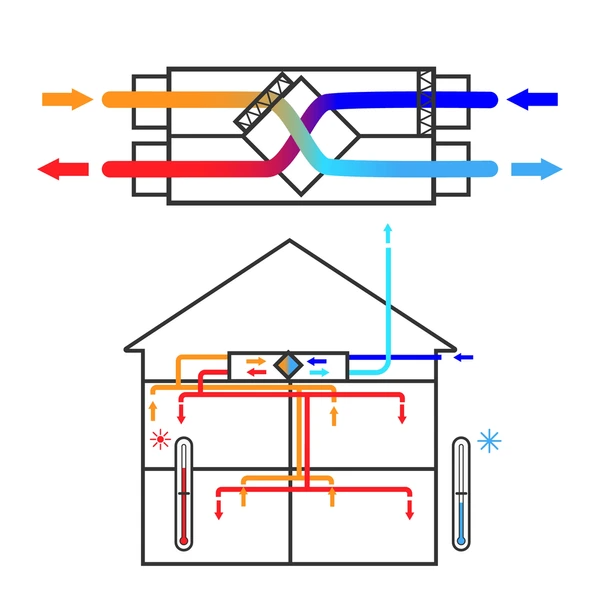
How ERV Works
- During winter, ERVs transfer heat and some moisture from outgoing indoor air to the fresh incoming air, preventing excessive dryness.
- In summer, ERVs remove heat and some humidity from incoming outdoor air, reducing the cooling load on the HVAC system.
Key Benefits of ERV Systems
- Maintains indoor humidity levels by controlling moisture exchange.
- Reduces heating and cooling costs by transferring heat energy.
- Improves air quality by filtering and exchanging fresh air.
- Prevents over-drying in winter and excessive humidity in summer.
What is an HRV (Heat Recovery Ventilator)?
A Heat Recovery Ventilator (HRV) focuses on transferring only heat between indoor and outdoor air while keeping humidity levels separate. HRVs are effective in colder climates where maintaining indoor humidity is not a primary concern.
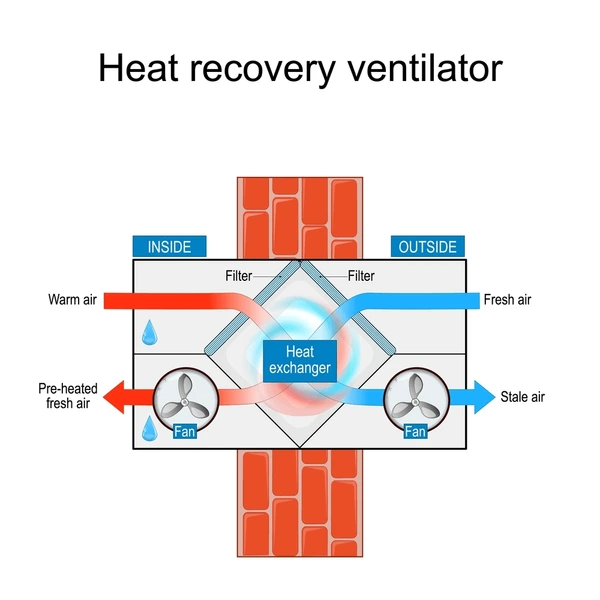
How HRV Works
- In winter, HRVs recover heat from outgoing air and transfer it to the fresh incoming air without adding moisture.
- In summer, HRVs remove heat from incoming air, reducing the cooling demand.
Key Benefits of HRV Systems
- Efficient heat transfer for energy savings in cold climates.
- Prevents excess indoor moisture buildup by keeping humidity levels independent.
- Enhances air quality by continuously exchanging fresh air.
- Reduces heating and cooling costs by retaining indoor air temperature.
ERV vs. HRV: Key Differences
💡 Not sure whether to choose an ERV or HRV? Eureka Technical Q&A provides expert insights into their key differences in ventilation efficiency, humidity control, and energy savings, helping you select the best system for your indoor air quality needs.

1. Functionality
- HRVs: Primarily recover sensible heat from exhaust air, which is used to warm the incoming fresh air during the heating season and cool it during the cooling season. They do not exchange moisture between the air streams.
- ERVs: Recover both sensible heat and latent heat (humidity) from exhaust air. This makes them more efficient in extreme climates, as they can add or remove moisture from the incoming air, thus improving indoor air quality and comfort.
2. Applications
- HRVs: Suitable for colder climates where the primary concern is heat recovery. They are less effective in hot and humid climates as they do not address moisture issues.
- ERVs: Ideal for a wide range of climates, including hot and humid regions. They are particularly beneficial in climates with high humidity or low humidity, as they can remove excess moisture or add moisture to the incoming air, respectively.
3. Installation and Efficiency
- HRVs: Tend to be simpler and less expensive to install, as they do not require moisture transfer capabilities. However, they may require additional components like drain pans to manage condensation.
- ERVs: More complex and expensive to install due to their ability to transfer moisture. They can be installed in any orientation and do not require defrost cycles, which can improve ventilation potential and energy efficiency.
4.Indoor Air Quality
- HRVs: May not significantly improve indoor air quality in terms of humidity levels, which can be a drawback in extreme climates.
- ERVs: Can significantly improve indoor air quality by controlling humidity levels, which can help prevent issues like mold, bacteria, and respiratory problems.
5. Energy Savings
Both ERVs and HRVs can lead to significant energy savings by reducing the load on heating and cooling systems. However, ERVs may offer greater energy savings in hot and humid climates due to their ability to recover both heat and humidity.
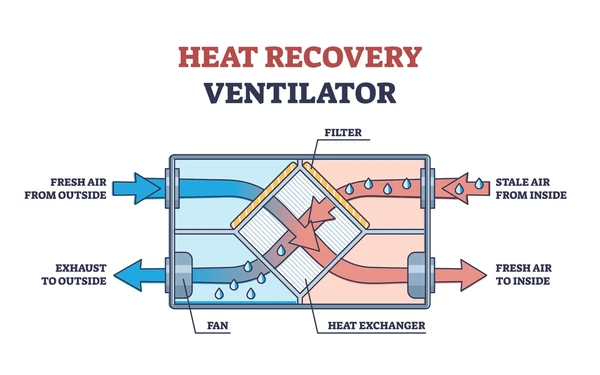
| Feature | ERV (Energy Recovery Ventilator) | HRV (Heat Recovery Ventilator) |
|---|---|---|
| Function | Transfers heat and moisture | Transfers heat only |
| Best for Climate | Mixed or humid climates | Cold or dry climates |
| Moisture Control | Balances indoor humidity | Removes excess humidity |
| Energy Efficiency | Reduces heating/cooling loads | Reduces heating/cooling loads |
| Prevents Dry Air | Yes | No |
How to Choose Between ERV and HRV
✔ Choose ERV if:
- You live in a humid or mixed climate where moisture control is essential.
- Your home experiences dry indoor air in winter.
- You want to balance both temperature and humidity efficiently.
✔ Choose HRV if:
- You live in a cold climate with low humidity.
- You need to reduce excess indoor moisture in winter.
- Your home has good natural humidity control through cooking, bathing, and other activities.
FAQs About ERV vs. HRV
1. Is an ERV or HRV better for winter?
HRVs work better in cold and dry winters because they retain heat while expelling excess moisture. ERVs are better for moderate winters where maintaining some indoor humidity is important.
2. Can an ERV or HRV reduce energy costs?
Yes, both systems reduce heating and cooling demands by recovering heat energy, leading to lower HVAC system costs.
3. Do ERVs and HRVs require maintenance?
Both systems need regular filter cleaning and periodic inspection to ensure proper airflow and efficiency.
4. Can an ERV or HRV replace an air purifier?
No, ERVs and HRVs improve ventilation but do not remove fine pollutants, allergens, or airborne contaminants like an air purifier.
5. Which system is better for humid climates?
An ERV is better because it helps control moisture levels, preventing excess humidity inside the home.
Conclusion
Both ERV and HRV systems enhance indoor air quality while reducing energy loss. ERVs are best for humid and mixed climates, while HRVs work better in cold, dry regions. Choosing the right system depends on climate, humidity control needs, and energy efficiency goals.
To get detailed scientific explanations of ERV vs. HRV, try Patsnap Eureka.
