


Cryogenic engines have become a cornerstone of modern space propulsion. By using supercooled liquid fuels, these engines provide the thrust needed to launch heavy payloads into space and power upper-stage rockets into precise orbits. Their efficiency and high performance make them essential in both national space programs and commercial launch systems.
This article explores what cryogenic engines are, how they work, the fuels they use, and their evolving role in the future of space travel.
What Is a Cryogenic Engine?
What is a cryogenic engine? Eureka Technical Q&A explains that it’s a type of rocket engine that uses super-cooled liquid fuels like liquid hydrogen and oxygen, delivering high efficiency and thrust for space missions.

A cryogenic engine is a type of liquid-fueled rocket engine that burns cryogenic propellants—liquids stored at extremely low temperatures. Typically, these engines use liquid hydrogen (LH₂) as fuel and liquid oxygen (LOX) as the oxidizer. When ignited, these substances create a high-energy reaction that generates massive thrust.
The term “cryogenic” refers to the ultra-cold temperatures required to keep the fuel and oxidizer in liquid form. For example:
- Liquid hydrogen is stored at –253°C (20 K)
- Liquid oxygen is stored at –183°C (90 K)
How Do Cryogenic Engines Work?
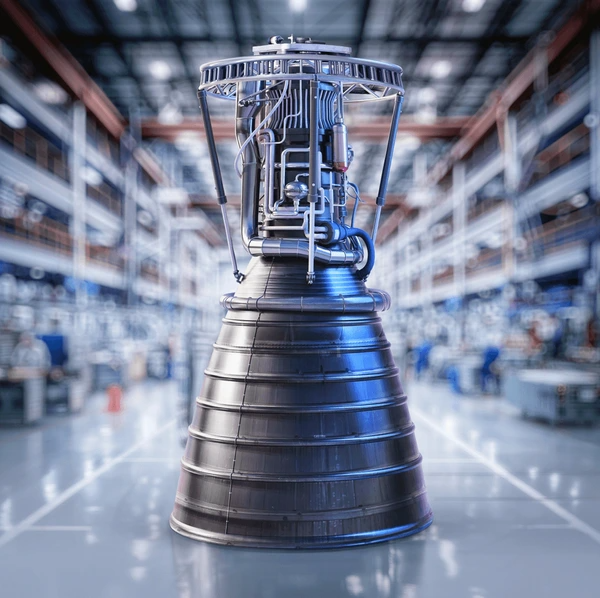
Cryogenic engines operate on the liquid bipropellant principle, involving two separate tanks for fuel and oxidizer. The process includes:
- Storage
LH₂ and LOX are stored in insulated cryogenic tanks to maintain their low temperatures and prevent boil-off. - Pumping
Powerful turbopumps draw the propellants into the combustion chamber. These pumps must withstand extreme cold and pressure. - Combustion
The propellants mix in a precise ratio and ignite, producing high-temperature gases that expand rapidly. - Thrust Generation
The expanding gases exit through a nozzle, generating the thrust required to lift rockets or adjust trajectories in space.
Cryogenic engines are often used in the upper stages of rockets because of their high specific impulse (Isp)—a measure of fuel efficiency.
Cryogenic vs. Non-Cryogenic Engines
| Feature | Cryogenic Engine | Non-Cryogenic Engine |
|---|---|---|
| Fuel Type | Liquid hydrogen and oxygen | Kerosene, hypergolics, or solid fuels |
| Operating Temperature | Extremely low | Ambient or moderately cold |
| Specific Impulse (Isp) | Higher (450+ seconds for LH₂/LOX) | Lower (200–350 seconds) |
| Thrust Control | Precise, restartable | Varies; often non-restartable |
| Usage | Upper stages, deep space | Boost stages, missiles, low-cost launch |
Cryogenic engines provide higher efficiency but are more complex to design, maintain, and store due to temperature requirements.
Applications of Cryogenic Engines in Space
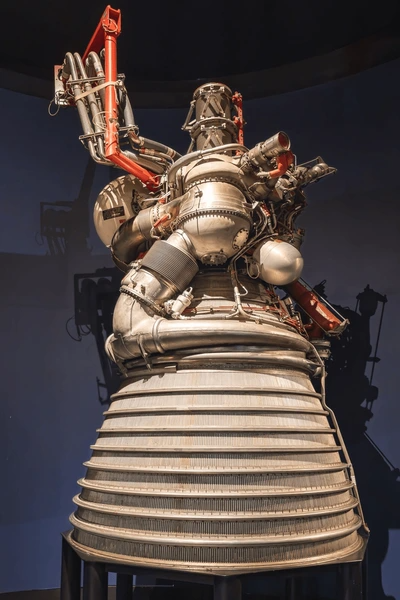
Heavy Lift Launch Vehicles
Cryogenic stages are vital for lifting satellites, space probes, and human missions into orbit. Notable rockets using cryogenic engines include:
- NASA’s SLS (Space Launch System)
- ESA’s Ariane 5 and 6
- ISRO’s GSLV Mk III
- ULA’s Delta IV Heavy
Space Probes and Deep-Space Missions
High-energy upper stages using cryogenic propulsion ensure spacecraft can escape Earth’s gravity and head toward interplanetary destinations.
Reusable Launch Systems
Companies like SpaceX and Blue Origin are integrating cryogenic technologies into reusable rockets, focusing on efficiency and sustainability.
Advantages of Cryogenic Engines
- High Efficiency
Their high specific impulse allows rockets to achieve greater speeds with less fuel. - Clean Propellants
Burning hydrogen and oxygen produces only water vapor—an environmentally friendly exhaust. - Restart Capability
Engineers design many cryogenic engines to reignite in space, enabling orbital maneuvers and complex mission profiles. - Deep-Space Readiness
Cryogenic propulsion is ideal for interplanetary missions due to its performance at high vacuum.
Challenges of Cryogenic Technology
- Storage and Handling
Keeping fuels at ultra-low temperatures requires advanced insulation and materials. - Boil-Off Losses
Even with insulation, some propellant inevitably evaporates, especially during long missions. - Engine Complexity
Cryogenic systems involve sophisticated turbopumps and plumbing that increase development and maintenance costs. - Launch Readiness
Fueling must occur shortly before launch to avoid excessive boil-off, complicating countdown procedures.
Future of Cryogenic Propulsion
Space agencies and private companies are expanding beyond low Earth orbit and plan to use cryogenic engines in long-duration, high-energy missions.
Upcoming Developments
- Cryogenic refueling in space: NASA and commercial partners are exploring orbital refueling depots using cryogenic fuel.
- Nuclear thermal propulsion with cryogenic propellants: Concepts involve combining nuclear reactors with hydrogen fuel for faster interplanetary travel.
- Lunar and Mars missions: Human exploration of deep space will rely on efficient cryogenic upper stages and landers.
FAQs
Why use cryogenic fuel instead of solid fuel?
Cryogenic fuels provide higher efficiency and better thrust control, making them ideal for precision missions and heavy payloads.
Are cryogenic engines reusable?
Engineers design some modern cryogenic engines for reusability, but extreme temperatures and stress demand robust engineering.
What is specific impulse and why does it matter?
Specific impulse measures how efficiently a rocket uses its fuel. Higher values mean more thrust per unit of fuel, which is crucial for space travel.
Can cryogenic engines be used for landing on the Moon or Mars?
Yes, engineers can adapt them for landing stages, especially when refueling options exist on the surface.
How long can cryogenic fuel be stored in space?
Storage depends on insulation, tank design, and mission duration. Advanced thermal control systems can minimize losses for weeks or months.
Conclusion
Cryogenic engines have revolutionized space exploration by enabling powerful, efficient, and precise propulsion. While their ultra-cold fuel requirements bring engineering challenges, the performance benefits far outweigh the complexities. From launching satellites to sending astronauts deeper into space, cryogenic technology will remain a driving force behind the next generation of space missions. As fuel storage and refueling systems evolve, cryogenic engines are set to become even more central to our journey beyond Earth.
To get detailed scientific explanations of cryogenic engine, try Patsnap Eureka.
