


What Is A2P Calling?
Application-to-Person (A2P) calling, also known as A2P voice messaging, refers to the technology that enables applications or systems to send voice messages to individual users. This technology is commonly used by organizations such as financial institutions, airlines, and social networks to communicate with their customers.
How does A2P calling work? Eureka Technical Q&A explains its role in automated messaging, business communications, and customer engagement, highlighting its efficiency and reliability.

How A2P Calling Works
- Message Origination: The process begins with an application or system initiating a voice message. This can be triggered by various events such as a transaction, a booking, or a notification.
- Message Routing: The voice message routes through a hub or server, managing communication between the organization and the customer.
- Delivery to Customer: Messages are sent to standard numbers or short codes, depending on the region and A2P service type.
- Customer Interaction: Customers receive voice messages and may respond or interact, generating valuable insights.
- Reply Management: Customer replies redirect to call centers or data-enabled organizational devices for further processing and action.
Key Features of A2P Calling
What are the key features of A2P calling? Eureka Technical Q&A highlights its automation, scalability, and reliability, making it ideal for business communications and customer engagement.
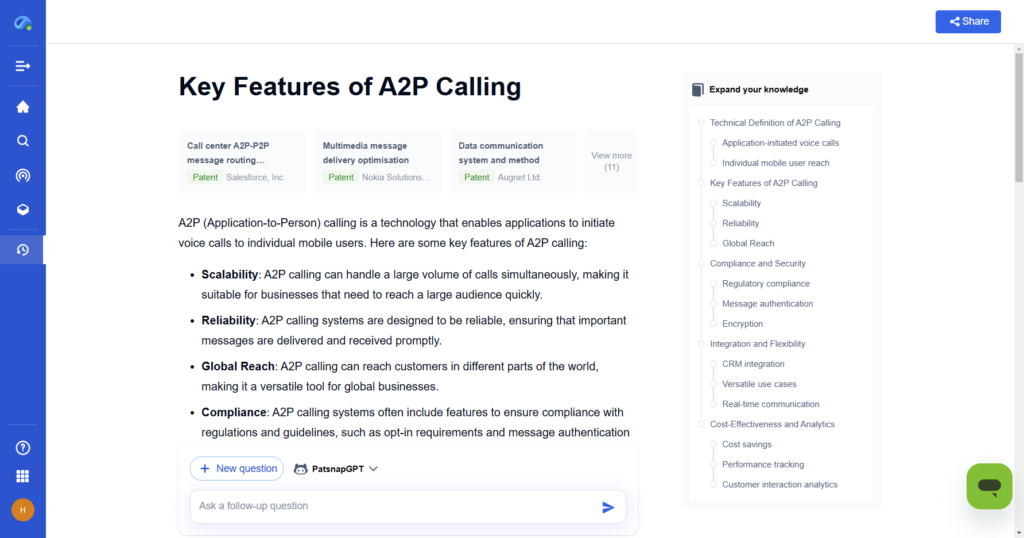
- Organization-Customer Communication: A2P calling enables organizations to send voice messages for alerts, information, or services, improving customer interaction.
- Efficient Communication Channel: It allows organizations to reach many customers simultaneously, offering a scalable alternative to traditional methods.
- Automation: Automated A2P calling eliminates manual intervention, enabling large-scale, consistent voice message delivery.
- Analytics and Insights: Customer interactions can be analyzed to understand behavior and preferences, aiding marketing and support strategies.
- Integration with CRM Systems: A2P calling integrates with CRM systems to streamline communication and enhance customer engagement effectively.
Benefits of A2P Calling
- Efficiency: A2P calling enhances efficiency by automating call processes, reducing the need for manual intervention and speeding up communication workflows.
- Data Collection and Analysis: A2P messages gather valuable data for determining destinations and analyzing marketing or support metrics, aiding enterprise decision-making.
- Personalization: Customizable communication preferences allow for more tailored and relevant interactions with users.
- Scalability: A2P calling systems manage high call volumes, making them ideal for businesses with extensive customer communication needs.
- Enhanced Customer Experience: Automated, personalized communication options improve convenience, efficiency, and the overall customer interaction experience.
Challenges of A2P Calling
- Regulatory Compliance: Businesses must comply with regulations regarding automated calls, such as those related to do-not-call lists and consent requirements.
- Customer Experience: While automation can improve efficiency, it can also lead to a negative customer experience if not implemented correctly. Ensuring that messages are clear and that customers have options to interact with a live agent is crucial.
- Technical Complexity: Implementing and managing A2P calling systems can be technically complex, requiring significant investment in infrastructure and expertise.
- Security Concerns: As with any technology that involves data transmission, there are security risks associated with A2P calling that businesses must mitigate.
A2P Calling vs P2P Calling
Key Differences
- Initiation: A2P Calling is initiated by an application or system, while P2P Calling is initiated by an individual.
- Cost: P2P Calling is often cheaper than traditional phone services, especially for long-distance calls, as it uses VoIP technology over the internet.
- Infrastructure: A2P Calling typically relies on traditional communication infrastructure, while P2P Calling uses internet connectivity.
- Mobility: P2P Calling is generally more mobile-friendly, as it can be made from anywhere with an internet connection, whereas A2P Calling may be limited to specific locations or devices.
- Session Control: P2P Calling often lacks centralized session control, allowing endpoints to establish sessions directly without third-party signaling.
Advantages and Disadvantages
- A2P Calling:
- Advantages: Automation, scalability, and ease of integration with various systems.
- Disadvantages: Limited mobility, potential higher costs, and reliance on traditional infrastructure.
- P2P Calling:
- Advantages: Cost-effectiveness, mobility, and flexibility in communication.
- Disadvantages: Requires internet connectivity, potential issues with reachability and session establishment.
Applications
- A2P Calling is commonly used in customer service automation, marketing campaigns, and other automated communication scenarios.
- P2P Calling is widely used in VoIP services, video conferencing, and mobile communication applications.
Applications of A2P Calling
- Customer Service and Support: Many companies use A2P calling for customer service automation. For instance, banks may use it to verify customer information, while airlines might use it to provide flight status updates or rebooking services directly to customers’ phones.
- Marketing and Advertising: Advertisers leverage A2P calling to connect with potential customers in real-time. This can involve promotional calls, surveys, or even interactive marketing campaigns where customers can engage with the advertiser directly over the call.
- Financial Services: In the financial sector, A2P calling is used for various purposes such as transaction verification, account updates, and security alerts. Financial institutions can send automated voice messages to customers to confirm transactions or notify them of suspicious activities.
- Healthcare: Healthcare providers use A2P calling for appointment reminders, medication alerts, and follow-up care instructions. This ensures that patients receive timely and important information directly on their phones.
- E-commerce: Retailers employ A2P calling for order confirmations, delivery updates, and customer feedback collection. This direct communication helps in enhancing the overall shopping experience and improving customer satisfaction.
- Entertainment and Media: Media companies use A2P calling for event reminders, subscription updates, and interactive content delivery. This can include notifications about new episodes, special offers, or interactive polls and quizzes.
Latest Technical Innovations in A2P Calling
Enhanced Security Features
- Two-Factor Authentication (2FA): A2P calling technologies have integrated 2FA to provide an additional layer of security for transactions and sensitive operations. This ensures that only authorized individuals can access certain functionalities.
- End-to-End Encryption: Advanced encryption methods have been implemented to protect the privacy and integrity of communications. This is particularly crucial in industries like healthcare and finance where sensitive information is exchanged.
Artificial Intelligence and Machine Learning
- Natural Language Processing (NLP): AI-driven NLP has improved the accuracy and efficiency of automated customer service systems, enabling more natural and effective interactions between users and applications.
- Predictive Analytics: Machine learning algorithms analyze user behavior and preferences to predict and personalize communication experiences, enhancing user engagement and satisfaction.
Internet of Things (IoT)
- Smart Home Automation: A2P calling technologies are integrated into smart home devices to facilitate seamless communication and control, improving convenience and security.
- Wearables and Health Monitoring: In the healthcare sector, A2P calling is used to monitor patients’ health metrics and alert healthcare providers in real-time, ensuring timely interventions.
Blockchain Technology
- Secure Transactions: Blockchain integration ensures secure and transparent transactions, particularly in industries like finance and supply chain management, where trust and security are paramount.
- Identity Verification: Blockchain-based identity verification systems enhance the security and reliability of A2P calling, reducing the risk of fraud and unauthorized access.
5G Technology
- High-Speed Connectivity: The adoption of 5G technology has significantly improved the speed and reliability of A2P calling, enabling more data-intensive applications and real-time communication.
- Enhanced User Experience: With lower latency and higher bandwidth, 5G enables more immersive and interactive experiences, such as augmented reality (AR) and virtual reality (VR) applications.
Cloud Computing
- Scalability and Flexibility: Cloud-based A2P calling solutions offer scalable infrastructure that can handle large volumes of calls and data, making it suitable for global operations.
- Cost Efficiency: By leveraging cloud resources, businesses can reduce operational costs and focus on innovation rather than infrastructure investments.
FAQs
- What is the difference between A2P and P2P calls?
A2P (Application-to-Person) calls are automated and initiated by applications, while P2P (Person-to-Person) calls are direct, personal conversations. - Are A2P calls legal?
Yes, but businesses must comply with regulations like GDPR, TCPA, or other local telecom laws to avoid legal issues. - How do businesses ensure compliance in A2P calling?
By obtaining user consent, maintaining transparent practices, and adhering to telecom regulations. - Can A2P calls include interactive features like surveys?
Yes, many A2P systems support Interactive Voice Response (IVR) for conducting surveys or gathering feedback. - How is A2P calling different from SMS messaging?
A2P calls deliver voice communication, while SMS is text-based. Each has distinct advantages depending on the use case.
To get detailed scientific explanations of A2P calling, try Patsnap Eureka.
