
Gene fragment for controlling silking of major cotton leafroller as well as cloning method and application thereof
A technology of cotton leaf roller and leaf roller silk fibroin, applied in the fields of application, genetic engineering, plant gene improvement, etc., can solve the aggravation of cotton leaf roller damage and the unsatisfactory control effect of cotton leaf roller, etc. question
Patent Information
- Authority / Receiving Office
- CN · China
- Current Assignee / Owner
- Publication Date
- 2012-10-10
- Estimated Expiration
- Not applicable · inactive patent
Smart Images
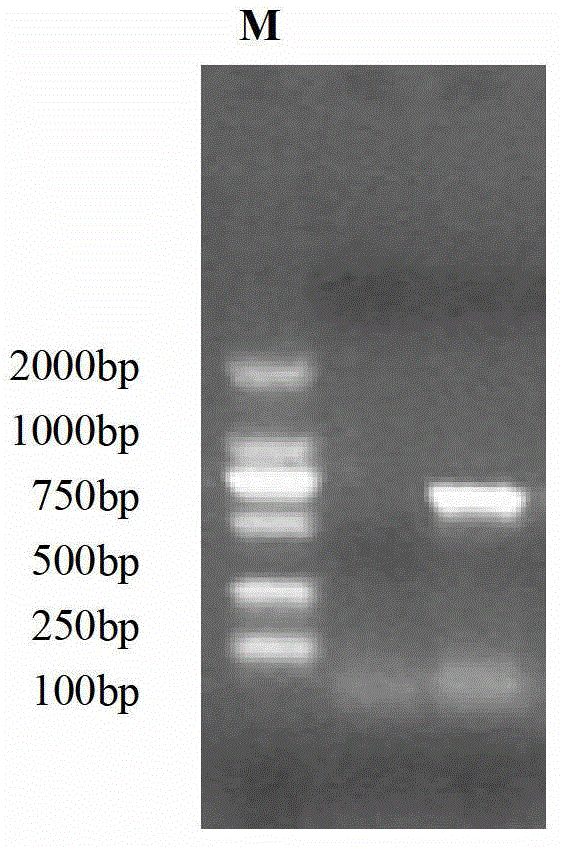
Figure 1 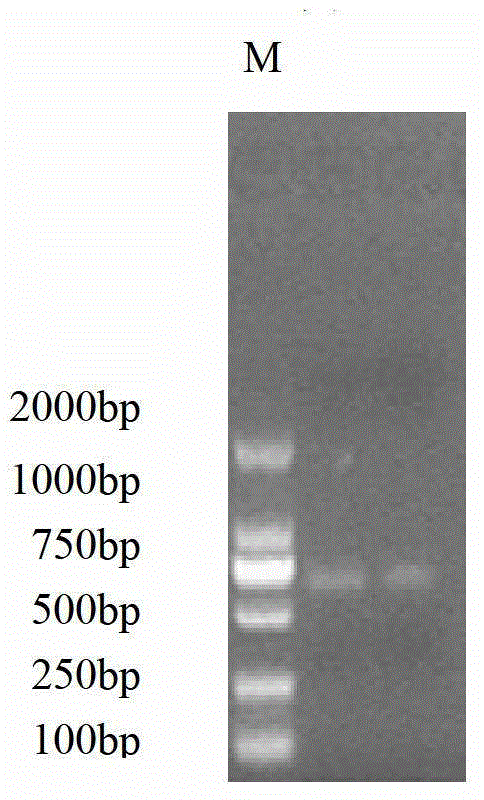
Figure 2 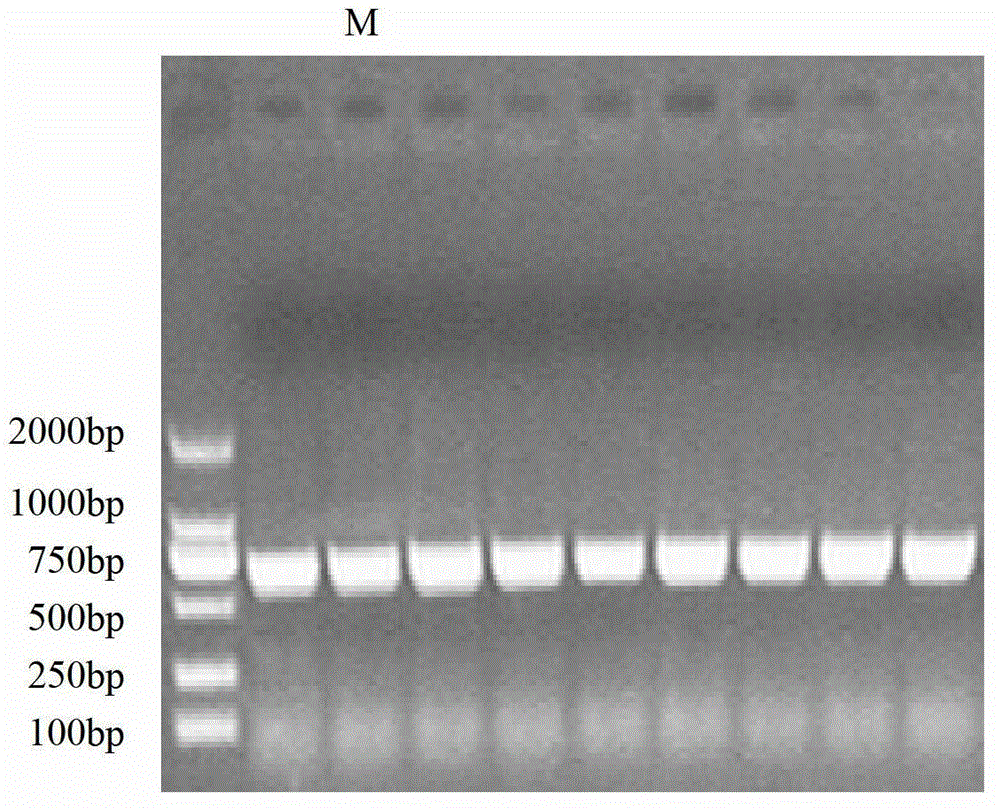
Figure 3
Abstract
Description
technical field
[0001] The invention belongs to the field of biotechnology, and in particular relates to the nucleotide sequence and amino acid sequence of the silk fibroin light chain protein gene of Leafroller mothella cotton and the application of the gene. Background technique
[0002] Cotton leaf roller (Syepta derogata Fabricius) is a polyphagous pest with wide distribution and wide range of hosts. It belongs to Lepidoptera Mothidae. It used to be an important leaf-eating pest in cotton fields. When a large outbreak occurs, it will eat cotton leaves and affect the boll setting and final yield of cotton. Due to the extensive use of organophosphate insecticides, the damage of this insect has gradually become lighter. However, in recent years, with the large-scale planting of transgenic cotton and the sharp drop in the use of chemical pesticides, the population of the cotton leaf roller in some cotton fields has shown an upward trend, and the damage has become increasing...
Examples
Embodiment 1
[0030] 1. Extraction of Total RNA
[0031] RNA was extracted using the SV Total RNA Isolation System kit from Promega, the specific method is as follows:
[0032] 1) Add 1mL of RNA Lysis Buffer (with BME) in a sterile centrifuge tube.
[0033] 2) Take the overwintering mature cotton leaf roller larvae, put them into a mortar filled with liquid nitrogen, grind them quickly with a pestle, and grind them into white powder. After the liquid nitrogen evaporates, immediately transfer the powder to a 300 μL In the centrifuge tube of RNA Lysis Buffer, invert several times to mix thoroughly.
[0034] 3) Add 350 μL RNA Dilution Buffer (blue) to 300 μL lysate, mix by inverting 3-4 times. 70°C, metal bath for 2.5 minutes.
[0035] 4) Centrifuge at 12000 rpm for 10 minutes.
[0036] 5) Prepare a new RNase-free centrifuge tube, and use a pipette to transfer the centrifuged clarified lysate to the new centrifuge tube to avoid aspiration of the precipitate.
[0037] 6) Add 200 μL of 95% ...