
Planogram compliance using automated item-tracking
a technology of item tracking and planogram, applied in the direction of instruments, electrical equipment, pneumatic/hydraulic sensing, etc., can solve the problem that planograms are difficult to enfor
Patent Information
- Authority / Receiving Office
- US · United States
- Patent Type
- Applications(United States)
- Current Assignee / Owner
- Publication Date
- 2011-03-03
Smart Images
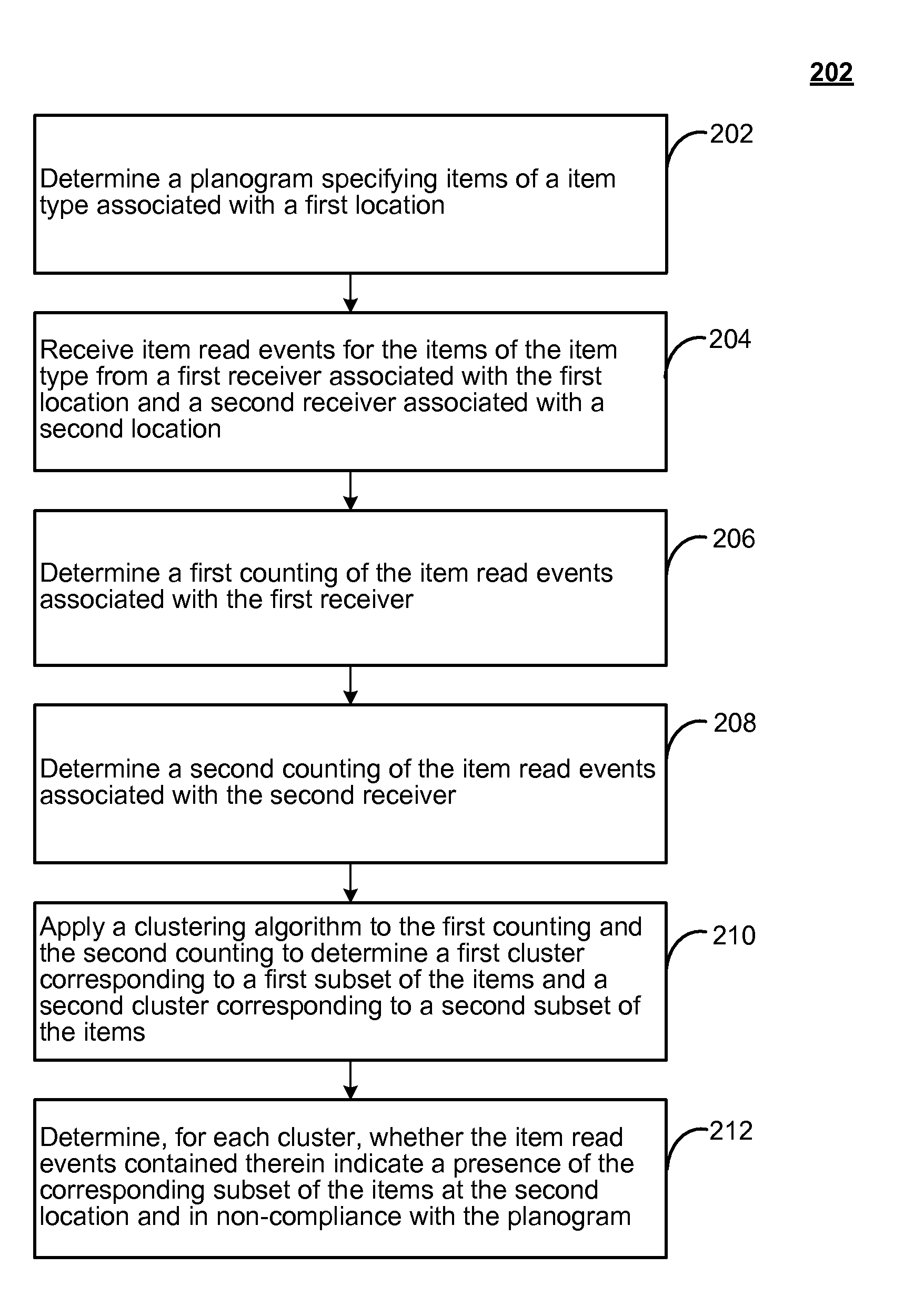
Figure 1 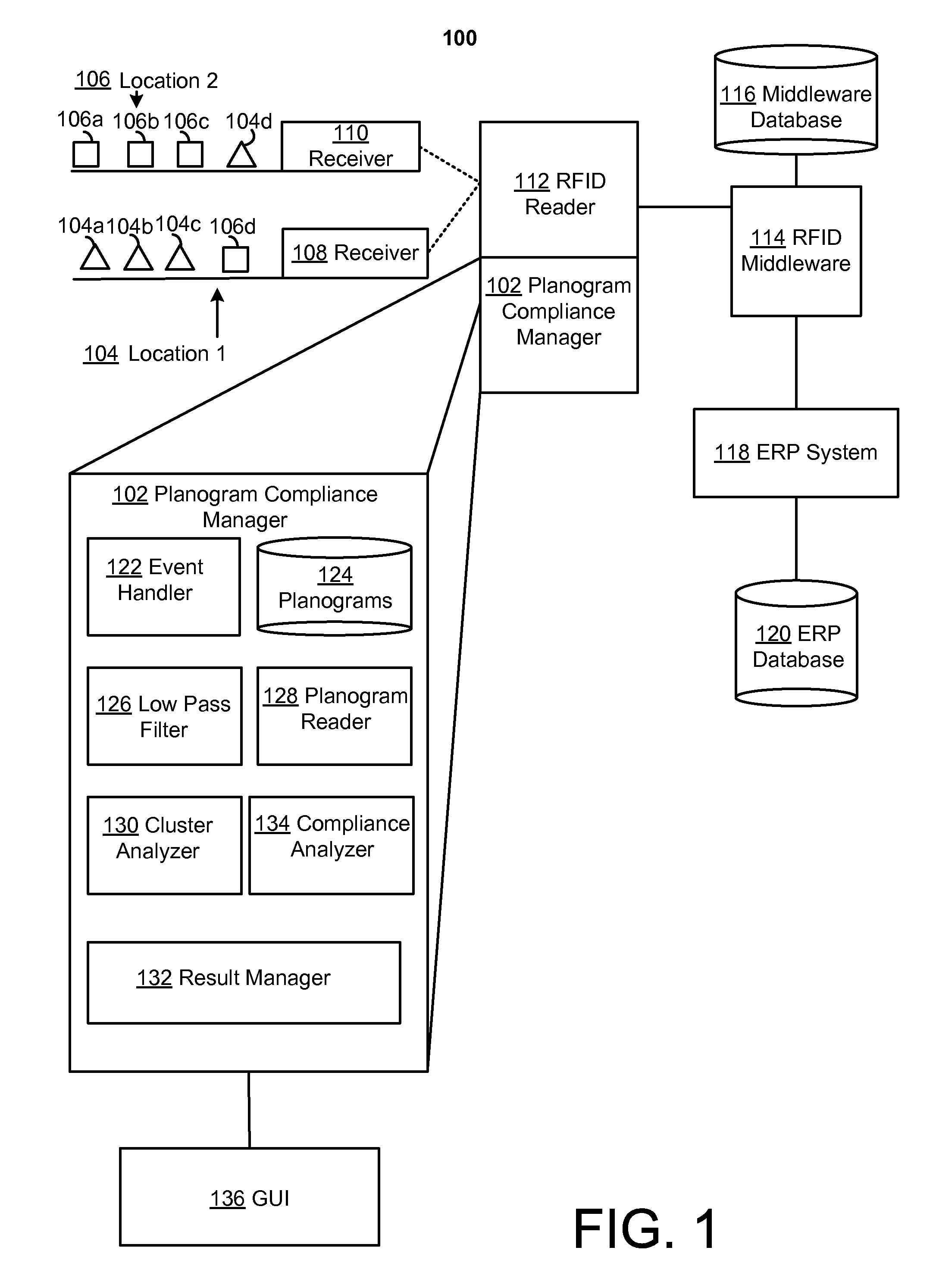
Figure 2 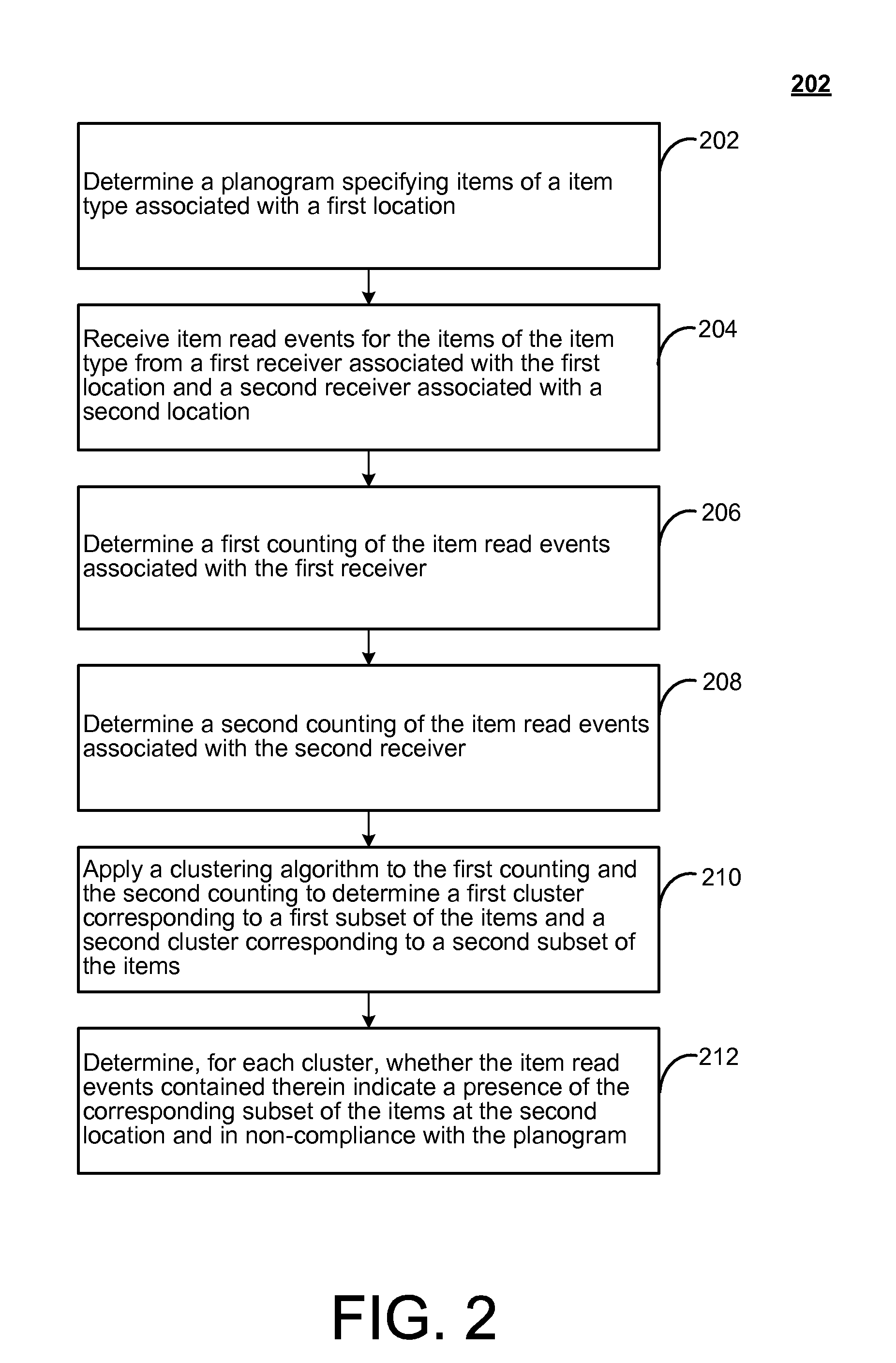
Figure 3
Abstract
Description
TECHNICAL FIELDThis description relates to item tracking for planogram compliance.BACKGROUNDRadio Frequency Identification (RFID) is an example of item tracking technology which provides for the detection of a presence, location, or movement of one or more items. For example, an individual item may be provided with an RFID tag which may automatically be detected by a corresponding RFID reader when the item and associated RFID tag are within a defined proximity of the RFID reader, where the proximity is defined based on a reading range of the RFID reader. RFID and similar item tracking technologies therefore generally provide a way to perform item tracking, potentially without requirement as to a positioning (within the reading range) or orientation of the item being tracked. Such RFID tracking techniques are therefore known to provide convenient item tracking in a wide variety of contexts, including, for example, inventory management within a retail or warehouse environment, trackin...
Examples
Embodiment Construction
In view of the above, RFID and similar item tracking technologies may have potential to enable or facilitate planogram compliance. E.g., in the above examples, RFID readers may be used to detect a presence of items of the various product types for comparison against an appropriate planogram. For example, a first RFID reader may be placed at a first shelf and configured to have a reading range sufficient to detect items placed on the first shelf. Similarly, a second RFID reader may be placed on the second shelf and configured to have a reading range sufficient to detect items placed on the second shelf. In this way, readings from the RFID readers may easily be associated with the corresponding shelves. Then, any detection of misplaced items may be responded to by the appropriate personnel in order to comply with the appropriate planogram (e.g., moving a misplaced item from an incorrect shelf to a correct shelf).
However, in practice it may occur that the RFID or other similar item tra...