
Transparent, look-up-free packet forwarding method for optimizing global network throughput based on real-time route status
a packet forwarding and real-time routing technology, applied in the field of packet forwarding schemes in digital communications networks, can solve the problems of not being able to configure more than a single egress port, certain serious limitations of the current packet-switching technique, and the process is known to be rather complex, so as to achieve high-throughput packet-switched networking, efficient multicasting, and fast protection re-routing.
Patent Information
- Authority / Receiving Office
- US · United States
- Patent Type
- Patents(United States)
- Current Assignee / Owner
- Publication Date
- 2007-08-07
Smart Images
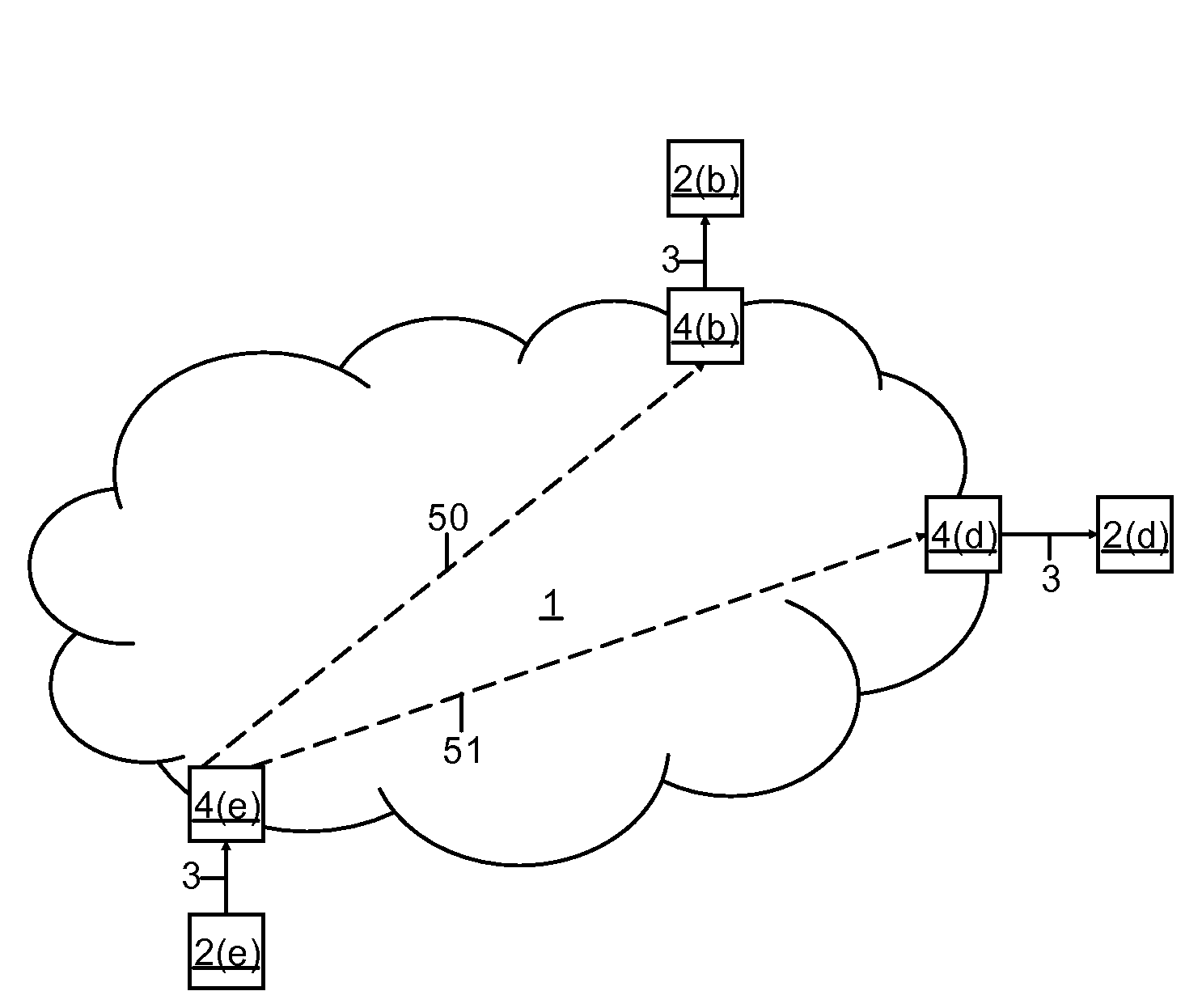
Figure 1 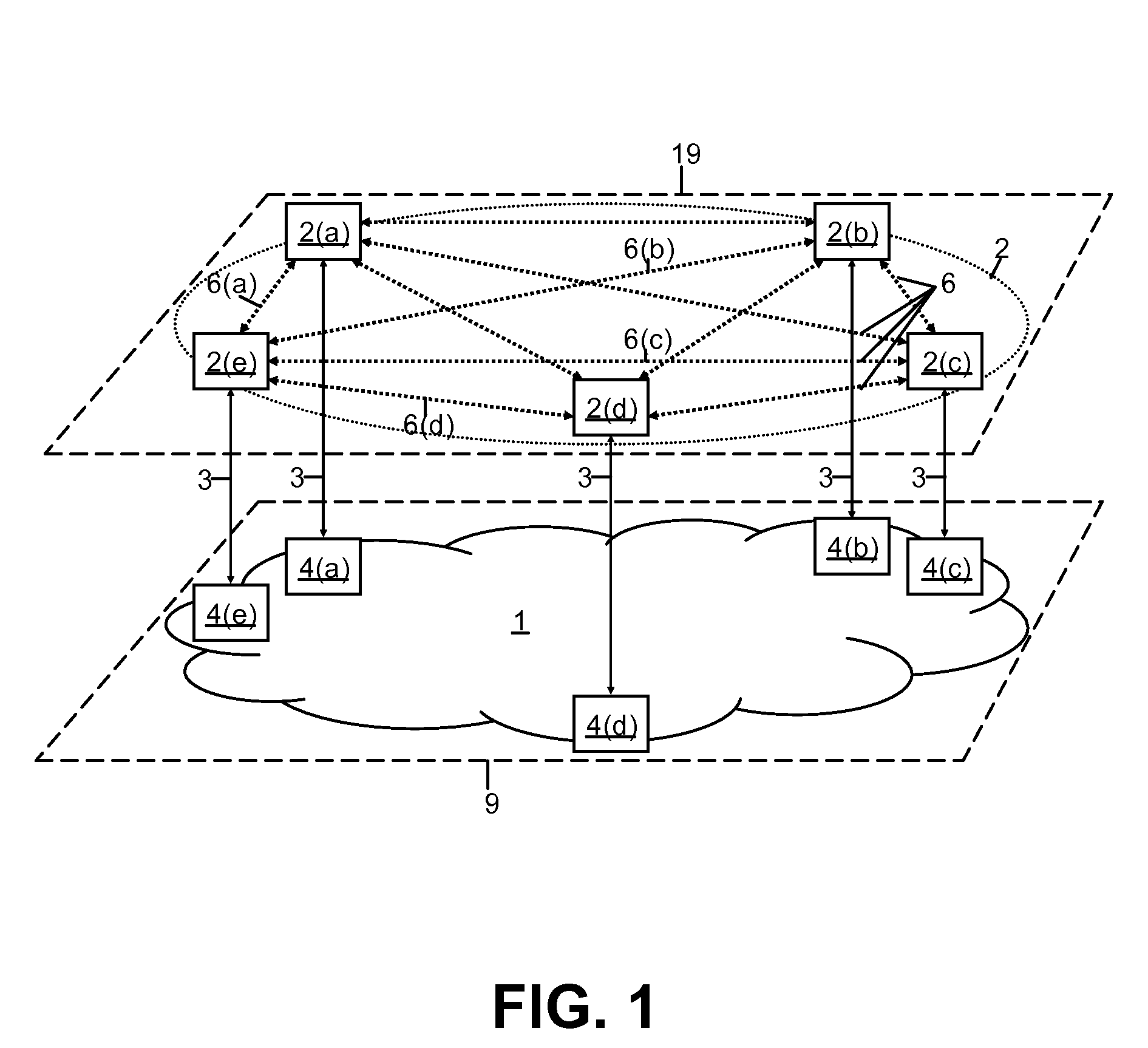
Figure 2 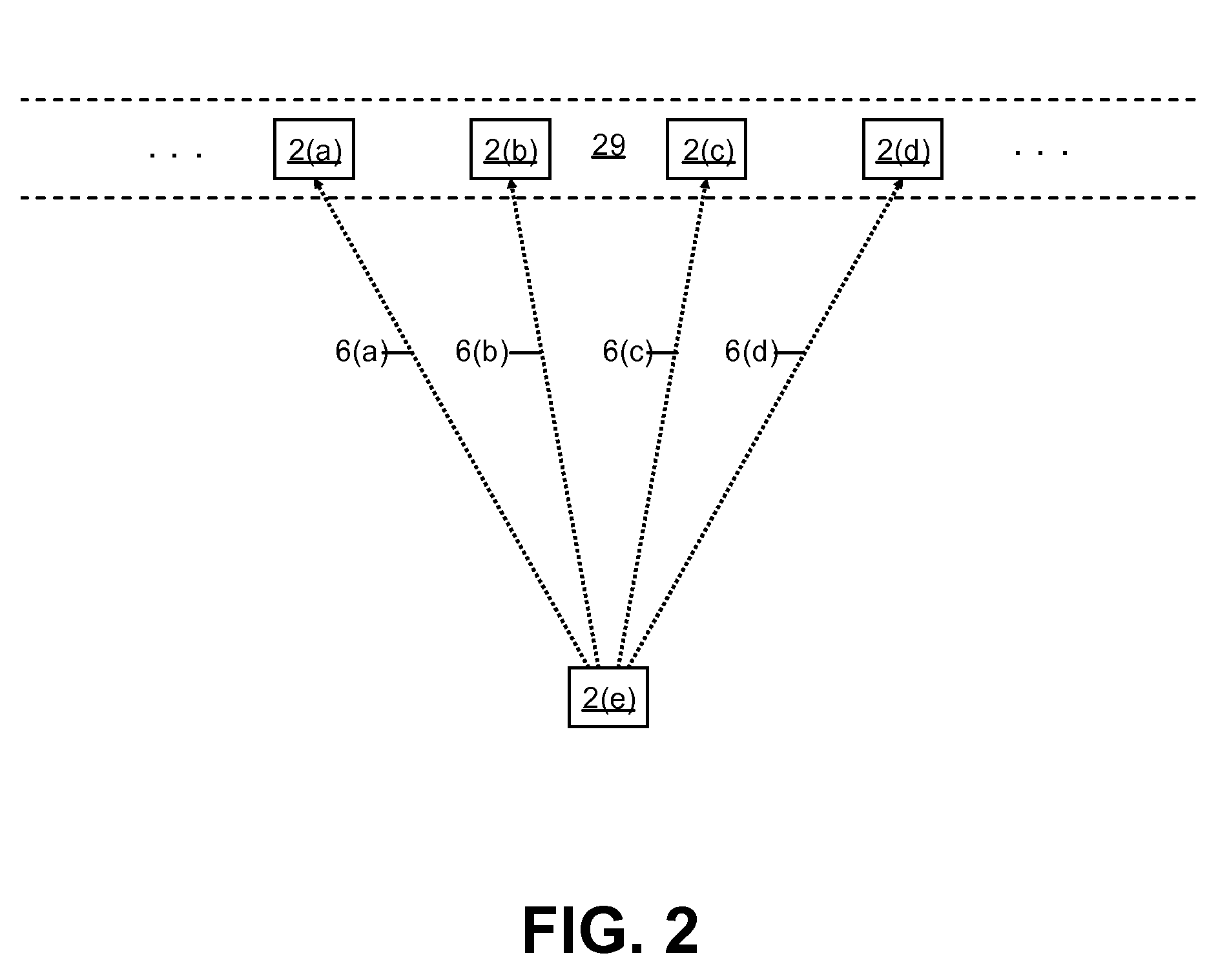
Figure 3
Abstract
Description
CROSS-REFERENCES TO RELATED APPLICATIONSThe subject matter of this application is related to and makes references to the following patent applications:
[0001] [1] Co-pending U.S. utility patent application Ser. No. 09 / 938,014, filing date Aug. 24, 2001, by Mark Henrik Sandstrom, entitled “A System and Method for Maximizing the Traffic Delivery Capacity of Packet Transport Networks via Real-time Traffic Pattern Based Optimization of Transport Capacity Allocation”.
[0002] [2] U.S. Provisional patent application Ser. No. 60 / 356,503, filing date Feb. 11, 2002, by Mark Henrik Sandstrom, entitled “Real-time Control-Plane for Maximizing Billable-Traffic-Throughput of Packet Transport Networks”.This application further claims the benefit under 35 U.S.C. § 119(e) of U.S. Provisional Application No. 60 / 356,503, filed Feb. 11, 2002, which is herein incorporated in its entirety by reference.BACKGROUND OF THE INVENTION
[0003] 1. Technical Field
[0004] The present invention pertains to the field of commu...
Examples
Embodiment Construction
[0035]The invention is described herein first by illustrating the novel concepts via a more detailed discussion of the drawings, and then by providing specifications for a currently preferred embodiment of the invention.
[0036]Symbols and notations used in the drawings:[0037]Solid arrows indicate a communications signal i.e. data traffic flow. Dotted arrows between network elements (drawn as boxes) indicate direct i.e. transparent connectivity at the packet-layer. Gapped arrows indicate a route of a traffic flow across network.[0038]Boxes represent network elements, such as a packet-switch nodes.[0039]Cloud shapes, such as the one below the packet-switches 2 in FIG. 1, present an abstraction of a physical network interconnecting the nodes (4 in FIG. 1) on its edges.[0040]Circular, dotted-line, shapes mark a border of a group of drawn elements that form a logical entity, such as the set 2 of packet-switching nodes, elements 2(a) through 2(e), on the upper network layer 19, in FIG. 1, ...