Abscisic Acid's Role in Seed Dormancy: A Comprehensive Analysis
JUL 14, 20259 MIN READ
Generate Your Research Report Instantly with AI Agent
Patsnap Eureka helps you evaluate technical feasibility & market potential.
ABA and Seed Dormancy: Background and Objectives
Abscisic acid (ABA) is a plant hormone that plays a crucial role in seed dormancy, a vital process in plant life cycles. The study of ABA's involvement in seed dormancy has been a subject of intense research for decades, with significant implications for agriculture, ecology, and plant biotechnology.
Seed dormancy is an adaptive trait that prevents germination under unfavorable conditions, ensuring the survival and propagation of plant species. ABA is recognized as the primary hormone responsible for inducing and maintaining seed dormancy. Its discovery in the 1960s marked a turning point in our understanding of plant physiology and development.
The historical context of ABA research dates back to the mid-20th century when scientists began investigating the chemical signals controlling plant growth and development. The isolation and characterization of ABA in the 1960s led to a surge of studies exploring its diverse functions in plants, with seed dormancy emerging as a key area of focus.
Over the years, research has revealed that ABA's role in seed dormancy is complex and multifaceted. It influences various aspects of seed physiology, including the regulation of gene expression, metabolism, and cellular responses to environmental cues. The hormone acts as a signaling molecule, triggering cascades of molecular events that ultimately result in the dormant state of seeds.
The objectives of studying ABA's role in seed dormancy are manifold. Firstly, researchers aim to elucidate the molecular mechanisms by which ABA induces and maintains dormancy. This includes understanding the ABA biosynthesis pathways, signaling cascades, and downstream effects on gene expression and cellular processes.
Secondly, there is a strong focus on unraveling the interplay between ABA and other plant hormones, such as gibberellins, which antagonize ABA's effects and promote germination. This hormone crosstalk is crucial for fine-tuning seed responses to environmental conditions.
Another important objective is to investigate the genetic basis of ABA-mediated seed dormancy. This involves identifying and characterizing the genes involved in ABA synthesis, perception, and signaling, as well as those regulated by ABA during dormancy induction and maintenance.
Furthermore, researchers aim to understand how environmental factors, such as temperature, light, and moisture, influence ABA levels and seed dormancy. This knowledge is essential for predicting and manipulating seed behavior in various ecological and agricultural contexts.
Lastly, the applied aspects of ABA research in seed dormancy are of great interest. Scientists seek to develop strategies for modulating seed dormancy in crop plants, potentially leading to improved seed quality, enhanced germination rates, and better control over crop establishment.
Seed dormancy is an adaptive trait that prevents germination under unfavorable conditions, ensuring the survival and propagation of plant species. ABA is recognized as the primary hormone responsible for inducing and maintaining seed dormancy. Its discovery in the 1960s marked a turning point in our understanding of plant physiology and development.
The historical context of ABA research dates back to the mid-20th century when scientists began investigating the chemical signals controlling plant growth and development. The isolation and characterization of ABA in the 1960s led to a surge of studies exploring its diverse functions in plants, with seed dormancy emerging as a key area of focus.
Over the years, research has revealed that ABA's role in seed dormancy is complex and multifaceted. It influences various aspects of seed physiology, including the regulation of gene expression, metabolism, and cellular responses to environmental cues. The hormone acts as a signaling molecule, triggering cascades of molecular events that ultimately result in the dormant state of seeds.
The objectives of studying ABA's role in seed dormancy are manifold. Firstly, researchers aim to elucidate the molecular mechanisms by which ABA induces and maintains dormancy. This includes understanding the ABA biosynthesis pathways, signaling cascades, and downstream effects on gene expression and cellular processes.
Secondly, there is a strong focus on unraveling the interplay between ABA and other plant hormones, such as gibberellins, which antagonize ABA's effects and promote germination. This hormone crosstalk is crucial for fine-tuning seed responses to environmental conditions.
Another important objective is to investigate the genetic basis of ABA-mediated seed dormancy. This involves identifying and characterizing the genes involved in ABA synthesis, perception, and signaling, as well as those regulated by ABA during dormancy induction and maintenance.
Furthermore, researchers aim to understand how environmental factors, such as temperature, light, and moisture, influence ABA levels and seed dormancy. This knowledge is essential for predicting and manipulating seed behavior in various ecological and agricultural contexts.
Lastly, the applied aspects of ABA research in seed dormancy are of great interest. Scientists seek to develop strategies for modulating seed dormancy in crop plants, potentially leading to improved seed quality, enhanced germination rates, and better control over crop establishment.
Market Analysis of ABA-related Agricultural Products
The market for ABA-related agricultural products has shown significant growth in recent years, driven by increasing demand for sustainable farming practices and improved crop yields. Abscisic acid (ABA), a plant hormone crucial for seed dormancy and stress responses, has become a focal point for agricultural innovation.
The global market for plant growth regulators, including ABA-based products, is experiencing steady expansion. This growth is primarily attributed to the rising need for enhanced crop productivity to meet the food demands of a growing global population. Farmers and agricultural businesses are increasingly adopting ABA-related products to improve seed quality, germination rates, and overall plant resilience.
In the seed treatment sector, ABA-based solutions have gained traction due to their ability to enhance seed dormancy and improve stress tolerance. This has led to increased interest from major seed companies and agrochemical firms, who are investing in research and development of ABA-related technologies. The market for these products is particularly strong in regions prone to drought and other environmental stresses.
The horticultural industry has also embraced ABA-related products, especially for applications in fruit ripening and flower development. These products have shown promise in extending the shelf life of fruits and vegetables, reducing post-harvest losses, and improving the overall quality of produce. This has opened up new market opportunities in the fresh produce supply chain.
Emerging trends in precision agriculture and smart farming have further boosted the demand for ABA-related products. Farmers are increasingly using these products in combination with advanced technologies like sensors and data analytics to optimize crop management practices. This integration has led to more targeted and efficient use of ABA-based solutions, enhancing their market appeal.
Geographically, North America and Europe lead the market for ABA-related agricultural products, owing to their advanced agricultural practices and stringent regulations promoting sustainable farming. However, the Asia-Pacific region is emerging as a rapidly growing market, driven by increasing awareness of modern agricultural techniques and the need to improve crop yields in countries like China and India.
Despite the positive market outlook, challenges remain. Regulatory hurdles in some regions and the need for extensive field trials to demonstrate efficacy can slow market penetration for new ABA-related products. Additionally, the high cost of research and development in this field may limit market entry for smaller companies.
In conclusion, the market for ABA-related agricultural products shows promising growth potential, driven by the increasing need for sustainable and efficient farming practices. As research continues to uncover new applications for ABA in agriculture, the market is expected to diversify and expand, offering significant opportunities for innovation and investment in the coming years.
The global market for plant growth regulators, including ABA-based products, is experiencing steady expansion. This growth is primarily attributed to the rising need for enhanced crop productivity to meet the food demands of a growing global population. Farmers and agricultural businesses are increasingly adopting ABA-related products to improve seed quality, germination rates, and overall plant resilience.
In the seed treatment sector, ABA-based solutions have gained traction due to their ability to enhance seed dormancy and improve stress tolerance. This has led to increased interest from major seed companies and agrochemical firms, who are investing in research and development of ABA-related technologies. The market for these products is particularly strong in regions prone to drought and other environmental stresses.
The horticultural industry has also embraced ABA-related products, especially for applications in fruit ripening and flower development. These products have shown promise in extending the shelf life of fruits and vegetables, reducing post-harvest losses, and improving the overall quality of produce. This has opened up new market opportunities in the fresh produce supply chain.
Emerging trends in precision agriculture and smart farming have further boosted the demand for ABA-related products. Farmers are increasingly using these products in combination with advanced technologies like sensors and data analytics to optimize crop management practices. This integration has led to more targeted and efficient use of ABA-based solutions, enhancing their market appeal.
Geographically, North America and Europe lead the market for ABA-related agricultural products, owing to their advanced agricultural practices and stringent regulations promoting sustainable farming. However, the Asia-Pacific region is emerging as a rapidly growing market, driven by increasing awareness of modern agricultural techniques and the need to improve crop yields in countries like China and India.
Despite the positive market outlook, challenges remain. Regulatory hurdles in some regions and the need for extensive field trials to demonstrate efficacy can slow market penetration for new ABA-related products. Additionally, the high cost of research and development in this field may limit market entry for smaller companies.
In conclusion, the market for ABA-related agricultural products shows promising growth potential, driven by the increasing need for sustainable and efficient farming practices. As research continues to uncover new applications for ABA in agriculture, the market is expected to diversify and expand, offering significant opportunities for innovation and investment in the coming years.
Current Understanding and Challenges in ABA Research
Abscisic acid (ABA) plays a crucial role in seed dormancy, a complex physiological process essential for plant survival and adaptation. Current research has significantly advanced our understanding of ABA's mechanisms in regulating seed dormancy, yet several challenges remain in fully elucidating its intricate functions.
Recent studies have revealed that ABA acts as a key signaling molecule in the induction and maintenance of seed dormancy. The ABA signaling pathway involves a complex network of receptors, protein phosphatases, and transcription factors. The PYR/PYL/RCAR family of ABA receptors has been identified as the primary ABA perception mechanism, initiating a signaling cascade that ultimately leads to the expression of dormancy-related genes.
One of the major breakthroughs in ABA research has been the identification of the core ABA signaling module, consisting of ABA receptors, protein phosphatases (PP2Cs), and SNF1-related protein kinases (SnRK2s). This discovery has provided a framework for understanding how ABA regulates various physiological responses, including seed dormancy.
Despite these advancements, several challenges persist in ABA research. One significant obstacle is the complexity of ABA's interactions with other plant hormones, such as gibberellins and ethylene, in regulating seed dormancy. The cross-talk between these hormonal pathways is not fully understood, making it difficult to predict the overall effect of ABA on seed dormancy under various environmental conditions.
Another challenge lies in understanding the spatial and temporal dynamics of ABA signaling during seed development and germination. While we know that ABA levels fluctuate throughout these processes, the precise mechanisms controlling its biosynthesis, catabolism, and transport within seeds remain elusive.
The genetic redundancy in ABA signaling components also poses a significant challenge. Many genes involved in ABA perception and signaling belong to multi-gene families, making it difficult to dissect their individual roles through traditional genetic approaches. This redundancy often masks the effects of single gene mutations, necessitating more sophisticated genetic and molecular tools to unravel their functions.
Furthermore, the environmental regulation of ABA-mediated seed dormancy presents a complex challenge. Factors such as temperature, light, and water availability can significantly influence ABA levels and sensitivity in seeds. Understanding how these environmental cues integrate with ABA signaling to modulate seed dormancy is crucial for predicting plant responses to changing climatic conditions.
Lastly, translating our molecular understanding of ABA signaling into practical applications for crop improvement remains a significant challenge. While manipulating ABA levels or sensitivity holds promise for enhancing seed dormancy or germination in agriculturally important species, the pleiotropic effects of ABA on plant growth and development often complicate such efforts.
Recent studies have revealed that ABA acts as a key signaling molecule in the induction and maintenance of seed dormancy. The ABA signaling pathway involves a complex network of receptors, protein phosphatases, and transcription factors. The PYR/PYL/RCAR family of ABA receptors has been identified as the primary ABA perception mechanism, initiating a signaling cascade that ultimately leads to the expression of dormancy-related genes.
One of the major breakthroughs in ABA research has been the identification of the core ABA signaling module, consisting of ABA receptors, protein phosphatases (PP2Cs), and SNF1-related protein kinases (SnRK2s). This discovery has provided a framework for understanding how ABA regulates various physiological responses, including seed dormancy.
Despite these advancements, several challenges persist in ABA research. One significant obstacle is the complexity of ABA's interactions with other plant hormones, such as gibberellins and ethylene, in regulating seed dormancy. The cross-talk between these hormonal pathways is not fully understood, making it difficult to predict the overall effect of ABA on seed dormancy under various environmental conditions.
Another challenge lies in understanding the spatial and temporal dynamics of ABA signaling during seed development and germination. While we know that ABA levels fluctuate throughout these processes, the precise mechanisms controlling its biosynthesis, catabolism, and transport within seeds remain elusive.
The genetic redundancy in ABA signaling components also poses a significant challenge. Many genes involved in ABA perception and signaling belong to multi-gene families, making it difficult to dissect their individual roles through traditional genetic approaches. This redundancy often masks the effects of single gene mutations, necessitating more sophisticated genetic and molecular tools to unravel their functions.
Furthermore, the environmental regulation of ABA-mediated seed dormancy presents a complex challenge. Factors such as temperature, light, and water availability can significantly influence ABA levels and sensitivity in seeds. Understanding how these environmental cues integrate with ABA signaling to modulate seed dormancy is crucial for predicting plant responses to changing climatic conditions.
Lastly, translating our molecular understanding of ABA signaling into practical applications for crop improvement remains a significant challenge. While manipulating ABA levels or sensitivity holds promise for enhancing seed dormancy or germination in agriculturally important species, the pleiotropic effects of ABA on plant growth and development often complicate such efforts.
Existing Methodologies for Studying ABA in Seeds
01 Regulation of seed dormancy by abscisic acid
Abscisic acid (ABA) plays a crucial role in regulating seed dormancy. It is involved in the induction and maintenance of dormancy, preventing premature germination. ABA levels and sensitivity affect the depth of dormancy and the timing of germination. Understanding this mechanism is essential for developing strategies to control seed dormancy in various plant species.- Regulation of seed dormancy by abscisic acid: Abscisic acid (ABA) plays a crucial role in regulating seed dormancy. It is involved in the induction and maintenance of dormancy, preventing premature germination. ABA levels in seeds are controlled by biosynthesis, catabolism, and signaling pathways, which influence the depth and duration of dormancy.
- Genetic manipulation of ABA-related genes: Researchers have identified and manipulated genes involved in ABA biosynthesis, signaling, and response to modify seed dormancy characteristics. This includes overexpression or suppression of key genes to alter ABA levels or sensitivity, thereby affecting dormancy and germination timing in crops and other plants.
- ABA-mediated stress response in seeds: Abscisic acid is involved in seed stress responses, particularly to environmental factors such as drought, salinity, and temperature extremes. ABA helps seeds withstand these stresses during dormancy and early germination stages by regulating gene expression and metabolic processes.
- Interaction of ABA with other plant hormones: The regulation of seed dormancy by ABA involves complex interactions with other plant hormones such as gibberellins, ethylene, and auxins. These hormonal interactions fine-tune the balance between dormancy maintenance and germination initiation, influencing seed behavior under various conditions.
- ABA-based methods for seed treatment: Practical applications of ABA in seed treatment have been developed to manipulate dormancy and germination. These include exogenous application of ABA or ABA analogs, as well as methods to alter endogenous ABA levels or sensitivity in seeds for agricultural and horticultural purposes.
02 Genetic manipulation of ABA pathways
Researchers have developed methods to manipulate ABA biosynthesis, signaling, and catabolism pathways through genetic engineering. This approach allows for the modification of seed dormancy characteristics in crops and other plants. By altering genes involved in ABA metabolism or response, it is possible to create plants with improved germination traits or enhanced stress tolerance.Expand Specific Solutions03 ABA-responsive gene expression
Studies have identified various genes that are regulated by ABA during seed dormancy. These genes are involved in processes such as embryo development, desiccation tolerance, and metabolic changes associated with dormancy. Understanding the expression patterns of these genes provides insights into the molecular mechanisms of seed dormancy and potential targets for its manipulation.Expand Specific Solutions04 Interaction of ABA with other plant hormones
Abscisic acid interacts with other plant hormones, such as gibberellins and ethylene, to regulate seed dormancy and germination. The balance between these hormones determines the dormancy status of seeds. Research in this area focuses on understanding the crosstalk between different hormonal pathways and how they collectively influence seed physiology.Expand Specific Solutions05 Environmental factors affecting ABA-mediated dormancy
Environmental conditions, such as temperature, light, and moisture, can influence ABA levels and seed dormancy. These factors can modulate ABA biosynthesis, degradation, or signaling, thereby affecting the dormancy status of seeds. Understanding these interactions is crucial for predicting and managing seed behavior in natural and agricultural settings.Expand Specific Solutions
Key Players in ABA and Seed Dormancy Research
The research on Abscisic Acid's role in seed dormancy is in a mature stage, with significant market potential in agriculture and biotechnology. The global market for plant growth regulators, including abscisic acid, is expected to grow substantially in the coming years. Key players in this field include Valent BioSciences Corp., Syngenta, and academic institutions like China Agricultural University and The Rockefeller University. These organizations are actively engaged in research and development, focusing on improving crop yields and stress tolerance. The technology's maturity is evident from the involvement of major agricultural companies and research institutions, indicating a competitive landscape with ongoing innovation and commercial applications.
China Agricultural University
Technical Solution: China Agricultural University has conducted comprehensive research on the molecular mechanisms of ABA-mediated seed dormancy, with a focus on important crop species like rice and wheat. Their studies have elucidated the genetic networks controlling ABA biosynthesis, catabolism, and signaling in seeds[9]. They have identified novel genes and regulatory elements involved in ABA-dependent dormancy induction and maintenance. The university has also explored the ecological and evolutionary aspects of seed dormancy, investigating how ABA-related mechanisms contribute to plant adaptation to diverse environments. Their research includes developing molecular markers for breeding programs aimed at optimizing seed dormancy traits in crops[10].
Strengths: Strong focus on crop-specific ABA research, integration of molecular biology with agronomic applications. Weaknesses: Potential gaps in translating basic research findings into practical field applications, limited global market reach compared to multinational corporations.
Syngenta Participations AG
Technical Solution: Syngenta has developed innovative approaches to modulate ABA signaling in seeds. Their research focuses on small molecule ABA agonists and antagonists that can fine-tune seed dormancy and germination. They have created synthetic compounds that mimic or block ABA's effects, allowing precise control over seed behavior[1]. These compounds interact with ABA receptors to either enhance or inhibit ABA-mediated responses. Syngenta has also explored genetic engineering approaches to modify ABA biosynthesis and signaling pathways in seeds, potentially creating crops with optimized dormancy characteristics[2].
Strengths: Advanced synthetic biology capabilities, extensive field testing resources. Weaknesses: Regulatory hurdles for genetically modified seeds, potential public resistance to synthetic ABA modulators.
Breakthrough Studies on ABA Signaling Pathways
High frequency plant transformation and/or regeneration
PatentInactiveUS20050060777A1
Innovation
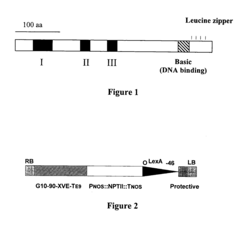
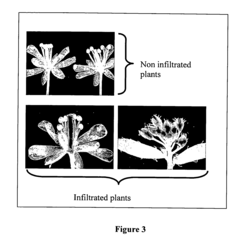
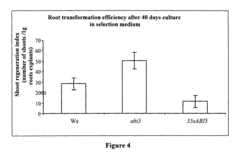
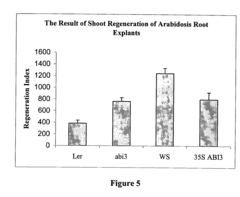
- Suppressing ABI5 protein levels or activity in plant tissue through various mechanisms such as RNA interference, T-DNA insertions, or expressing negative regulators, allowing for increased transformation efficiency by using transgenic plants with reduced ABI5 expression or activity, and utilizing vectors designed to downregulate ABI5 or its orthologs to facilitate higher transformation and regeneration frequencies.
Environmental Factors Influencing ABA-Mediated Dormancy
The environmental factors influencing ABA-mediated dormancy play a crucial role in regulating seed germination and plant development. Temperature, light, and moisture are among the primary external cues that modulate ABA levels and sensitivity in seeds, thereby affecting dormancy status.
Temperature fluctuations significantly impact ABA-mediated dormancy. Cold stratification, for instance, can reduce ABA levels and increase gibberellin (GA) sensitivity, promoting dormancy release in many species. Conversely, high temperatures may enhance ABA synthesis and signaling, reinforcing dormancy in some seeds. The interplay between temperature and ABA is species-specific and can vary depending on the seed's developmental stage.
Light quality and photoperiod are also key factors in ABA-mediated dormancy regulation. Red light often promotes germination by decreasing ABA levels and increasing GA sensitivity, while far-red light can have the opposite effect. Some seeds require specific light conditions to break dormancy, highlighting the complex relationship between light perception and ABA signaling pathways.
Moisture availability is another critical factor influencing ABA-mediated dormancy. Dry after-ripening, a process where dry seeds gradually lose dormancy over time, is associated with changes in ABA metabolism and sensitivity. Alternating wet and dry cycles can also affect ABA levels and dormancy status, with some species requiring specific hydration patterns to initiate germination.
Soil conditions, including pH, nutrient availability, and salinity, can indirectly influence ABA-mediated dormancy by affecting seed physiology and hormone balance. For example, high salinity can increase ABA accumulation, potentially enhancing dormancy in salt-sensitive species.
Atmospheric gases, particularly oxygen and carbon dioxide concentrations, can modulate ABA-mediated dormancy. Hypoxic conditions may increase ABA levels and maintain dormancy, while elevated CO2 levels can interact with ABA signaling pathways to affect germination responses.
Biotic factors, such as the presence of microorganisms in the soil, can also impact ABA-mediated dormancy. Some beneficial bacteria and fungi have been shown to produce compounds that interfere with ABA signaling or promote GA biosynthesis, potentially breaking seed dormancy.
Understanding these environmental influences on ABA-mediated dormancy is crucial for predicting and manipulating seed behavior in natural and agricultural settings. This knowledge can be applied to improve seed storage techniques, optimize germination protocols, and develop strategies for managing plant populations in changing environments.
Temperature fluctuations significantly impact ABA-mediated dormancy. Cold stratification, for instance, can reduce ABA levels and increase gibberellin (GA) sensitivity, promoting dormancy release in many species. Conversely, high temperatures may enhance ABA synthesis and signaling, reinforcing dormancy in some seeds. The interplay between temperature and ABA is species-specific and can vary depending on the seed's developmental stage.
Light quality and photoperiod are also key factors in ABA-mediated dormancy regulation. Red light often promotes germination by decreasing ABA levels and increasing GA sensitivity, while far-red light can have the opposite effect. Some seeds require specific light conditions to break dormancy, highlighting the complex relationship between light perception and ABA signaling pathways.
Moisture availability is another critical factor influencing ABA-mediated dormancy. Dry after-ripening, a process where dry seeds gradually lose dormancy over time, is associated with changes in ABA metabolism and sensitivity. Alternating wet and dry cycles can also affect ABA levels and dormancy status, with some species requiring specific hydration patterns to initiate germination.
Soil conditions, including pH, nutrient availability, and salinity, can indirectly influence ABA-mediated dormancy by affecting seed physiology and hormone balance. For example, high salinity can increase ABA accumulation, potentially enhancing dormancy in salt-sensitive species.
Atmospheric gases, particularly oxygen and carbon dioxide concentrations, can modulate ABA-mediated dormancy. Hypoxic conditions may increase ABA levels and maintain dormancy, while elevated CO2 levels can interact with ABA signaling pathways to affect germination responses.
Biotic factors, such as the presence of microorganisms in the soil, can also impact ABA-mediated dormancy. Some beneficial bacteria and fungi have been shown to produce compounds that interfere with ABA signaling or promote GA biosynthesis, potentially breaking seed dormancy.
Understanding these environmental influences on ABA-mediated dormancy is crucial for predicting and manipulating seed behavior in natural and agricultural settings. This knowledge can be applied to improve seed storage techniques, optimize germination protocols, and develop strategies for managing plant populations in changing environments.
Biotechnological Applications of ABA in Agriculture
Abscisic acid (ABA) has emerged as a powerful tool in agricultural biotechnology, offering numerous applications to enhance crop productivity and resilience. One of the most significant uses of ABA in agriculture is the regulation of seed dormancy and germination. By manipulating ABA levels, researchers and agronomists can control the timing of seed germination, which is crucial for optimizing crop establishment and yield.
In drought-prone regions, ABA's role in stomatal closure has been harnessed to develop crops with improved water-use efficiency. Genetic engineering techniques have been employed to enhance ABA sensitivity or production in plants, resulting in cultivars that can maintain productivity under water-limited conditions. This application has far-reaching implications for sustainable agriculture in the face of climate change and water scarcity.
ABA's involvement in stress responses has also been exploited to improve crop tolerance to various abiotic stresses. Exogenous application of ABA or the development of transgenic plants with altered ABA pathways has shown promise in enhancing tolerance to salt, cold, and heat stress. This biotechnological approach has the potential to expand the geographical range of crop cultivation and increase overall agricultural productivity.
In fruit production, ABA has been utilized to improve fruit quality and storage life. The hormone's role in fruit ripening and senescence has been leveraged to develop treatments that can delay or accelerate these processes, depending on market demands. This application has significant economic implications for the fruit industry, allowing for better management of harvest timing and post-harvest storage.
The use of ABA in tissue culture and micropropagation has revolutionized plant breeding and conservation efforts. By manipulating ABA levels in culture media, researchers can enhance somatic embryogenesis and improve the efficiency of plant regeneration. This technique has facilitated the rapid propagation of elite plant varieties and the conservation of rare or endangered plant species.
Recent advances in nanotechnology have opened up new avenues for ABA delivery in agricultural systems. Nanoencapsulation of ABA has been explored as a means to achieve controlled release and targeted delivery of the hormone to specific plant tissues. This approach promises to enhance the efficacy of ABA treatments while minimizing environmental impact and reducing application costs.
The biotechnological applications of ABA in agriculture continue to expand, with ongoing research focusing on fine-tuning hormone signaling pathways and developing novel ABA analogs with enhanced stability and specificity. As our understanding of ABA's multifaceted roles in plant physiology deepens, the potential for innovative agricultural solutions grows, offering hope for addressing global food security challenges in an environmentally sustainable manner.
In drought-prone regions, ABA's role in stomatal closure has been harnessed to develop crops with improved water-use efficiency. Genetic engineering techniques have been employed to enhance ABA sensitivity or production in plants, resulting in cultivars that can maintain productivity under water-limited conditions. This application has far-reaching implications for sustainable agriculture in the face of climate change and water scarcity.
ABA's involvement in stress responses has also been exploited to improve crop tolerance to various abiotic stresses. Exogenous application of ABA or the development of transgenic plants with altered ABA pathways has shown promise in enhancing tolerance to salt, cold, and heat stress. This biotechnological approach has the potential to expand the geographical range of crop cultivation and increase overall agricultural productivity.
In fruit production, ABA has been utilized to improve fruit quality and storage life. The hormone's role in fruit ripening and senescence has been leveraged to develop treatments that can delay or accelerate these processes, depending on market demands. This application has significant economic implications for the fruit industry, allowing for better management of harvest timing and post-harvest storage.
The use of ABA in tissue culture and micropropagation has revolutionized plant breeding and conservation efforts. By manipulating ABA levels in culture media, researchers can enhance somatic embryogenesis and improve the efficiency of plant regeneration. This technique has facilitated the rapid propagation of elite plant varieties and the conservation of rare or endangered plant species.
Recent advances in nanotechnology have opened up new avenues for ABA delivery in agricultural systems. Nanoencapsulation of ABA has been explored as a means to achieve controlled release and targeted delivery of the hormone to specific plant tissues. This approach promises to enhance the efficacy of ABA treatments while minimizing environmental impact and reducing application costs.
The biotechnological applications of ABA in agriculture continue to expand, with ongoing research focusing on fine-tuning hormone signaling pathways and developing novel ABA analogs with enhanced stability and specificity. As our understanding of ABA's multifaceted roles in plant physiology deepens, the potential for innovative agricultural solutions grows, offering hope for addressing global food security challenges in an environmentally sustainable manner.
Unlock deeper insights with Patsnap Eureka Quick Research — get a full tech report to explore trends and direct your research. Try now!
Generate Your Research Report Instantly with AI Agent
Supercharge your innovation with Patsnap Eureka AI Agent Platform!