

Advanced Coating Technologies For Turbine Engine Technology
SEP 23, 20254 MIN READ
Generate Your Research Report Instantly with AI Agent
Patsnap Eureka helps you evaluate technical feasibility & market potential.
Advanced Coating Technologies Background And Goals
## Directory: 技术背景与目标
Advanced coating technologies for turbine engine technology have evolved significantly over the past few decades. These coatings are crucial for enhancing the performance, efficiency, and longevity of turbine engines, which are widely used in aerospace and power generation industries. The primary goal is to develop coatings that can withstand extreme temperatures, resist oxidation and corrosion, and reduce wear and tear on engine components. This involves exploring materials science advancements, such as thermal barrier coatings (TBCs), environmental barrier coatings (EBCs), and advanced metallic coatings. The evolution of these technologies is driven by the need for higher engine efficiency, reduced emissions, and lower maintenance costs. By understanding the historical development and current trends, we aim to identify future breakthroughs that can further optimize turbine engine performance.
Advanced Coating Technologies Market Demand Analysis
The demand for advanced coating technologies in turbine engine technology is driven by several key factors:
Performance Enhancement:
Advanced coatings significantly improve turbine engine performance by enhancing thermal resistance, reducing wear and corrosion, and increasing overall efficiency. This leads to longer engine life and reduced maintenance costs.
Fuel Efficiency:
Coatings that can withstand higher temperatures allow engines to operate at higher efficiencies, directly contributing to better fuel economy. This is crucial for both commercial aviation and power generation sectors.
Environmental Regulations:
Stricter environmental regulations are pushing the industry towards technologies that reduce emissions. Advanced coatings help achieve this by enabling cleaner and more efficient combustion processes.
Market Growth:
The global market for turbine engines, particularly in aviation and energy sectors, is expanding. This growth drives the demand for advanced coatings to meet the increasing performance and durability requirements.
Technological Advancements:
Continuous advancements in materials science and coating application techniques are opening new possibilities for more effective and durable coatings. This innovation cycle fuels ongoing demand as industries seek to leverage the latest technologies.
Competitive Advantage:
Companies that adopt advanced coating technologies can gain a competitive edge by offering superior products with enhanced performance and longer service life, attracting more customers and increasing market share.
Cost Efficiency:
Although the initial investment in advanced coatings can be high, the long-term cost savings from reduced maintenance, longer engine life, and improved fuel efficiency make them economically viable.
Performance Enhancement:
Advanced coatings significantly improve turbine engine performance by enhancing thermal resistance, reducing wear and corrosion, and increasing overall efficiency. This leads to longer engine life and reduced maintenance costs.
Fuel Efficiency:
Coatings that can withstand higher temperatures allow engines to operate at higher efficiencies, directly contributing to better fuel economy. This is crucial for both commercial aviation and power generation sectors.
Environmental Regulations:
Stricter environmental regulations are pushing the industry towards technologies that reduce emissions. Advanced coatings help achieve this by enabling cleaner and more efficient combustion processes.
Market Growth:
The global market for turbine engines, particularly in aviation and energy sectors, is expanding. This growth drives the demand for advanced coatings to meet the increasing performance and durability requirements.
Technological Advancements:
Continuous advancements in materials science and coating application techniques are opening new possibilities for more effective and durable coatings. This innovation cycle fuels ongoing demand as industries seek to leverage the latest technologies.
Competitive Advantage:
Companies that adopt advanced coating technologies can gain a competitive edge by offering superior products with enhanced performance and longer service life, attracting more customers and increasing market share.
Cost Efficiency:
Although the initial investment in advanced coatings can be high, the long-term cost savings from reduced maintenance, longer engine life, and improved fuel efficiency make them economically viable.
Advanced Coating Technologies Status And Challenges
### Advanced Coating Technologies Status And Challenges
**Current Status:**
- Advanced coating technologies for turbine engines have seen significant progress, enhancing engine efficiency and durability.
- Key advancements include thermal barrier coatings (TBCs), environmental barrier coatings (EBCs), and oxidation-resistant coatings.
**Challenges:**
- **Thermal Stability:** Maintaining coating integrity at high temperatures remains a challenge.
- **Oxidation Resistance:** Improving resistance to oxidation and corrosion in harsh environments is critical.
- **Adhesion:** Ensuring strong adhesion between coatings and substrates to prevent delamination.
- **Manufacturing Complexity:** Developing cost-effective and scalable manufacturing processes for advanced coatings.
- **Material Compatibility:** Ensuring compatibility of coatings with various turbine engine materials to avoid adverse reactions.
Advanced Coating Technologies Current Technical Solutions
01 Use of Nanocoatings for Enhanced Durability
Nanocoatings improve durability and performance by providing resistance to wear, corrosion, and environmental factors, extending surface lifespan.- Use of Nanocoatings for Enhanced Durability: Nanocoatings enhance durability and performance by providing resistance to wear, corrosion, and environmental factors, extending surface lifespan.
- Application of Self-Healing Coatings: Self-healing coatings repair minor damages autonomously using microcapsules that release healing agents, maintaining surface integrity.
- Incorporation of Anti-Fouling Properties: Anti-fouling coatings prevent accumulation of biofilms and marine organisms, useful in marine and industrial applications for maintaining surface cleanliness.
- Development of High-Temperature Resistant Coatings: High-temperature resistant coatings withstand extreme temperatures, protecting surfaces in aerospace, automotive, and industrial sectors from thermal damage.
- Use of Environmentally Friendly Coatings: Environmentally friendly coatings use sustainable materials and are low in VOCs, reducing environmental impact and improving safety for human health.
02 Application of Self-Healing Coatings
Self-healing coatings repair minor damages like scratches and cracks using microcapsules that release healing agents, maintaining surface integrity.Expand Specific Solutions03 Incorporation of Anti-Fouling Properties
Anti-fouling coatings prevent accumulation of biofilms, dirt, and marine organisms, useful in marine and industrial applications for maintaining surface cleanliness.Expand Specific Solutions04 Development of High-Temperature Resistant Coatings
High-temperature resistant coatings withstand extreme heat, protecting components in aerospace, automotive, and industrial sectors from thermal damage.Expand Specific Solutions05 Use of Environmentally Friendly Coatings
Environmentally friendly coatings use non-toxic, biodegradable, or low-VOC materials, reducing environmental impact and improving safety for human health.Expand Specific Solutions
Advanced Coating Technologies Main Player Analysis
The competitive landscape for advanced coating technologies for turbine engines includes industry leaders and research institutions. Companies like United Technologies Corp., Honeywell International Technologies Ltd., General Electric Company, and Safran Aircraft Engines SAS are key players with advanced capabilities. Applied Materials, Inc. and RTX Corp. also contribute significantly. Research institutions such as Beihang University and Delft University of Technology advance the technology through innovative research. The technology maturity is high, with continuous improvements driven by both industry leaders and academic institutions.
United Technologies Corp.
Technical Solution: United Technologies Corp. has developed advanced thermal barrier coatings (TBCs) for turbine engines, enhancing efficiency and lifespan.
Strength: High temperature resistance. Weakness: High cost of implementation.
Honeywell International Technologies Ltd.
Technical Solution: Honeywell offers advanced coatings, including ceramic matrix composites (CMCs) for superior thermal protection and durability.
Strength: Superior thermal protection. Weakness: Complex manufacturing process.
Advanced Coating Technologies Key Technology Interpretation
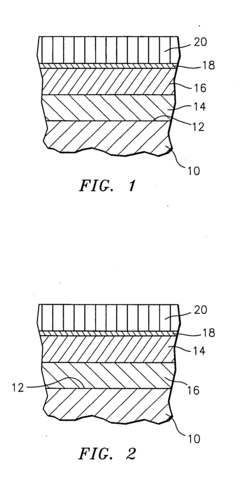
High strength NiPtAIHf Bondcoat
PatentInactiveEP1801257A2
Innovation
- The use of a nickel-platinum-aluminum-hafnium (Ni-Pt-Al-Hf) bondcoat provides superior high temperature resistance and corrosion resistance.
- The method of depositing layers of platinum and nickel-aluminum-hafnium onto the substrate and heat treating them to form the bondcoat improves the durability and reliability of turbine engine components.
- The coating system reduces maintenance costs and increases the efficiency of the engine by providing improved oxidation resistance.
Advanced Coating Technologies Environmental Impact Analysis
Advanced coating technologies for turbine engines significantly impact the environment. These coatings enhance engine efficiency, reduce fuel consumption, and lower emissions, contributing to environmental sustainability. However, the production and application of these coatings involve hazardous materials and energy-intensive processes, posing environmental risks. Proper waste management and recycling strategies are essential to mitigate these impacts. Additionally, ongoing research focuses on developing eco-friendly coating materials and methods to minimize environmental footprints. Balancing performance improvements with environmental considerations is crucial for the sustainable advancement of turbine engine technologies.
Advanced Coating Technologies Regulatory And Compliance Considerations
Regulatory and compliance considerations for advanced coating technologies in turbine engine technology are crucial. These coatings must meet stringent industry standards to ensure safety, performance, and durability. Compliance with regulations such as those from the FAA, EASA, and other aviation authorities is mandatory. Additionally, environmental regulations regarding the use of hazardous materials and emissions must be adhered to. Companies must also consider intellectual property laws to protect their innovations. Ensuring compliance involves rigorous testing, certification processes, and continuous monitoring to align with evolving standards and regulations, thereby ensuring the technology's reliability and market acceptance.
Unlock deeper insights with Patsnap Eureka Quick Research — get a full tech report to explore trends and direct your research. Try now!
Generate Your Research Report Instantly with AI Agent
Supercharge your innovation with Patsnap Eureka AI Agent Platform!