
Advanced Materials for Future Drainage Applications
FEB 28, 20269 MIN READ
Generate Your Research Report Instantly with AI Agent
Patsnap Eureka helps you evaluate technical feasibility & market potential.
Advanced Drainage Materials Background and Objectives
The global drainage infrastructure faces unprecedented challenges as urbanization accelerates and climate patterns become increasingly unpredictable. Traditional drainage materials, primarily concrete and conventional polymers, are proving inadequate for modern demands characterized by extreme weather events, aging infrastructure, and stringent environmental regulations. The evolution from basic clay pipes to sophisticated composite systems reflects humanity's continuous quest for more durable, efficient, and sustainable drainage solutions.
Contemporary drainage systems must address multiple complex requirements simultaneously. These include enhanced structural integrity to withstand ground movement and heavy loads, superior chemical resistance against increasingly corrosive urban runoff, and improved hydraulic performance to handle variable flow conditions. Additionally, environmental sustainability has emerged as a critical factor, driving demand for materials with reduced carbon footprints and enhanced recyclability.
The technological landscape of drainage materials has undergone significant transformation over the past two decades. Advanced polymer composites, bio-based materials, and smart sensing-enabled systems represent the current frontier of innovation. These developments are driven by the convergence of materials science breakthroughs, environmental imperatives, and the integration of digital technologies into infrastructure management.
The primary objective of advanced drainage materials research centers on developing next-generation solutions that demonstrate superior performance across multiple dimensions. These materials must exhibit exceptional durability, with service lives extending beyond 100 years while maintaining structural and functional integrity. Enhanced hydraulic efficiency through optimized surface properties and geometric configurations represents another crucial target, enabling improved flow characteristics and reduced maintenance requirements.
Environmental compatibility constitutes a fundamental objective, encompassing both manufacturing sustainability and end-of-life considerations. Advanced materials must demonstrate reduced environmental impact throughout their lifecycle while potentially offering additional benefits such as water treatment capabilities or carbon sequestration properties.
The integration of smart technologies represents an emerging objective, where materials incorporate sensing capabilities for real-time monitoring of structural health, flow conditions, and environmental parameters. This convergence of materials science and digital technology aims to enable predictive maintenance strategies and optimize system performance dynamically.
Cost-effectiveness remains a critical consideration, as advanced materials must demonstrate economic viability compared to conventional alternatives while delivering superior long-term value through reduced maintenance requirements and extended service life.
Contemporary drainage systems must address multiple complex requirements simultaneously. These include enhanced structural integrity to withstand ground movement and heavy loads, superior chemical resistance against increasingly corrosive urban runoff, and improved hydraulic performance to handle variable flow conditions. Additionally, environmental sustainability has emerged as a critical factor, driving demand for materials with reduced carbon footprints and enhanced recyclability.
The technological landscape of drainage materials has undergone significant transformation over the past two decades. Advanced polymer composites, bio-based materials, and smart sensing-enabled systems represent the current frontier of innovation. These developments are driven by the convergence of materials science breakthroughs, environmental imperatives, and the integration of digital technologies into infrastructure management.
The primary objective of advanced drainage materials research centers on developing next-generation solutions that demonstrate superior performance across multiple dimensions. These materials must exhibit exceptional durability, with service lives extending beyond 100 years while maintaining structural and functional integrity. Enhanced hydraulic efficiency through optimized surface properties and geometric configurations represents another crucial target, enabling improved flow characteristics and reduced maintenance requirements.
Environmental compatibility constitutes a fundamental objective, encompassing both manufacturing sustainability and end-of-life considerations. Advanced materials must demonstrate reduced environmental impact throughout their lifecycle while potentially offering additional benefits such as water treatment capabilities or carbon sequestration properties.
The integration of smart technologies represents an emerging objective, where materials incorporate sensing capabilities for real-time monitoring of structural health, flow conditions, and environmental parameters. This convergence of materials science and digital technology aims to enable predictive maintenance strategies and optimize system performance dynamically.
Cost-effectiveness remains a critical consideration, as advanced materials must demonstrate economic viability compared to conventional alternatives while delivering superior long-term value through reduced maintenance requirements and extended service life.
Market Demand for Next-Generation Drainage Solutions
The global drainage infrastructure market is experiencing unprecedented demand driven by rapid urbanization, climate change impacts, and aging infrastructure systems worldwide. Urban populations continue to expand at accelerating rates, placing enormous strain on existing drainage networks that were designed for smaller populations and different precipitation patterns. This demographic shift creates immediate market opportunities for advanced drainage solutions capable of handling increased volumes and more complex urban runoff scenarios.
Climate change has fundamentally altered precipitation patterns, introducing more frequent extreme weather events that overwhelm traditional drainage systems. Cities across different continents are witnessing increased flooding incidents, creating urgent demand for next-generation drainage technologies that can adapt to variable flow conditions and extreme weather scenarios. This climate-driven demand extends beyond simple capacity increases to include smart, responsive systems capable of real-time adaptation.
The aging infrastructure crisis represents another significant market driver, particularly in developed economies where drainage systems installed decades ago are reaching end-of-life status. Replacement and upgrade projects create substantial market opportunities for advanced materials that offer superior durability, reduced maintenance requirements, and enhanced performance characteristics compared to conventional solutions.
Regulatory frameworks are increasingly emphasizing sustainable drainage practices and environmental protection standards. New regulations mandate improved stormwater management, reduced environmental impact, and enhanced system resilience. These regulatory requirements create market demand for innovative materials that can meet stricter performance criteria while supporting sustainable development objectives.
Smart city initiatives worldwide are driving demand for intelligent drainage solutions that integrate with broader urban management systems. Municipal authorities seek drainage technologies that provide real-time monitoring capabilities, predictive maintenance features, and data integration with city-wide infrastructure management platforms. This trend creates market opportunities for advanced materials that can support embedded sensing technologies and connectivity features.
Industrial and commercial sectors represent growing market segments requiring specialized drainage solutions. Manufacturing facilities, data centers, and large commercial complexes need drainage systems capable of handling specific contaminants, temperature variations, and high-volume discharge scenarios. These applications demand advanced materials with specialized chemical resistance, thermal stability, and enhanced structural properties.
The maintenance and operational cost considerations are becoming increasingly important market factors. End users prioritize drainage solutions that minimize lifecycle costs through reduced maintenance requirements, extended service life, and improved operational efficiency. This economic driver creates demand for advanced materials that offer superior performance-to-cost ratios over extended operational periods.
Climate change has fundamentally altered precipitation patterns, introducing more frequent extreme weather events that overwhelm traditional drainage systems. Cities across different continents are witnessing increased flooding incidents, creating urgent demand for next-generation drainage technologies that can adapt to variable flow conditions and extreme weather scenarios. This climate-driven demand extends beyond simple capacity increases to include smart, responsive systems capable of real-time adaptation.
The aging infrastructure crisis represents another significant market driver, particularly in developed economies where drainage systems installed decades ago are reaching end-of-life status. Replacement and upgrade projects create substantial market opportunities for advanced materials that offer superior durability, reduced maintenance requirements, and enhanced performance characteristics compared to conventional solutions.
Regulatory frameworks are increasingly emphasizing sustainable drainage practices and environmental protection standards. New regulations mandate improved stormwater management, reduced environmental impact, and enhanced system resilience. These regulatory requirements create market demand for innovative materials that can meet stricter performance criteria while supporting sustainable development objectives.
Smart city initiatives worldwide are driving demand for intelligent drainage solutions that integrate with broader urban management systems. Municipal authorities seek drainage technologies that provide real-time monitoring capabilities, predictive maintenance features, and data integration with city-wide infrastructure management platforms. This trend creates market opportunities for advanced materials that can support embedded sensing technologies and connectivity features.
Industrial and commercial sectors represent growing market segments requiring specialized drainage solutions. Manufacturing facilities, data centers, and large commercial complexes need drainage systems capable of handling specific contaminants, temperature variations, and high-volume discharge scenarios. These applications demand advanced materials with specialized chemical resistance, thermal stability, and enhanced structural properties.
The maintenance and operational cost considerations are becoming increasingly important market factors. End users prioritize drainage solutions that minimize lifecycle costs through reduced maintenance requirements, extended service life, and improved operational efficiency. This economic driver creates demand for advanced materials that offer superior performance-to-cost ratios over extended operational periods.
Current State and Challenges in Drainage Material Technology
The global drainage materials market currently faces a complex landscape characterized by both technological advancement and persistent challenges. Traditional materials such as concrete, clay, and basic polymers continue to dominate infrastructure applications, while emerging composite materials and smart systems are gradually gaining traction in specialized applications. The market demonstrates significant regional variations, with developed economies leading in advanced material adoption and developing nations primarily relying on conventional solutions due to cost constraints.
Contemporary drainage systems predominantly utilize reinforced concrete pipes, high-density polyethylene (HDPE), polyvinyl chloride (PVC), and ductile iron materials. These materials have established supply chains and proven performance records, yet they exhibit limitations in durability, environmental impact, and adaptability to changing climate conditions. Advanced ceramic composites and fiber-reinforced polymers are emerging as premium alternatives, offering enhanced corrosion resistance and structural integrity, though their adoption remains limited by higher initial costs.
The primary technical challenges confronting drainage material technology include corrosion resistance in aggressive chemical environments, structural degradation under cyclic loading conditions, and inadequate performance during extreme weather events. Traditional materials suffer from chemical attack by industrial effluents, biological degradation, and thermal expansion issues that compromise long-term reliability. Additionally, existing materials often lack self-monitoring capabilities, making predictive maintenance difficult and increasing lifecycle costs.
Environmental sustainability represents another critical challenge, as conventional drainage materials contribute significantly to carbon emissions during production and disposal phases. The industry struggles with balancing performance requirements against environmental impact, particularly in large-scale infrastructure projects where material volumes are substantial. Recycling and end-of-life management of current drainage materials remain problematic, creating long-term environmental liabilities.
Manufacturing scalability and cost optimization present ongoing obstacles for advanced material adoption. While laboratory-scale developments show promising results, translating these innovations to industrial production scales while maintaining quality consistency and economic viability remains challenging. The conservative nature of infrastructure procurement processes further slows the integration of innovative materials, as decision-makers prioritize proven solutions over potentially superior but unestablished alternatives.
Regulatory frameworks and standardization gaps also impede progress, as existing codes and specifications were developed for traditional materials and may not adequately address the unique properties and performance characteristics of advanced drainage materials. This regulatory lag creates uncertainty for manufacturers and specifiers, limiting investment in research and development activities.
Contemporary drainage systems predominantly utilize reinforced concrete pipes, high-density polyethylene (HDPE), polyvinyl chloride (PVC), and ductile iron materials. These materials have established supply chains and proven performance records, yet they exhibit limitations in durability, environmental impact, and adaptability to changing climate conditions. Advanced ceramic composites and fiber-reinforced polymers are emerging as premium alternatives, offering enhanced corrosion resistance and structural integrity, though their adoption remains limited by higher initial costs.
The primary technical challenges confronting drainage material technology include corrosion resistance in aggressive chemical environments, structural degradation under cyclic loading conditions, and inadequate performance during extreme weather events. Traditional materials suffer from chemical attack by industrial effluents, biological degradation, and thermal expansion issues that compromise long-term reliability. Additionally, existing materials often lack self-monitoring capabilities, making predictive maintenance difficult and increasing lifecycle costs.
Environmental sustainability represents another critical challenge, as conventional drainage materials contribute significantly to carbon emissions during production and disposal phases. The industry struggles with balancing performance requirements against environmental impact, particularly in large-scale infrastructure projects where material volumes are substantial. Recycling and end-of-life management of current drainage materials remain problematic, creating long-term environmental liabilities.
Manufacturing scalability and cost optimization present ongoing obstacles for advanced material adoption. While laboratory-scale developments show promising results, translating these innovations to industrial production scales while maintaining quality consistency and economic viability remains challenging. The conservative nature of infrastructure procurement processes further slows the integration of innovative materials, as decision-makers prioritize proven solutions over potentially superior but unestablished alternatives.
Regulatory frameworks and standardization gaps also impede progress, as existing codes and specifications were developed for traditional materials and may not adequately address the unique properties and performance characteristics of advanced drainage materials. This regulatory lag creates uncertainty for manufacturers and specifiers, limiting investment in research and development activities.
Existing Advanced Material Solutions for Drainage Systems
01 Advanced composite materials and their manufacturing processes
This category focuses on the development and production of composite materials with enhanced properties. These materials combine multiple components to achieve superior mechanical strength, thermal stability, and durability compared to traditional materials. Manufacturing processes include advanced molding techniques, layering methods, and curing processes that optimize the material structure for specific applications in aerospace, automotive, and construction industries.- Advanced composite materials and their manufacturing processes: This category focuses on the development and production of composite materials with enhanced properties. These materials combine multiple components to achieve superior mechanical strength, thermal stability, and durability compared to traditional materials. Manufacturing processes include layering techniques, bonding methods, and specialized curing processes that optimize the material structure for specific applications in aerospace, automotive, and construction industries.
- Nanomaterials and nanostructured compositions: This classification covers materials engineered at the nanoscale to exhibit unique physical, chemical, and mechanical properties. These materials demonstrate enhanced surface area, improved reactivity, and novel optical or electrical characteristics. Applications include coatings, catalysts, electronics, and biomedical devices where nanoscale features provide significant performance advantages over conventional materials.
- Functional polymers and polymer-based materials: This category encompasses advanced polymer systems designed with specific functional properties such as conductivity, biodegradability, or stimuli-responsiveness. These materials can be tailored for applications in electronics, packaging, medical devices, and environmental remediation. The development includes novel polymerization techniques, crosslinking strategies, and incorporation of functional additives to achieve desired performance characteristics.
- Smart and responsive materials: This classification includes materials that can respond to external stimuli such as temperature, pH, light, or magnetic fields. These materials exhibit reversible changes in their properties, enabling applications in sensors, actuators, drug delivery systems, and adaptive structures. The technology involves designing molecular architectures and material compositions that enable controlled and predictable responses to environmental changes.
- High-performance ceramic and metallic materials: This category covers advanced ceramic and metallic materials engineered for extreme conditions and demanding applications. These materials exhibit exceptional hardness, wear resistance, high-temperature stability, and corrosion resistance. Development focuses on optimizing microstructure, grain size, and phase composition through advanced processing techniques to achieve superior mechanical and thermal properties for aerospace, energy, and industrial applications.
02 Nanomaterials and nanostructured coatings
This classification covers materials engineered at the nanoscale to exhibit unique properties such as increased surface area, enhanced reactivity, and improved electrical or optical characteristics. Applications include protective coatings, catalysts, and functional surfaces. The technology involves synthesis methods that control particle size and distribution to achieve desired performance characteristics in electronics, energy storage, and biomedical devices.Expand Specific Solutions03 High-performance polymers and polymer composites
This area encompasses the development of polymeric materials with exceptional thermal resistance, chemical stability, and mechanical properties. These materials are designed for demanding applications where conventional polymers fail. The technology includes polymer modification, blending techniques, and reinforcement strategies to create materials suitable for high-temperature environments, corrosive conditions, and structural applications requiring long-term reliability.Expand Specific Solutions04 Smart and functional materials with responsive properties
This category includes materials that can respond to external stimuli such as temperature, light, pressure, or chemical environment. These materials exhibit adaptive behavior including shape memory effects, self-healing capabilities, or variable conductivity. Applications span from sensors and actuators to adaptive structures and biomedical implants. The development involves molecular design and processing techniques that enable controlled responsiveness to specific triggers.Expand Specific Solutions05 Advanced ceramic and inorganic materials
This classification covers non-metallic inorganic materials with exceptional hardness, wear resistance, and high-temperature stability. These materials include advanced ceramics, glass-ceramics, and engineered minerals designed for extreme environments. Processing methods involve sintering, crystallization control, and surface modification to achieve desired microstructures. Applications include cutting tools, thermal barriers, electronic substrates, and structural components in harsh operating conditions.Expand Specific Solutions
Key Players in Advanced Drainage Materials Industry
The advanced materials for future drainage applications market is experiencing significant growth driven by increasing urbanization and climate change challenges. The industry is in a mature development stage with established players like ACO Severin Ahlmann GmbH & Co. KG leading traditional drainage solutions, while companies such as HUESKER Synthetic GmbH and Oldcastle Infrastructure Inc. advance synthetic material applications. Technology maturity varies across segments, with membrane technologies from Beijing Bishuiyuan Membrane Technology Co. and Oseco Membrane Technology representing cutting-edge innovations. Energy sector giants including Halliburton Energy Services and Schlumberger entities contribute specialized materials for industrial drainage. The market benefits from strong R&D collaboration between universities like Shandong University and Qingdao University of Technology with industrial partners, accelerating material science breakthroughs and commercial applications.
ACO Severin Ahlmann GmbH & Co. KG
Technical Solution: ACO develops advanced polymer-based drainage systems incorporating high-performance materials such as polymer concrete and fiber-reinforced composites. Their innovative approach includes self-cleaning surface technologies using hydrophobic coatings and antimicrobial additives to prevent biofilm formation. The company integrates smart sensor technologies within drainage channels using corrosion-resistant alloys and IoT-enabled monitoring systems. Their modular design philosophy utilizes recyclable thermoplastic materials with enhanced UV resistance and thermal stability, ensuring long-term performance in harsh environmental conditions while maintaining structural integrity and flow efficiency.
Strengths: Market leadership in polymer concrete technology, extensive distribution network, proven durability in harsh conditions. Weaknesses: Higher initial costs compared to traditional materials, limited customization for specialized industrial applications.
Halliburton Energy Services, Inc.
Technical Solution: Halliburton specializes in advanced materials for subsurface drainage applications, particularly in oil and gas operations. Their technology portfolio includes high-temperature resistant polymer composites, corrosion-resistant metallic alloys, and specialized cement formulations for wellbore integrity. The company develops smart materials with self-healing properties using microcapsule technology and shape-memory alloys for adaptive drainage systems. Their advanced filtration materials incorporate nanostructured membranes and selective permeability barriers designed to handle complex fluid mixtures while maintaining structural stability under extreme pressure and temperature conditions.
Strengths: Extensive R&D capabilities, proven performance in extreme environments, global technical support network. Weaknesses: Focus primarily on industrial applications, limited experience in urban drainage systems, high-cost solutions.
Core Innovations in Smart Drainage Materials
Geonet for a geocomposite
PatentInactiveUS20150071710A1
Innovation
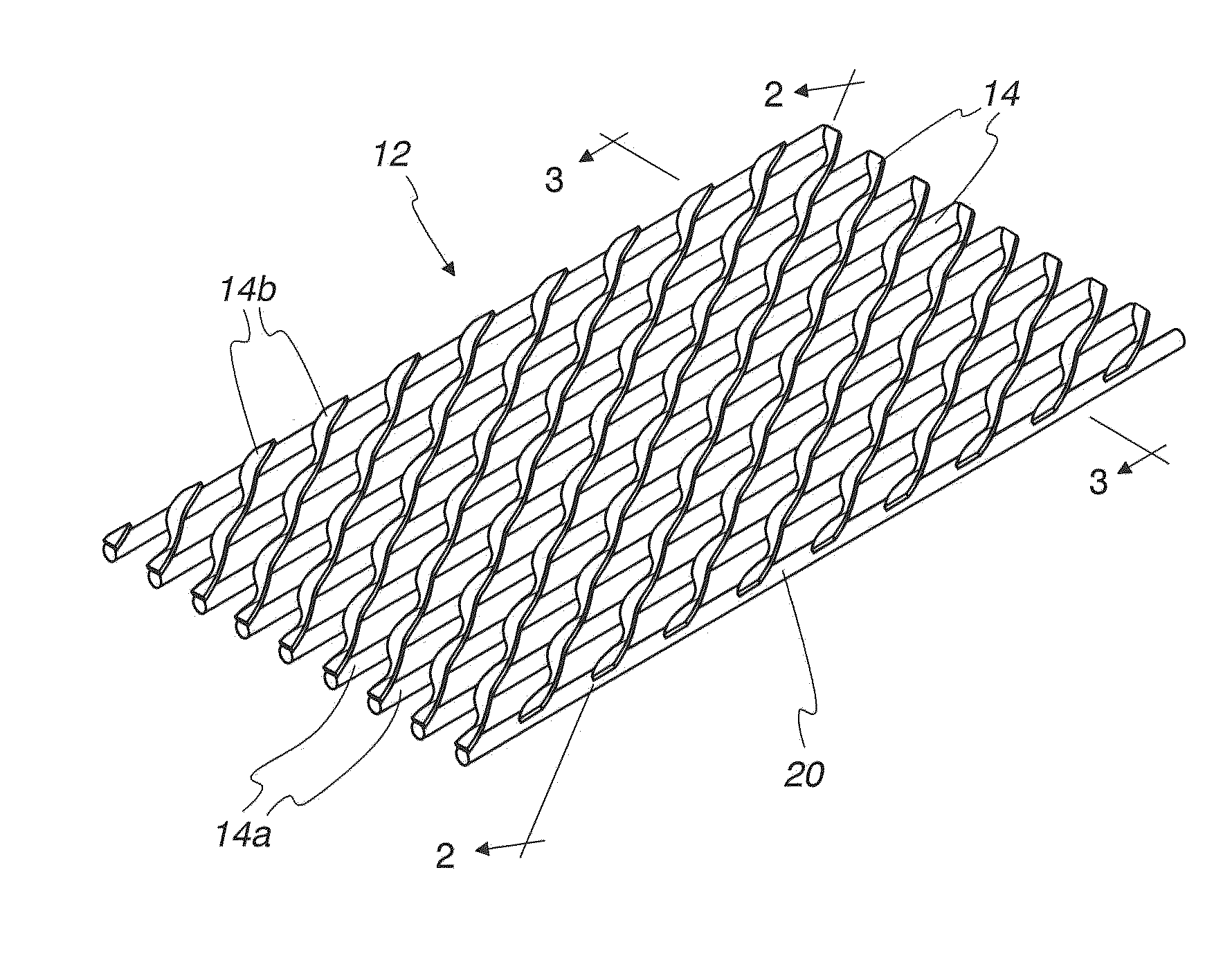
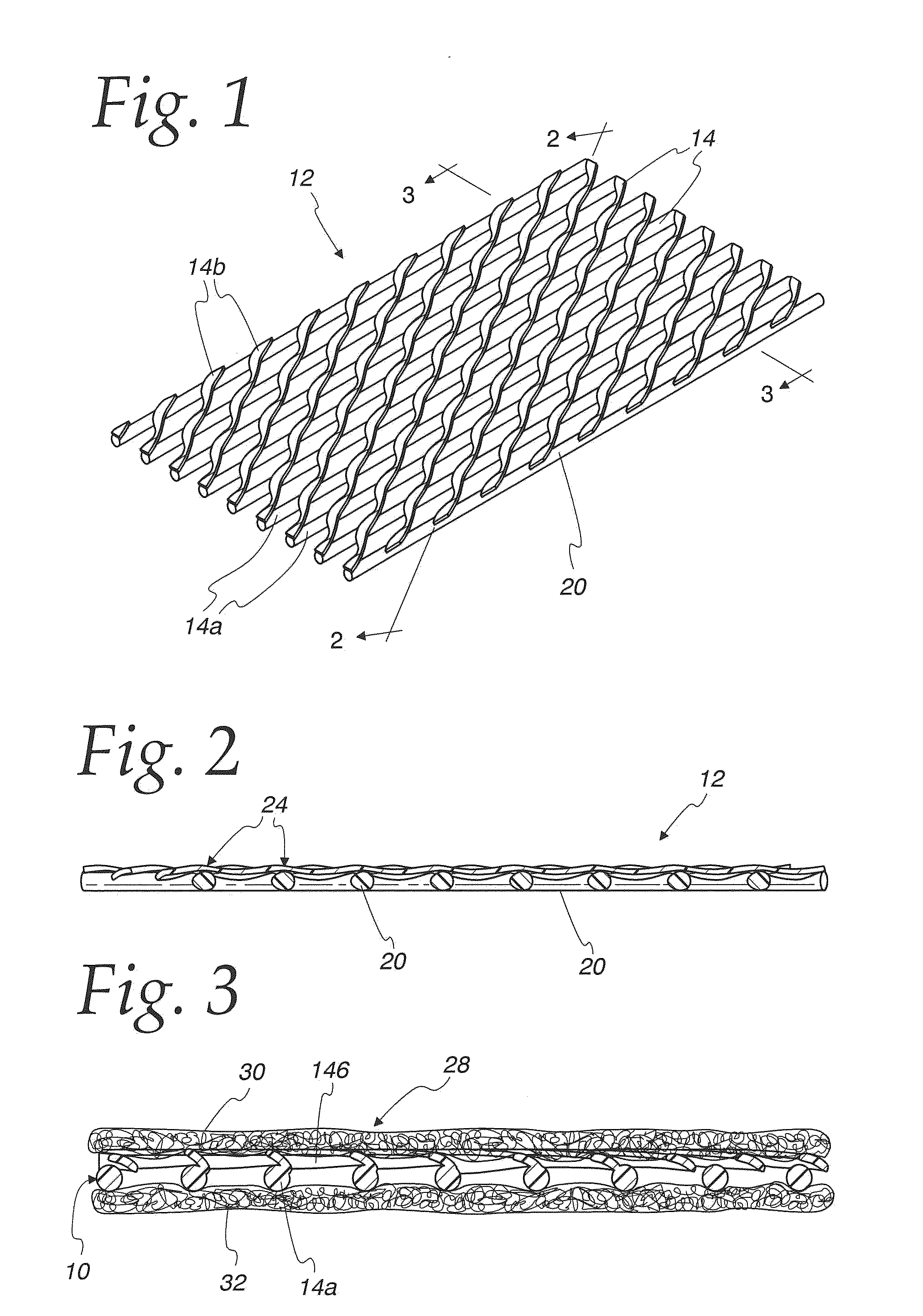
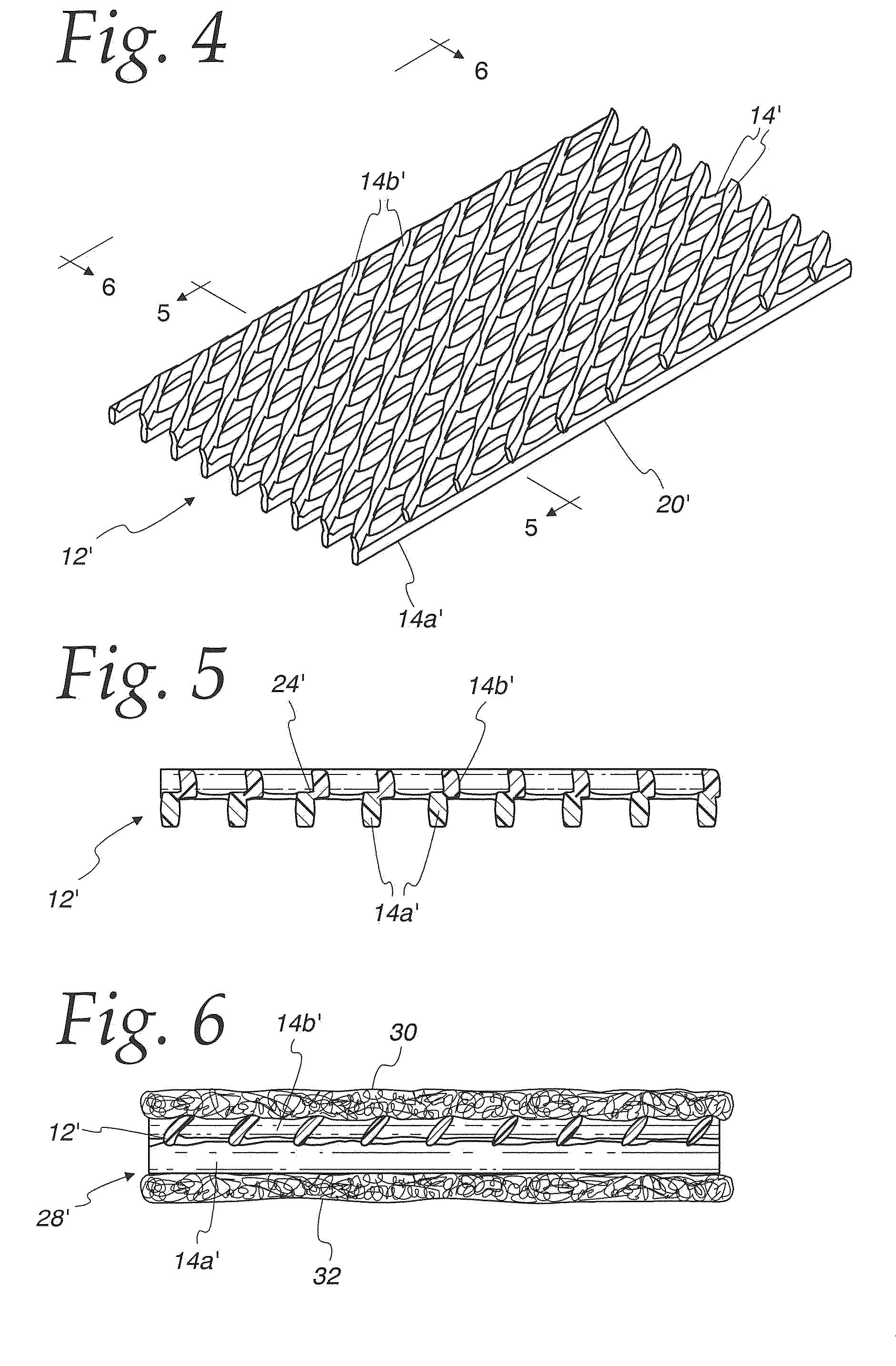
- A geonet with a length greater than its width, featuring two layers of substantially parallel strands where one set extends longitudinally and the other is angled, secured at crossover points, and bonded with a geotextile, providing a rigid yet flexible structure to maintain high fluid flow rates under pressure.

Draining element for the lining of wells and process for its manufacture
PatentInactiveEP0468608A1
Innovation
- A drainage element composed of a homogeneous mixture of selected additives and a binder, with a 30:20 mass ratio of aggregate to binding agent, using reactive resin with hardener and catalyst, forming a porous material with controlled microstructure for enhanced water permeability and mechanical strength, suitable for lignite mining and environmental applications.

Environmental Regulations for Drainage Material Development
Environmental regulations serve as critical drivers shaping the development trajectory of advanced drainage materials, establishing mandatory frameworks that govern material composition, performance standards, and lifecycle environmental impact. These regulatory structures have evolved significantly over the past decade, transitioning from basic material safety requirements to comprehensive sustainability mandates that encompass carbon footprint reduction, recyclability standards, and ecosystem protection protocols.
The European Union's Construction Products Regulation (CPR) has established stringent requirements for drainage materials, mandating detailed environmental product declarations and life cycle assessments. Similarly, the United States Environmental Protection Agency has implemented enhanced standards under the Clean Water Act, requiring drainage materials to demonstrate minimal leaching potential and compatibility with groundwater protection objectives. These regulations directly influence material selection criteria, pushing manufacturers toward bio-based polymers, recycled composites, and chemically inert formulations.
Emerging regulatory trends focus on circular economy principles, requiring drainage materials to incorporate minimum percentages of recycled content while maintaining structural integrity and longevity. The proposed EU Taxonomy for Sustainable Activities specifically addresses infrastructure materials, establishing performance thresholds that drainage systems must meet to qualify for green financing and public procurement preferences.
Regional variations in environmental standards create complex compliance landscapes for global manufacturers. Nordic countries have implemented particularly stringent requirements for cold-weather performance and environmental durability, while tropical regions emphasize resistance to chemical degradation and biological fouling. These geographic differences necessitate adaptive material formulations and testing protocols.
Future regulatory developments are anticipated to address microplastic generation from synthetic drainage materials, potentially requiring biodegradable alternatives or enhanced filtration capabilities. Additionally, emerging regulations on per- and polyfluoroalkyl substances (PFAS) may restrict certain chemical treatments traditionally used for water repellency and corrosion resistance in drainage applications.
The regulatory landscape increasingly emphasizes performance-based standards rather than prescriptive material specifications, allowing innovation in material science while ensuring environmental protection objectives are met through measurable outcomes and long-term monitoring requirements.
The European Union's Construction Products Regulation (CPR) has established stringent requirements for drainage materials, mandating detailed environmental product declarations and life cycle assessments. Similarly, the United States Environmental Protection Agency has implemented enhanced standards under the Clean Water Act, requiring drainage materials to demonstrate minimal leaching potential and compatibility with groundwater protection objectives. These regulations directly influence material selection criteria, pushing manufacturers toward bio-based polymers, recycled composites, and chemically inert formulations.
Emerging regulatory trends focus on circular economy principles, requiring drainage materials to incorporate minimum percentages of recycled content while maintaining structural integrity and longevity. The proposed EU Taxonomy for Sustainable Activities specifically addresses infrastructure materials, establishing performance thresholds that drainage systems must meet to qualify for green financing and public procurement preferences.
Regional variations in environmental standards create complex compliance landscapes for global manufacturers. Nordic countries have implemented particularly stringent requirements for cold-weather performance and environmental durability, while tropical regions emphasize resistance to chemical degradation and biological fouling. These geographic differences necessitate adaptive material formulations and testing protocols.
Future regulatory developments are anticipated to address microplastic generation from synthetic drainage materials, potentially requiring biodegradable alternatives or enhanced filtration capabilities. Additionally, emerging regulations on per- and polyfluoroalkyl substances (PFAS) may restrict certain chemical treatments traditionally used for water repellency and corrosion resistance in drainage applications.
The regulatory landscape increasingly emphasizes performance-based standards rather than prescriptive material specifications, allowing innovation in material science while ensuring environmental protection objectives are met through measurable outcomes and long-term monitoring requirements.
Sustainability Considerations in Advanced Drainage Materials
Sustainability has emerged as a fundamental driver in the development of advanced drainage materials, fundamentally reshaping material selection criteria and design philosophies. The integration of environmental considerations into drainage infrastructure development reflects growing awareness of climate change impacts and resource scarcity challenges facing urban environments globally.
Life cycle assessment methodologies have become essential tools for evaluating drainage materials, encompassing raw material extraction, manufacturing processes, transportation, installation, operational performance, and end-of-life disposal or recycling. Advanced materials such as bio-based polymers, recycled composites, and engineered ceramics demonstrate varying environmental footprints that must be carefully balanced against performance requirements and economic viability.
Circular economy principles are increasingly influencing material innovation in drainage applications. Recycled plastic aggregates, reclaimed concrete materials, and bio-degradable geotextiles represent emerging solutions that minimize waste generation while maintaining structural integrity and hydraulic performance. These materials often require modified installation techniques and quality control protocols to ensure long-term reliability.
Carbon footprint reduction strategies focus on both embodied carbon in materials and operational carbon emissions throughout infrastructure lifespan. Low-carbon concrete alternatives, locally sourced natural materials, and modular systems designed for disassembly and reuse contribute to overall emission reductions. Manufacturing process optimization and transportation efficiency further enhance environmental performance metrics.
Resource conservation considerations extend beyond material composition to include water management efficiency and energy consumption during production and installation phases. Advanced materials incorporating smart sensing capabilities enable optimized system performance, reducing maintenance requirements and extending service life while minimizing environmental impact.
Regulatory frameworks and certification standards increasingly mandate sustainability assessments for infrastructure projects, driving adoption of environmentally responsible materials. Green building certification programs and municipal sustainability requirements create market incentives for innovative drainage solutions that demonstrate measurable environmental benefits while meeting technical performance specifications.
Life cycle assessment methodologies have become essential tools for evaluating drainage materials, encompassing raw material extraction, manufacturing processes, transportation, installation, operational performance, and end-of-life disposal or recycling. Advanced materials such as bio-based polymers, recycled composites, and engineered ceramics demonstrate varying environmental footprints that must be carefully balanced against performance requirements and economic viability.
Circular economy principles are increasingly influencing material innovation in drainage applications. Recycled plastic aggregates, reclaimed concrete materials, and bio-degradable geotextiles represent emerging solutions that minimize waste generation while maintaining structural integrity and hydraulic performance. These materials often require modified installation techniques and quality control protocols to ensure long-term reliability.
Carbon footprint reduction strategies focus on both embodied carbon in materials and operational carbon emissions throughout infrastructure lifespan. Low-carbon concrete alternatives, locally sourced natural materials, and modular systems designed for disassembly and reuse contribute to overall emission reductions. Manufacturing process optimization and transportation efficiency further enhance environmental performance metrics.
Resource conservation considerations extend beyond material composition to include water management efficiency and energy consumption during production and installation phases. Advanced materials incorporating smart sensing capabilities enable optimized system performance, reducing maintenance requirements and extending service life while minimizing environmental impact.
Regulatory frameworks and certification standards increasingly mandate sustainability assessments for infrastructure projects, driving adoption of environmentally responsible materials. Green building certification programs and municipal sustainability requirements create market incentives for innovative drainage solutions that demonstrate measurable environmental benefits while meeting technical performance specifications.
Unlock deeper insights with Patsnap Eureka Quick Research — get a full tech report to explore trends and direct your research. Try now!
Generate Your Research Report Instantly with AI Agent
Supercharge your innovation with Patsnap Eureka AI Agent Platform!