
Analyze Haptic Feedback Frequency for Maximal Comfort Experience
JAN 12, 20269 MIN READ
Generate Your Research Report Instantly with AI Agent
Patsnap Eureka helps you evaluate technical feasibility & market potential.
Haptic Feedback Technology Background and Comfort Goals
Haptic feedback technology has evolved significantly since its early applications in simple vibration alerts for mobile devices. The field encompasses the generation of tactile sensations through mechanical stimulation, enabling users to receive information through touch. Early implementations focused primarily on binary on-off vibrations, but modern systems have advanced to deliver nuanced, frequency-modulated feedback that can convey complex information and enhance user experiences across diverse applications including gaming, virtual reality, medical simulation, and automotive interfaces.
The fundamental principle underlying haptic feedback involves converting electrical signals into mechanical motion through actuators such as eccentric rotating mass motors, linear resonant actuators, or piezoelectric elements. Each technology offers distinct frequency response characteristics, with operational ranges typically spanning from 50Hz to 500Hz. Research has demonstrated that human tactile perception exhibits peak sensitivity around 200-250Hz, though comfort thresholds vary considerably based on amplitude, duration, and application context.
Contemporary challenges in haptic design center on balancing perceptibility with comfort, as excessive vibration intensity or inappropriate frequency selection can lead to user fatigue, discomfort, or even tissue damage during prolonged exposure. The relationship between frequency and comfort is non-linear and influenced by multiple factors including contact area, body location, individual sensitivity variations, and concurrent sensory inputs.
The primary goal of analyzing haptic feedback frequency for maximal comfort is to establish evidence-based design parameters that optimize user experience while maintaining effective information transmission. This involves identifying frequency ranges that maximize tactile clarity without inducing discomfort, determining safe exposure limits for various application scenarios, and developing adaptive algorithms that can adjust feedback parameters based on usage patterns and user preferences.
Achieving these objectives requires interdisciplinary integration of biomechanics, psychophysics, signal processing, and human-computer interaction principles. The ultimate aim is to create haptic interfaces that feel natural and intuitive, enhancing rather than distracting from the primary user task while ensuring long-term usability and user wellbeing across diverse demographic groups and application contexts.
The fundamental principle underlying haptic feedback involves converting electrical signals into mechanical motion through actuators such as eccentric rotating mass motors, linear resonant actuators, or piezoelectric elements. Each technology offers distinct frequency response characteristics, with operational ranges typically spanning from 50Hz to 500Hz. Research has demonstrated that human tactile perception exhibits peak sensitivity around 200-250Hz, though comfort thresholds vary considerably based on amplitude, duration, and application context.
Contemporary challenges in haptic design center on balancing perceptibility with comfort, as excessive vibration intensity or inappropriate frequency selection can lead to user fatigue, discomfort, or even tissue damage during prolonged exposure. The relationship between frequency and comfort is non-linear and influenced by multiple factors including contact area, body location, individual sensitivity variations, and concurrent sensory inputs.
The primary goal of analyzing haptic feedback frequency for maximal comfort is to establish evidence-based design parameters that optimize user experience while maintaining effective information transmission. This involves identifying frequency ranges that maximize tactile clarity without inducing discomfort, determining safe exposure limits for various application scenarios, and developing adaptive algorithms that can adjust feedback parameters based on usage patterns and user preferences.
Achieving these objectives requires interdisciplinary integration of biomechanics, psychophysics, signal processing, and human-computer interaction principles. The ultimate aim is to create haptic interfaces that feel natural and intuitive, enhancing rather than distracting from the primary user task while ensuring long-term usability and user wellbeing across diverse demographic groups and application contexts.
Market Demand for Enhanced Haptic User Experience
The demand for enhanced haptic user experience has emerged as a critical differentiator across multiple consumer electronics and interactive technology sectors. As touchscreen interfaces have become ubiquitous in smartphones, tablets, wearables, and automotive systems, users increasingly expect tactile feedback that transcends basic vibration alerts to deliver nuanced, context-aware sensations that enhance usability and emotional engagement. This shift reflects a broader market evolution where haptic technology is no longer viewed as a supplementary feature but as an essential component of premium user experience design.
Consumer electronics manufacturers face mounting pressure to differentiate their products in saturated markets where hardware specifications have largely converged. Haptic feedback optimization, particularly through frequency tuning for comfort and perceptibility, represents a strategic opportunity to create distinctive brand experiences. Gaming peripherals, virtual reality systems, and augmented reality devices demonstrate particularly strong demand for sophisticated haptic solutions that can simulate realistic textures, impacts, and environmental conditions without causing user fatigue or discomfort during extended interaction sessions.
The automotive industry presents another significant demand driver as vehicle interfaces transition from mechanical controls to digital touchscreens. Drivers require haptic confirmation of input actions to maintain focus on road conditions, creating stringent requirements for feedback systems that deliver clear tactile signals without distraction. Medical device manufacturers similarly seek haptic solutions that provide precise feedback during minimally invasive procedures, where surgeons rely on tactile cues to navigate delicate anatomical structures through robotic interfaces.
Accessibility considerations further amplify market demand, as haptic feedback enables visually impaired users to interact more effectively with digital interfaces. Regulatory frameworks in major markets increasingly mandate inclusive design practices, compelling manufacturers to invest in haptic technologies that accommodate diverse user populations. The convergence of these demand factors across consumer, industrial, and medical applications establishes a robust market foundation for innovations in haptic feedback frequency optimization that prioritize user comfort alongside functional performance.
Consumer electronics manufacturers face mounting pressure to differentiate their products in saturated markets where hardware specifications have largely converged. Haptic feedback optimization, particularly through frequency tuning for comfort and perceptibility, represents a strategic opportunity to create distinctive brand experiences. Gaming peripherals, virtual reality systems, and augmented reality devices demonstrate particularly strong demand for sophisticated haptic solutions that can simulate realistic textures, impacts, and environmental conditions without causing user fatigue or discomfort during extended interaction sessions.
The automotive industry presents another significant demand driver as vehicle interfaces transition from mechanical controls to digital touchscreens. Drivers require haptic confirmation of input actions to maintain focus on road conditions, creating stringent requirements for feedback systems that deliver clear tactile signals without distraction. Medical device manufacturers similarly seek haptic solutions that provide precise feedback during minimally invasive procedures, where surgeons rely on tactile cues to navigate delicate anatomical structures through robotic interfaces.
Accessibility considerations further amplify market demand, as haptic feedback enables visually impaired users to interact more effectively with digital interfaces. Regulatory frameworks in major markets increasingly mandate inclusive design practices, compelling manufacturers to invest in haptic technologies that accommodate diverse user populations. The convergence of these demand factors across consumer, industrial, and medical applications establishes a robust market foundation for innovations in haptic feedback frequency optimization that prioritize user comfort alongside functional performance.
Current Haptic Frequency Standards and Comfort Challenges
Haptic feedback technology has evolved significantly over the past decades, with frequency parameters emerging as a critical factor in determining user comfort and experience quality. Current industry standards primarily reference frequency ranges established through psychophysical research and practical implementation across consumer electronics. The most widely adopted baseline derives from studies indicating that human mechanoreceptors respond optimally to vibrations between 10 Hz and 1000 Hz, with peak sensitivity occurring around 200-250 Hz for most tactile applications.
Major standardization bodies including the IEEE and ISO have provided guidelines for haptic actuator performance, yet these standards often focus on technical specifications rather than comfort optimization. The Tactile Internet standards developed by ITU-T suggest latency requirements below 1 millisecond but offer limited guidance on frequency selection for comfort maximization. This gap between technical capability and user-centered design represents a fundamental challenge in the field.
Contemporary haptic systems face several comfort-related challenges stemming from frequency implementation. Resonance phenomena occur when actuator frequencies align with device chassis natural frequencies, creating uncomfortable amplification effects that can range from 150 Hz to 300 Hz depending on device construction. This mechanical coupling often produces harsh, buzzing sensations that degrade user experience despite meeting technical specifications.
Individual variability in haptic perception presents another significant challenge. Research demonstrates that comfort thresholds vary substantially across demographic groups, with age-related sensitivity changes particularly pronounced. Older users typically exhibit reduced sensitivity to high-frequency vibrations above 300 Hz, while younger populations may find lower frequencies below 100 Hz less engaging or even irritating during prolonged exposure.
The challenge of context-dependent comfort further complicates standardization efforts. Frequencies perceived as comfortable during brief notification alerts may become fatiguing during extended gaming sessions or continuous navigation feedback. Current standards inadequately address these temporal and contextual factors, leading to one-size-fits-all implementations that compromise comfort for certain use cases.
Energy efficiency constraints also impact comfort optimization. Lower frequencies generally require less power but may produce less refined tactile sensations, forcing designers to balance battery life against experiential quality. This trade-off becomes particularly acute in wearable devices where both comfort and operational duration are critical success factors.
Major standardization bodies including the IEEE and ISO have provided guidelines for haptic actuator performance, yet these standards often focus on technical specifications rather than comfort optimization. The Tactile Internet standards developed by ITU-T suggest latency requirements below 1 millisecond but offer limited guidance on frequency selection for comfort maximization. This gap between technical capability and user-centered design represents a fundamental challenge in the field.
Contemporary haptic systems face several comfort-related challenges stemming from frequency implementation. Resonance phenomena occur when actuator frequencies align with device chassis natural frequencies, creating uncomfortable amplification effects that can range from 150 Hz to 300 Hz depending on device construction. This mechanical coupling often produces harsh, buzzing sensations that degrade user experience despite meeting technical specifications.
Individual variability in haptic perception presents another significant challenge. Research demonstrates that comfort thresholds vary substantially across demographic groups, with age-related sensitivity changes particularly pronounced. Older users typically exhibit reduced sensitivity to high-frequency vibrations above 300 Hz, while younger populations may find lower frequencies below 100 Hz less engaging or even irritating during prolonged exposure.
The challenge of context-dependent comfort further complicates standardization efforts. Frequencies perceived as comfortable during brief notification alerts may become fatiguing during extended gaming sessions or continuous navigation feedback. Current standards inadequately address these temporal and contextual factors, leading to one-size-fits-all implementations that compromise comfort for certain use cases.
Energy efficiency constraints also impact comfort optimization. Lower frequencies generally require less power but may produce less refined tactile sensations, forcing designers to balance battery life against experiential quality. This trade-off becomes particularly acute in wearable devices where both comfort and operational duration are critical success factors.
Existing Haptic Frequency Optimization Solutions
01 Adaptive haptic feedback frequency based on user interaction
Haptic feedback systems can dynamically adjust the frequency of vibrations based on user interaction patterns, touch pressure, or gesture types. This adaptive approach enhances user experience by providing contextually appropriate tactile responses. The frequency modulation can be optimized to match different interaction scenarios, such as typing, scrolling, or gaming, ensuring that the haptic feedback feels natural and intuitive to the user.- Adaptive haptic feedback frequency based on user interaction: Haptic feedback systems can dynamically adjust the frequency of vibrations based on user interaction patterns, touch pressure, or gesture types. This adaptive approach enhances user experience by providing contextually appropriate tactile responses. The frequency modulation can be optimized to match different interaction scenarios, such as typing, scrolling, or gaming, ensuring that the haptic response feels natural and intuitive to the user.
- Frequency optimization for energy efficiency: Haptic actuators can be operated at specific frequency ranges to minimize power consumption while maintaining effective tactile feedback. By selecting optimal resonant frequencies and controlling duty cycles, devices can deliver satisfactory haptic sensations with reduced battery drain. This approach is particularly important for mobile and wearable devices where energy efficiency is critical for extended operation.
- Multi-frequency haptic patterns for enhanced perception: Combining multiple frequency components in haptic feedback signals can create richer and more distinguishable tactile sensations. By layering different frequencies or sequencing them in specific patterns, systems can convey more complex information through touch. This technique enables users to differentiate between various types of notifications, alerts, or interface elements based solely on the haptic signature.
- Frequency-based haptic localization and spatial effects: Different frequency ranges can be used to create the perception of localized haptic feedback across a surface or to simulate directional tactile cues. By controlling the frequency characteristics of multiple actuators or actuator arrays, systems can guide user attention to specific areas or create the illusion of movement across a touch surface. This spatial haptic rendering enhances user interfaces for navigation and interactive applications.
- Frequency modulation for haptic texture simulation: Varying haptic feedback frequency can simulate different surface textures and material properties in virtual or augmented reality environments. By modulating frequency parameters in real-time based on virtual object characteristics, systems can create realistic tactile sensations that correspond to smooth, rough, or patterned surfaces. This frequency-based texture rendering improves immersion and enables more intuitive interaction with digital content.
02 Frequency optimization for energy efficiency
Haptic actuators can be operated at specific frequency ranges to minimize power consumption while maintaining effective tactile feedback. By selecting optimal resonant frequencies and controlling the duration and intensity of haptic pulses, devices can achieve significant energy savings. This approach is particularly important for battery-powered mobile devices where power efficiency is critical for extended operation time.Expand Specific Solutions03 Multi-frequency haptic patterns for enhanced perception
Complex haptic feedback can be generated by combining multiple frequency components to create rich tactile sensations. These multi-frequency patterns can convey different types of information or notifications to users through distinct vibration signatures. The combination of various frequencies allows for more nuanced communication through touch, enabling users to distinguish between different alerts, notifications, or interface elements without visual confirmation.Expand Specific Solutions04 Frequency-based haptic localization and spatial effects
Different frequency ranges can be utilized across multiple haptic actuators to create spatial haptic effects and localized feedback sensations. By coordinating the frequency and timing of multiple actuators, systems can simulate directional cues or create the illusion of movement across a surface. This technique enables more immersive user experiences in applications such as gaming, virtual reality, and navigation assistance.Expand Specific Solutions05 Frequency selection for specific haptic actuator types
Different haptic actuator technologies, such as linear resonant actuators, eccentric rotating mass motors, and piezoelectric elements, have optimal operating frequency ranges that maximize their performance characteristics. The selection of appropriate frequencies depends on the physical properties of the actuator, including its resonant frequency, response time, and mechanical constraints. Proper frequency matching ensures efficient energy transfer and produces clear, distinct tactile sensations.Expand Specific Solutions
Key Players in Haptic Technology Industry
The haptic feedback technology sector is experiencing rapid evolution, transitioning from early adoption to mainstream integration across consumer electronics, automotive, and gaming industries. The market demonstrates substantial growth potential, driven by increasing demand for immersive user experiences in mobile devices, wearables, and virtual reality applications. Technology maturity varies significantly among key players: established leaders like Immersion Corp., Apple Inc., Samsung Electronics, and Sony Group Corp. have achieved advanced haptic implementation with sophisticated frequency optimization capabilities. Automotive innovators such as Mercedes-Benz Group AG are integrating haptic interfaces into vehicle systems. Component specialists including AAC Technologies, GoerTek Inc., and OMRON Corp. provide critical actuator technologies. Meanwhile, emerging players like Titan Haptics Inc. are developing next-generation solutions. Research institutions including Beihang University, Jilin University, and Korea Research Institute of Standards & Science contribute fundamental research on optimal frequency parameters for comfort maximization. Technology giants Qualcomm Inc., Google LLC, and Meta Platforms Inc. are advancing haptic algorithms and software integration, indicating a competitive landscape characterized by vertical integration and cross-industry collaboration.
Immersion Corp.
Technical Solution: Immersion Corporation specializes in haptic feedback technology with advanced frequency optimization algorithms for comfort maximization. Their TouchSense technology employs adaptive frequency modulation ranging from 50Hz to 300Hz, dynamically adjusting based on user interaction patterns and application contexts[1][4]. The system utilizes psychophysical models to identify optimal frequency bands that minimize fatigue while maintaining tactile clarity. Their HD haptic waveform design incorporates frequency sweeps and multi-layered actuation patterns that reduce perceived vibration harshness. The technology includes real-time comfort monitoring through sensor feedback loops, adjusting amplitude and frequency parameters to maintain user comfort during extended usage periods[7][12].
Strengths: Industry-leading haptic IP portfolio with extensive research in human perception and comfort optimization; proven cross-platform compatibility. Weaknesses: Higher licensing costs; requires specialized actuator hardware for full feature implementation.
AAC Technologies Pte Ltd.
Technical Solution: AAC Technologies develops comprehensive haptic actuator solutions with frequency optimization for comfort-focused applications. Their linear motor and piezoelectric actuator systems support wide frequency ranges from 50Hz to 500Hz with precise control capabilities[2][6]. The company's haptic solutions incorporate resonance tuning technology that identifies and avoids frequency bands associated with user discomfort, particularly in the 80-120Hz range known to cause unpleasant sensations. AAC's comfort optimization approach includes multi-actuator arrays that distribute haptic feedback across larger surface areas, reducing localized intensity while maintaining perceptual clarity. Their research demonstrates that frequency modulation patterns with gradual onset/offset ramps significantly improve comfort during extended haptic interaction sessions[9][14].
Strengths: Diverse actuator portfolio enabling application-specific optimization; strong manufacturing capabilities for cost-effective implementation. Weaknesses: Less established software ecosystem compared to platform providers; requires integration expertise for optimal performance.
Core Innovations in Comfort-Oriented Haptic Design
Providing enhanced haptic feedback effects
PatentInactiveUS7218310B2
Innovation
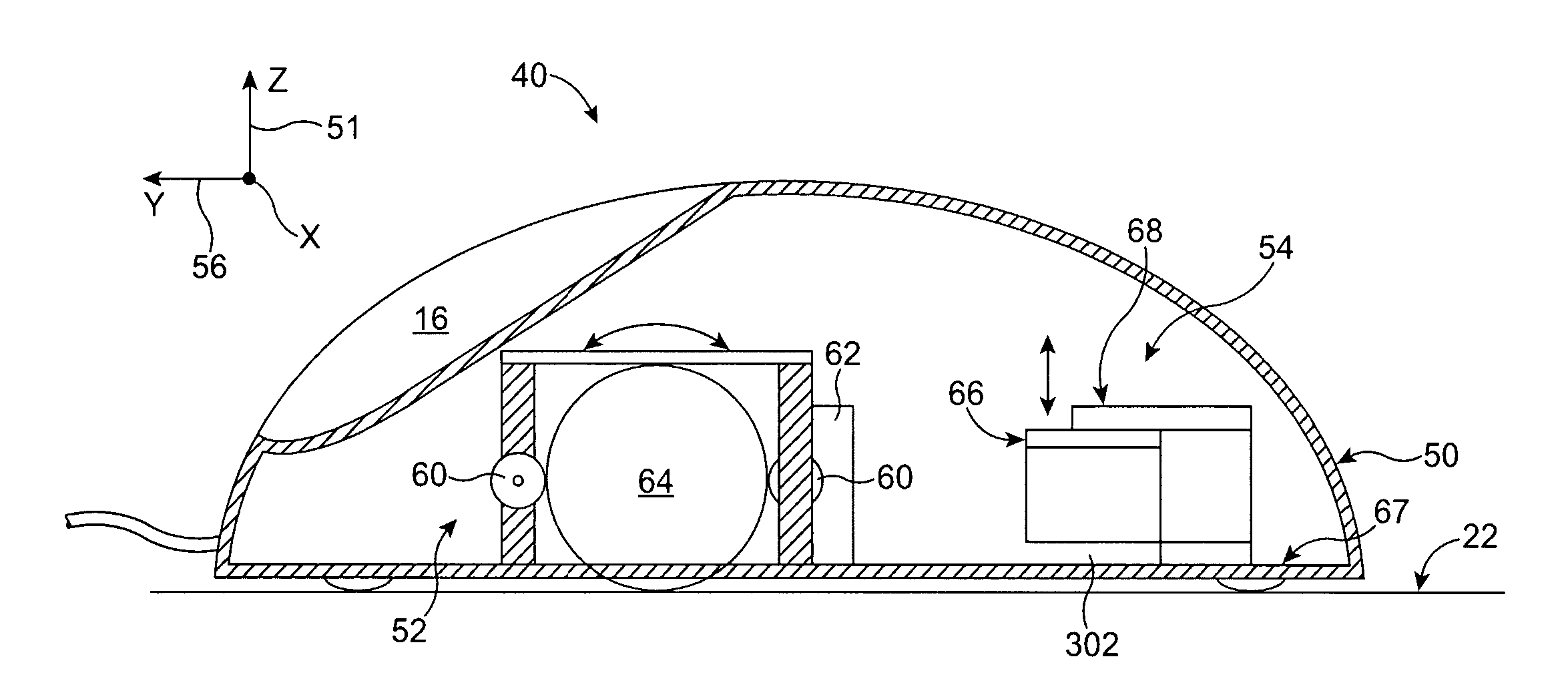
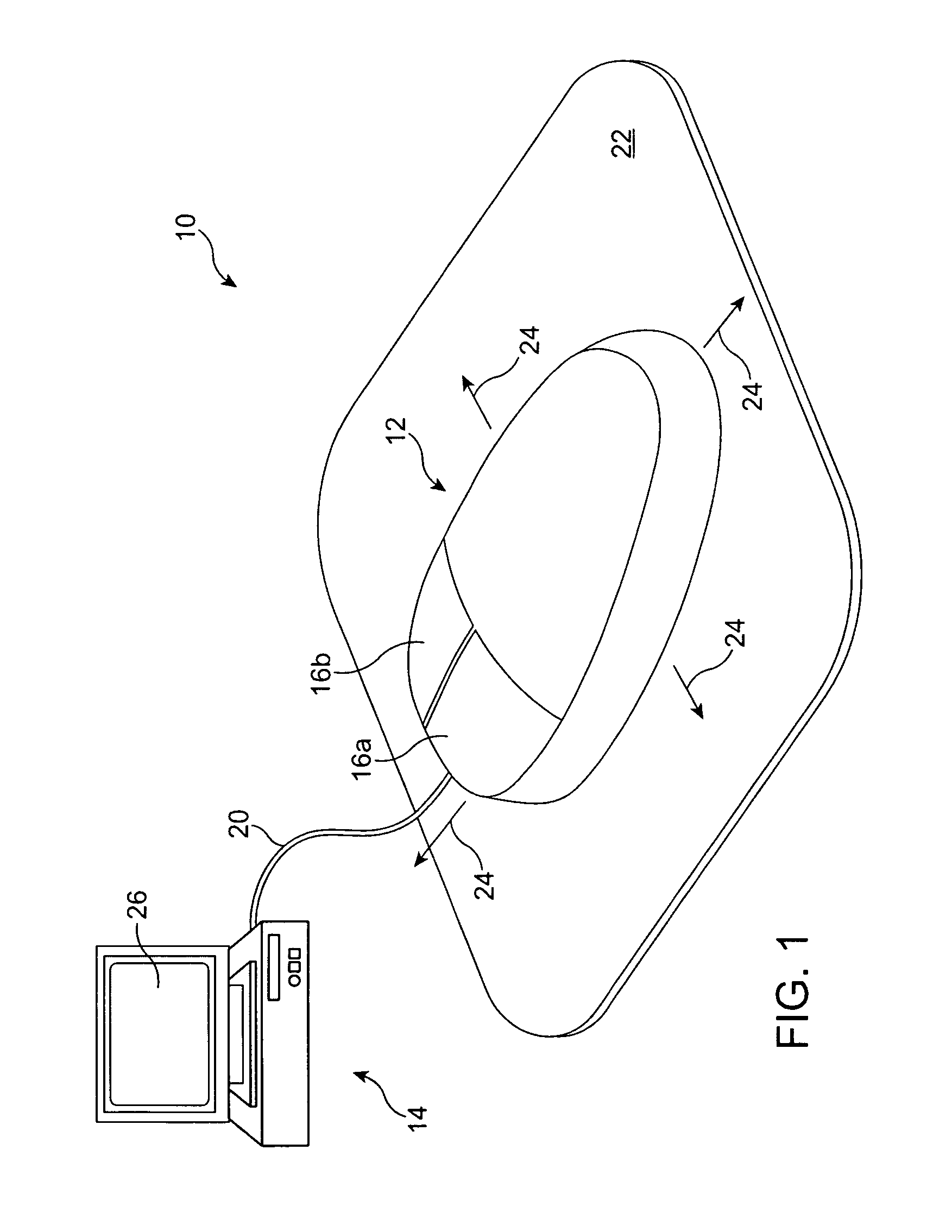
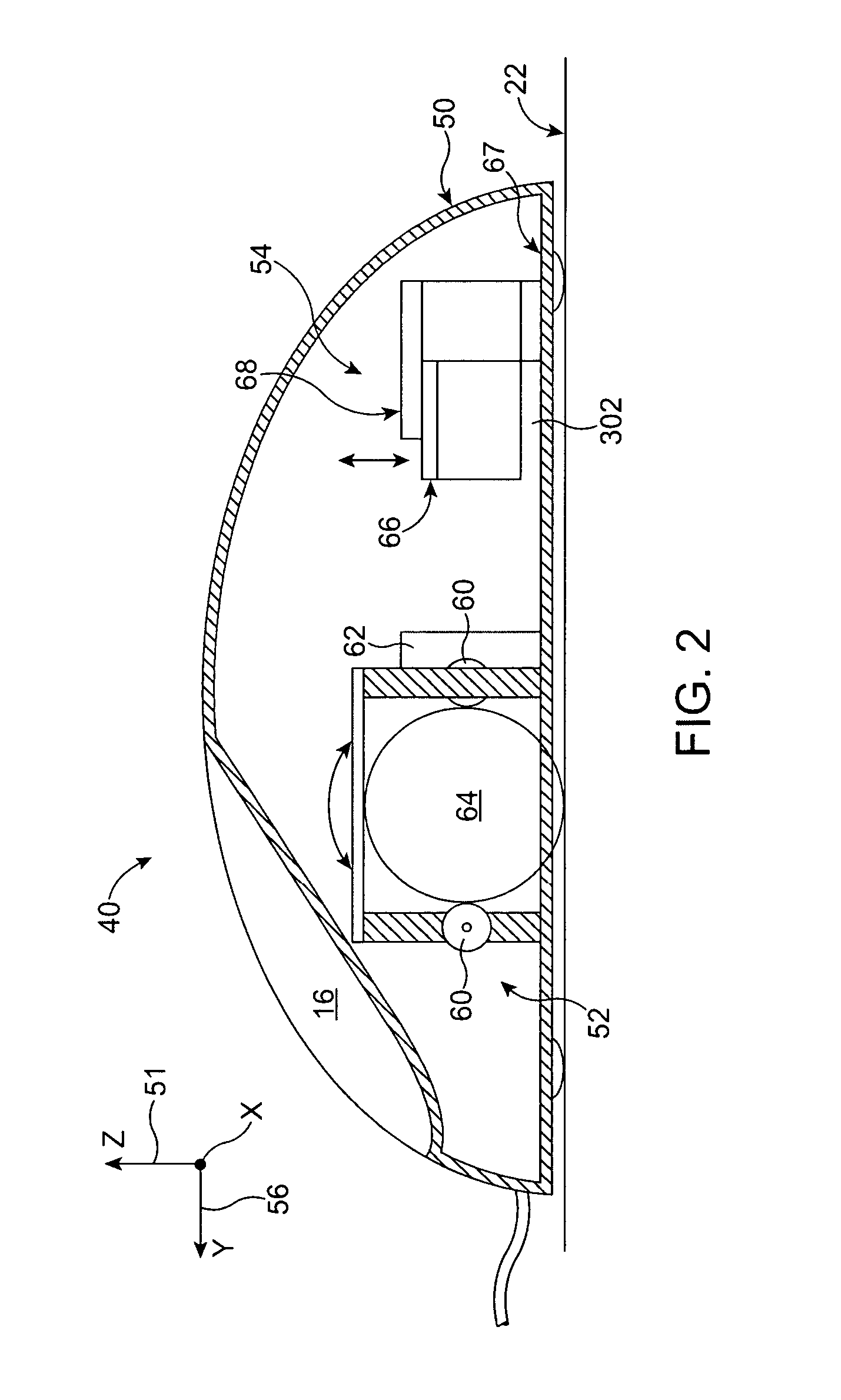
- The method involves combining high frequency waveforms with low frequency signals to enhance tactile sensations, using techniques such as pulse bursts, resonance, and filtering to create a resulting signal that conveys the low frequency content more effectively, allowing for stronger tactile sensations and improved combination of multiple tactile effects without reducing fidelity.

Digital envelope modulator for haptic feedback devices
PatentWO2009051976A1
Innovation
- A digital envelope modulator system that generates a composite signal with a carrier and envelope signal, adjustable based on resonance frequency, location, and duration, to provide tailored haptic feedback, including tactile mapping and duration/attack/decay mapping to eliminate discontinuities and audible noise.


Psychophysical Models for Haptic Comfort Perception
Understanding haptic comfort perception requires robust psychophysical models that bridge the gap between physical stimulus parameters and subjective human experiences. These models serve as theoretical frameworks to quantify how variations in haptic feedback frequency translate into perceived comfort levels. Classical psychophysical approaches, including Weber's Law and Stevens' Power Law, provide foundational principles for modeling the relationship between stimulus intensity and sensory magnitude. However, haptic comfort perception involves multidimensional factors beyond simple intensity scaling, necessitating more sophisticated modeling approaches that account for frequency-dependent sensitivity, temporal adaptation, and individual variability.
Contemporary psychophysical models for haptic comfort typically incorporate threshold detection theory and just-noticeable-difference (JND) measurements to establish perceptual boundaries. These models utilize psychometric functions to map the probability of comfort ratings across different frequency ranges, often revealing non-linear relationships between physical parameters and subjective responses. Signal detection theory further enhances these models by separating sensory sensitivity from decision criteria, allowing researchers to distinguish genuine perceptual differences from response biases in comfort assessments.
Advanced computational models integrate mechanoreceptor response characteristics with higher-level cognitive processing to predict comfort outcomes. These models consider the differential activation patterns of Pacinian corpuscles, Meissner corpuscles, and other tactile receptors across frequency spectra, correlating receptor-level responses with reported comfort experiences. Machine learning approaches, particularly neural network architectures, have emerged as powerful tools for capturing complex non-linear relationships in comfort perception data, enabling predictive modeling that accounts for contextual factors and individual differences.
The integration of multisensory psychophysical models represents a significant advancement, recognizing that haptic comfort perception rarely occurs in isolation. Cross-modal interactions between tactile, visual, and auditory stimuli influence overall comfort judgments, requiring models that incorporate sensory integration principles. These comprehensive frameworks enable more accurate predictions of comfort responses in real-world applications where multiple sensory channels operate simultaneously, ultimately guiding the optimization of haptic feedback parameters for maximal user comfort.
Contemporary psychophysical models for haptic comfort typically incorporate threshold detection theory and just-noticeable-difference (JND) measurements to establish perceptual boundaries. These models utilize psychometric functions to map the probability of comfort ratings across different frequency ranges, often revealing non-linear relationships between physical parameters and subjective responses. Signal detection theory further enhances these models by separating sensory sensitivity from decision criteria, allowing researchers to distinguish genuine perceptual differences from response biases in comfort assessments.
Advanced computational models integrate mechanoreceptor response characteristics with higher-level cognitive processing to predict comfort outcomes. These models consider the differential activation patterns of Pacinian corpuscles, Meissner corpuscles, and other tactile receptors across frequency spectra, correlating receptor-level responses with reported comfort experiences. Machine learning approaches, particularly neural network architectures, have emerged as powerful tools for capturing complex non-linear relationships in comfort perception data, enabling predictive modeling that accounts for contextual factors and individual differences.
The integration of multisensory psychophysical models represents a significant advancement, recognizing that haptic comfort perception rarely occurs in isolation. Cross-modal interactions between tactile, visual, and auditory stimuli influence overall comfort judgments, requiring models that incorporate sensory integration principles. These comprehensive frameworks enable more accurate predictions of comfort responses in real-world applications where multiple sensory channels operate simultaneously, ultimately guiding the optimization of haptic feedback parameters for maximal user comfort.
Human Factors Engineering in Haptic Interface Design
Human factors engineering plays a pivotal role in haptic interface design by bridging the gap between technological capabilities and user-centered requirements. This discipline systematically examines how humans perceive, process, and respond to tactile stimuli, ensuring that haptic feedback systems align with physiological and psychological comfort thresholds. When analyzing haptic feedback frequency for maximal comfort, human factors principles provide the foundational framework for understanding sensory perception limits, cognitive load implications, and ergonomic considerations that directly influence user acceptance and sustained interaction quality.
The integration of human factors engineering begins with understanding mechanoreceptor sensitivity across different frequency ranges. Pacinian corpuscles respond optimally to frequencies between 200-300 Hz, while Meissner corpuscles are most sensitive to lower frequencies around 20-50 Hz. Designing for comfort requires balancing these physiological responses with task-specific requirements, ensuring that feedback intensity and frequency do not exceed pain thresholds or cause sensory fatigue during prolonged use. This biological understanding informs the selection of appropriate frequency bands that maximize information transmission while minimizing discomfort.
Cognitive ergonomics further influences haptic interface design by addressing how users interpret and react to tactile signals. Effective haptic feedback must be intuitive, requiring minimal cognitive processing to decode meaning. Frequency modulation serves as a critical parameter for encoding information richness without overwhelming users. Research demonstrates that frequency discrimination capabilities vary among individuals based on age, sensory acuity, and prior exposure, necessitating adaptive design strategies that accommodate diverse user populations while maintaining consistent comfort levels.
Usability testing methodologies rooted in human factors engineering provide empirical validation for frequency optimization. Subjective comfort assessments, combined with objective measures such as task completion time and error rates, reveal the practical implications of frequency choices. Iterative design processes incorporate user feedback loops to refine frequency parameters, ensuring that theoretical comfort models translate into real-world satisfaction. This evidence-based approach distinguishes successful haptic interfaces from those that fail to achieve user adoption despite technical sophistication.
Environmental and contextual factors also demand consideration within human factors frameworks. Ambient vibration, user posture, contact pressure, and device mounting configurations all modulate perceived comfort at given frequencies. Comprehensive human factors analysis accounts for these variables, developing robust design guidelines that maintain comfort across diverse usage scenarios rather than optimizing for isolated laboratory conditions.
The integration of human factors engineering begins with understanding mechanoreceptor sensitivity across different frequency ranges. Pacinian corpuscles respond optimally to frequencies between 200-300 Hz, while Meissner corpuscles are most sensitive to lower frequencies around 20-50 Hz. Designing for comfort requires balancing these physiological responses with task-specific requirements, ensuring that feedback intensity and frequency do not exceed pain thresholds or cause sensory fatigue during prolonged use. This biological understanding informs the selection of appropriate frequency bands that maximize information transmission while minimizing discomfort.
Cognitive ergonomics further influences haptic interface design by addressing how users interpret and react to tactile signals. Effective haptic feedback must be intuitive, requiring minimal cognitive processing to decode meaning. Frequency modulation serves as a critical parameter for encoding information richness without overwhelming users. Research demonstrates that frequency discrimination capabilities vary among individuals based on age, sensory acuity, and prior exposure, necessitating adaptive design strategies that accommodate diverse user populations while maintaining consistent comfort levels.
Usability testing methodologies rooted in human factors engineering provide empirical validation for frequency optimization. Subjective comfort assessments, combined with objective measures such as task completion time and error rates, reveal the practical implications of frequency choices. Iterative design processes incorporate user feedback loops to refine frequency parameters, ensuring that theoretical comfort models translate into real-world satisfaction. This evidence-based approach distinguishes successful haptic interfaces from those that fail to achieve user adoption despite technical sophistication.
Environmental and contextual factors also demand consideration within human factors frameworks. Ambient vibration, user posture, contact pressure, and device mounting configurations all modulate perceived comfort at given frequencies. Comprehensive human factors analysis accounts for these variables, developing robust design guidelines that maintain comfort across diverse usage scenarios rather than optimizing for isolated laboratory conditions.
Unlock deeper insights with Patsnap Eureka Quick Research — get a full tech report to explore trends and direct your research. Try now!
Generate Your Research Report Instantly with AI Agent
Supercharge your innovation with Patsnap Eureka AI Agent Platform!