
Analyze TRIP Behavior in Functionally Graded Materials
JUN 14, 20269 MIN READ
Generate Your Research Report Instantly with AI Agent
Patsnap Eureka helps you evaluate technical feasibility & market potential.
TRIP FGM Background and Technical Objectives
Transformation-Induced Plasticity (TRIP) represents a critical metallurgical phenomenon where mechanical deformation triggers phase transformations in steel alloys, resulting in enhanced ductility and strength characteristics. This mechanism has gained substantial attention in advanced materials engineering due to its ability to simultaneously improve formability and mechanical performance. The integration of TRIP behavior with functionally graded materials (FGMs) presents an emerging frontier that combines the benefits of spatially varying material properties with strain-induced phase transformation capabilities.
Functionally graded materials have evolved as sophisticated engineering solutions where material composition, microstructure, and properties vary continuously across spatial dimensions. Unlike traditional homogeneous materials, FGMs enable tailored property distributions that can optimize performance for specific loading conditions and service environments. The incorporation of TRIP mechanisms within FGM architectures offers unprecedented opportunities to create materials with location-specific deformation responses and enhanced energy absorption capabilities.
The historical development of TRIP steels traces back to the 1960s when researchers first identified the correlation between retained austenite content and mechanical properties. Subsequent decades witnessed significant advances in alloy design, processing techniques, and microstructural control methods. The evolution toward TRIP-enabled FGMs represents a natural progression, driven by increasing demands for lightweight structures with superior crash performance in automotive applications and enhanced damage tolerance in aerospace components.
Current technological objectives focus on understanding the complex interactions between compositional gradients, microstructural evolution, and TRIP activation mechanisms. The primary challenge lies in controlling the spatial distribution of retained austenite stability while maintaining coherent interfaces between gradient zones. Advanced processing techniques, including additive manufacturing and controlled cooling strategies, are being explored to achieve precise microstructural control across FGM architectures.
The strategic importance of TRIP behavior analysis in FGMs extends beyond fundamental materials science to encompass critical industrial applications. Automotive manufacturers seek materials that can provide enhanced crashworthiness through progressive deformation characteristics, while aerospace industries require components with predictable failure modes and improved fatigue resistance. The ability to engineer TRIP activation sequences across material gradients offers pathways to optimize energy dissipation and structural integrity simultaneously.
Emerging research directions emphasize the development of predictive models that can accurately forecast TRIP behavior in complex gradient environments. These models must account for stress state variations, temperature distributions, and strain rate dependencies that influence phase transformation kinetics. The ultimate goal involves creating design methodologies that enable engineers to specify desired mechanical responses and subsequently determine the corresponding FGM architecture and TRIP activation parameters necessary to achieve those performance targets.
Functionally graded materials have evolved as sophisticated engineering solutions where material composition, microstructure, and properties vary continuously across spatial dimensions. Unlike traditional homogeneous materials, FGMs enable tailored property distributions that can optimize performance for specific loading conditions and service environments. The incorporation of TRIP mechanisms within FGM architectures offers unprecedented opportunities to create materials with location-specific deformation responses and enhanced energy absorption capabilities.
The historical development of TRIP steels traces back to the 1960s when researchers first identified the correlation between retained austenite content and mechanical properties. Subsequent decades witnessed significant advances in alloy design, processing techniques, and microstructural control methods. The evolution toward TRIP-enabled FGMs represents a natural progression, driven by increasing demands for lightweight structures with superior crash performance in automotive applications and enhanced damage tolerance in aerospace components.
Current technological objectives focus on understanding the complex interactions between compositional gradients, microstructural evolution, and TRIP activation mechanisms. The primary challenge lies in controlling the spatial distribution of retained austenite stability while maintaining coherent interfaces between gradient zones. Advanced processing techniques, including additive manufacturing and controlled cooling strategies, are being explored to achieve precise microstructural control across FGM architectures.
The strategic importance of TRIP behavior analysis in FGMs extends beyond fundamental materials science to encompass critical industrial applications. Automotive manufacturers seek materials that can provide enhanced crashworthiness through progressive deformation characteristics, while aerospace industries require components with predictable failure modes and improved fatigue resistance. The ability to engineer TRIP activation sequences across material gradients offers pathways to optimize energy dissipation and structural integrity simultaneously.
Emerging research directions emphasize the development of predictive models that can accurately forecast TRIP behavior in complex gradient environments. These models must account for stress state variations, temperature distributions, and strain rate dependencies that influence phase transformation kinetics. The ultimate goal involves creating design methodologies that enable engineers to specify desired mechanical responses and subsequently determine the corresponding FGM architecture and TRIP activation parameters necessary to achieve those performance targets.
Market Demand for Advanced TRIP-FGM Applications
The aerospace industry represents the most significant market segment driving demand for advanced TRIP-FGM applications. Aircraft manufacturers increasingly require materials that can withstand extreme temperature gradients while maintaining structural integrity throughout operational cycles. TRIP-enhanced functionally graded materials offer superior fatigue resistance and damage tolerance compared to conventional aerospace alloys, making them particularly valuable for turbine blades, combustion chambers, and structural components subjected to thermal cycling.
Automotive sector demand continues expanding as manufacturers pursue lightweight solutions without compromising safety performance. Advanced TRIP-FGM components enable significant weight reduction in critical structural elements while providing enhanced crash energy absorption through controlled phase transformation mechanisms. The growing emphasis on electric vehicle development further amplifies this demand, as battery thermal management systems require materials with precisely tailored thermal conductivity gradients and mechanical properties.
Energy generation applications, particularly in renewable energy infrastructure, present substantial growth opportunities. Wind turbine manufacturers seek TRIP-FGM solutions for blade root connections and hub assemblies, where materials must endure millions of stress cycles under varying environmental conditions. Similarly, concentrated solar power systems require components capable of managing severe thermal gradients while maintaining dimensional stability over extended operational periods.
The biomedical device market demonstrates increasing adoption of TRIP-FGM technologies for orthopedic implants and surgical instruments. These applications leverage the materials' ability to provide smooth property transitions from hard, wear-resistant surfaces to softer, more biocompatible substrates that better match human bone characteristics. The aging global population and rising healthcare standards continue driving growth in this sector.
Defense and military applications constitute another critical demand driver, particularly for armor systems and protective equipment. TRIP-FGM structures can provide superior ballistic protection through controlled energy dissipation mechanisms while reducing overall system weight. Advanced naval and ground vehicle applications increasingly specify these materials for components requiring exceptional durability under extreme operational conditions.
Manufacturing industry adoption accelerates as production technologies mature and cost structures become more favorable. Additive manufacturing advances enable more complex TRIP-FGM geometries while reducing material waste, making these solutions economically viable for broader industrial applications including tooling, dies, and high-performance machinery components.
Automotive sector demand continues expanding as manufacturers pursue lightweight solutions without compromising safety performance. Advanced TRIP-FGM components enable significant weight reduction in critical structural elements while providing enhanced crash energy absorption through controlled phase transformation mechanisms. The growing emphasis on electric vehicle development further amplifies this demand, as battery thermal management systems require materials with precisely tailored thermal conductivity gradients and mechanical properties.
Energy generation applications, particularly in renewable energy infrastructure, present substantial growth opportunities. Wind turbine manufacturers seek TRIP-FGM solutions for blade root connections and hub assemblies, where materials must endure millions of stress cycles under varying environmental conditions. Similarly, concentrated solar power systems require components capable of managing severe thermal gradients while maintaining dimensional stability over extended operational periods.
The biomedical device market demonstrates increasing adoption of TRIP-FGM technologies for orthopedic implants and surgical instruments. These applications leverage the materials' ability to provide smooth property transitions from hard, wear-resistant surfaces to softer, more biocompatible substrates that better match human bone characteristics. The aging global population and rising healthcare standards continue driving growth in this sector.
Defense and military applications constitute another critical demand driver, particularly for armor systems and protective equipment. TRIP-FGM structures can provide superior ballistic protection through controlled energy dissipation mechanisms while reducing overall system weight. Advanced naval and ground vehicle applications increasingly specify these materials for components requiring exceptional durability under extreme operational conditions.
Manufacturing industry adoption accelerates as production technologies mature and cost structures become more favorable. Additive manufacturing advances enable more complex TRIP-FGM geometries while reducing material waste, making these solutions economically viable for broader industrial applications including tooling, dies, and high-performance machinery components.
Current TRIP Behavior Analysis Challenges in FGMs
The analysis of TRIP (Transformation-Induced Plasticity) behavior in functionally graded materials presents significant technical challenges that stem from the inherent complexity of these advanced material systems. Unlike homogeneous materials where TRIP mechanisms can be studied under uniform conditions, FGMs exhibit spatially varying microstructures, compositions, and mechanical properties that create a multifaceted analytical environment.
One of the primary challenges lies in the heterogeneous nature of phase transformations across the gradient. Traditional TRIP analysis methods, developed for uniform materials, struggle to account for the continuous variation in austenite stability, transformation kinetics, and stress-strain relationships that occur throughout the FGM structure. The gradient composition creates localized differences in chemical driving forces for martensitic transformation, making it difficult to predict where and when TRIP effects will be most pronounced.
Characterization techniques face substantial limitations when applied to FGMs. Conventional mechanical testing methods provide averaged responses that mask the localized TRIP behavior occurring at different positions within the gradient. X-ray diffraction and neutron diffraction techniques, while capable of detecting phase transformations, often lack the spatial resolution needed to map transformation behavior across fine gradient transitions. This limitation becomes particularly problematic when trying to correlate local stress states with transformation kinetics.
The multi-scale nature of TRIP phenomena in FGMs presents another significant hurdle. Transformation behavior must be understood simultaneously at the atomic level (nucleation mechanisms), microscale (grain boundary effects and local stress concentrations), and macroscale (overall mechanical response). The gradient structure introduces additional complexity by creating interfaces between regions of different transformation characteristics, leading to stress redistribution patterns that are difficult to predict using existing models.
Computational modeling faces substantial challenges due to the need for coupled thermomechanical-metallurgical simulations that can handle spatially varying material properties. Current finite element approaches often require prohibitively fine mesh densities to capture gradient effects accurately, while phase-field models struggle with the computational expense of modeling transformation kinetics across large gradient regions.
Temperature and strain rate dependencies of TRIP behavior become increasingly complex in FGMs due to the varying thermal and mechanical properties across the gradient. The coupling between local heating from transformation-induced energy release and the spatially varying thermal conductivity creates non-uniform temperature distributions that further complicate the analysis of transformation kinetics and mechanical response.
One of the primary challenges lies in the heterogeneous nature of phase transformations across the gradient. Traditional TRIP analysis methods, developed for uniform materials, struggle to account for the continuous variation in austenite stability, transformation kinetics, and stress-strain relationships that occur throughout the FGM structure. The gradient composition creates localized differences in chemical driving forces for martensitic transformation, making it difficult to predict where and when TRIP effects will be most pronounced.
Characterization techniques face substantial limitations when applied to FGMs. Conventional mechanical testing methods provide averaged responses that mask the localized TRIP behavior occurring at different positions within the gradient. X-ray diffraction and neutron diffraction techniques, while capable of detecting phase transformations, often lack the spatial resolution needed to map transformation behavior across fine gradient transitions. This limitation becomes particularly problematic when trying to correlate local stress states with transformation kinetics.
The multi-scale nature of TRIP phenomena in FGMs presents another significant hurdle. Transformation behavior must be understood simultaneously at the atomic level (nucleation mechanisms), microscale (grain boundary effects and local stress concentrations), and macroscale (overall mechanical response). The gradient structure introduces additional complexity by creating interfaces between regions of different transformation characteristics, leading to stress redistribution patterns that are difficult to predict using existing models.
Computational modeling faces substantial challenges due to the need for coupled thermomechanical-metallurgical simulations that can handle spatially varying material properties. Current finite element approaches often require prohibitively fine mesh densities to capture gradient effects accurately, while phase-field models struggle with the computational expense of modeling transformation kinetics across large gradient regions.
Temperature and strain rate dependencies of TRIP behavior become increasingly complex in FGMs due to the varying thermal and mechanical properties across the gradient. The coupling between local heating from transformation-induced energy release and the spatially varying thermal conductivity creates non-uniform temperature distributions that further complicate the analysis of transformation kinetics and mechanical response.
Existing TRIP Behavior Analysis Methods for FGMs
01 Functionally graded steel compositions with TRIP effect
Steel compositions designed with functionally graded microstructures that exhibit transformation-induced plasticity behavior. These materials feature controlled chemical gradients and phase distributions that enable enhanced mechanical properties through strain-induced phase transformations during deformation.- TRIP steel composition and microstructure design: Development of transformation-induced plasticity steels with specific chemical compositions and microstructural features to achieve desired mechanical properties. The focus is on controlling austenite stability and carbon content to optimize the TRIP effect in functionally graded materials through careful alloy design and processing parameters.
- Heat treatment processes for TRIP behavior enhancement: Specialized thermal processing techniques including intercritical annealing, isothermal bainitic transformation, and controlled cooling strategies to develop the required multiphase microstructure. These processes are designed to retain metastable austenite that transforms to martensite during deformation, providing the TRIP effect in graded material systems.
- Functionally graded TRIP material manufacturing methods: Manufacturing techniques for producing materials with spatially varying TRIP behavior through gradient processing approaches. These methods involve creating controlled variations in composition, microstructure, or processing conditions across the material to achieve location-specific mechanical properties and deformation characteristics.
- Mechanical property optimization in graded TRIP structures: Approaches for optimizing strength, ductility, and toughness in functionally graded materials exhibiting transformation-induced plasticity. The focus is on balancing the trade-off between strength and formability while maximizing the beneficial effects of strain-induced martensitic transformation across different regions of the component.
- Applications and performance evaluation of TRIP graded materials: Implementation of functionally graded TRIP materials in structural applications with emphasis on performance testing and characterization methods. This includes evaluation of deformation behavior, crash performance, and service life assessment of components designed to exploit location-specific TRIP effects for enhanced overall performance.
02 Manufacturing processes for graded TRIP materials
Various manufacturing techniques and processing methods for producing functionally graded materials with transformation-induced plasticity characteristics. These processes involve controlled thermal treatments, compositional variations, and specialized forming techniques to achieve desired gradient properties.Expand Specific Solutions03 Microstructural control in graded TRIP systems
Methods for controlling microstructural evolution and phase transformations in functionally graded materials to optimize TRIP behavior. This includes techniques for managing austenite stability, martensite formation, and retained austenite distribution across material gradients.Expand Specific Solutions04 Mechanical property enhancement through gradient design
Approaches for improving mechanical properties such as strength, ductility, and toughness in functionally graded materials by leveraging transformation-induced plasticity effects. These methods focus on optimizing gradient profiles and transformation kinetics for superior performance.Expand Specific Solutions05 Applications and characterization of graded TRIP materials
Specific applications and testing methodologies for functionally graded materials exhibiting transformation-induced plasticity behavior. This encompasses evaluation techniques, performance assessment methods, and industrial applications where these materials provide enhanced functionality.Expand Specific Solutions
Key Players in TRIP Steel and FGM Industries
The TRIP behavior analysis in functionally graded materials represents an emerging research domain in the early development stage, characterized by significant academic involvement and limited commercial maturity. The market remains nascent with substantial growth potential as industries seek advanced materials with tailored properties. Technology maturity varies considerably across players, with established steel manufacturers like Nippon Steel Corp., Kobe Steel Ltd., and Hyundai Steel Co. leading practical applications, while research institutions including Central South University, Huazhong University of Science & Technology, and McGill University drive fundamental understanding. Industrial giants such as Honda Motor Co., Toshiba Corp., and Samsung SDI Co. are exploring applications in automotive and electronics sectors. The competitive landscape shows a clear divide between academic research excellence and industrial implementation capabilities, with European players like Outokumpu Oyj and TRUMPF Werkzeugmaschinen contributing specialized expertise in materials processing and manufacturing technologies.
Kobe Steel, Ltd.
Technical Solution: Kobe Steel has developed advanced TRIP steel manufacturing technologies focusing on the controlled transformation of retained austenite to martensite under mechanical stress. Their approach involves precise control of chemical composition, particularly carbon and silicon content, combined with optimized heat treatment processes including intercritical annealing and isothermal bainitic transformation. The company has implemented multi-stage cooling processes to achieve optimal microstructural distribution in functionally graded TRIP steels, enabling tailored mechanical properties across different sections of components. Their technology emphasizes the relationship between processing parameters and TRIP behavior, utilizing advanced metallurgical modeling to predict transformation kinetics in graded structures.
Strengths: Extensive industrial experience in steel production, proven manufacturing scalability, strong integration of research and production capabilities. Weaknesses: Limited focus on non-ferrous functionally graded materials, primarily concentrated on automotive applications.
Central South University
Technical Solution: Central South University has established comprehensive research programs analyzing TRIP behavior in functionally graded materials through advanced characterization techniques and computational modeling. Their approach integrates electron backscatter diffraction (EBSD) analysis with finite element modeling to understand stress-strain partitioning effects during phase transformation. The university has developed novel experimental methodologies for measuring local transformation kinetics in graded structures, including high-resolution digital image correlation and synchrotron X-ray diffraction techniques. Their research emphasizes the fundamental mechanisms governing TRIP behavior in materials with compositional and microstructural gradients, contributing significantly to the theoretical understanding of transformation-induced plasticity in complex material systems.
Strengths: Strong fundamental research capabilities, advanced characterization facilities, extensive academic collaborations and publications. Weaknesses: Limited industrial application experience, focus primarily on laboratory-scale investigations rather than commercial implementation.
Core Innovations in TRIP-FGM Characterization
Expanding metal material and bulged tube device for petroleum oil well
PatentInactiveCN1594631A
Innovation
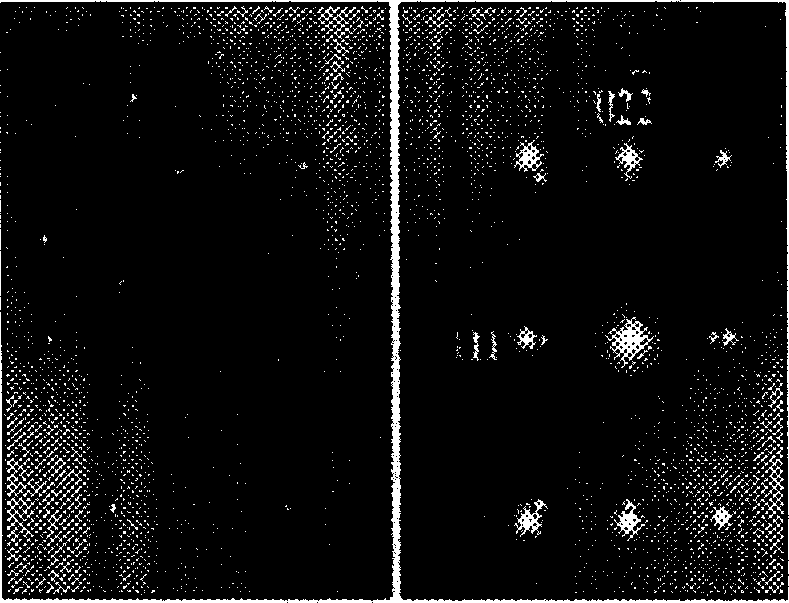
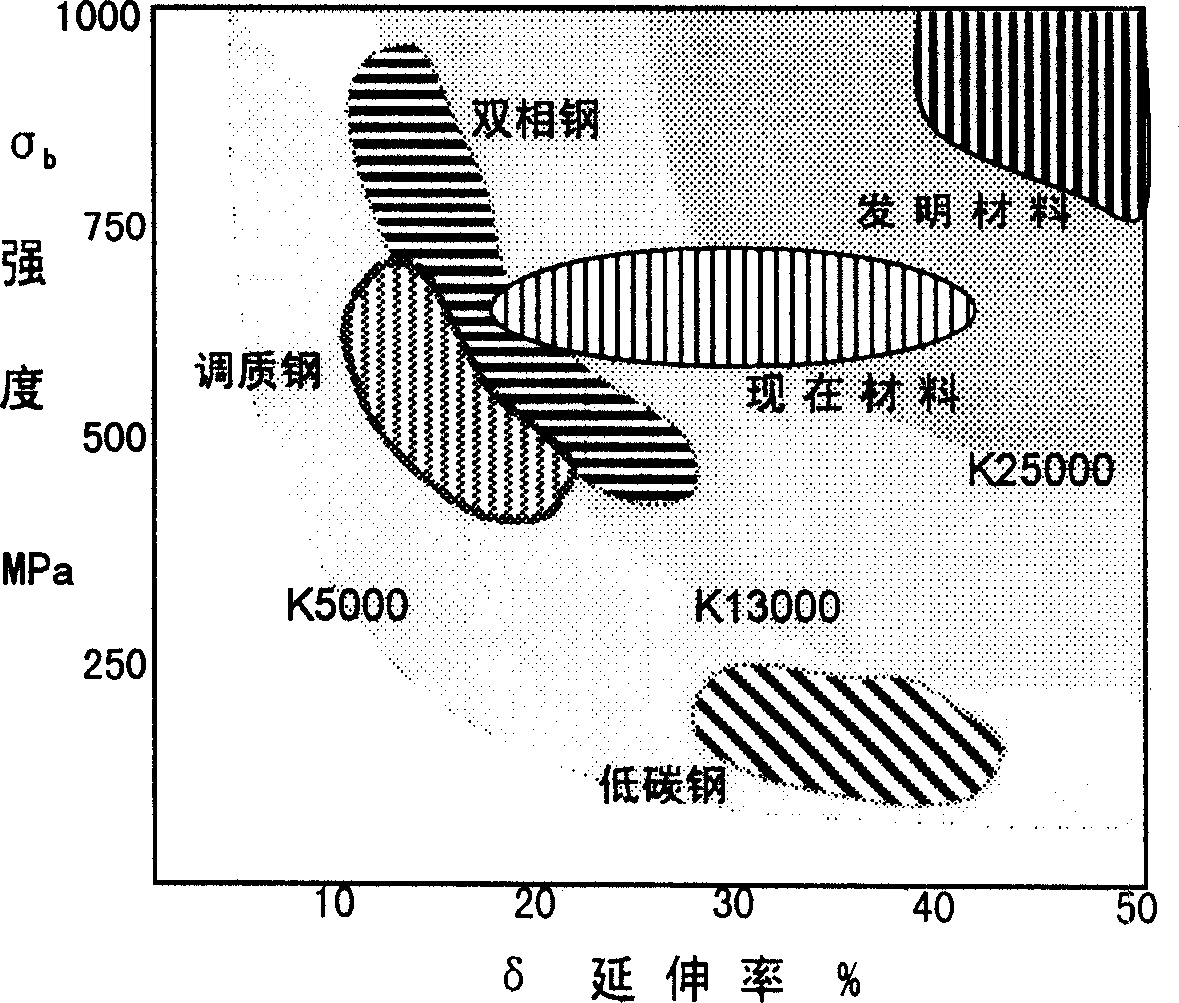
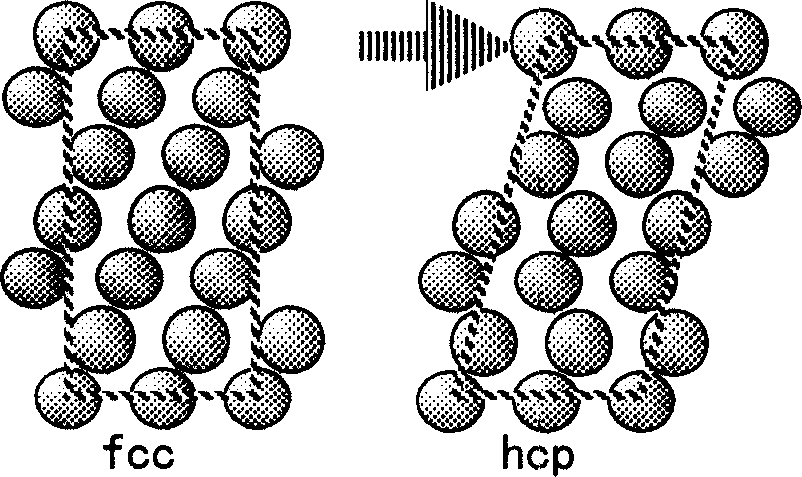
- High plasticity phase change expansion alloy materials and shape memory joint connection methods are used to form carbides through homogenization and aging treatments. The phase change induced plasticity mechanism is used to improve material strength and plasticity, and iron-based shape memory joints and high plasticity are used. Metal sealing rings enable simple and easy connection and sealing.

Manufacturing Standards for TRIP-Enhanced FGMs
The establishment of comprehensive manufacturing standards for TRIP-enhanced functionally graded materials represents a critical milestone in transitioning these advanced materials from laboratory research to industrial applications. Current standardization efforts focus on defining precise control parameters for the gradient formation process, including temperature profiles, cooling rates, and chemical composition variations that directly influence TRIP behavior activation across different material zones.
Quality control protocols constitute a fundamental component of these manufacturing standards, emphasizing real-time monitoring of microstructural evolution during processing. Advanced characterization techniques, including in-situ X-ray diffraction and thermal analysis, are being integrated into standard operating procedures to ensure consistent TRIP phase distribution throughout the functionally graded structure. These protocols establish acceptable tolerance ranges for retained austenite content, martensite formation kinetics, and mechanical property gradients.
Standardized testing methodologies specifically designed for TRIP-enhanced FGMs address the unique challenges posed by spatially varying material properties. These include modified tensile testing procedures that account for gradient effects, standardized sample preparation techniques that preserve the integrity of compositional transitions, and specialized fatigue testing protocols that evaluate TRIP activation under cyclic loading conditions across different material zones.
Process validation standards encompass comprehensive documentation requirements for manufacturing parameters, including alloy composition control, thermal processing windows, and post-processing treatments that optimize TRIP behavior. These standards establish traceability protocols that link processing conditions to final material performance, enabling consistent reproduction of desired TRIP characteristics in industrial manufacturing environments.
Certification frameworks are being developed to ensure compliance with aerospace, automotive, and biomedical application requirements. These frameworks incorporate safety factors specific to TRIP-enhanced materials, accounting for the dynamic nature of phase transformations and their impact on long-term material reliability. International collaboration efforts are underway to harmonize these standards across different regulatory jurisdictions, facilitating global adoption of TRIP-enhanced FGM technologies.
Quality control protocols constitute a fundamental component of these manufacturing standards, emphasizing real-time monitoring of microstructural evolution during processing. Advanced characterization techniques, including in-situ X-ray diffraction and thermal analysis, are being integrated into standard operating procedures to ensure consistent TRIP phase distribution throughout the functionally graded structure. These protocols establish acceptable tolerance ranges for retained austenite content, martensite formation kinetics, and mechanical property gradients.
Standardized testing methodologies specifically designed for TRIP-enhanced FGMs address the unique challenges posed by spatially varying material properties. These include modified tensile testing procedures that account for gradient effects, standardized sample preparation techniques that preserve the integrity of compositional transitions, and specialized fatigue testing protocols that evaluate TRIP activation under cyclic loading conditions across different material zones.
Process validation standards encompass comprehensive documentation requirements for manufacturing parameters, including alloy composition control, thermal processing windows, and post-processing treatments that optimize TRIP behavior. These standards establish traceability protocols that link processing conditions to final material performance, enabling consistent reproduction of desired TRIP characteristics in industrial manufacturing environments.
Certification frameworks are being developed to ensure compliance with aerospace, automotive, and biomedical application requirements. These frameworks incorporate safety factors specific to TRIP-enhanced materials, accounting for the dynamic nature of phase transformations and their impact on long-term material reliability. International collaboration efforts are underway to harmonize these standards across different regulatory jurisdictions, facilitating global adoption of TRIP-enhanced FGM technologies.
Computational Modeling Advances for TRIP-FGM Systems
The computational modeling of TRIP (Transformation-Induced Plasticity) behavior in functionally graded materials has experienced remarkable advancement through the integration of sophisticated numerical frameworks and enhanced material constitutive models. Modern finite element analysis platforms now incorporate multi-scale modeling capabilities that can simultaneously capture microscopic phase transformation kinetics and macroscopic mechanical responses across gradient interfaces.
Recent developments in crystal plasticity finite element methods have enabled researchers to model the complex interactions between austenite-to-martensite transformation and the continuously varying material properties inherent in FGM structures. These advanced models incorporate temperature-dependent transformation criteria, strain-rate sensitivity, and the influence of local stress states on transformation behavior, providing unprecedented accuracy in predicting TRIP phenomena.
Machine learning algorithms have emerged as powerful tools for accelerating computational predictions of TRIP-FGM systems. Neural network-based surrogate models trained on extensive finite element datasets can rapidly predict transformation patterns and mechanical responses, reducing computational costs by orders of magnitude while maintaining acceptable accuracy levels for engineering applications.
Phase-field modeling represents another significant breakthrough, offering the capability to simulate the evolution of microstructural features during TRIP activation in graded materials. These models can capture the nucleation and growth of martensitic phases while accounting for the spatial variation in chemical composition and mechanical properties characteristic of FGMs.
The integration of uncertainty quantification methods into TRIP-FGM computational frameworks has addressed the inherent variability in material properties and processing parameters. Stochastic finite element approaches and Monte Carlo simulations now enable engineers to assess the reliability and robustness of TRIP-enhanced functionally graded components under realistic operating conditions.
Multi-physics coupling capabilities have been substantially enhanced, allowing simultaneous consideration of thermal, mechanical, and metallurgical phenomena. These coupled models are essential for accurately predicting TRIP behavior in applications involving significant temperature gradients or thermomechanical loading conditions, where the interplay between heat transfer and phase transformation becomes critical for performance optimization.
Recent developments in crystal plasticity finite element methods have enabled researchers to model the complex interactions between austenite-to-martensite transformation and the continuously varying material properties inherent in FGM structures. These advanced models incorporate temperature-dependent transformation criteria, strain-rate sensitivity, and the influence of local stress states on transformation behavior, providing unprecedented accuracy in predicting TRIP phenomena.
Machine learning algorithms have emerged as powerful tools for accelerating computational predictions of TRIP-FGM systems. Neural network-based surrogate models trained on extensive finite element datasets can rapidly predict transformation patterns and mechanical responses, reducing computational costs by orders of magnitude while maintaining acceptable accuracy levels for engineering applications.
Phase-field modeling represents another significant breakthrough, offering the capability to simulate the evolution of microstructural features during TRIP activation in graded materials. These models can capture the nucleation and growth of martensitic phases while accounting for the spatial variation in chemical composition and mechanical properties characteristic of FGMs.
The integration of uncertainty quantification methods into TRIP-FGM computational frameworks has addressed the inherent variability in material properties and processing parameters. Stochastic finite element approaches and Monte Carlo simulations now enable engineers to assess the reliability and robustness of TRIP-enhanced functionally graded components under realistic operating conditions.
Multi-physics coupling capabilities have been substantially enhanced, allowing simultaneous consideration of thermal, mechanical, and metallurgical phenomena. These coupled models are essential for accurately predicting TRIP behavior in applications involving significant temperature gradients or thermomechanical loading conditions, where the interplay between heat transfer and phase transformation becomes critical for performance optimization.
Unlock deeper insights with Patsnap Eureka Quick Research — get a full tech report to explore trends and direct your research. Try now!
Generate Your Research Report Instantly with AI Agent
Supercharge your innovation with Patsnap Eureka AI Agent Platform!