
How to Optimize Manufacturing Parameters for Maximized TRIP Effect
JUN 14, 20269 MIN READ
Generate Your Research Report Instantly with AI Agent
Patsnap Eureka helps you evaluate technical feasibility & market potential.
TRIP Steel Manufacturing Background and Optimization Goals
TRIP (Transformation-Induced Plasticity) steel represents a revolutionary advancement in metallurgical engineering, emerging from the fundamental understanding of phase transformation mechanisms in multi-phase steel systems. This advanced high-strength steel (AHSS) leverages the metastable retained austenite phase, which transforms to martensite under applied stress, providing exceptional combinations of strength and ductility that were previously unattainable in conventional steel grades.
The development of TRIP steel originated in the 1960s through pioneering research on austenite stabilization and controlled transformation processes. The technology gained significant momentum in the automotive industry during the 1990s as manufacturers sought lightweight materials capable of meeting increasingly stringent safety and fuel efficiency requirements. The fundamental principle relies on carefully controlling the microstructural composition to retain specific amounts of austenite at room temperature, typically ranging from 5% to 20% by volume.
Current technological evolution in TRIP steel manufacturing focuses on achieving precise control over critical parameters including chemical composition, thermal processing cycles, and cooling strategies. The primary challenge lies in optimizing the complex interplay between carbon content, alloying elements such as silicon and aluminum, and processing parameters to maximize the volume fraction of stable retained austenite while maintaining optimal mechanical properties.
The manufacturing optimization targets center on achieving maximum TRIP effect through strategic parameter control. Key objectives include maximizing the volume fraction of retained austenite, ensuring optimal carbon enrichment in the austenite phase, and controlling the morphology and distribution of constituent phases including ferrite, bainite, and martensite. Temperature control during intercritical annealing, isothermal holding conditions, and cooling rates emerge as critical variables requiring precise optimization.
Advanced process control technologies now enable real-time monitoring and adjustment of manufacturing parameters, facilitating the achievement of target microstructures with unprecedented consistency. The integration of computational modeling with experimental validation has accelerated the development of optimized processing windows, enabling manufacturers to achieve TRIP steel grades with enhanced formability and crash energy absorption characteristics essential for next-generation automotive applications.
The development of TRIP steel originated in the 1960s through pioneering research on austenite stabilization and controlled transformation processes. The technology gained significant momentum in the automotive industry during the 1990s as manufacturers sought lightweight materials capable of meeting increasingly stringent safety and fuel efficiency requirements. The fundamental principle relies on carefully controlling the microstructural composition to retain specific amounts of austenite at room temperature, typically ranging from 5% to 20% by volume.
Current technological evolution in TRIP steel manufacturing focuses on achieving precise control over critical parameters including chemical composition, thermal processing cycles, and cooling strategies. The primary challenge lies in optimizing the complex interplay between carbon content, alloying elements such as silicon and aluminum, and processing parameters to maximize the volume fraction of stable retained austenite while maintaining optimal mechanical properties.
The manufacturing optimization targets center on achieving maximum TRIP effect through strategic parameter control. Key objectives include maximizing the volume fraction of retained austenite, ensuring optimal carbon enrichment in the austenite phase, and controlling the morphology and distribution of constituent phases including ferrite, bainite, and martensite. Temperature control during intercritical annealing, isothermal holding conditions, and cooling rates emerge as critical variables requiring precise optimization.
Advanced process control technologies now enable real-time monitoring and adjustment of manufacturing parameters, facilitating the achievement of target microstructures with unprecedented consistency. The integration of computational modeling with experimental validation has accelerated the development of optimized processing windows, enabling manufacturers to achieve TRIP steel grades with enhanced formability and crash energy absorption characteristics essential for next-generation automotive applications.
Market Demand for Advanced High-Strength TRIP Steels
The automotive industry represents the largest and most dynamic market segment driving demand for advanced high-strength TRIP steels. Modern vehicle manufacturers face unprecedented pressure to simultaneously reduce vehicle weight, enhance crash safety performance, and meet stringent fuel efficiency standards. TRIP steels offer an optimal solution by providing exceptional strength-to-weight ratios while maintaining superior formability during complex stamping operations. The growing emphasis on electric vehicle production further amplifies this demand, as battery-powered vehicles require lightweight yet robust structural components to maximize range efficiency.
Steel producers worldwide are experiencing substantial growth in orders for TRIP steel grades, particularly for automotive body-in-white applications. The technology enables manufacturers to achieve weight reductions while meeting increasingly stringent safety regulations across global markets. European and Asian automotive manufacturers have been particularly aggressive in adopting TRIP steel technologies, driving significant capacity expansions among steel suppliers.
The construction and infrastructure sectors present emerging opportunities for TRIP steel applications, though market penetration remains relatively nascent compared to automotive applications. High-rise building construction and bridge engineering projects increasingly specify advanced high-strength steels to achieve superior structural performance with reduced material consumption. The technology's ability to provide enhanced ductility under extreme loading conditions makes it particularly attractive for seismic-resistant construction applications.
Manufacturing equipment and heavy machinery industries represent another growing market segment. Equipment manufacturers seek materials that can withstand high-stress operational environments while enabling lighter, more efficient machine designs. TRIP steels' unique combination of strength and energy absorption capabilities addresses these requirements effectively.
Regional market dynamics show particularly strong growth in Asia-Pacific markets, driven by rapid industrialization and automotive production expansion. North American markets demonstrate steady demand growth, primarily focused on premium automotive applications and specialized industrial uses. European markets continue to lead in advanced TRIP steel technology adoption, supported by stringent environmental regulations and established automotive engineering expertise.
The market trajectory indicates sustained growth potential, supported by ongoing technological advancement in steel processing capabilities and expanding application awareness across multiple industrial sectors. Supply chain optimization and cost reduction initiatives continue to improve market accessibility for broader industrial applications.
Steel producers worldwide are experiencing substantial growth in orders for TRIP steel grades, particularly for automotive body-in-white applications. The technology enables manufacturers to achieve weight reductions while meeting increasingly stringent safety regulations across global markets. European and Asian automotive manufacturers have been particularly aggressive in adopting TRIP steel technologies, driving significant capacity expansions among steel suppliers.
The construction and infrastructure sectors present emerging opportunities for TRIP steel applications, though market penetration remains relatively nascent compared to automotive applications. High-rise building construction and bridge engineering projects increasingly specify advanced high-strength steels to achieve superior structural performance with reduced material consumption. The technology's ability to provide enhanced ductility under extreme loading conditions makes it particularly attractive for seismic-resistant construction applications.
Manufacturing equipment and heavy machinery industries represent another growing market segment. Equipment manufacturers seek materials that can withstand high-stress operational environments while enabling lighter, more efficient machine designs. TRIP steels' unique combination of strength and energy absorption capabilities addresses these requirements effectively.
Regional market dynamics show particularly strong growth in Asia-Pacific markets, driven by rapid industrialization and automotive production expansion. North American markets demonstrate steady demand growth, primarily focused on premium automotive applications and specialized industrial uses. European markets continue to lead in advanced TRIP steel technology adoption, supported by stringent environmental regulations and established automotive engineering expertise.
The market trajectory indicates sustained growth potential, supported by ongoing technological advancement in steel processing capabilities and expanding application awareness across multiple industrial sectors. Supply chain optimization and cost reduction initiatives continue to improve market accessibility for broader industrial applications.
Current TRIP Effect Challenges in Manufacturing
The manufacturing of TRIP (Transformation-Induced Plasticity) steels faces significant challenges in achieving optimal microstructural control and mechanical properties. Current industrial practices struggle with the precise control of processing parameters required to maximize the TRIP effect, leading to inconsistent product quality and suboptimal performance characteristics.
Temperature control during hot rolling and cooling processes represents one of the most critical challenges. The narrow temperature windows required for austenite formation and subsequent transformation create difficulties in maintaining uniform conditions across large-scale production runs. Variations in heating rates, soaking temperatures, and cooling profiles directly impact the volume fraction of retained austenite, which is essential for the TRIP mechanism.
The intercritical annealing process poses another substantial manufacturing hurdle. Achieving the optimal balance between ferrite and austenite phases requires precise temperature control within a narrow range, typically between 750-850°C depending on alloy composition. Industrial furnaces often exhibit temperature gradients and fluctuations that compromise the desired microstructural development, resulting in heterogeneous mechanical properties across the final product.
Chemical composition control presents ongoing challenges, particularly regarding carbon and alloying element distribution. The partitioning of carbon between phases during processing is highly sensitive to minor variations in silicon, manganese, and aluminum content. Current manufacturing processes struggle to maintain the tight compositional tolerances required for consistent TRIP behavior, especially in continuous casting operations where segregation effects can be pronounced.
Cooling rate optimization remains problematic in industrial settings. The bainitic transformation temperature range must be carefully controlled to achieve the desired microstructure while preventing pearlite formation. Conventional cooling systems often lack the precision required for the complex thermal cycles needed, particularly during the isothermal holding stages that are crucial for carbon partitioning.
Quality control and real-time monitoring capabilities are insufficient for TRIP steel production. Current manufacturing lines lack advanced sensors and control systems capable of providing immediate feedback on microstructural development during processing. This limitation prevents operators from making real-time adjustments to optimize the TRIP effect, resulting in reactive rather than proactive process control.
Scale-up challenges from laboratory to industrial production continue to hinder widespread TRIP steel adoption. Laboratory-optimized parameters often fail to translate effectively to large-scale manufacturing due to differences in heating rates, thermal mass effects, and equipment limitations inherent in industrial processing lines.
Temperature control during hot rolling and cooling processes represents one of the most critical challenges. The narrow temperature windows required for austenite formation and subsequent transformation create difficulties in maintaining uniform conditions across large-scale production runs. Variations in heating rates, soaking temperatures, and cooling profiles directly impact the volume fraction of retained austenite, which is essential for the TRIP mechanism.
The intercritical annealing process poses another substantial manufacturing hurdle. Achieving the optimal balance between ferrite and austenite phases requires precise temperature control within a narrow range, typically between 750-850°C depending on alloy composition. Industrial furnaces often exhibit temperature gradients and fluctuations that compromise the desired microstructural development, resulting in heterogeneous mechanical properties across the final product.
Chemical composition control presents ongoing challenges, particularly regarding carbon and alloying element distribution. The partitioning of carbon between phases during processing is highly sensitive to minor variations in silicon, manganese, and aluminum content. Current manufacturing processes struggle to maintain the tight compositional tolerances required for consistent TRIP behavior, especially in continuous casting operations where segregation effects can be pronounced.
Cooling rate optimization remains problematic in industrial settings. The bainitic transformation temperature range must be carefully controlled to achieve the desired microstructure while preventing pearlite formation. Conventional cooling systems often lack the precision required for the complex thermal cycles needed, particularly during the isothermal holding stages that are crucial for carbon partitioning.
Quality control and real-time monitoring capabilities are insufficient for TRIP steel production. Current manufacturing lines lack advanced sensors and control systems capable of providing immediate feedback on microstructural development during processing. This limitation prevents operators from making real-time adjustments to optimize the TRIP effect, resulting in reactive rather than proactive process control.
Scale-up challenges from laboratory to industrial production continue to hinder widespread TRIP steel adoption. Laboratory-optimized parameters often fail to translate effectively to large-scale manufacturing due to differences in heating rates, thermal mass effects, and equipment limitations inherent in industrial processing lines.
Current Manufacturing Parameter Control Solutions
01 Chemical composition optimization for TRIP steel
TRIP steels require specific chemical compositions with controlled amounts of carbon, manganese, silicon, and aluminum to achieve optimal transformation-induced plasticity effects. The precise balance of these alloying elements determines the stability of retained austenite and its transformation behavior during deformation, which directly influences the mechanical properties and formability of the steel.- Chemical composition optimization for TRIP steel: The TRIP effect in steel can be enhanced through careful control of chemical composition, particularly carbon, manganese, silicon, and aluminum content. These alloying elements influence the stability of retained austenite and its transformation behavior during deformation. Proper chemical composition design ensures optimal mechanical properties including strength, ductility, and formability through controlled austenite-to-martensite transformation.
- Heat treatment processes for TRIP steel production: Specific heat treatment cycles including intercritical annealing and isothermal bainitic transformation are crucial for developing the TRIP effect. The thermal processing parameters such as heating temperature, holding time, and cooling rate directly affect the microstructure formation and the volume fraction of retained austenite. Advanced heat treatment strategies enable precise control over the multiphase microstructure required for optimal TRIP behavior.
- Microstructure control and retained austenite stabilization: The TRIP effect relies on the presence of metastable retained austenite within a multiphase microstructure typically consisting of ferrite, bainite, and martensite. Stabilization of retained austenite through carbon enrichment and grain refinement is essential for controlling the transformation kinetics during mechanical loading. Microstructural engineering techniques focus on achieving the optimal balance between austenite stability and transformability.
- Mechanical properties enhancement through TRIP mechanism: The transformation-induced plasticity mechanism provides superior combination of strength and ductility by progressive transformation of retained austenite to martensite during deformation. This strain-hardening effect improves energy absorption capacity and formability while maintaining high strength levels. The TRIP effect enables the development of advanced high-strength steels with enhanced crashworthiness and manufacturing flexibility.
- Industrial applications and manufacturing processes: TRIP steels find extensive applications in automotive industry for structural components requiring high strength-to-weight ratio and excellent formability. Manufacturing processes including hot rolling, cold rolling, and continuous annealing are optimized to achieve desired TRIP characteristics in industrial production. Process parameters are carefully controlled to ensure consistent mechanical properties and microstructural features across different product forms and dimensions.
02 Heat treatment processes for TRIP effect enhancement
Specific heat treatment cycles including intercritical annealing and isothermal bainitic transformation are crucial for developing the desired microstructure in TRIP steels. These thermal processing routes control the volume fraction and carbon content of retained austenite, which is essential for achieving the transformation-induced plasticity effect during mechanical deformation.Expand Specific Solutions03 Microstructure control and retained austenite stabilization
The TRIP effect depends on the presence of metastable retained austenite within a multi-phase microstructure typically consisting of ferrite, bainite, and martensite. Controlling the morphology, distribution, and stability of retained austenite through processing parameters is critical for optimizing the strain-induced transformation behavior and achieving superior mechanical properties.Expand Specific Solutions04 Mechanical property enhancement through TRIP mechanism
The transformation-induced plasticity effect provides TRIP steels with an excellent combination of strength and ductility through the progressive transformation of retained austenite to martensite during deformation. This mechanism results in continuous work hardening, improved formability, and enhanced energy absorption capacity, making these steels suitable for automotive applications requiring high crashworthiness.Expand Specific Solutions05 Industrial applications and manufacturing processes
TRIP steels are primarily used in automotive manufacturing for structural components and body panels due to their superior formability and crash performance. The industrial production involves continuous annealing lines or batch annealing processes with precise temperature and atmosphere control to achieve the required microstructural characteristics and mechanical properties for specific applications.Expand Specific Solutions
Key Players in TRIP Steel Manufacturing Industry
The optimization of manufacturing parameters for maximized TRIP (Transformation-Induced Plasticity) effect represents a mature yet evolving technological domain within advanced high-strength steel development. The industry has progressed beyond early research phases into commercial implementation, with global market demand driven by automotive lightweighting requirements and stringent safety regulations. Major steel producers including POSCO Holdings, Nippon Steel Corp., Baoshan Iron & Steel, and thyssenkrupp Steel Europe AG have achieved significant technological maturity through decades of research and industrial-scale production capabilities. Leading academic institutions like Northeastern University, South China University of Technology, and Northwestern University continue advancing fundamental understanding of TRIP mechanisms. Equipment manufacturers such as Primetals Technologies and SMS AG provide specialized processing solutions, while automotive end-users like Mercedes-Benz Group drive application requirements. The competitive landscape shows established players leveraging extensive R&D investments and production experience, creating substantial barriers for new entrants in this capital-intensive sector.
Baoshan Iron & Steel Co., Ltd.
Technical Solution: Baosteel has developed an innovative approach to TRIP steel manufacturing optimization through integrated steelmaking and processing route design. Their technology focuses on clean steel production with ultra-low sulfur and phosphorus content (S<0.003%, P<0.015%) to enhance austenite stability and TRIP effect. The company utilizes a continuous galvanizing line (CGL) with optimized thermal cycles including intercritical annealing at 750-800°C and overaging treatment at 350-400°C for 120-240 seconds. Baosteel's manufacturing process incorporates micro-alloying with titanium and niobium additions (0.02-0.05% each) to control grain size and precipitation behavior. Their approach includes advanced coiling temperature control (400-500°C) and precise tension leveling to optimize the distribution of retained austenite. The optimized parameters achieve retained austenite fractions of 10-18% with enhanced thermal stability, resulting in excellent crash energy absorption properties for automotive safety applications.
Strengths: Integrated steelmaking approach ensuring clean steel chemistry and excellent surface quality for coating applications. Weaknesses: Higher production costs due to clean steel requirements and complex micro-alloying strategies.
POSCO Holdings, Inc.
Technical Solution: POSCO has developed an integrated approach for TRIP steel optimization focusing on continuous annealing line (CAL) processing parameters. Their technology emphasizes precise intercritical annealing at 760-820°C followed by isothermal treatment at 400-450°C for 100-300 seconds. The company has implemented advanced mathematical modeling to predict optimal carbon partitioning and retained austenite stability. Their manufacturing process utilizes lean chemistry with manganese content of 1.5-2.0% and silicon additions of 1.2-1.8% to achieve cost-effective TRIP steel production. POSCO's approach includes real-time monitoring of transformation kinetics using dilatometry and magnetic phase detection systems. The optimized parameters result in retained austenite fractions of 8-15% with enhanced mechanical stability, achieving ultimate tensile strengths of 600-900 MPa with excellent stretch-flangeability for automotive applications.
Strengths: Cost-effective lean alloy design and robust industrial-scale processing capabilities. Weaknesses: Limited flexibility in alloy composition and dependency on specific cooling infrastructure.
Core Innovations in TRIP Effect Optimization
Finite element simulation method for TRIP steel dynamic deformation process phase change induced plasticity
PatentActiveCN110795885A
Innovation
- By obtaining the microstructure profile of TRIP steel, create a two-dimensional microstructure model and mesh it, build a constitutive model and a martensitic phase transformation model, consider the temperature softening effect, write the ABAQUS main program and user subroutine USFLD, and set The load analysis step and boundary conditions simulate the phase transformation, stress and strain distribution of TRIP steel under high-speed tensile deformation conditions.


High entropy alloy having TWIP/trip property and manufacturing method for the same
PatentActiveUS20170233855A1
Innovation
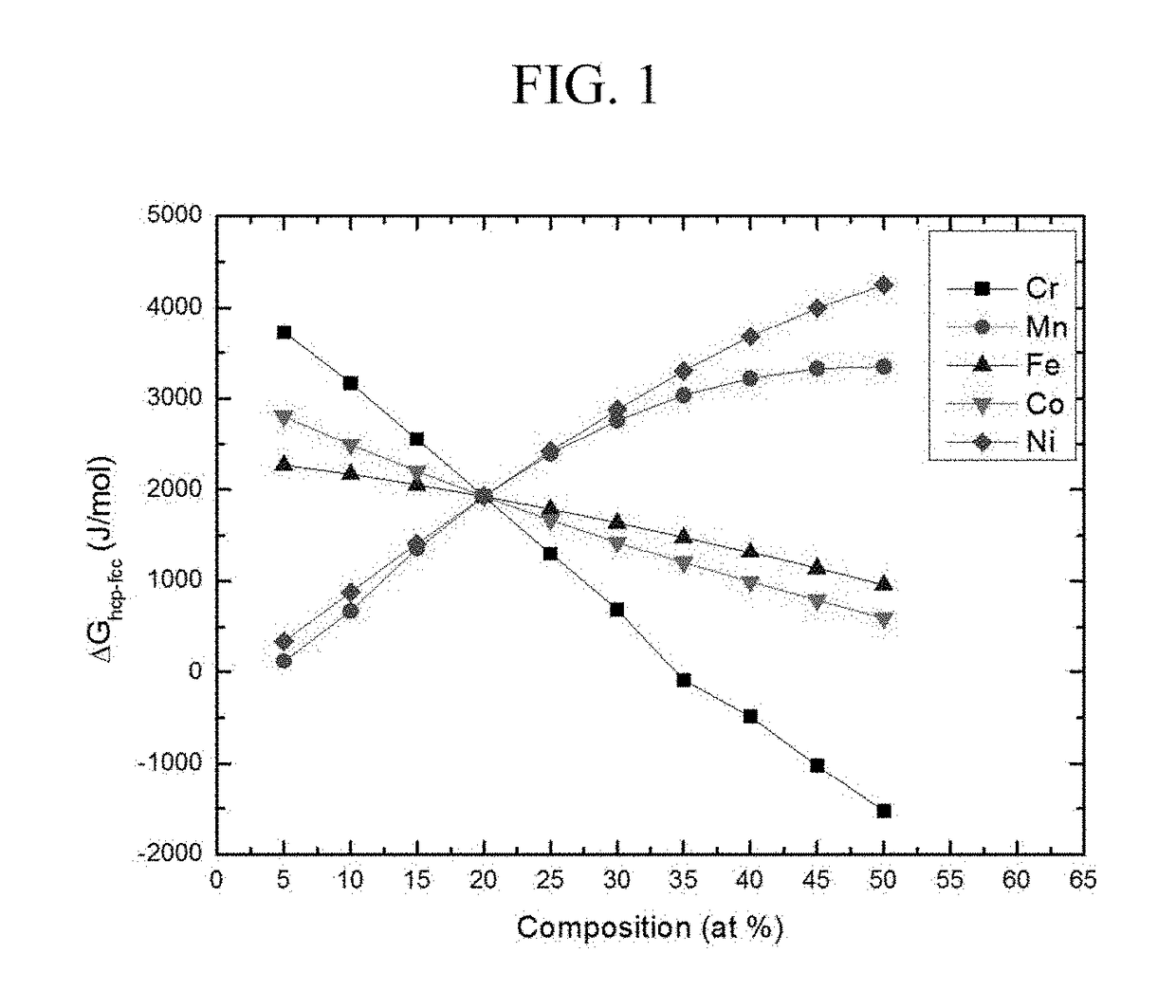
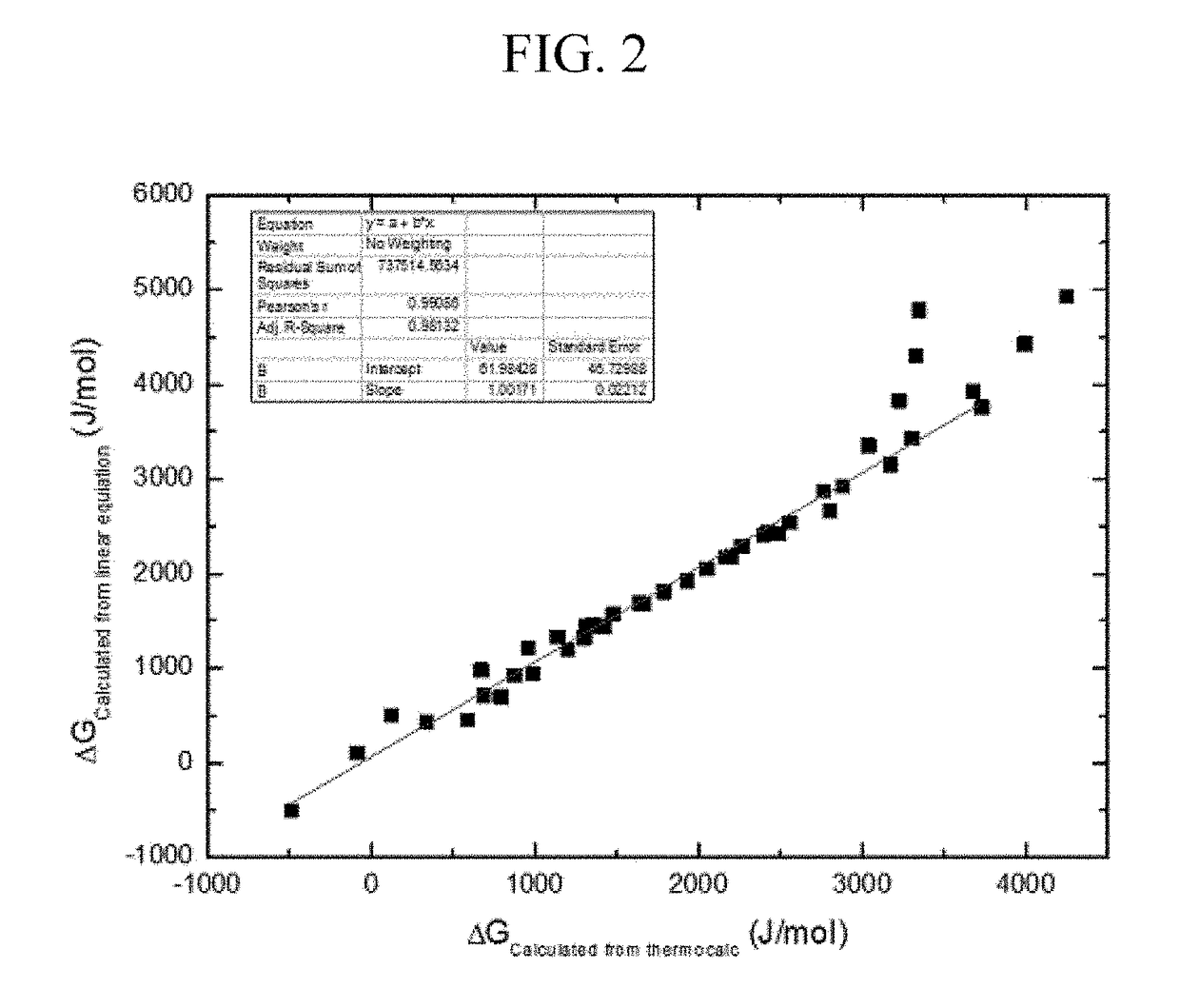
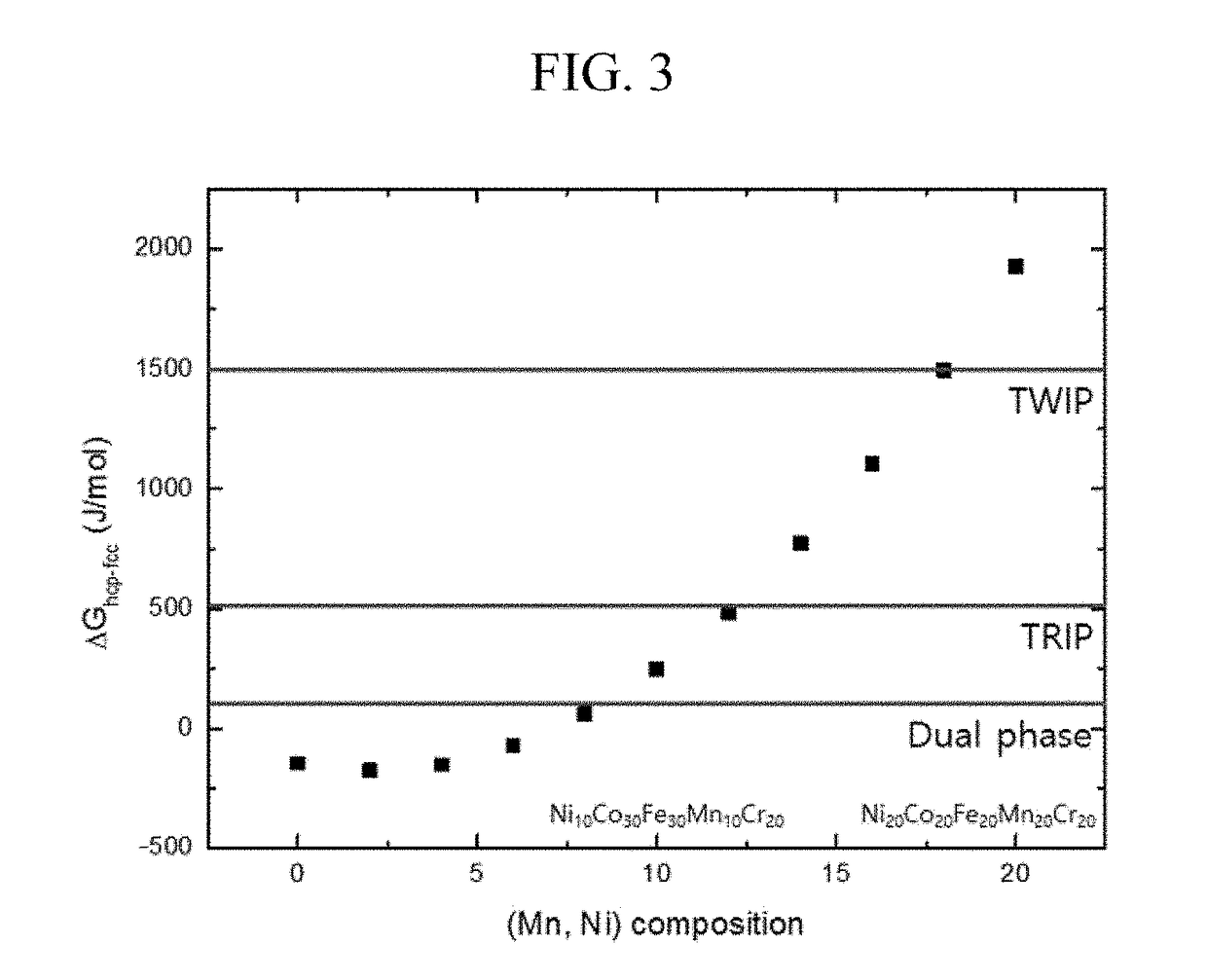
- A high entropy alloy with a non-equiatomic composition of Ni, Co, Fe, Mn, and Cr, where the ratio of Fe and Co to Ni and Mn is adjusted to reduce stacking fault energy, allowing for the formation of γ austenite single or dual-phase microstructures that exhibit TWIP/TRIP properties under stress, thereby improving strength and elongation.

Quality Standards for TRIP Steel Products
The establishment of comprehensive quality standards for TRIP steel products is essential to ensure consistent performance and maximize the transformation-induced plasticity effect across different manufacturing batches. These standards must address both mechanical properties and microstructural characteristics that directly influence the TRIP mechanism effectiveness.
Mechanical property specifications form the foundation of TRIP steel quality standards. Tensile strength requirements typically range from 600 to 1200 MPa, depending on the specific application and grade designation. Yield strength parameters must be carefully controlled to maintain an optimal strength-to-ductility balance, with total elongation values generally exceeding 20% to demonstrate adequate formability. The work hardening exponent should meet minimum thresholds to ensure progressive strain hardening during deformation.
Microstructural quality criteria focus on retained austenite content and stability parameters. The volume fraction of retained austenite should be maintained within specified ranges, typically 5-20%, with carbon content in austenite phases controlled to achieve desired transformation kinetics. Grain size distributions and phase morphology requirements ensure consistent mechanical response and transformation behavior throughout the material.
Chemical composition tolerances represent another critical aspect of quality standards. Carbon content must be precisely controlled within narrow bands to achieve target austenite stability, while silicon and aluminum levels require strict monitoring to prevent carbide precipitation during processing. Manganese distribution homogeneity standards ensure uniform austenite formation and stability across the steel matrix.
Surface quality specifications address decarburization limits, surface roughness parameters, and coating adhesion requirements where applicable. Internal quality standards encompass inclusion content limits, segregation indices, and porosity thresholds that could compromise mechanical performance or transformation uniformity.
Testing protocols and acceptance criteria must be clearly defined for each quality parameter, including sampling frequencies, test methods, and statistical process control limits. These standards should incorporate both laboratory-scale characterization techniques and production-line quality control measures to ensure consistent TRIP steel performance in end-use applications while maintaining manufacturing efficiency and cost-effectiveness.
Mechanical property specifications form the foundation of TRIP steel quality standards. Tensile strength requirements typically range from 600 to 1200 MPa, depending on the specific application and grade designation. Yield strength parameters must be carefully controlled to maintain an optimal strength-to-ductility balance, with total elongation values generally exceeding 20% to demonstrate adequate formability. The work hardening exponent should meet minimum thresholds to ensure progressive strain hardening during deformation.
Microstructural quality criteria focus on retained austenite content and stability parameters. The volume fraction of retained austenite should be maintained within specified ranges, typically 5-20%, with carbon content in austenite phases controlled to achieve desired transformation kinetics. Grain size distributions and phase morphology requirements ensure consistent mechanical response and transformation behavior throughout the material.
Chemical composition tolerances represent another critical aspect of quality standards. Carbon content must be precisely controlled within narrow bands to achieve target austenite stability, while silicon and aluminum levels require strict monitoring to prevent carbide precipitation during processing. Manganese distribution homogeneity standards ensure uniform austenite formation and stability across the steel matrix.
Surface quality specifications address decarburization limits, surface roughness parameters, and coating adhesion requirements where applicable. Internal quality standards encompass inclusion content limits, segregation indices, and porosity thresholds that could compromise mechanical performance or transformation uniformity.
Testing protocols and acceptance criteria must be clearly defined for each quality parameter, including sampling frequencies, test methods, and statistical process control limits. These standards should incorporate both laboratory-scale characterization techniques and production-line quality control measures to ensure consistent TRIP steel performance in end-use applications while maintaining manufacturing efficiency and cost-effectiveness.
Sustainability in TRIP Steel Manufacturing
The sustainability imperative in TRIP steel manufacturing has emerged as a critical consideration for optimizing manufacturing parameters while maximizing the TRIP effect. Environmental regulations and corporate responsibility mandates are driving steel manufacturers to adopt cleaner production technologies that reduce carbon emissions, minimize waste generation, and improve energy efficiency throughout the production cycle.
Energy consumption optimization represents a fundamental pillar of sustainable TRIP steel manufacturing. Advanced heat treatment processes, including controlled cooling strategies and precise temperature management systems, can significantly reduce energy requirements while maintaining optimal austenite stability and carbon partitioning. Implementation of waste heat recovery systems and electric arc furnace technologies has demonstrated potential for reducing overall energy consumption by 15-25% compared to traditional manufacturing approaches.
Water management and recycling systems play an increasingly important role in sustainable TRIP steel production. Closed-loop cooling systems and advanced filtration technologies enable manufacturers to minimize freshwater consumption while maintaining the precise temperature control necessary for optimal TRIP effect development. These systems also reduce thermal pollution and minimize environmental impact on local water resources.
Raw material sustainability considerations are reshaping TRIP steel manufacturing strategies. Increased utilization of recycled steel scrap, combined with optimized alloying element selection, reduces dependency on virgin materials while maintaining metallurgical performance. Advanced sorting and processing technologies enable higher recycled content without compromising the complex microstructural requirements essential for TRIP behavior.
Carbon footprint reduction initiatives are driving innovation in manufacturing process optimization. Integration of renewable energy sources, implementation of carbon capture technologies, and adoption of hydrogen-based reduction processes represent emerging approaches to minimize greenhouse gas emissions. These sustainability measures must be carefully balanced with the precise process control requirements necessary for achieving maximum TRIP effect.
Waste stream management and byproduct utilization strategies are becoming integral components of sustainable TRIP steel manufacturing. Advanced slag processing technologies and scale recycling systems enable manufacturers to minimize waste disposal while recovering valuable materials. These circular economy approaches contribute to overall sustainability while potentially reducing raw material costs and improving manufacturing efficiency.
Energy consumption optimization represents a fundamental pillar of sustainable TRIP steel manufacturing. Advanced heat treatment processes, including controlled cooling strategies and precise temperature management systems, can significantly reduce energy requirements while maintaining optimal austenite stability and carbon partitioning. Implementation of waste heat recovery systems and electric arc furnace technologies has demonstrated potential for reducing overall energy consumption by 15-25% compared to traditional manufacturing approaches.
Water management and recycling systems play an increasingly important role in sustainable TRIP steel production. Closed-loop cooling systems and advanced filtration technologies enable manufacturers to minimize freshwater consumption while maintaining the precise temperature control necessary for optimal TRIP effect development. These systems also reduce thermal pollution and minimize environmental impact on local water resources.
Raw material sustainability considerations are reshaping TRIP steel manufacturing strategies. Increased utilization of recycled steel scrap, combined with optimized alloying element selection, reduces dependency on virgin materials while maintaining metallurgical performance. Advanced sorting and processing technologies enable higher recycled content without compromising the complex microstructural requirements essential for TRIP behavior.
Carbon footprint reduction initiatives are driving innovation in manufacturing process optimization. Integration of renewable energy sources, implementation of carbon capture technologies, and adoption of hydrogen-based reduction processes represent emerging approaches to minimize greenhouse gas emissions. These sustainability measures must be carefully balanced with the precise process control requirements necessary for achieving maximum TRIP effect.
Waste stream management and byproduct utilization strategies are becoming integral components of sustainable TRIP steel manufacturing. Advanced slag processing technologies and scale recycling systems enable manufacturers to minimize waste disposal while recovering valuable materials. These circular economy approaches contribute to overall sustainability while potentially reducing raw material costs and improving manufacturing efficiency.
Unlock deeper insights with Patsnap Eureka Quick Research — get a full tech report to explore trends and direct your research. Try now!
Generate Your Research Report Instantly with AI Agent
Supercharge your innovation with Patsnap Eureka AI Agent Platform!