

Analyzing Quality Protocols in Piezoelectric Crystal Development
MAR 27, 20269 MIN READ
Generate Your Research Report Instantly with AI Agent
PatSnap Eureka helps you evaluate technical feasibility & market potential.
Piezoelectric Crystal Quality Development Background and Objectives
Piezoelectric crystals have emerged as fundamental components in modern electronic systems, with their unique ability to convert mechanical energy into electrical energy and vice versa. The development of these materials traces back to the late 19th century when Pierre and Jacques Curie first discovered the piezoelectric effect in quartz crystals. Since then, the field has evolved dramatically, encompassing natural crystals like quartz and tourmaline, as well as synthetic materials such as lead zirconate titanate (PZT) ceramics and lithium niobate.
The evolution of piezoelectric crystal technology has been driven by increasing demands for precision, reliability, and performance across diverse applications. From early radio frequency oscillators to contemporary ultrasonic medical devices, automotive sensors, and energy harvesting systems, the requirements for crystal quality have become increasingly stringent. This progression has necessitated the development of sophisticated quality protocols that can ensure consistent performance characteristics while maintaining cost-effectiveness in manufacturing processes.
Current technological trends indicate a shift toward miniaturization and enhanced sensitivity, particularly in consumer electronics and Internet of Things applications. The integration of piezoelectric crystals in smartphones, wearable devices, and autonomous vehicles demands unprecedented levels of quality assurance. Additionally, emerging applications in quantum computing and advanced medical diagnostics are pushing the boundaries of crystal purity and structural perfection requirements.
The primary objective of establishing comprehensive quality protocols in piezoelectric crystal development centers on achieving reproducible material properties that meet specific application requirements. This involves developing standardized testing methodologies that can accurately characterize key parameters such as electromechanical coupling coefficients, dielectric constants, mechanical quality factors, and temperature stability. These protocols must address both bulk material properties and surface characteristics that directly impact device performance.
Another critical objective involves establishing traceability throughout the manufacturing process, from raw material selection to final device integration. This encompasses implementing real-time monitoring systems that can detect deviations in crystal growth conditions, processing parameters, and environmental factors that might compromise material quality. The goal is to create a feedback loop that enables continuous improvement in manufacturing processes while reducing waste and production costs.
Furthermore, quality protocols must address the long-term reliability and aging characteristics of piezoelectric crystals under various operating conditions. This includes developing accelerated testing procedures that can predict device lifetime and performance degradation patterns, enabling manufacturers to provide accurate specifications and warranty terms for their products.
The evolution of piezoelectric crystal technology has been driven by increasing demands for precision, reliability, and performance across diverse applications. From early radio frequency oscillators to contemporary ultrasonic medical devices, automotive sensors, and energy harvesting systems, the requirements for crystal quality have become increasingly stringent. This progression has necessitated the development of sophisticated quality protocols that can ensure consistent performance characteristics while maintaining cost-effectiveness in manufacturing processes.
Current technological trends indicate a shift toward miniaturization and enhanced sensitivity, particularly in consumer electronics and Internet of Things applications. The integration of piezoelectric crystals in smartphones, wearable devices, and autonomous vehicles demands unprecedented levels of quality assurance. Additionally, emerging applications in quantum computing and advanced medical diagnostics are pushing the boundaries of crystal purity and structural perfection requirements.
The primary objective of establishing comprehensive quality protocols in piezoelectric crystal development centers on achieving reproducible material properties that meet specific application requirements. This involves developing standardized testing methodologies that can accurately characterize key parameters such as electromechanical coupling coefficients, dielectric constants, mechanical quality factors, and temperature stability. These protocols must address both bulk material properties and surface characteristics that directly impact device performance.
Another critical objective involves establishing traceability throughout the manufacturing process, from raw material selection to final device integration. This encompasses implementing real-time monitoring systems that can detect deviations in crystal growth conditions, processing parameters, and environmental factors that might compromise material quality. The goal is to create a feedback loop that enables continuous improvement in manufacturing processes while reducing waste and production costs.
Furthermore, quality protocols must address the long-term reliability and aging characteristics of piezoelectric crystals under various operating conditions. This includes developing accelerated testing procedures that can predict device lifetime and performance degradation patterns, enabling manufacturers to provide accurate specifications and warranty terms for their products.
Market Demand for High-Quality Piezoelectric Crystal Applications
The global market for high-quality piezoelectric crystals demonstrates robust growth driven by expanding applications across multiple technology sectors. Consumer electronics represent the largest demand segment, with smartphones, tablets, and wearable devices requiring precise frequency control and timing solutions. The miniaturization trend in electronic devices necessitates increasingly sophisticated piezoelectric components with enhanced performance characteristics and reduced form factors.
Industrial automation and manufacturing sectors exhibit substantial demand for piezoelectric crystals in precision positioning systems, ultrasonic cleaning equipment, and vibration monitoring applications. The automotive industry's transition toward electric vehicles and advanced driver assistance systems creates new market opportunities for high-performance piezoelectric components in sensors, actuators, and energy harvesting systems.
Medical device applications constitute a rapidly expanding market segment, particularly in ultrasonic imaging, therapeutic equipment, and implantable devices. The stringent quality requirements in medical applications drive demand for crystals with exceptional stability, reliability, and biocompatibility characteristics. Diagnostic equipment manufacturers increasingly require custom-engineered piezoelectric solutions with specific frequency responses and temperature coefficients.
Telecommunications infrastructure modernization, including the deployment of advanced wireless networks, generates significant demand for high-frequency piezoelectric crystals with superior phase noise performance and temperature stability. Data center expansion and cloud computing infrastructure require precise timing solutions to maintain network synchronization and data integrity.
Aerospace and defense applications demand piezoelectric crystals capable of operating under extreme environmental conditions while maintaining exceptional performance standards. These applications often require specialized materials and manufacturing processes to meet stringent military and space qualification requirements.
The Internet of Things ecosystem expansion creates emerging demand for low-power, miniaturized piezoelectric components in sensor networks, smart home devices, and industrial monitoring systems. Energy harvesting applications represent a growing niche market where piezoelectric crystals convert mechanical vibrations into electrical energy for powering autonomous sensor systems.
Market demand increasingly emphasizes customization and application-specific solutions rather than standard commodity products. Customers require piezoelectric crystals with tailored characteristics including specific frequency ranges, temperature coefficients, aging rates, and package configurations to meet unique application requirements.
Industrial automation and manufacturing sectors exhibit substantial demand for piezoelectric crystals in precision positioning systems, ultrasonic cleaning equipment, and vibration monitoring applications. The automotive industry's transition toward electric vehicles and advanced driver assistance systems creates new market opportunities for high-performance piezoelectric components in sensors, actuators, and energy harvesting systems.
Medical device applications constitute a rapidly expanding market segment, particularly in ultrasonic imaging, therapeutic equipment, and implantable devices. The stringent quality requirements in medical applications drive demand for crystals with exceptional stability, reliability, and biocompatibility characteristics. Diagnostic equipment manufacturers increasingly require custom-engineered piezoelectric solutions with specific frequency responses and temperature coefficients.
Telecommunications infrastructure modernization, including the deployment of advanced wireless networks, generates significant demand for high-frequency piezoelectric crystals with superior phase noise performance and temperature stability. Data center expansion and cloud computing infrastructure require precise timing solutions to maintain network synchronization and data integrity.
Aerospace and defense applications demand piezoelectric crystals capable of operating under extreme environmental conditions while maintaining exceptional performance standards. These applications often require specialized materials and manufacturing processes to meet stringent military and space qualification requirements.
The Internet of Things ecosystem expansion creates emerging demand for low-power, miniaturized piezoelectric components in sensor networks, smart home devices, and industrial monitoring systems. Energy harvesting applications represent a growing niche market where piezoelectric crystals convert mechanical vibrations into electrical energy for powering autonomous sensor systems.
Market demand increasingly emphasizes customization and application-specific solutions rather than standard commodity products. Customers require piezoelectric crystals with tailored characteristics including specific frequency ranges, temperature coefficients, aging rates, and package configurations to meet unique application requirements.
Current Quality Control Challenges in Piezoelectric Manufacturing
Piezoelectric crystal manufacturing faces significant quality control challenges that stem from the inherent complexity of crystal growth processes and the stringent performance requirements of modern applications. The crystalline structure formation is highly sensitive to environmental variables, making consistent quality achievement a persistent industry concern.
Temperature fluctuations during crystal growth represent one of the most critical challenges in maintaining quality standards. Even minor deviations from optimal thermal conditions can introduce structural defects, alter piezoelectric coefficients, and compromise frequency stability. Manufacturing facilities struggle to maintain precise temperature control across large growth chambers, particularly during extended growth cycles that can span several weeks.
Contamination control presents another formidable challenge in piezoelectric crystal production. Trace impurities introduced during raw material preparation, crystal seeding, or growth processes can significantly impact electrical properties and long-term stability. The detection and elimination of sub-ppm level contaminants requires sophisticated analytical techniques and cleanroom protocols that many manufacturers find difficult to implement consistently.
Dimensional accuracy and surface quality control pose additional manufacturing challenges. Piezoelectric applications demand extremely tight tolerances, often requiring surface flatness within nanometer ranges and dimensional precision exceeding conventional machining capabilities. Traditional quality inspection methods prove inadequate for detecting microscopic surface irregularities that can affect device performance.
Crystal orientation verification and maintenance throughout processing stages create ongoing quality assurance difficulties. Misaligned crystal cuts or orientation drift during fabrication can result in significant performance degradation. Current measurement techniques for crystal orientation often lack the precision required for advanced applications, leading to quality uncertainties.
Batch-to-batch consistency remains a persistent challenge due to the complex interplay of multiple process variables. Variations in seed crystal quality, growth solution composition, mechanical vibrations, and atmospheric conditions contribute to performance variations between production runs. Establishing robust process control parameters that ensure reproducible results across different batches requires extensive process optimization and continuous monitoring capabilities that strain existing quality systems.
Temperature fluctuations during crystal growth represent one of the most critical challenges in maintaining quality standards. Even minor deviations from optimal thermal conditions can introduce structural defects, alter piezoelectric coefficients, and compromise frequency stability. Manufacturing facilities struggle to maintain precise temperature control across large growth chambers, particularly during extended growth cycles that can span several weeks.
Contamination control presents another formidable challenge in piezoelectric crystal production. Trace impurities introduced during raw material preparation, crystal seeding, or growth processes can significantly impact electrical properties and long-term stability. The detection and elimination of sub-ppm level contaminants requires sophisticated analytical techniques and cleanroom protocols that many manufacturers find difficult to implement consistently.
Dimensional accuracy and surface quality control pose additional manufacturing challenges. Piezoelectric applications demand extremely tight tolerances, often requiring surface flatness within nanometer ranges and dimensional precision exceeding conventional machining capabilities. Traditional quality inspection methods prove inadequate for detecting microscopic surface irregularities that can affect device performance.
Crystal orientation verification and maintenance throughout processing stages create ongoing quality assurance difficulties. Misaligned crystal cuts or orientation drift during fabrication can result in significant performance degradation. Current measurement techniques for crystal orientation often lack the precision required for advanced applications, leading to quality uncertainties.
Batch-to-batch consistency remains a persistent challenge due to the complex interplay of multiple process variables. Variations in seed crystal quality, growth solution composition, mechanical vibrations, and atmospheric conditions contribute to performance variations between production runs. Establishing robust process control parameters that ensure reproducible results across different batches requires extensive process optimization and continuous monitoring capabilities that strain existing quality systems.
Existing Quality Protocol Solutions for Crystal Development
01 Crystal growth methods and temperature control
Methods for growing high-quality piezoelectric crystals involve precise control of temperature gradients and growth rates. Techniques include controlled cooling processes, specific temperature profiles during crystallization, and optimization of thermal conditions to minimize defects and improve crystal uniformity. These methods ensure better piezoelectric properties and reduced internal stress in the final crystal structure.- Crystal growth methods and temperature control: Piezoelectric crystal quality can be improved through optimized crystal growth methods, particularly by controlling temperature gradients and growth rates during the manufacturing process. Precise temperature control during crystal formation helps reduce defects and improves uniformity. Advanced growth techniques including controlled cooling rates and thermal management systems contribute to enhanced crystal structure and piezoelectric properties.
- Doping and compositional control: The quality of piezoelectric crystals can be enhanced through careful control of dopants and compositional elements. Strategic introduction of specific elements during crystal formation can improve electrical properties and reduce internal defects. Compositional uniformity throughout the crystal structure is critical for consistent piezoelectric performance and can be achieved through controlled doping processes.
- Defect detection and quality evaluation methods: Various inspection and evaluation techniques are employed to assess piezoelectric crystal quality, including optical inspection, electrical testing, and structural analysis methods. Non-destructive testing approaches allow for identification of internal defects, inclusions, and structural irregularities. Advanced measurement systems enable quantitative assessment of piezoelectric coefficients and other performance parameters to ensure crystal quality meets specifications.
- Post-growth treatment and processing: Crystal quality can be improved through various post-growth treatments including annealing, poling, and surface processing techniques. Heat treatment processes help eliminate residual stress and improve crystal homogeneity. Controlled poling procedures align domains within the crystal structure to optimize piezoelectric response, while surface finishing techniques reduce surface defects and improve device performance.
- Substrate preparation and orientation control: The quality of piezoelectric crystals is significantly influenced by substrate preparation and crystallographic orientation control. Proper substrate selection and surface preparation create optimal conditions for epitaxial growth and reduce defect formation. Precise control of crystal orientation during growth ensures desired piezoelectric properties and minimizes twinning or misorientation defects that can degrade performance.
02 Doping and composition optimization
Enhancement of piezoelectric crystal quality through controlled addition of dopants and optimization of chemical composition. This includes introducing specific elements or compounds to improve electrical properties, reduce losses, and enhance stability. The composition control affects crystal structure, domain orientation, and overall piezoelectric performance.Expand Specific Solutions03 Defect reduction and crystal structure improvement
Techniques focused on minimizing crystallographic defects such as dislocations, inclusions, and grain boundaries that affect piezoelectric performance. Methods include annealing processes, controlled atmosphere processing, and post-growth treatment procedures to improve crystal homogeneity and reduce internal defects that can degrade piezoelectric properties.Expand Specific Solutions04 Quality evaluation and characterization methods
Advanced testing and measurement techniques for assessing piezoelectric crystal quality. This includes methods for evaluating electrical properties, mechanical characteristics, crystal orientation, and defect detection. Characterization approaches involve resonance frequency analysis, impedance measurements, and structural analysis to ensure crystals meet performance specifications.Expand Specific Solutions05 Manufacturing process control and substrate preparation
Optimization of manufacturing processes including substrate selection, surface preparation, and processing environment control. Techniques involve cleaning procedures, surface treatment methods, and control of processing parameters to ensure consistent crystal quality. This includes methods for preparing growth substrates and maintaining contamination-free conditions during crystal formation.Expand Specific Solutions
Major Players in Piezoelectric Crystal Quality Control Industry
The piezoelectric crystal development sector exhibits a mature competitive landscape characterized by established industry players and emerging specialized firms. The market demonstrates significant scale with major Japanese corporations like Seiko Epson Corp., Canon Inc., and Toshiba Corp. leading through diversified portfolios spanning consumer electronics to industrial applications. Technology maturity varies across segments, with companies like TRS Technologies Inc. and CTS Advanced Materials LLC representing specialized high-performance crystal development, while broader manufacturers like Mitsubishi Materials Corp. and NGK Insulators Ltd. leverage established ceramic and materials expertise. Research institutions including Penn State Research Foundation and Virginia Tech Intellectual Properties Inc. contribute foundational innovations, indicating strong academic-industry collaboration. The competitive dynamics suggest a consolidating market where specialized piezoelectric expertise increasingly differentiates players from general electronics manufacturers, particularly in advanced applications requiring precise quality protocols and performance specifications.
Seiko Epson Corp.
Technical Solution: Seiko Epson has developed sophisticated quality protocols for piezoelectric crystal manufacturing, particularly focusing on quartz crystal resonators. Their quality assurance framework includes precision frequency stability testing, phase noise characterization, and aging rate validation. The company utilizes clean room environments with controlled atmospheric conditions and implements real-time monitoring systems for crystal growth parameters. Their protocols encompass comprehensive electrical testing including equivalent series resistance (ESR) measurements, drive level dependency analysis, and temperature-frequency characteristics validation to ensure optimal performance in timing applications.
Strengths: Decades of experience in crystal technology with proven manufacturing excellence and precision timing solutions. Weaknesses: Limited focus on emerging piezoelectric materials beyond traditional quartz crystals.
CTS Corp.
Technical Solution: CTS Corporation employs rigorous quality protocols in piezoelectric crystal development through integrated design and manufacturing processes. Their quality framework includes advanced material screening procedures, crystal orientation verification, and comprehensive electrical parameter validation. The company implements Design of Experiments (DOE) methodologies to optimize crystal performance while maintaining strict quality standards. Their protocols feature automated testing systems for piezoelectric coefficients, dielectric properties, and mechanical resonance characteristics, ensuring consistent product quality across high-volume production environments.
Strengths: Strong focus on automotive and telecommunications applications with proven quality systems and cost-effective manufacturing. Weaknesses: Smaller scale compared to major competitors may limit R&D investment in advanced quality technologies.
Core Quality Assessment Patents in Piezoelectric Technology
Quality management method for polymer piezoelectric material, manufacturing method for resin composition, manufacturing method for cable or tube, manufacturing method for piezoelectric element, manufacturing method for pyroelectric type sensor, and manufacturing method for nonvolatile thin film memory
PatentActiveJP2022080001A
Innovation
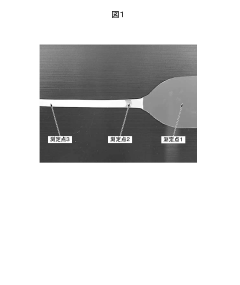
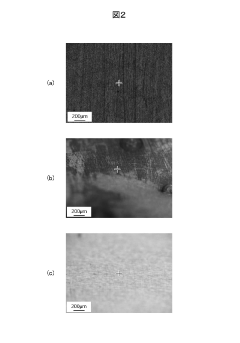
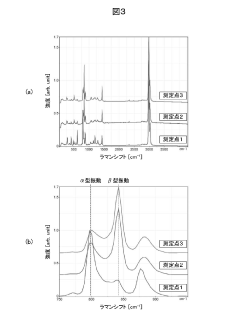
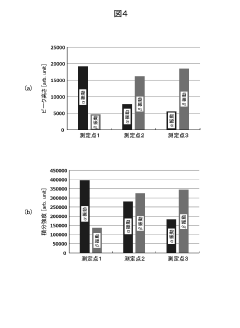
- Irradiate the polymeric piezoelectric material with a laser beam to measure the Raman spectrum, diagnosing piezoelectric performance based on the intensity of specific peaks, allowing non-destructive quality control and retention of original shape information.
Piezoelectric single crystal including internal bias electric field, manufacturing method thereof and use for piezoelectric and dielectric articles using the same
PatentActiveKR1020220083604A
Innovation
- A piezoelectric single crystal with a perovskite structure is developed by controlling the composition of [A] and [B] site ions and oxygen partial pressure during heat treatment, enhancing the coercive and internal electric fields, maintaining high dielectric and piezoelectric constants, and using a solid-phase growth method to achieve uniform composition and stability.


Material Safety Standards for Piezoelectric Crystal Production
Material safety standards in piezoelectric crystal production encompass comprehensive regulatory frameworks designed to protect workers, equipment, and the environment throughout the manufacturing process. These standards address the inherent risks associated with handling raw materials, chemical processing agents, and high-temperature operations required for crystal growth and fabrication.
The primary safety considerations involve exposure to toxic substances commonly used in piezoelectric crystal synthesis, including lead-based compounds in PZT ceramics, lithium compounds in LiNbO3 crystals, and various dopants and flux materials. Occupational exposure limits have been established for these materials, with lead exposure being particularly stringent due to its neurological and reproductive health impacts. Manufacturing facilities must implement engineering controls such as closed-loop processing systems, negative pressure environments, and automated material handling to minimize direct worker contact.
Chemical handling protocols require specialized storage conditions for hygroscopic materials like lithium tantalate precursors, which must be maintained in controlled humidity environments to prevent degradation and ensure consistent crystal quality. Emergency response procedures address potential chemical spills, fire hazards from organic solvents used in cleaning processes, and exposure incidents involving corrosive acids used in crystal etching and surface preparation.
High-temperature processing safety standards govern the operation of crystal growth furnaces, which typically operate between 800°C to 1400°C depending on the crystal type. These standards mandate proper ventilation systems to manage thermal decomposition products, regular maintenance of heating elements to prevent catastrophic failures, and implementation of fail-safe shutdown mechanisms to protect both personnel and expensive crystal growth equipment.
Personal protective equipment requirements include specialized respiratory protection for powder handling operations, chemical-resistant gloves for wet processing steps, and heat-resistant gear for furnace operations. Regular health monitoring programs track potential exposure effects, particularly for workers involved in lead-containing piezoelectric material production.
Environmental safety standards address waste stream management, including proper disposal of lead-contaminated materials, recovery and recycling of precious metal dopants, and treatment of process wastewater containing dissolved crystal precursors. Air emission controls focus on particulate matter from grinding and polishing operations, as well as volatile organic compounds from solvent-based cleaning processes.
The primary safety considerations involve exposure to toxic substances commonly used in piezoelectric crystal synthesis, including lead-based compounds in PZT ceramics, lithium compounds in LiNbO3 crystals, and various dopants and flux materials. Occupational exposure limits have been established for these materials, with lead exposure being particularly stringent due to its neurological and reproductive health impacts. Manufacturing facilities must implement engineering controls such as closed-loop processing systems, negative pressure environments, and automated material handling to minimize direct worker contact.
Chemical handling protocols require specialized storage conditions for hygroscopic materials like lithium tantalate precursors, which must be maintained in controlled humidity environments to prevent degradation and ensure consistent crystal quality. Emergency response procedures address potential chemical spills, fire hazards from organic solvents used in cleaning processes, and exposure incidents involving corrosive acids used in crystal etching and surface preparation.
High-temperature processing safety standards govern the operation of crystal growth furnaces, which typically operate between 800°C to 1400°C depending on the crystal type. These standards mandate proper ventilation systems to manage thermal decomposition products, regular maintenance of heating elements to prevent catastrophic failures, and implementation of fail-safe shutdown mechanisms to protect both personnel and expensive crystal growth equipment.
Personal protective equipment requirements include specialized respiratory protection for powder handling operations, chemical-resistant gloves for wet processing steps, and heat-resistant gear for furnace operations. Regular health monitoring programs track potential exposure effects, particularly for workers involved in lead-containing piezoelectric material production.
Environmental safety standards address waste stream management, including proper disposal of lead-contaminated materials, recovery and recycling of precious metal dopants, and treatment of process wastewater containing dissolved crystal precursors. Air emission controls focus on particulate matter from grinding and polishing operations, as well as volatile organic compounds from solvent-based cleaning processes.
Quality Certification Requirements for Piezoelectric Devices
Piezoelectric devices must comply with stringent quality certification requirements to ensure reliable performance across diverse applications. International standards such as IEC 60444 and IEEE 176 establish fundamental guidelines for piezoelectric crystal specifications, while industry-specific certifications like ISO 9001 provide comprehensive quality management frameworks. These standards define critical parameters including frequency stability, temperature coefficients, aging characteristics, and mechanical durability that manufacturers must validate through rigorous testing protocols.
The certification process typically involves multiple stages of verification, beginning with material composition analysis and crystal structure characterization. X-ray diffraction studies confirm proper crystalline orientation, while chemical analysis ensures purity levels meet specified thresholds. Electrical performance testing encompasses frequency response measurements, impedance analysis, and long-term stability assessments under various environmental conditions including temperature cycling, humidity exposure, and mechanical stress.
Regulatory compliance varies significantly across different market segments and geographical regions. Medical device applications require FDA approval or CE marking in Europe, demanding extensive biocompatibility testing and clinical validation. Automotive applications must meet AEC-Q200 standards for electronic components, emphasizing reliability under extreme temperature variations and vibration conditions. Aerospace applications necessitate compliance with DO-160 environmental conditions and testing procedures for airborne equipment.
Third-party certification bodies play crucial roles in validating manufacturer claims and ensuring independent verification of device performance. Organizations such as UL, TÜV, and SGS provide accredited testing services and certification programs that enhance market credibility and facilitate international trade. These certifications often require ongoing surveillance audits and periodic retesting to maintain validity.
Documentation requirements form a critical component of quality certification, encompassing detailed test reports, manufacturing process descriptions, and traceability records. Manufacturers must maintain comprehensive quality management systems that demonstrate consistent production capabilities and continuous improvement initiatives. Statistical process control data, failure analysis reports, and corrective action documentation provide evidence of systematic quality assurance practices.
Emerging certification requirements address environmental sustainability and conflict mineral compliance, reflecting growing industry emphasis on responsible sourcing and manufacturing practices. RoHS compliance ensures restriction of hazardous substances, while REACH regulations govern chemical safety throughout the supply chain.
The certification process typically involves multiple stages of verification, beginning with material composition analysis and crystal structure characterization. X-ray diffraction studies confirm proper crystalline orientation, while chemical analysis ensures purity levels meet specified thresholds. Electrical performance testing encompasses frequency response measurements, impedance analysis, and long-term stability assessments under various environmental conditions including temperature cycling, humidity exposure, and mechanical stress.
Regulatory compliance varies significantly across different market segments and geographical regions. Medical device applications require FDA approval or CE marking in Europe, demanding extensive biocompatibility testing and clinical validation. Automotive applications must meet AEC-Q200 standards for electronic components, emphasizing reliability under extreme temperature variations and vibration conditions. Aerospace applications necessitate compliance with DO-160 environmental conditions and testing procedures for airborne equipment.
Third-party certification bodies play crucial roles in validating manufacturer claims and ensuring independent verification of device performance. Organizations such as UL, TÜV, and SGS provide accredited testing services and certification programs that enhance market credibility and facilitate international trade. These certifications often require ongoing surveillance audits and periodic retesting to maintain validity.
Documentation requirements form a critical component of quality certification, encompassing detailed test reports, manufacturing process descriptions, and traceability records. Manufacturers must maintain comprehensive quality management systems that demonstrate consistent production capabilities and continuous improvement initiatives. Statistical process control data, failure analysis reports, and corrective action documentation provide evidence of systematic quality assurance practices.
Emerging certification requirements address environmental sustainability and conflict mineral compliance, reflecting growing industry emphasis on responsible sourcing and manufacturing practices. RoHS compliance ensures restriction of hazardous substances, while REACH regulations govern chemical safety throughout the supply chain.
Unlock deeper insights with PatSnap Eureka Quick Research — get a full tech report to explore trends and direct your research. Try now!
Generate Your Research Report Instantly with AI Agent
Supercharge your innovation with PatSnap Eureka AI Agent Platform!