Assessing Proprioceptive Sensing Technologies: An Industrial Perspective
APR 24, 20269 MIN READ
Generate Your Research Report Instantly with AI Agent
PatSnap Eureka helps you evaluate technical feasibility & market potential.
Proprioceptive Sensing Technology Background and Industrial Goals
Proprioceptive sensing represents a fundamental capability that enables systems to perceive their own internal state, position, and movement without relying on external references. This technology draws inspiration from biological proprioception, where living organisms maintain spatial awareness through specialized sensory receptors. In industrial contexts, proprioceptive sensing has evolved from basic position feedback mechanisms to sophisticated multi-modal sensing systems that provide real-time awareness of mechanical states, forces, and spatial relationships.
The historical development of proprioceptive sensing in industrial applications began with simple mechanical feedback systems in the mid-20th century, primarily serving basic automation needs. The integration of electronic sensors in the 1970s marked a significant advancement, enabling more precise position and velocity measurements. The subsequent decades witnessed the emergence of strain gauges, encoders, and inertial measurement units, each contributing to enhanced proprioceptive capabilities in industrial machinery.
Modern proprioceptive sensing technologies encompass a diverse range of sensing modalities, including tactile sensors, force-torque sensors, joint encoders, and distributed sensing networks. These technologies have become increasingly sophisticated, incorporating advanced signal processing algorithms and machine learning techniques to extract meaningful information from complex sensor data streams.
The evolution toward Industry 4.0 and smart manufacturing has significantly amplified the importance of proprioceptive sensing technologies. Contemporary industrial systems require unprecedented levels of self-awareness to operate autonomously, adapt to changing conditions, and ensure safe human-robot collaboration. This technological shift has driven demand for more integrated, intelligent, and cost-effective proprioceptive sensing solutions.
Current industrial goals for proprioceptive sensing technologies focus on achieving higher precision, improved reliability, and enhanced integration capabilities. Key objectives include developing sensing systems that can operate effectively in harsh industrial environments while maintaining accuracy and longevity. Additionally, there is growing emphasis on creating sensing solutions that can seamlessly integrate with existing industrial infrastructure and provide standardized interfaces for data exchange.
The pursuit of advanced proprioceptive sensing capabilities aims to enable next-generation industrial applications, including fully autonomous manufacturing systems, adaptive quality control processes, and predictive maintenance strategies. These technological goals represent critical enablers for achieving greater operational efficiency, reduced downtime, and improved product quality across diverse industrial sectors.
The historical development of proprioceptive sensing in industrial applications began with simple mechanical feedback systems in the mid-20th century, primarily serving basic automation needs. The integration of electronic sensors in the 1970s marked a significant advancement, enabling more precise position and velocity measurements. The subsequent decades witnessed the emergence of strain gauges, encoders, and inertial measurement units, each contributing to enhanced proprioceptive capabilities in industrial machinery.
Modern proprioceptive sensing technologies encompass a diverse range of sensing modalities, including tactile sensors, force-torque sensors, joint encoders, and distributed sensing networks. These technologies have become increasingly sophisticated, incorporating advanced signal processing algorithms and machine learning techniques to extract meaningful information from complex sensor data streams.
The evolution toward Industry 4.0 and smart manufacturing has significantly amplified the importance of proprioceptive sensing technologies. Contemporary industrial systems require unprecedented levels of self-awareness to operate autonomously, adapt to changing conditions, and ensure safe human-robot collaboration. This technological shift has driven demand for more integrated, intelligent, and cost-effective proprioceptive sensing solutions.
Current industrial goals for proprioceptive sensing technologies focus on achieving higher precision, improved reliability, and enhanced integration capabilities. Key objectives include developing sensing systems that can operate effectively in harsh industrial environments while maintaining accuracy and longevity. Additionally, there is growing emphasis on creating sensing solutions that can seamlessly integrate with existing industrial infrastructure and provide standardized interfaces for data exchange.
The pursuit of advanced proprioceptive sensing capabilities aims to enable next-generation industrial applications, including fully autonomous manufacturing systems, adaptive quality control processes, and predictive maintenance strategies. These technological goals represent critical enablers for achieving greater operational efficiency, reduced downtime, and improved product quality across diverse industrial sectors.
Market Demand Analysis for Proprioceptive Sensing Solutions
The industrial demand for proprioceptive sensing technologies has experienced substantial growth across multiple sectors, driven by the increasing adoption of automation, robotics, and advanced manufacturing systems. Manufacturing industries represent the largest market segment, where proprioceptive sensors enable precise position feedback, force control, and collision detection in robotic assembly lines. The automotive sector demonstrates particularly strong demand for these technologies in both production processes and emerging autonomous vehicle applications.
Healthcare and medical device industries constitute another significant market driver, with proprioceptive sensing solutions essential for surgical robotics, prosthetics, and rehabilitation equipment. The aging global population and increasing focus on minimally invasive procedures have accelerated demand for high-precision sensing capabilities that can provide tactile feedback and spatial awareness in medical applications.
The aerospace and defense sectors require proprioceptive sensing technologies for unmanned aerial vehicles, satellite positioning systems, and advanced weapon platforms. These applications demand sensors capable of operating under extreme environmental conditions while maintaining exceptional accuracy and reliability standards.
Consumer electronics and gaming industries have emerged as rapidly growing market segments, particularly with the expansion of virtual reality, augmented reality, and haptic feedback systems. The integration of proprioceptive sensing in smartphones, wearable devices, and gaming controllers has created new revenue streams and application possibilities.
Market capacity analysis reveals significant regional variations in demand patterns. North American and European markets demonstrate mature adoption rates with focus on high-performance applications, while Asian markets, particularly China and Japan, show accelerated growth driven by manufacturing automation initiatives and robotics investments.
Industry development trends indicate a shift toward miniaturization, wireless connectivity, and integration with artificial intelligence systems. The convergence of Internet of Things technologies with proprioceptive sensing creates opportunities for predictive maintenance, real-time monitoring, and adaptive control systems across industrial applications.
Supply chain considerations have become increasingly important, with end-users seeking reliable sensor suppliers capable of meeting stringent quality requirements and delivery schedules. The market demonstrates growing preference for standardized interfaces and modular sensing solutions that can be easily integrated into existing systems.
Healthcare and medical device industries constitute another significant market driver, with proprioceptive sensing solutions essential for surgical robotics, prosthetics, and rehabilitation equipment. The aging global population and increasing focus on minimally invasive procedures have accelerated demand for high-precision sensing capabilities that can provide tactile feedback and spatial awareness in medical applications.
The aerospace and defense sectors require proprioceptive sensing technologies for unmanned aerial vehicles, satellite positioning systems, and advanced weapon platforms. These applications demand sensors capable of operating under extreme environmental conditions while maintaining exceptional accuracy and reliability standards.
Consumer electronics and gaming industries have emerged as rapidly growing market segments, particularly with the expansion of virtual reality, augmented reality, and haptic feedback systems. The integration of proprioceptive sensing in smartphones, wearable devices, and gaming controllers has created new revenue streams and application possibilities.
Market capacity analysis reveals significant regional variations in demand patterns. North American and European markets demonstrate mature adoption rates with focus on high-performance applications, while Asian markets, particularly China and Japan, show accelerated growth driven by manufacturing automation initiatives and robotics investments.
Industry development trends indicate a shift toward miniaturization, wireless connectivity, and integration with artificial intelligence systems. The convergence of Internet of Things technologies with proprioceptive sensing creates opportunities for predictive maintenance, real-time monitoring, and adaptive control systems across industrial applications.
Supply chain considerations have become increasingly important, with end-users seeking reliable sensor suppliers capable of meeting stringent quality requirements and delivery schedules. The market demonstrates growing preference for standardized interfaces and modular sensing solutions that can be easily integrated into existing systems.
Current State and Challenges in Proprioceptive Technology
Proprioceptive sensing technology has reached a critical juncture in its development trajectory, with significant advancements in sensor miniaturization, signal processing algorithms, and integration methodologies. Current implementations span multiple technological approaches, including strain gauge-based sensors, optical fiber sensing systems, magnetic encoders, and emerging capacitive sensing solutions. These technologies have demonstrated varying degrees of success in industrial applications, with strain gauge systems dominating traditional robotics while optical solutions gain traction in high-precision manufacturing environments.
The geographical distribution of proprioceptive technology development reveals distinct regional strengths and specializations. North American companies lead in software integration and system-level solutions, particularly in collaborative robotics and autonomous systems. European manufacturers excel in precision mechanical sensing components and standardization efforts, while Asian markets drive cost-effective mass production and miniaturization innovations. This distribution creates both opportunities for collaboration and challenges in technology transfer and standardization.
Contemporary proprioceptive systems face substantial technical limitations that constrain their industrial deployment. Sensor drift remains a persistent issue, particularly in harsh industrial environments where temperature fluctuations, electromagnetic interference, and mechanical vibrations compromise measurement accuracy over extended operational periods. Current calibration procedures are often time-intensive and require specialized expertise, limiting widespread adoption in smaller manufacturing facilities.
Integration complexity presents another significant barrier to technology advancement. Modern industrial systems require seamless communication between proprioceptive sensors and existing control architectures, yet compatibility issues persist across different manufacturer ecosystems. Real-time processing demands often exceed the computational capabilities of embedded systems, necessitating external processing units that increase system complexity and cost.
Power consumption and wireless connectivity challenges further complicate deployment scenarios. Battery-powered proprioceptive sensors struggle to maintain consistent performance over extended periods, while wired solutions introduce mechanical constraints that limit system flexibility. Wireless communication protocols face reliability issues in electromagnetically noisy industrial environments, creating gaps in data transmission that compromise system performance.
Cost-performance optimization remains a fundamental challenge across all proprioceptive sensing applications. High-precision sensors command premium prices that often exceed budget constraints for mid-scale industrial implementations, while lower-cost alternatives frequently lack the accuracy and reliability required for critical applications. This economic tension drives ongoing research into novel sensing principles and manufacturing processes that could deliver improved performance at reduced costs.
The geographical distribution of proprioceptive technology development reveals distinct regional strengths and specializations. North American companies lead in software integration and system-level solutions, particularly in collaborative robotics and autonomous systems. European manufacturers excel in precision mechanical sensing components and standardization efforts, while Asian markets drive cost-effective mass production and miniaturization innovations. This distribution creates both opportunities for collaboration and challenges in technology transfer and standardization.
Contemporary proprioceptive systems face substantial technical limitations that constrain their industrial deployment. Sensor drift remains a persistent issue, particularly in harsh industrial environments where temperature fluctuations, electromagnetic interference, and mechanical vibrations compromise measurement accuracy over extended operational periods. Current calibration procedures are often time-intensive and require specialized expertise, limiting widespread adoption in smaller manufacturing facilities.
Integration complexity presents another significant barrier to technology advancement. Modern industrial systems require seamless communication between proprioceptive sensors and existing control architectures, yet compatibility issues persist across different manufacturer ecosystems. Real-time processing demands often exceed the computational capabilities of embedded systems, necessitating external processing units that increase system complexity and cost.
Power consumption and wireless connectivity challenges further complicate deployment scenarios. Battery-powered proprioceptive sensors struggle to maintain consistent performance over extended periods, while wired solutions introduce mechanical constraints that limit system flexibility. Wireless communication protocols face reliability issues in electromagnetically noisy industrial environments, creating gaps in data transmission that compromise system performance.
Cost-performance optimization remains a fundamental challenge across all proprioceptive sensing applications. High-precision sensors command premium prices that often exceed budget constraints for mid-scale industrial implementations, while lower-cost alternatives frequently lack the accuracy and reliability required for critical applications. This economic tension drives ongoing research into novel sensing principles and manufacturing processes that could deliver improved performance at reduced costs.
Current Proprioceptive Sensing Technology Solutions
01 Sensor-based proprioceptive systems for motion tracking
Proprioceptive sensing technologies utilize various sensor configurations to detect and track body movements, joint positions, and limb orientations. These systems employ accelerometers, gyroscopes, and inertial measurement units to capture kinematic data in real-time. The sensor arrays can be integrated into wearable devices or embedded within prosthetic limbs to provide continuous feedback about spatial positioning and movement dynamics.- Sensor-based proprioceptive systems for motion tracking: Proprioceptive sensing technologies utilize various sensors including accelerometers, gyroscopes, and inertial measurement units to detect and track body position, movement, and orientation in space. These systems can measure joint angles, limb positions, and dynamic motion patterns to provide real-time feedback about body positioning and movement without relying on external references.
- Wearable proprioceptive devices for rehabilitation and training: Wearable proprioceptive sensing devices are designed for medical rehabilitation, physical therapy, and athletic training applications. These devices can be attached to limbs or body segments to monitor movement patterns, provide biofeedback, and assist in correcting improper movements or postures. The technology enables users to improve motor control and body awareness through continuous monitoring and feedback mechanisms.
- Haptic feedback integration with proprioceptive sensing: Advanced proprioceptive systems incorporate haptic feedback mechanisms that provide tactile or force feedback to users based on detected body positions and movements. This integration creates a closed-loop system where sensory input is combined with physical feedback to enhance user awareness of body positioning and improve motor learning and control in various applications including virtual reality and robotic control.
- Neural interface and signal processing for proprioceptive data: Proprioceptive sensing technologies employ sophisticated signal processing algorithms and neural interface techniques to interpret raw sensor data into meaningful proprioceptive information. These systems utilize machine learning, pattern recognition, and filtering techniques to extract relevant motion parameters, compensate for sensor drift, and provide accurate real-time assessment of body kinematics and dynamics.
- Multi-modal proprioceptive sensing for robotic and prosthetic applications: Multi-modal proprioceptive sensing combines multiple sensing modalities such as force sensors, position encoders, and tactile sensors to provide comprehensive feedback for robotic systems and prosthetic devices. These integrated sensing systems enable more natural and intuitive control of artificial limbs and robotic manipulators by mimicking the proprioceptive capabilities of biological systems, allowing for improved dexterity and adaptive control.
02 Haptic feedback mechanisms for proprioceptive enhancement
Advanced proprioceptive technologies incorporate haptic feedback systems that provide tactile sensations to users, enhancing their awareness of body position and movement. These mechanisms use vibration motors, force sensors, and pressure-sensitive elements to simulate natural proprioceptive responses. The feedback systems can be calibrated to deliver varying intensities and patterns of stimulation based on detected movements or positions.Expand Specific Solutions03 Neural interface systems for proprioceptive signal processing
Proprioceptive sensing technologies employ neural interface systems that interpret and process sensory signals from the body. These systems utilize signal processing algorithms and machine learning techniques to decode proprioceptive information and translate it into actionable data. The neural interfaces can be designed to work with biological sensors or artificial sensing elements to create comprehensive proprioceptive feedback loops.Expand Specific Solutions04 Flexible and stretchable sensor arrays for body-conforming applications
Modern proprioceptive sensing technologies feature flexible and stretchable sensor arrays that conform to body contours and joint movements. These arrays utilize soft materials, conductive polymers, and strain-sensitive elements that maintain functionality during dynamic movements. The flexible design allows for comfortable long-term wear while providing accurate proprioceptive measurements across various body locations and movement ranges.Expand Specific Solutions05 Wireless communication and data integration systems
Proprioceptive sensing technologies incorporate wireless communication protocols to transmit sensory data to external processing units or control systems. These systems enable real-time data streaming, remote monitoring, and integration with other devices or platforms. The wireless capabilities support various applications including rehabilitation monitoring, prosthetic control, and virtual reality interactions, allowing for seamless data exchange and system coordination.Expand Specific Solutions
Major Players in Proprioceptive Sensing Industry
The proprioceptive sensing technology landscape is in a mature growth phase, driven by expanding applications across automotive, medical devices, and industrial automation sectors. The market demonstrates significant scale with established players like Honda Motor Co., Volkswagen AG, and Boeing Co. integrating these technologies into advanced manufacturing and autonomous systems. Technology maturity varies considerably across applications, with companies like Renishaw Plc and Canon Inc. leading in precision measurement solutions, while Intuitive Surgical Operations Inc. and Koninklijke Philips NV advance medical applications. Academic institutions including Nanyang Technological University, University of Chicago, and Southeast University contribute fundamental research, bridging the gap between theoretical development and commercial implementation. The competitive landscape shows strong collaboration between industrial giants, specialized technology providers, and research institutions, indicating a robust ecosystem supporting continued innovation and market expansion in proprioceptive sensing capabilities.
Renishaw Plc
Technical Solution: Specializes in high-precision proprioceptive sensing solutions for industrial metrology and manufacturing applications, developing advanced encoder systems and position feedback technologies. Their proprioceptive sensing portfolio includes optical and magnetic encoders with nanometer-level resolution, integrated with sophisticated signal processing algorithms for real-time position and motion feedback. The company's systems incorporate advanced calibration techniques and environmental compensation methods to maintain accuracy across varying operational conditions, particularly in CNC machining and coordinate measuring machines.
Strengths: Ultra-high precision measurement capabilities, robust industrial design, extensive calibration expertise. Weaknesses: Limited to industrial applications, high cost for precision systems, requires controlled environments.
Honda Motor Co., Ltd.
Technical Solution: Implements proprioceptive sensing technologies in humanoid robotics and autonomous vehicles through integrated inertial measurement units, joint position sensors, and advanced sensor fusion algorithms. Their ASIMO robot demonstrates sophisticated proprioceptive capabilities using distributed sensor networks for balance control and spatial orientation. In automotive applications, Honda develops proprioceptive systems for vehicle dynamics control, integrating wheel speed sensors, gyroscopes, and accelerometers to enhance stability and autonomous driving capabilities through real-time vehicle state estimation.
Strengths: Extensive robotics expertise, proven automotive integration, robust real-world testing. Weaknesses: Complex system integration, high development costs, limited commercial availability of advanced systems.
Core Proprioceptive Sensing Patents and Innovations
Systems and methods for accurate measurement of proprioception
PatentActiveUS20190216388A1
Innovation
- A system comprising a hand layer with vertically offset portions for proper hand placement, a top cover to obscure the patient's view, and a support element to maintain the hand at a predetermined angle, combined with pressure sensors and a display screen to objectively measure proprioception using an adaptive staircase method.


Method and apparatus for assessing proprioceptive function
PatentActiveUS8277396B2
Innovation
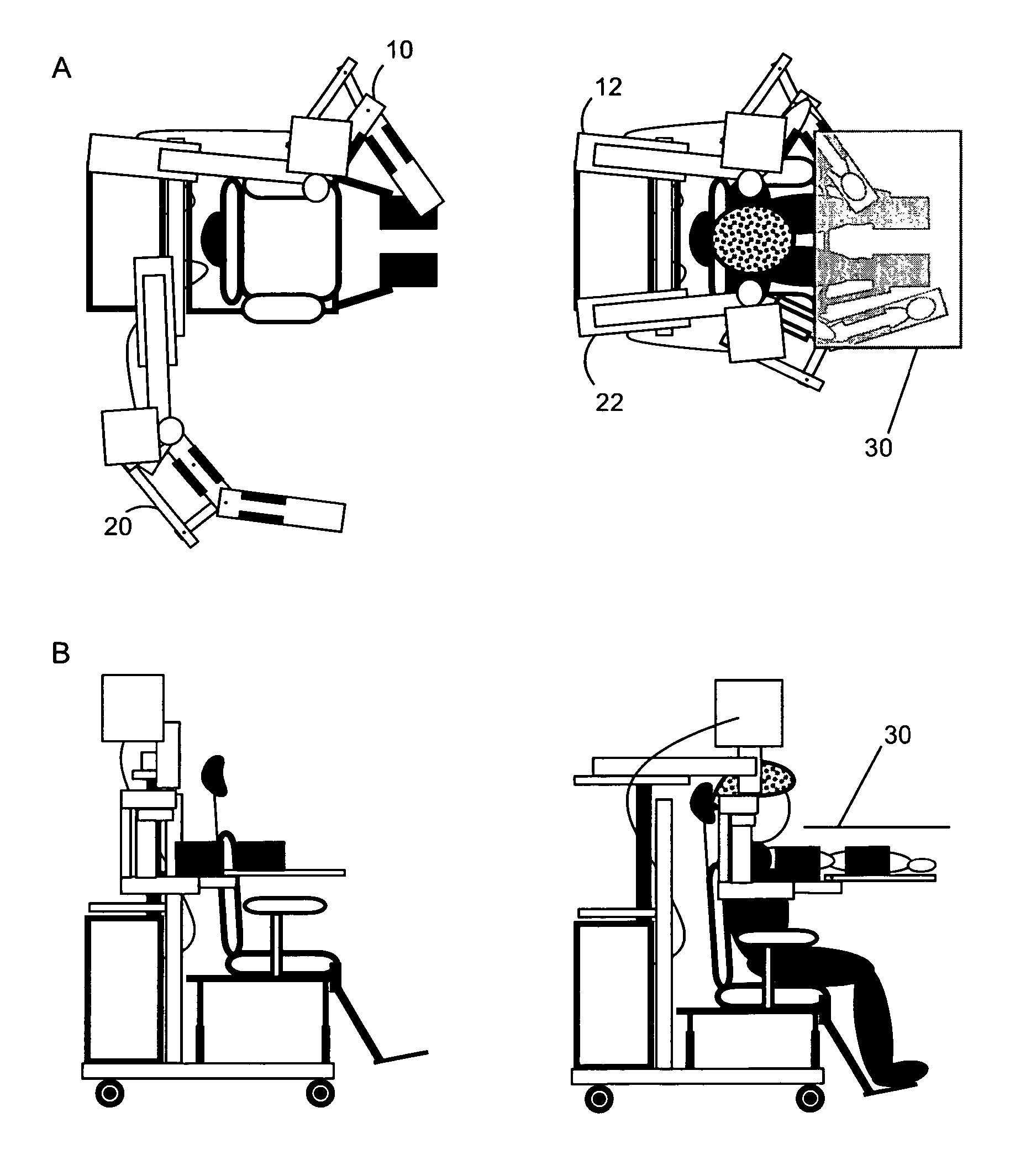
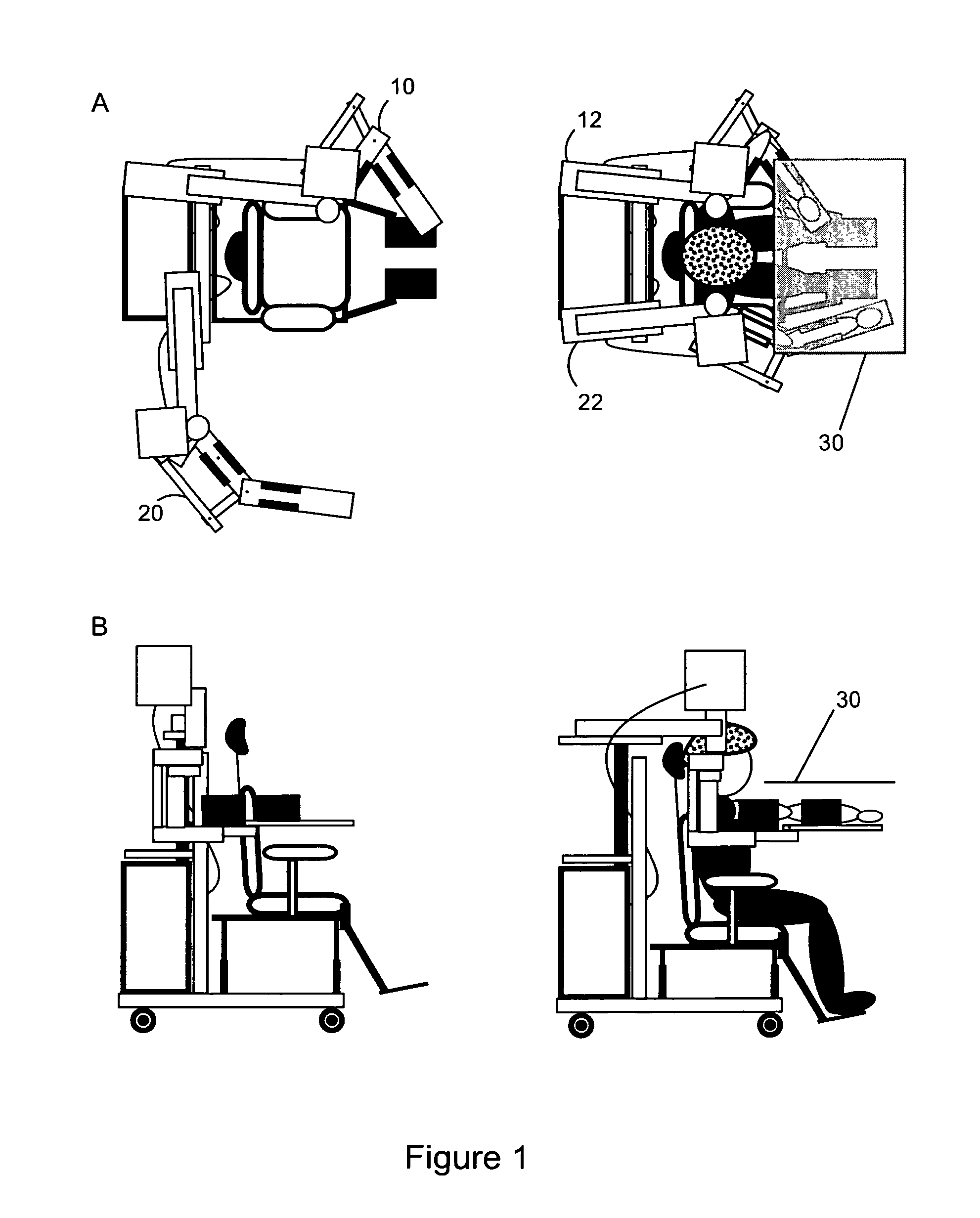
- An apparatus with articulating members that couple to a subject's limbs, allowing movement in 2- or 3-dimensional space, and data collection systems to assess geometry, location, and motion, enabling comparison between limbs to provide quantitative proprioception data and aiding in diagnosis and treatment of neurological disorders.

Industrial Safety Standards for Proprioceptive Devices
Industrial safety standards for proprioceptive devices represent a critical framework governing the deployment and operation of these sensing technologies in manufacturing and industrial environments. The regulatory landscape encompasses multiple international and regional standards organizations, with ISO 13849 (Safety of machinery - Safety-related parts of control systems) and IEC 61508 (Functional safety of electrical/electronic/programmable electronic safety-related systems) serving as foundational documents. These standards establish Safety Integrity Levels (SIL) and Performance Levels (PL) that proprioceptive devices must achieve to ensure reliable operation in safety-critical applications.
The certification process for proprioceptive sensing devices involves rigorous testing protocols that evaluate sensor accuracy, response time, environmental resilience, and failure mode behavior. Devices must demonstrate consistent performance across specified temperature ranges, humidity levels, and electromagnetic interference conditions typical of industrial settings. Particular emphasis is placed on systematic capability assessment, where sensors must maintain specified accuracy thresholds even under degraded operating conditions or partial system failures.
Compliance requirements vary significantly across different industrial sectors, with automotive manufacturing adhering to ISO 26262 standards, while process industries follow IEC 61511 guidelines. These sector-specific regulations address unique operational hazards and establish minimum performance criteria for proprioceptive devices used in human-machine collaboration scenarios. The standards mandate comprehensive documentation of sensor calibration procedures, maintenance schedules, and failure detection mechanisms.
Recent regulatory developments have focused on establishing standardized testing methodologies for emerging proprioceptive technologies, including flexible sensors and distributed sensing networks. The International Electrotechnical Commission has initiated working groups to address gaps in current standards, particularly regarding the integration of artificial intelligence algorithms in proprioceptive sensing systems and their impact on safety validation procedures.
The enforcement of these standards requires collaboration between device manufacturers, system integrators, and end-users to ensure proper implementation and ongoing compliance monitoring throughout the device lifecycle.
The certification process for proprioceptive sensing devices involves rigorous testing protocols that evaluate sensor accuracy, response time, environmental resilience, and failure mode behavior. Devices must demonstrate consistent performance across specified temperature ranges, humidity levels, and electromagnetic interference conditions typical of industrial settings. Particular emphasis is placed on systematic capability assessment, where sensors must maintain specified accuracy thresholds even under degraded operating conditions or partial system failures.
Compliance requirements vary significantly across different industrial sectors, with automotive manufacturing adhering to ISO 26262 standards, while process industries follow IEC 61511 guidelines. These sector-specific regulations address unique operational hazards and establish minimum performance criteria for proprioceptive devices used in human-machine collaboration scenarios. The standards mandate comprehensive documentation of sensor calibration procedures, maintenance schedules, and failure detection mechanisms.
Recent regulatory developments have focused on establishing standardized testing methodologies for emerging proprioceptive technologies, including flexible sensors and distributed sensing networks. The International Electrotechnical Commission has initiated working groups to address gaps in current standards, particularly regarding the integration of artificial intelligence algorithms in proprioceptive sensing systems and their impact on safety validation procedures.
The enforcement of these standards requires collaboration between device manufacturers, system integrators, and end-users to ensure proper implementation and ongoing compliance monitoring throughout the device lifecycle.
Manufacturing Integration Challenges for Proprioceptive Tech
The integration of proprioceptive sensing technologies into existing manufacturing environments presents multifaceted challenges that significantly impact industrial adoption rates. Manufacturing facilities typically operate with legacy systems that have been optimized over decades, creating substantial barriers for incorporating advanced sensing capabilities that require fundamental changes to established workflows and infrastructure.
Production line compatibility emerges as a primary concern, as proprioceptive sensors often demand specific mounting configurations, power requirements, and data transmission protocols that may not align with existing equipment architectures. The physical integration process frequently necessitates modifications to robotic arms, assembly stations, and quality control checkpoints, potentially disrupting continuous production schedules and requiring extensive downtime for implementation.
Calibration complexity represents another critical challenge, particularly in high-precision manufacturing environments where sensor accuracy directly impacts product quality. Proprioceptive systems require sophisticated calibration procedures that must account for environmental variables such as temperature fluctuations, electromagnetic interference, and mechanical vibrations inherent in industrial settings. These calibration processes often demand specialized expertise that may not be readily available within existing maintenance teams.
Data infrastructure limitations pose significant obstacles for manufacturers seeking to leverage proprioceptive sensing capabilities. The high-frequency data streams generated by these sensors require robust communication networks and substantial computational resources for real-time processing. Many manufacturing facilities lack the necessary bandwidth and edge computing capabilities to handle the continuous data flow without compromising existing operational systems.
Interoperability issues further complicate integration efforts, as proprioceptive sensing technologies must seamlessly communicate with diverse industrial protocols including Ethernet/IP, PROFINET, and Modbus systems. The absence of standardized interfaces often requires custom software development and middleware solutions, increasing implementation costs and extending deployment timelines.
Maintenance and reliability considerations also present ongoing challenges, as proprioceptive sensors introduce additional failure points within critical production systems. Establishing predictive maintenance protocols and ensuring rapid replacement capabilities becomes essential to prevent costly production interruptions while maintaining the enhanced sensing capabilities that justify the initial investment.
Production line compatibility emerges as a primary concern, as proprioceptive sensors often demand specific mounting configurations, power requirements, and data transmission protocols that may not align with existing equipment architectures. The physical integration process frequently necessitates modifications to robotic arms, assembly stations, and quality control checkpoints, potentially disrupting continuous production schedules and requiring extensive downtime for implementation.
Calibration complexity represents another critical challenge, particularly in high-precision manufacturing environments where sensor accuracy directly impacts product quality. Proprioceptive systems require sophisticated calibration procedures that must account for environmental variables such as temperature fluctuations, electromagnetic interference, and mechanical vibrations inherent in industrial settings. These calibration processes often demand specialized expertise that may not be readily available within existing maintenance teams.
Data infrastructure limitations pose significant obstacles for manufacturers seeking to leverage proprioceptive sensing capabilities. The high-frequency data streams generated by these sensors require robust communication networks and substantial computational resources for real-time processing. Many manufacturing facilities lack the necessary bandwidth and edge computing capabilities to handle the continuous data flow without compromising existing operational systems.
Interoperability issues further complicate integration efforts, as proprioceptive sensing technologies must seamlessly communicate with diverse industrial protocols including Ethernet/IP, PROFINET, and Modbus systems. The absence of standardized interfaces often requires custom software development and middleware solutions, increasing implementation costs and extending deployment timelines.
Maintenance and reliability considerations also present ongoing challenges, as proprioceptive sensors introduce additional failure points within critical production systems. Establishing predictive maintenance protocols and ensuring rapid replacement capabilities becomes essential to prevent costly production interruptions while maintaining the enhanced sensing capabilities that justify the initial investment.
Unlock deeper insights with PatSnap Eureka Quick Research — get a full tech report to explore trends and direct your research. Try now!
Generate Your Research Report Instantly with AI Agent
Supercharge your innovation with PatSnap Eureka AI Agent Platform!