

Balancing Real-time Reporting with Vortex Vibrations Control
MAR 10, 20269 MIN READ
Generate Your Research Report Instantly with AI Agent
PatSnap Eureka helps you evaluate technical feasibility & market potential.
Vortex Vibration Control Technology Background and Objectives
Vortex-induced vibrations (VIV) represent one of the most persistent challenges in fluid-structure interaction engineering, affecting structures ranging from offshore oil platforms and wind turbines to heat exchangers and bridge cables. These oscillations occur when fluid flow creates alternating vortices that shed from cylindrical or bluff body structures, generating periodic forces that can induce resonant vibrations. The phenomenon becomes particularly problematic when the vortex shedding frequency approaches the natural frequency of the structure, leading to lock-in conditions that can cause catastrophic fatigue damage.
The evolution of vortex vibration control technology has progressed through several distinct phases, beginning with passive control methods in the 1960s, advancing to semi-active systems in the 1990s, and culminating in today's sophisticated active control approaches. Early solutions focused primarily on mechanical suppression devices such as helical strakes, fairings, and spoiler plates. However, these passive methods often proved inadequate for complex operational environments where flow conditions vary significantly.
Modern vortex vibration control systems increasingly emphasize the integration of real-time monitoring capabilities with active suppression mechanisms. This convergence addresses the critical need for adaptive response systems that can dynamically adjust control parameters based on instantaneous flow conditions and structural responses. The challenge lies in achieving optimal balance between comprehensive data acquisition and effective vibration mitigation without compromising system performance or reliability.
Contemporary technological objectives center on developing intelligent control systems capable of predictive vibration suppression while maintaining continuous operational awareness. These systems must process multiple data streams including accelerometer readings, strain measurements, flow velocity sensors, and pressure transducers to generate comprehensive situational assessments. The integration challenge involves managing computational loads, communication latencies, and power consumption constraints while ensuring robust control performance.
The primary technical goal involves creating unified platforms that seamlessly combine high-frequency vibration control algorithms with real-time data processing and reporting capabilities. This requires sophisticated signal processing architectures capable of distinguishing between normal operational variations and potentially damaging vortex-induced responses. Success metrics include vibration amplitude reduction, fatigue life extension, operational efficiency improvement, and enhanced predictive maintenance capabilities through continuous condition monitoring integration.
The evolution of vortex vibration control technology has progressed through several distinct phases, beginning with passive control methods in the 1960s, advancing to semi-active systems in the 1990s, and culminating in today's sophisticated active control approaches. Early solutions focused primarily on mechanical suppression devices such as helical strakes, fairings, and spoiler plates. However, these passive methods often proved inadequate for complex operational environments where flow conditions vary significantly.
Modern vortex vibration control systems increasingly emphasize the integration of real-time monitoring capabilities with active suppression mechanisms. This convergence addresses the critical need for adaptive response systems that can dynamically adjust control parameters based on instantaneous flow conditions and structural responses. The challenge lies in achieving optimal balance between comprehensive data acquisition and effective vibration mitigation without compromising system performance or reliability.
Contemporary technological objectives center on developing intelligent control systems capable of predictive vibration suppression while maintaining continuous operational awareness. These systems must process multiple data streams including accelerometer readings, strain measurements, flow velocity sensors, and pressure transducers to generate comprehensive situational assessments. The integration challenge involves managing computational loads, communication latencies, and power consumption constraints while ensuring robust control performance.
The primary technical goal involves creating unified platforms that seamlessly combine high-frequency vibration control algorithms with real-time data processing and reporting capabilities. This requires sophisticated signal processing architectures capable of distinguishing between normal operational variations and potentially damaging vortex-induced responses. Success metrics include vibration amplitude reduction, fatigue life extension, operational efficiency improvement, and enhanced predictive maintenance capabilities through continuous condition monitoring integration.
Market Demand for Real-time Vibration Monitoring Systems
The global industrial landscape is experiencing unprecedented demand for real-time vibration monitoring systems, driven by the critical need to maintain operational efficiency and prevent catastrophic equipment failures. Industries ranging from aerospace and energy to manufacturing and marine operations are increasingly recognizing that traditional periodic maintenance approaches are insufficient for managing complex rotating machinery and fluid flow systems where vortex-induced vibrations pose significant operational risks.
Power generation facilities, particularly wind farms and hydroelectric plants, represent one of the largest market segments driving this demand. These installations face constant challenges from vortex shedding phenomena that can cause structural fatigue and reduced energy output. The economic impact of unplanned downtime in these facilities has created urgent requirements for continuous monitoring solutions that can detect vibration anomalies in real-time while providing actionable data for immediate corrective measures.
The oil and gas sector has emerged as another major demand driver, where offshore platforms and pipeline systems are subjected to complex flow-induced vibrations. Recent industry incidents have highlighted the catastrophic consequences of unmonitored vortex vibrations, leading to stricter regulatory requirements and increased investment in advanced monitoring technologies. Companies are seeking integrated solutions that can simultaneously track vibration patterns and provide real-time reporting capabilities to operations centers.
Manufacturing industries, particularly those involving high-speed rotating equipment, are experiencing growing pressure to implement predictive maintenance strategies. The shift from reactive to proactive maintenance approaches has created substantial market opportunities for systems that can balance comprehensive vibration analysis with immediate alert capabilities. This trend is particularly pronounced in automotive, aerospace, and heavy machinery manufacturing sectors.
The marine industry presents unique challenges where vessel propulsion systems and offshore structures encounter complex vortex interactions. Ship operators and offshore facility managers require monitoring systems capable of distinguishing between normal operational vibrations and potentially damaging vortex-induced oscillations, while maintaining continuous communication with shore-based monitoring centers.
Emerging market segments include renewable energy infrastructure, where the proliferation of wind turbines and tidal energy systems has created new applications for real-time vibration monitoring. These installations often operate in remote locations where immediate response capabilities are limited, making real-time reporting functionality essential for maintaining operational reliability and preventing costly equipment damage.
Power generation facilities, particularly wind farms and hydroelectric plants, represent one of the largest market segments driving this demand. These installations face constant challenges from vortex shedding phenomena that can cause structural fatigue and reduced energy output. The economic impact of unplanned downtime in these facilities has created urgent requirements for continuous monitoring solutions that can detect vibration anomalies in real-time while providing actionable data for immediate corrective measures.
The oil and gas sector has emerged as another major demand driver, where offshore platforms and pipeline systems are subjected to complex flow-induced vibrations. Recent industry incidents have highlighted the catastrophic consequences of unmonitored vortex vibrations, leading to stricter regulatory requirements and increased investment in advanced monitoring technologies. Companies are seeking integrated solutions that can simultaneously track vibration patterns and provide real-time reporting capabilities to operations centers.
Manufacturing industries, particularly those involving high-speed rotating equipment, are experiencing growing pressure to implement predictive maintenance strategies. The shift from reactive to proactive maintenance approaches has created substantial market opportunities for systems that can balance comprehensive vibration analysis with immediate alert capabilities. This trend is particularly pronounced in automotive, aerospace, and heavy machinery manufacturing sectors.
The marine industry presents unique challenges where vessel propulsion systems and offshore structures encounter complex vortex interactions. Ship operators and offshore facility managers require monitoring systems capable of distinguishing between normal operational vibrations and potentially damaging vortex-induced oscillations, while maintaining continuous communication with shore-based monitoring centers.
Emerging market segments include renewable energy infrastructure, where the proliferation of wind turbines and tidal energy systems has created new applications for real-time vibration monitoring. These installations often operate in remote locations where immediate response capabilities are limited, making real-time reporting functionality essential for maintaining operational reliability and preventing costly equipment damage.
Current Challenges in Vortex-Induced Vibration Management
Vortex-induced vibration (VIV) management faces significant technical challenges that complicate the integration of real-time monitoring systems with effective vibration control mechanisms. The primary difficulty lies in the inherent unpredictability of vortex shedding patterns, which vary dramatically based on fluid velocity, structural geometry, and environmental conditions. Traditional control systems struggle to adapt quickly enough to these rapid changes, creating a fundamental mismatch between detection speed and response capability.
The complexity of multi-modal vibration responses presents another critical challenge. Structures experiencing VIV often exhibit multiple vibration modes simultaneously, each requiring different control strategies. Current control algorithms frequently fail to distinguish between these modes in real-time, leading to suboptimal or counterproductive control actions. This issue is particularly pronounced in long, flexible structures such as marine risers or bridge cables, where multiple vibration modes can interact nonlinearly.
Sensor placement and data acquisition represent persistent technical obstacles. Optimal sensor positioning for VIV detection often conflicts with practical installation constraints and structural integrity requirements. The harsh operating environments typical of VIV-prone structures, such as offshore platforms or high-altitude bridges, impose severe limitations on sensor reliability and maintenance accessibility. Additionally, the high-frequency nature of vortex shedding demands sophisticated data acquisition systems capable of capturing rapid fluctuations without introducing significant latency.
Control system response time limitations constitute a fundamental bottleneck in VIV management. The time delay between vibration detection, signal processing, control decision-making, and actuator response often exceeds the characteristic time scales of vortex shedding phenomena. This temporal mismatch renders many control strategies ineffective, particularly for structures operating in highly dynamic fluid environments where vortex patterns change rapidly.
Energy management and power consumption challenges further complicate VIV control implementation. Active control systems require substantial power for continuous operation of sensors, processors, and actuators. In remote or offshore applications, power availability constraints limit the sophistication and responsiveness of control systems. The trade-off between control effectiveness and energy efficiency remains a significant design challenge.
Integration complexity between monitoring and control subsystems creates additional technical hurdles. Achieving seamless communication between diverse sensor types, data processing units, and control actuators requires sophisticated system architecture. Compatibility issues between different manufacturers' components, varying communication protocols, and real-time data synchronization requirements often result in system performance degradation or reliability problems that compromise overall VIV management effectiveness.
The complexity of multi-modal vibration responses presents another critical challenge. Structures experiencing VIV often exhibit multiple vibration modes simultaneously, each requiring different control strategies. Current control algorithms frequently fail to distinguish between these modes in real-time, leading to suboptimal or counterproductive control actions. This issue is particularly pronounced in long, flexible structures such as marine risers or bridge cables, where multiple vibration modes can interact nonlinearly.
Sensor placement and data acquisition represent persistent technical obstacles. Optimal sensor positioning for VIV detection often conflicts with practical installation constraints and structural integrity requirements. The harsh operating environments typical of VIV-prone structures, such as offshore platforms or high-altitude bridges, impose severe limitations on sensor reliability and maintenance accessibility. Additionally, the high-frequency nature of vortex shedding demands sophisticated data acquisition systems capable of capturing rapid fluctuations without introducing significant latency.
Control system response time limitations constitute a fundamental bottleneck in VIV management. The time delay between vibration detection, signal processing, control decision-making, and actuator response often exceeds the characteristic time scales of vortex shedding phenomena. This temporal mismatch renders many control strategies ineffective, particularly for structures operating in highly dynamic fluid environments where vortex patterns change rapidly.
Energy management and power consumption challenges further complicate VIV control implementation. Active control systems require substantial power for continuous operation of sensors, processors, and actuators. In remote or offshore applications, power availability constraints limit the sophistication and responsiveness of control systems. The trade-off between control effectiveness and energy efficiency remains a significant design challenge.
Integration complexity between monitoring and control subsystems creates additional technical hurdles. Achieving seamless communication between diverse sensor types, data processing units, and control actuators requires sophisticated system architecture. Compatibility issues between different manufacturers' components, varying communication protocols, and real-time data synchronization requirements often result in system performance degradation or reliability problems that compromise overall VIV management effectiveness.
Existing Real-time Vortex Vibration Control Solutions
01 Real-time vibration monitoring and data acquisition systems
Systems and methods for continuously monitoring vortex-induced vibrations through sensor networks that capture real-time data. These systems employ various sensors to detect vibration parameters including amplitude, frequency, and displacement. The acquired data is processed and transmitted for immediate analysis, enabling operators to track vibration patterns as they occur. Advanced data acquisition techniques ensure high-frequency sampling and accurate measurement of dynamic vibration characteristics.- Real-time vibration monitoring and data acquisition systems: Systems designed to continuously monitor and acquire vibration data from structures or equipment in real-time. These systems utilize sensors and data acquisition hardware to capture vibration signals, process them, and transmit the information for analysis. The monitoring capabilities enable immediate detection of abnormal vibration patterns and provide continuous feedback on structural or equipment health.
- Vortex-induced vibration suppression mechanisms: Mechanical or active control devices specifically designed to suppress or mitigate vortex-induced vibrations in structures such as risers, pipelines, or tall buildings. These mechanisms may include helical strakes, fairings, or active damping systems that disrupt vortex formation or counteract the oscillatory forces. The suppression techniques aim to reduce fatigue damage and extend the operational life of affected structures.
- Wireless communication and remote reporting infrastructure: Communication systems that enable wireless transmission of vibration monitoring data to remote locations for analysis and reporting. These infrastructures support real-time data streaming, cloud-based storage, and remote access capabilities, allowing operators to monitor conditions from centralized control rooms. The wireless architecture eliminates the need for extensive cabling and facilitates deployment in challenging environments.
- Predictive analytics and alarm generation for vibration events: Advanced analytical methods that process real-time vibration data to predict potential failures or critical events before they occur. These systems employ algorithms, machine learning, or threshold-based detection to identify anomalous patterns and generate automated alarms or notifications. The predictive capabilities enable proactive maintenance scheduling and prevent catastrophic failures through early warning systems.
- Integrated control systems with feedback loops for vibration mitigation: Closed-loop control systems that integrate vibration sensing, real-time processing, and active control mechanisms to dynamically adjust damping or counteracting forces. These systems continuously monitor vibration responses and automatically adjust control parameters to optimize suppression effectiveness. The feedback architecture ensures adaptive response to changing environmental conditions or operational states.
02 Active vibration control and suppression mechanisms
Technologies for actively controlling and suppressing vortex-induced vibrations through mechanical or electronic intervention. These methods include the use of actuators, dampers, and control algorithms that respond dynamically to detected vibration conditions. The control systems can adjust parameters in real-time to counteract vibration forces and reduce structural oscillations. Implementation may involve feedback loops that continuously optimize suppression strategies based on current vibration states.Expand Specific Solutions03 Wireless communication and remote reporting infrastructure
Infrastructure for transmitting vibration data wirelessly to remote monitoring stations and generating automated reports. These systems utilize wireless protocols to send real-time measurements from field sensors to centralized databases or cloud platforms. The communication architecture supports continuous data streaming and ensures reliable transmission even in challenging environmental conditions. Remote access capabilities allow operators to monitor vibration conditions from any location.Expand Specific Solutions04 Predictive analytics and alert generation systems
Advanced analytical systems that process real-time vibration data to predict potential failures and generate alerts. These systems employ algorithms and machine learning techniques to identify abnormal vibration patterns and forecast critical conditions before they occur. Automated alert mechanisms notify operators when vibration thresholds are exceeded or when trends indicate developing problems. The predictive capabilities enable proactive maintenance and risk mitigation strategies.Expand Specific Solutions05 Integrated visualization and reporting dashboards
User interface systems that present real-time vibration data through interactive dashboards and comprehensive reports. These platforms consolidate multiple data streams into unified visualizations including graphs, charts, and status indicators. The reporting functionality generates automated summaries of vibration events, trends, and system performance metrics. Customizable display options allow users to focus on specific parameters or time periods relevant to their monitoring objectives.Expand Specific Solutions
Key Players in Vibration Control and Monitoring Industry
The technology challenge of balancing real-time reporting with vortex vibrations control represents a mature industrial automation sector experiencing steady growth, driven by increasing demands for precision monitoring in aerospace, manufacturing, and energy applications. The market demonstrates significant scale with established players spanning multiple industries, from aerospace giants like General Electric, Safran Aircraft Engines, and AECC Commercial Aircraft Engine to specialized vibration control companies like Schenck RoTec and RDI Technologies. Technology maturity varies across segments, with traditional industrial automation leaders like ABB, Hitachi, and Siemens-affiliated companies offering proven solutions, while emerging players like RDI Technologies pioneer advanced video-based vibration measurement systems. Research institutions including Xi'an Jiaotong University and Nagoya University contribute to ongoing innovation, particularly in advanced sensing and control algorithms, indicating continued technological evolution in this established but dynamically advancing field.
General Electric Company
Technical Solution: GE has developed advanced vibration control systems for gas turbines and jet engines that integrate real-time monitoring with active vibration suppression. Their solution employs magnetic bearings and active damping systems to control vortex-induced vibrations while maintaining continuous data acquisition at sampling rates up to 100 kHz. The system uses predictive algorithms to anticipate vortex formation patterns and adjusts control parameters in real-time, achieving vibration reduction of up to 80% while ensuring millisecond-level reporting latency for critical operational parameters.
Strengths: Extensive experience in turbomachinery, proven track record in aerospace applications, robust real-time control systems. Weaknesses: High system complexity, significant power consumption, expensive implementation costs.
Safran Aircraft Engines SAS
Technical Solution: Safran has implemented sophisticated vortex vibration control systems in their LEAP engine series, utilizing active flow control technology combined with real-time health monitoring. Their approach integrates plasma actuators and micro-jet systems to disrupt vortex formation while maintaining continuous engine parameter reporting through distributed sensor networks. The system processes over 10,000 data points per second while executing vibration control algorithms with response times under 5 milliseconds, effectively balancing performance optimization with comprehensive real-time diagnostics.
Strengths: Leading aerospace technology, proven commercial aviation applications, excellent integration capabilities. Weaknesses: Limited to aerospace applications, high certification requirements, complex maintenance procedures.
Core Patents in Vortex Suppression and Real-time Reporting
Kalman filter based Anti-transient-impact-vibration-interference signal processing method and system for vortex flowmeter
PatentInactiveUS20180231406A1
Innovation
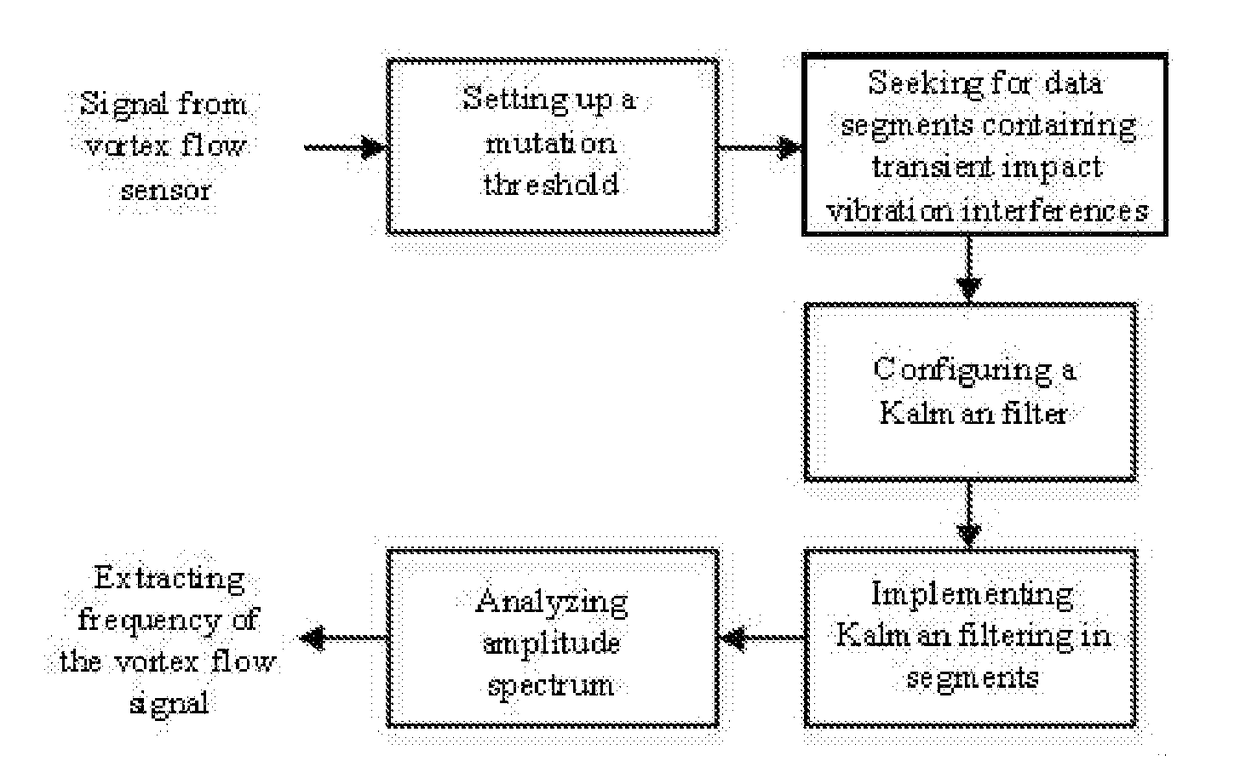
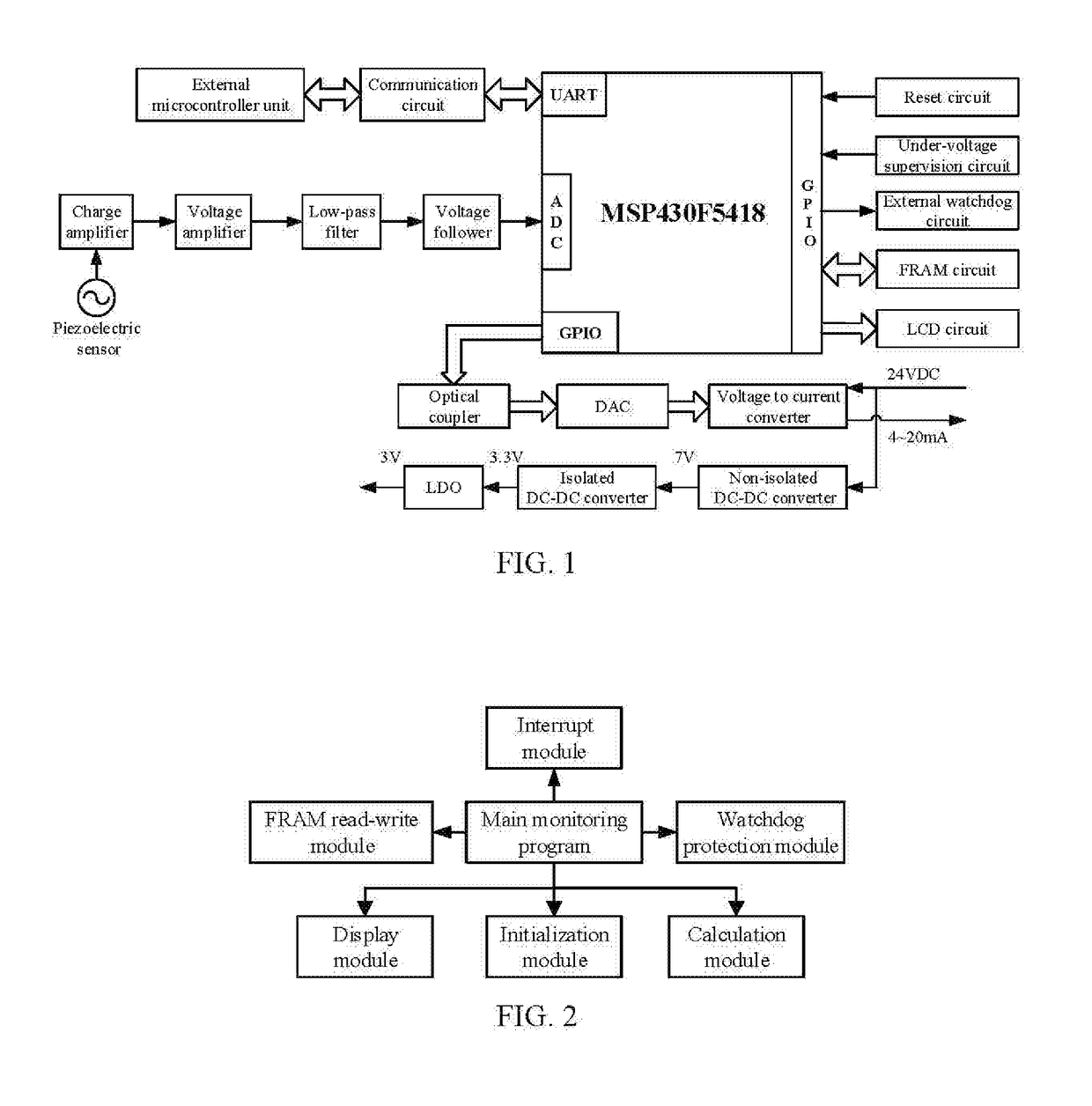
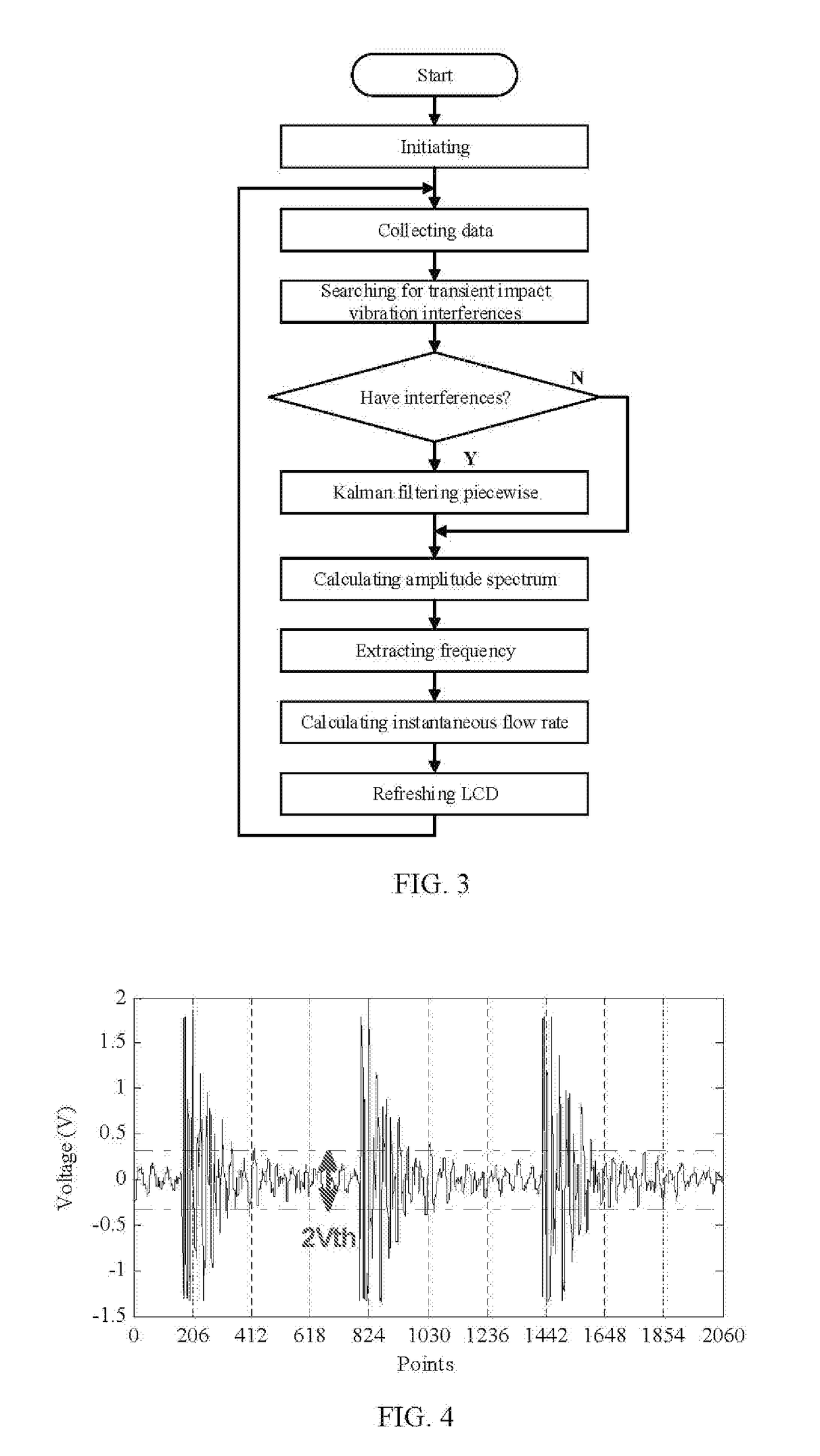
- A segmented Kalman filter-based method is employed to identify and reduce the power and proportion of transient impact vibration interferences by configuring Kalman filters to predict and estimate the vortex flow signal, followed by frequency domain analysis to extract the dominant frequency of the vortex flow signal.

Method for real-time identification, monitoring, and early warning of vortex-induced vibration event of long-span suspension bridge
PatentPendingUS20230314272A1
Innovation
- A real-time online monitoring method using recursive Hilbert transform processing of bridge acceleration signals, involving high-pass filtering, displacement integration, and conversion of signals into complex plane vectors to intuitively identify VIV through circular image features, allowing for real-time detection and early warning.


Safety Standards for Industrial Vibration Control Systems
Industrial vibration control systems operating in real-time reporting environments must adhere to comprehensive safety standards that address both operational reliability and personnel protection. The integration of vortex vibration control mechanisms with continuous monitoring capabilities introduces unique safety considerations that extend beyond traditional vibration control protocols. Current safety frameworks emphasize the critical importance of fail-safe mechanisms that ensure system stability even when real-time data transmission experiences interruptions or delays.
The foundational safety requirements for these systems center on redundant control architectures that maintain vibration suppression capabilities independent of reporting system status. Primary safety standards mandate that control systems must continue operating within acceptable vibration thresholds even during communication failures or data processing bottlenecks. This principle ensures that the physical safety of equipment and personnel remains uncompromised regardless of reporting system performance.
Emergency shutdown protocols represent another crucial aspect of safety standardization, particularly when dealing with vortex-induced vibrations that can escalate rapidly. These protocols must be designed to trigger automatically when vibration amplitudes exceed predetermined safety limits, regardless of real-time reporting system availability. The standards require multiple independent monitoring channels that can initiate protective actions without relying solely on networked communication systems.
Personnel safety standards specifically address the risks associated with high-frequency vibrations and potential equipment failure modes. These include mandatory safety zones around vibration control equipment, proper personal protective equipment specifications, and clear evacuation procedures for emergency situations. The standards also establish maximum exposure limits for workers operating near active vibration control systems.
Data integrity and cybersecurity standards have become increasingly important as real-time reporting systems become more connected and networked. Safety protocols must ensure that external cyber threats cannot compromise the fundamental vibration control functions, requiring isolated control loops and secure communication channels for critical safety functions.
Regular calibration and maintenance standards ensure that both vibration sensors and control actuators maintain their specified performance characteristics over time. These standards mandate periodic verification of system response times, accuracy thresholds, and fail-safe operation modes to guarantee continued compliance with safety requirements throughout the system lifecycle.
The foundational safety requirements for these systems center on redundant control architectures that maintain vibration suppression capabilities independent of reporting system status. Primary safety standards mandate that control systems must continue operating within acceptable vibration thresholds even during communication failures or data processing bottlenecks. This principle ensures that the physical safety of equipment and personnel remains uncompromised regardless of reporting system performance.
Emergency shutdown protocols represent another crucial aspect of safety standardization, particularly when dealing with vortex-induced vibrations that can escalate rapidly. These protocols must be designed to trigger automatically when vibration amplitudes exceed predetermined safety limits, regardless of real-time reporting system availability. The standards require multiple independent monitoring channels that can initiate protective actions without relying solely on networked communication systems.
Personnel safety standards specifically address the risks associated with high-frequency vibrations and potential equipment failure modes. These include mandatory safety zones around vibration control equipment, proper personal protective equipment specifications, and clear evacuation procedures for emergency situations. The standards also establish maximum exposure limits for workers operating near active vibration control systems.
Data integrity and cybersecurity standards have become increasingly important as real-time reporting systems become more connected and networked. Safety protocols must ensure that external cyber threats cannot compromise the fundamental vibration control functions, requiring isolated control loops and secure communication channels for critical safety functions.
Regular calibration and maintenance standards ensure that both vibration sensors and control actuators maintain their specified performance characteristics over time. These standards mandate periodic verification of system response times, accuracy thresholds, and fail-safe operation modes to guarantee continued compliance with safety requirements throughout the system lifecycle.
Energy Efficiency in Real-time Vibration Monitoring
Energy efficiency represents a critical consideration in real-time vibration monitoring systems, particularly when addressing the complex challenge of balancing continuous data reporting with active vortex vibration control. The computational demands of simultaneous monitoring and control operations create significant power consumption challenges that directly impact system sustainability and operational costs.
Modern vibration monitoring systems typically consume substantial energy through multiple pathways including sensor arrays, signal processing units, wireless communication modules, and control actuators. The continuous nature of real-time monitoring requires persistent power draw, while vortex vibration control mechanisms demand additional energy for active intervention strategies. This dual requirement creates a compounding effect on overall system energy consumption.
Advanced power management strategies have emerged as essential components for optimizing energy utilization in these integrated systems. Dynamic frequency scaling allows processors to adjust computational intensity based on real-time monitoring demands, reducing power consumption during periods of stable operation. Sleep mode implementations enable selective deactivation of non-critical components while maintaining essential monitoring functions.
Sensor-level energy optimization techniques focus on intelligent sampling strategies that balance monitoring accuracy with power conservation. Adaptive sampling rates adjust data collection frequency based on detected vibration patterns, reducing unnecessary power consumption during stable operational periods. Edge computing implementations minimize energy-intensive wireless transmissions by performing local data processing and transmitting only critical information.
Communication protocol optimization plays a vital role in energy efficiency, with low-power wireless standards specifically designed for industrial monitoring applications. These protocols implement sophisticated duty cycling mechanisms that synchronize transmission windows across multiple sensors, reducing overall network energy consumption while maintaining real-time reporting capabilities.
Energy harvesting technologies present promising opportunities for sustainable vibration monitoring systems. Piezoelectric energy harvesting can capture power from the very vibrations being monitored, creating self-sustaining sensor networks. Solar and thermal energy harvesting provide supplementary power sources that reduce dependence on traditional battery systems.
Battery management systems incorporate intelligent charging algorithms and energy storage optimization to maximize operational lifetime. Predictive energy management uses machine learning algorithms to anticipate power demands based on operational patterns, enabling proactive energy allocation strategies that ensure continuous system availability while minimizing waste.
Modern vibration monitoring systems typically consume substantial energy through multiple pathways including sensor arrays, signal processing units, wireless communication modules, and control actuators. The continuous nature of real-time monitoring requires persistent power draw, while vortex vibration control mechanisms demand additional energy for active intervention strategies. This dual requirement creates a compounding effect on overall system energy consumption.
Advanced power management strategies have emerged as essential components for optimizing energy utilization in these integrated systems. Dynamic frequency scaling allows processors to adjust computational intensity based on real-time monitoring demands, reducing power consumption during periods of stable operation. Sleep mode implementations enable selective deactivation of non-critical components while maintaining essential monitoring functions.
Sensor-level energy optimization techniques focus on intelligent sampling strategies that balance monitoring accuracy with power conservation. Adaptive sampling rates adjust data collection frequency based on detected vibration patterns, reducing unnecessary power consumption during stable operational periods. Edge computing implementations minimize energy-intensive wireless transmissions by performing local data processing and transmitting only critical information.
Communication protocol optimization plays a vital role in energy efficiency, with low-power wireless standards specifically designed for industrial monitoring applications. These protocols implement sophisticated duty cycling mechanisms that synchronize transmission windows across multiple sensors, reducing overall network energy consumption while maintaining real-time reporting capabilities.
Energy harvesting technologies present promising opportunities for sustainable vibration monitoring systems. Piezoelectric energy harvesting can capture power from the very vibrations being monitored, creating self-sustaining sensor networks. Solar and thermal energy harvesting provide supplementary power sources that reduce dependence on traditional battery systems.
Battery management systems incorporate intelligent charging algorithms and energy storage optimization to maximize operational lifetime. Predictive energy management uses machine learning algorithms to anticipate power demands based on operational patterns, enabling proactive energy allocation strategies that ensure continuous system availability while minimizing waste.
Unlock deeper insights with PatSnap Eureka Quick Research — get a full tech report to explore trends and direct your research. Try now!
Generate Your Research Report Instantly with AI Agent
Supercharge your innovation with PatSnap Eureka AI Agent Platform!