

Campaigning for Integrated Approaches in Vortex Vibrations
MAR 10, 20269 MIN READ
Generate Your Research Report Instantly with AI Agent
PatSnap Eureka helps you evaluate technical feasibility & market potential.
Vortex Vibration Background and Integration Goals
Vortex-induced vibrations represent one of the most persistent and challenging phenomena in fluid-structure interaction, affecting a vast array of engineering systems from offshore oil platforms and wind turbines to heat exchangers and bridge structures. This phenomenon occurs when fluid flow around bluff bodies generates alternating vortices that can synchronize with the natural frequency of the structure, leading to potentially destructive oscillations. The complexity of vortex vibrations stems from the intricate coupling between fluid dynamics, structural mechanics, and control systems, making it a multidisciplinary challenge that has demanded increasingly sophisticated approaches.
Historically, research efforts in vortex vibration mitigation have been fragmented across different engineering disciplines, with aerodynamicists focusing on flow modification, structural engineers emphasizing damping solutions, and control theorists developing active suppression systems. This compartmentalized approach has led to suboptimal solutions that address only specific aspects of the problem while neglecting the inherent interconnectedness of the underlying physical mechanisms. The limitations of single-discipline approaches have become increasingly apparent as engineering systems grow more complex and performance requirements become more stringent.
The evolution toward integrated approaches has been driven by several key technological developments, including advanced computational fluid dynamics capabilities, real-time sensing technologies, and sophisticated control algorithms. These tools have enabled researchers to better understand the fundamental physics of vortex shedding and its interaction with structural dynamics, revealing opportunities for synergistic solutions that combine multiple mitigation strategies. The integration paradigm recognizes that optimal vortex vibration control requires simultaneous consideration of flow physics, structural response, and control system design.
Current integration goals focus on developing unified frameworks that can seamlessly combine passive flow control devices, adaptive structural modifications, and active control systems. These frameworks aim to create self-optimizing systems capable of responding to varying flow conditions and operational requirements while maintaining structural integrity and performance efficiency. The ultimate objective is to establish design methodologies that can predict and prevent vortex-induced vibrations through coordinated multi-physics approaches rather than reactive single-point solutions.
The technological trajectory points toward intelligent vortex vibration management systems that leverage machine learning, advanced materials, and distributed sensing networks to achieve unprecedented levels of control effectiveness and energy efficiency.
Historically, research efforts in vortex vibration mitigation have been fragmented across different engineering disciplines, with aerodynamicists focusing on flow modification, structural engineers emphasizing damping solutions, and control theorists developing active suppression systems. This compartmentalized approach has led to suboptimal solutions that address only specific aspects of the problem while neglecting the inherent interconnectedness of the underlying physical mechanisms. The limitations of single-discipline approaches have become increasingly apparent as engineering systems grow more complex and performance requirements become more stringent.
The evolution toward integrated approaches has been driven by several key technological developments, including advanced computational fluid dynamics capabilities, real-time sensing technologies, and sophisticated control algorithms. These tools have enabled researchers to better understand the fundamental physics of vortex shedding and its interaction with structural dynamics, revealing opportunities for synergistic solutions that combine multiple mitigation strategies. The integration paradigm recognizes that optimal vortex vibration control requires simultaneous consideration of flow physics, structural response, and control system design.
Current integration goals focus on developing unified frameworks that can seamlessly combine passive flow control devices, adaptive structural modifications, and active control systems. These frameworks aim to create self-optimizing systems capable of responding to varying flow conditions and operational requirements while maintaining structural integrity and performance efficiency. The ultimate objective is to establish design methodologies that can predict and prevent vortex-induced vibrations through coordinated multi-physics approaches rather than reactive single-point solutions.
The technological trajectory points toward intelligent vortex vibration management systems that leverage machine learning, advanced materials, and distributed sensing networks to achieve unprecedented levels of control effectiveness and energy efficiency.
Market Demand for Vortex Vibration Control Solutions
The global market for vortex vibration control solutions has experienced substantial growth driven by increasing infrastructure development and heightened awareness of structural safety requirements. Industries ranging from oil and gas to renewable energy are recognizing the critical importance of managing vortex-induced vibrations to prevent catastrophic failures and extend asset lifecycles.
Offshore wind energy represents one of the most rapidly expanding market segments for vortex vibration control technologies. The proliferation of offshore wind farms has created unprecedented demand for effective vibration suppression systems, as these structures face constant exposure to complex wind and wave interactions that can trigger destructive vortex shedding phenomena.
The oil and gas sector continues to drive significant market demand, particularly for subsea pipeline systems and offshore drilling platforms. Aging infrastructure in mature oil fields requires retrofitting with advanced vibration control solutions, while new deepwater projects demand cutting-edge integrated approaches from the design phase. Pipeline operators are increasingly investing in comprehensive vibration management systems to avoid costly repairs and production shutdowns.
Bridge and civil infrastructure markets are experiencing renewed focus on vortex vibration control following several high-profile structural incidents worldwide. Government regulations and engineering standards are becoming more stringent, mandating the implementation of proven vibration suppression technologies in new construction projects and major renovations.
Industrial applications across chemical processing, power generation, and manufacturing sectors are generating steady demand for specialized vortex control solutions. Heat exchangers, cooling towers, and tall industrial stacks require tailored approaches to manage complex flow-induced vibrations that can compromise operational efficiency and safety.
The market is witnessing a clear shift toward integrated solutions that combine multiple vibration control mechanisms rather than single-point interventions. End users are increasingly seeking comprehensive packages that address the full spectrum of vortex-induced phenomena through coordinated technological approaches.
Emerging markets in Asia-Pacific and Latin America are contributing to accelerated demand growth as these regions invest heavily in infrastructure development and industrial expansion. Local engineering firms are partnering with international technology providers to deliver sophisticated vortex vibration control solutions tailored to regional requirements and environmental conditions.
Offshore wind energy represents one of the most rapidly expanding market segments for vortex vibration control technologies. The proliferation of offshore wind farms has created unprecedented demand for effective vibration suppression systems, as these structures face constant exposure to complex wind and wave interactions that can trigger destructive vortex shedding phenomena.
The oil and gas sector continues to drive significant market demand, particularly for subsea pipeline systems and offshore drilling platforms. Aging infrastructure in mature oil fields requires retrofitting with advanced vibration control solutions, while new deepwater projects demand cutting-edge integrated approaches from the design phase. Pipeline operators are increasingly investing in comprehensive vibration management systems to avoid costly repairs and production shutdowns.
Bridge and civil infrastructure markets are experiencing renewed focus on vortex vibration control following several high-profile structural incidents worldwide. Government regulations and engineering standards are becoming more stringent, mandating the implementation of proven vibration suppression technologies in new construction projects and major renovations.
Industrial applications across chemical processing, power generation, and manufacturing sectors are generating steady demand for specialized vortex control solutions. Heat exchangers, cooling towers, and tall industrial stacks require tailored approaches to manage complex flow-induced vibrations that can compromise operational efficiency and safety.
The market is witnessing a clear shift toward integrated solutions that combine multiple vibration control mechanisms rather than single-point interventions. End users are increasingly seeking comprehensive packages that address the full spectrum of vortex-induced phenomena through coordinated technological approaches.
Emerging markets in Asia-Pacific and Latin America are contributing to accelerated demand growth as these regions invest heavily in infrastructure development and industrial expansion. Local engineering firms are partnering with international technology providers to deliver sophisticated vortex vibration control solutions tailored to regional requirements and environmental conditions.
Current Vortex Vibration Challenges and Technical Barriers
Vortex-induced vibrations represent one of the most persistent and complex challenges in fluid-structure interaction engineering, affecting structures ranging from offshore platforms and bridge cables to heat exchanger tubes and wind turbine blades. The fundamental difficulty lies in the nonlinear coupling between fluid flow dynamics and structural response, creating a feedback loop that can lead to sustained oscillations even at relatively low flow velocities.
The primary technical barrier stems from the inherent complexity of vortex shedding phenomena, where alternating vortices create fluctuating pressure distributions around bluff bodies. Current predictive models struggle with the transition between different response regimes, particularly the lock-in phenomenon where structural frequency synchronizes with vortex shedding frequency. This synchronization can amplify vibrations significantly, leading to fatigue damage and structural failure.
Computational limitations pose another significant challenge in accurately modeling vortex vibrations. High-fidelity CFD simulations require enormous computational resources and time, making them impractical for design optimization or real-time monitoring applications. Simplified analytical models, while computationally efficient, often fail to capture the full complexity of three-dimensional flow effects and multi-mode interactions.
Scale effects present additional complications, as laboratory test results frequently do not translate directly to full-scale applications. Reynolds number dependencies, surface roughness effects, and environmental factors such as turbulence intensity and flow angularity create discrepancies between controlled testing conditions and real-world scenarios. This scaling challenge particularly affects the validation of suppression devices and mitigation strategies.
The lack of standardized design guidelines across different industries creates inconsistencies in approach and methodology. While offshore engineering has developed relatively mature practices for vortex-induced vibration assessment, other sectors such as civil engineering and power generation still rely on conservative design factors that may lead to over-engineered or inadequate solutions.
Multi-physics coupling represents an emerging challenge as modern structures become more complex and lightweight. The interaction between vortex vibrations and other phenomena such as galloping, flutter, or parametric excitation requires integrated analysis approaches that current methodologies struggle to address comprehensively. This complexity is further amplified in flexible structures where multiple modes can be simultaneously excited.
The primary technical barrier stems from the inherent complexity of vortex shedding phenomena, where alternating vortices create fluctuating pressure distributions around bluff bodies. Current predictive models struggle with the transition between different response regimes, particularly the lock-in phenomenon where structural frequency synchronizes with vortex shedding frequency. This synchronization can amplify vibrations significantly, leading to fatigue damage and structural failure.
Computational limitations pose another significant challenge in accurately modeling vortex vibrations. High-fidelity CFD simulations require enormous computational resources and time, making them impractical for design optimization or real-time monitoring applications. Simplified analytical models, while computationally efficient, often fail to capture the full complexity of three-dimensional flow effects and multi-mode interactions.
Scale effects present additional complications, as laboratory test results frequently do not translate directly to full-scale applications. Reynolds number dependencies, surface roughness effects, and environmental factors such as turbulence intensity and flow angularity create discrepancies between controlled testing conditions and real-world scenarios. This scaling challenge particularly affects the validation of suppression devices and mitigation strategies.
The lack of standardized design guidelines across different industries creates inconsistencies in approach and methodology. While offshore engineering has developed relatively mature practices for vortex-induced vibration assessment, other sectors such as civil engineering and power generation still rely on conservative design factors that may lead to over-engineered or inadequate solutions.
Multi-physics coupling represents an emerging challenge as modern structures become more complex and lightweight. The interaction between vortex vibrations and other phenomena such as galloping, flutter, or parametric excitation requires integrated analysis approaches that current methodologies struggle to address comprehensively. This complexity is further amplified in flexible structures where multiple modes can be simultaneously excited.
Existing Integrated Vortex Vibration Solutions
01 Vortex-induced vibration suppression devices
Devices and methods designed to suppress or reduce vortex-induced vibrations in structures such as pipes, risers, and cables. These solutions typically involve the use of helical strakes, fairings, or other aerodynamic or hydrodynamic attachments that disrupt vortex formation and shedding patterns. The suppression mechanisms work by altering the flow characteristics around the structure to minimize oscillatory forces.- Vortex-induced vibration suppression devices: Technologies focused on suppressing or reducing vortex-induced vibrations in structures such as pipes, risers, and cylindrical bodies exposed to fluid flow. These devices typically employ helical strakes, fairings, or other aerodynamic modifications to disrupt vortex formation and minimize oscillatory motion. The suppression mechanisms work by altering the flow pattern around the structure to prevent synchronized vortex shedding.
- Vortex flow generation and control systems: Methods and apparatus for generating, controlling, or utilizing vortex flows in various applications. These systems may involve vortex generators, flow control devices, or mechanisms that deliberately create or manipulate vortical structures for purposes such as mixing, separation, or energy extraction. The technologies focus on harnessing or directing vortex phenomena rather than suppressing them.
- Vibration damping and isolation mechanisms: Devices and systems designed to dampen or isolate vibrations in mechanical structures and equipment. These solutions include dampers, isolators, and vibration absorption systems that reduce the transmission of vibrational energy. The technologies may employ passive or active damping methods to protect structures from dynamic loads and resonance effects.
- Flow-induced vibration monitoring and analysis: Systems and methods for monitoring, detecting, and analyzing vibrations caused by fluid flow interactions. These technologies involve sensors, measurement devices, and analytical tools to assess vibration characteristics, predict failure modes, and optimize structural design. The monitoring systems help in understanding the dynamic behavior of structures subjected to flow-induced excitations.
- Structural design for vortex and vibration mitigation: Innovative structural configurations and design approaches specifically developed to minimize vortex formation and associated vibrations. These include optimized geometries, surface treatments, and structural arrangements that inherently reduce susceptibility to flow-induced oscillations. The designs focus on preventing resonance conditions and improving structural stability under dynamic fluid loading.
02 Vortex flow measurement and detection systems
Systems and apparatus for measuring or detecting vortex vibrations and flow characteristics using sensors and monitoring equipment. These technologies enable the identification of vortex shedding frequencies and vibration amplitudes in fluid flow applications. The measurement data can be used for flow rate determination or structural health monitoring purposes.Expand Specific Solutions03 Structural design modifications for vibration control
Structural modifications and design approaches to control or mitigate vibrations caused by vortex shedding phenomena. These include changes to geometry, material properties, or the addition of damping elements to reduce resonance effects. The modifications aim to shift natural frequencies away from vortex shedding frequencies or increase structural damping capacity.Expand Specific Solutions04 Active vibration control systems
Active control systems that use actuators, sensors, and control algorithms to counteract vortex-induced vibrations in real-time. These systems detect vibration patterns and apply corrective forces or movements to cancel out unwanted oscillations. The active approach allows for adaptive response to varying flow conditions and vibration characteristics.Expand Specific Solutions05 Vortex generation and utilization devices
Devices that intentionally generate or utilize vortex vibrations for beneficial purposes such as mixing, energy harvesting, or flow enhancement. These applications harness the energy from vortex shedding or use controlled vortex formation to achieve specific functional objectives. The designs optimize vortex characteristics for improved performance in various industrial processes.Expand Specific Solutions
Key Players in Vortex Vibration Control Industry
The vortex vibration mitigation field represents a mature but evolving technological landscape driven by increasing demands across energy, aerospace, and marine sectors. The market demonstrates significant scale with established industrial players like Shell Oil Co. and Ford Global Technologies LLC leading commercial applications, while GE Vernova subsidiaries focus on renewable energy solutions. Technology maturity varies considerably across applications, with traditional oil and gas sectors showing advanced implementation through Shell Internationale Research, while emerging areas like wind energy benefit from GE Vernova Technology GmbH and General Electric Renovables España SL innovations. Academic institutions including MIT, Carnegie Mellon University, and Chinese universities (Beihang, Tianjin, Harbin Engineering) drive fundamental research advancement. Specialized companies like Hunan Xiaozhen Engineering Technology and Murtech Inc. provide niche solutions, while technology giants such as Keysight Technologies offer measurement and testing capabilities essential for system optimization and validation.
Shell Oil Co.
Technical Solution: Shell has developed comprehensive vortex-induced vibration (VIV) management systems for offshore drilling operations, incorporating helical strakes and fairings on marine risers to suppress vortex shedding. Their integrated approach combines computational fluid dynamics modeling with real-time monitoring systems to predict and mitigate VIV effects on deepwater drilling equipment. The company utilizes advanced materials and geometric modifications to reduce drag forces and minimize structural fatigue caused by vortex vibrations in harsh marine environments.
Strengths: Extensive field experience in offshore applications, proven track record in deepwater operations. Weaknesses: Solutions primarily focused on oil and gas sector, limited diversification to other industries.
Beihang University
Technical Solution: Beihang University has developed integrated vortex vibration control systems for aerospace applications, focusing on aircraft wing design and unmanned aerial vehicle stability. Their approach combines passive flow control devices with active feedback systems, utilizing piezoelectric actuators and pressure sensors to detect and suppress vortex-induced vibrations in real-time. The university's research emphasizes lightweight solutions that maintain aerodynamic efficiency while providing effective vibration suppression for high-speed flight conditions.
Strengths: Strong aerospace engineering expertise, focus on lightweight and efficient solutions. Weaknesses: Limited industrial partnerships, primarily academic research with slower technology transfer to commercial applications.
Core Patents in Integrated Vortex Suppression Methods
Methods and apparatus for installation of VIV suppression during installation of marine pipeline
PatentInactiveUS20050254903A1
Innovation
- A fairing system with a degradable locking member and a collar design that allows the fairing to rotate freely and avoid collision with the stinger, ensuring the fairing remains attached to the pipe and maintains its position during S-Lay installation, utilizing degradable materials for the locking mechanism to disengage after installation.
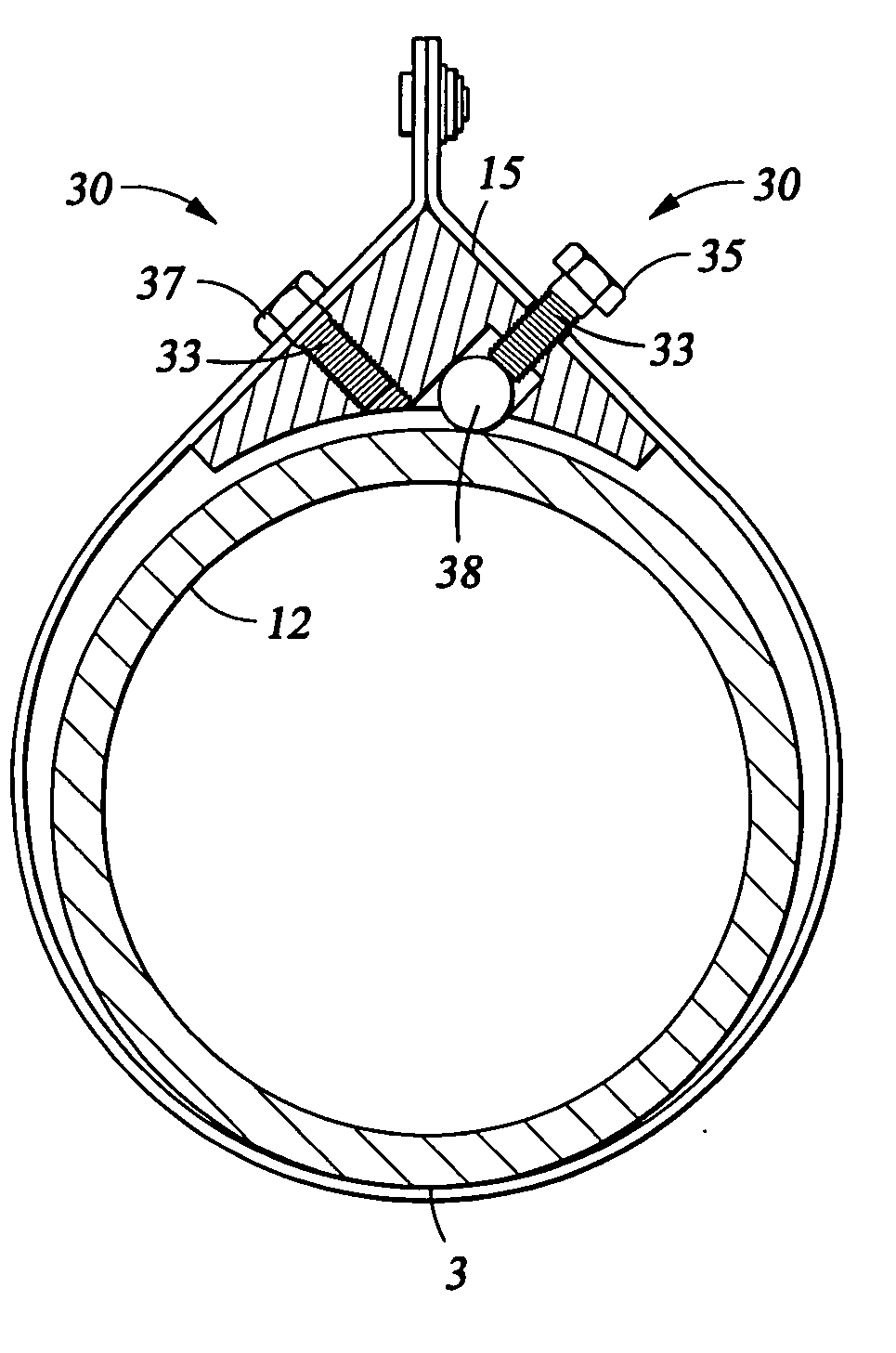
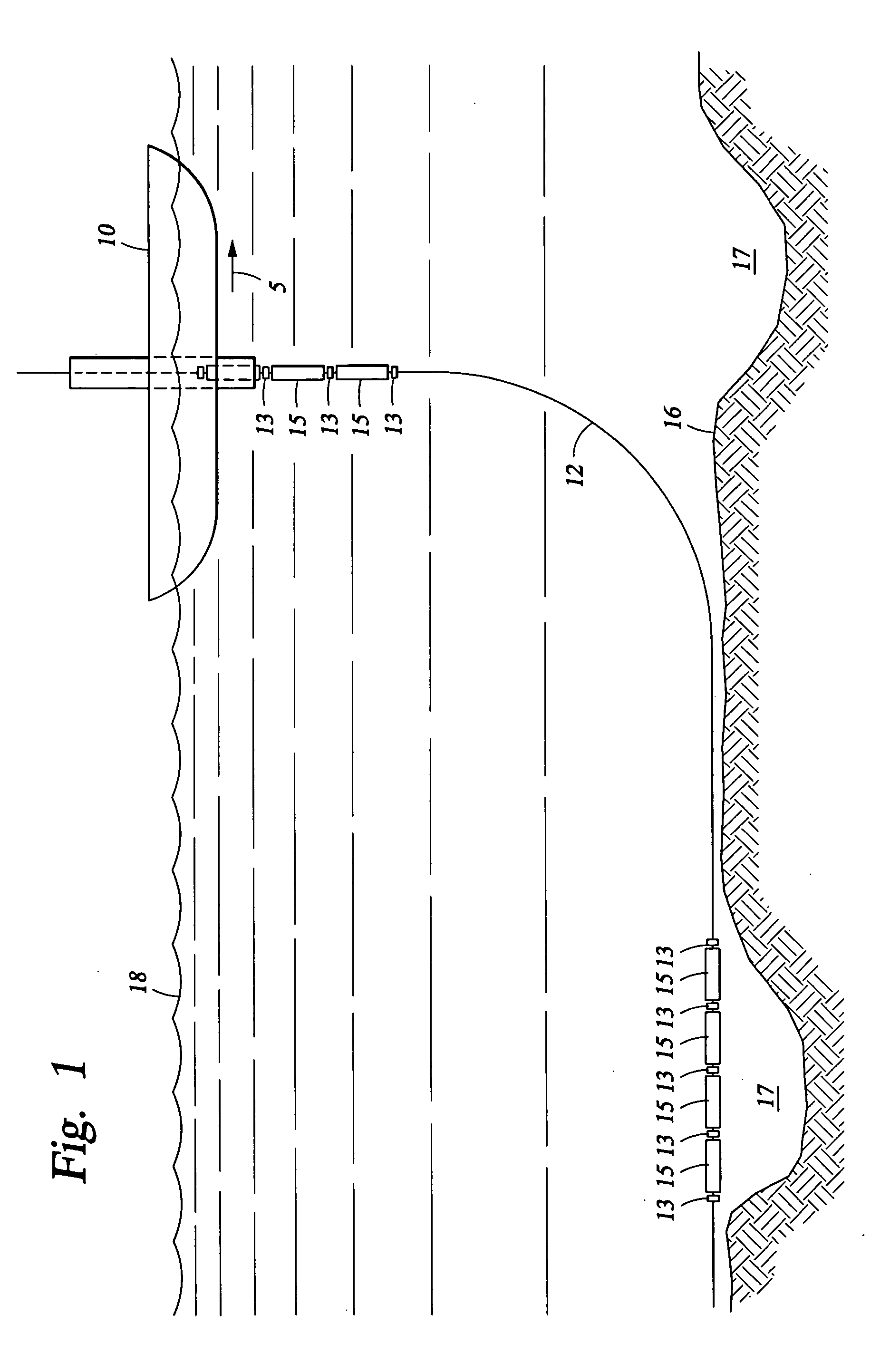
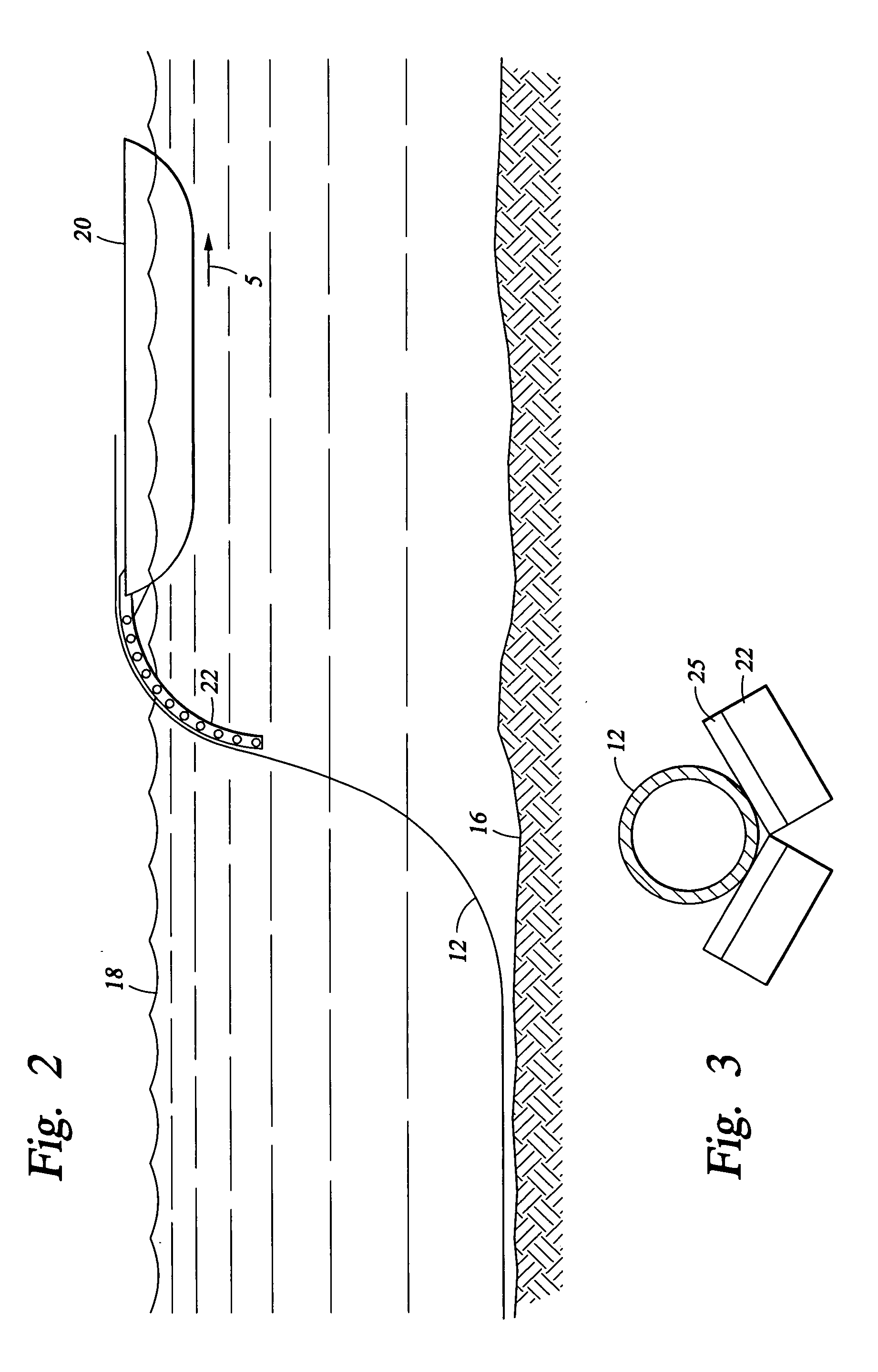

Adaptive system and bridge for improving vortex-vibration performance of π-type composite beam
PatentActiveCN118148005B
Innovation
- Design an adaptive system, including a telescopic plate device, acquisition equipment and a controller. It adjusts the width of the lower flange of the I-beam through the measured wind attack angle, and uses a servo mechanism to control the position of the telescopic plate to reduce the vortex amplitude. Combined with the wind Hole test data and vibration suppression effect evaluation curve are used to determine the target width.


Safety Standards for Vortex-Induced Vibration Systems
The establishment of comprehensive safety standards for vortex-induced vibration systems represents a critical imperative in modern engineering applications. Current regulatory frameworks often lack specific provisions addressing the unique challenges posed by VIV phenomena, creating potential gaps in operational safety protocols. The development of integrated safety standards must encompass both preventive measures and responsive mechanisms to ensure system reliability across diverse operational environments.
International standardization bodies, including ISO and ASME, have begun incorporating VIV considerations into their structural integrity guidelines. However, these standards primarily focus on traditional fatigue analysis rather than addressing the dynamic complexities inherent in vortex-induced oscillations. The need for specialized safety protocols becomes particularly evident in offshore structures, wind turbines, and high-rise buildings where VIV effects can significantly impact structural longevity and operational safety.
Risk assessment methodologies for VIV systems require multi-dimensional evaluation criteria that consider fluid-structure interaction parameters, environmental loading conditions, and material degradation factors. Current safety standards inadequately address the probabilistic nature of vortex shedding phenomena, often relying on deterministic approaches that may underestimate actual risk levels. Advanced safety frameworks must incorporate stochastic modeling techniques to better predict failure modes and establish appropriate safety margins.
Monitoring and detection systems form essential components of comprehensive VIV safety standards. Real-time vibration monitoring protocols should establish threshold values for displacement amplitudes, frequency ranges, and acceleration limits specific to different structural configurations. Emergency response procedures must be clearly defined, including automatic shutdown mechanisms and maintenance intervention protocols when critical vibration levels are detected.
The integration of artificial intelligence and machine learning technologies into safety standard development offers promising opportunities for predictive maintenance and early warning systems. These advanced approaches can enhance traditional safety protocols by providing continuous assessment capabilities and adaptive response mechanisms that evolve with changing operational conditions and accumulated structural knowledge.
International standardization bodies, including ISO and ASME, have begun incorporating VIV considerations into their structural integrity guidelines. However, these standards primarily focus on traditional fatigue analysis rather than addressing the dynamic complexities inherent in vortex-induced oscillations. The need for specialized safety protocols becomes particularly evident in offshore structures, wind turbines, and high-rise buildings where VIV effects can significantly impact structural longevity and operational safety.
Risk assessment methodologies for VIV systems require multi-dimensional evaluation criteria that consider fluid-structure interaction parameters, environmental loading conditions, and material degradation factors. Current safety standards inadequately address the probabilistic nature of vortex shedding phenomena, often relying on deterministic approaches that may underestimate actual risk levels. Advanced safety frameworks must incorporate stochastic modeling techniques to better predict failure modes and establish appropriate safety margins.
Monitoring and detection systems form essential components of comprehensive VIV safety standards. Real-time vibration monitoring protocols should establish threshold values for displacement amplitudes, frequency ranges, and acceleration limits specific to different structural configurations. Emergency response procedures must be clearly defined, including automatic shutdown mechanisms and maintenance intervention protocols when critical vibration levels are detected.
The integration of artificial intelligence and machine learning technologies into safety standard development offers promising opportunities for predictive maintenance and early warning systems. These advanced approaches can enhance traditional safety protocols by providing continuous assessment capabilities and adaptive response mechanisms that evolve with changing operational conditions and accumulated structural knowledge.
Multi-Physics Coupling in Vortex Vibration Analysis
Multi-physics coupling represents a fundamental paradigm shift in vortex vibration analysis, moving beyond traditional single-physics approaches to embrace the complex interdependencies that govern real-world fluid-structure interactions. This integrated methodology recognizes that vortex-induced vibrations cannot be accurately predicted or controlled without simultaneously considering fluid dynamics, structural mechanics, thermal effects, and electromagnetic phenomena where applicable.
The coupling mechanisms in vortex vibration systems exhibit strong nonlinear characteristics that manifest through multiple pathways. Fluid-structure coupling occurs when vortex shedding frequencies approach structural natural frequencies, creating feedback loops that can amplify or suppress vibrational responses. Thermal coupling becomes significant in high-temperature environments where material properties vary with temperature, affecting both structural stiffness and fluid viscosity. Additionally, electromagnetic coupling emerges in applications involving conductive fluids or structures subjected to magnetic fields.
Contemporary multi-physics modeling frameworks employ sophisticated numerical techniques to capture these interactions. Computational Fluid Dynamics (CFD) solvers are coupled with Finite Element Analysis (FEA) through partitioned or monolithic approaches, enabling real-time exchange of pressure loads, displacement fields, and thermal gradients. Advanced algorithms such as Arbitrary Lagrangian-Eulerian (ALE) methods facilitate mesh deformation while maintaining numerical stability across physics domains.
The temporal and spatial scales involved in multi-physics vortex problems present significant computational challenges. Fluid time scales often differ by orders of magnitude from structural response times, necessitating adaptive time-stepping strategies and multi-rate integration schemes. Spatial discretization must accommodate boundary layer resolution requirements while maintaining computational efficiency for large-scale industrial applications.
Validation of multi-physics models requires comprehensive experimental datasets that capture simultaneous measurements across all relevant physics domains. Modern sensing technologies, including particle image velocimetry, strain gauges, and thermal imaging systems, enable synchronized data acquisition for model validation and uncertainty quantification in coupled vortex vibration systems.
The coupling mechanisms in vortex vibration systems exhibit strong nonlinear characteristics that manifest through multiple pathways. Fluid-structure coupling occurs when vortex shedding frequencies approach structural natural frequencies, creating feedback loops that can amplify or suppress vibrational responses. Thermal coupling becomes significant in high-temperature environments where material properties vary with temperature, affecting both structural stiffness and fluid viscosity. Additionally, electromagnetic coupling emerges in applications involving conductive fluids or structures subjected to magnetic fields.
Contemporary multi-physics modeling frameworks employ sophisticated numerical techniques to capture these interactions. Computational Fluid Dynamics (CFD) solvers are coupled with Finite Element Analysis (FEA) through partitioned or monolithic approaches, enabling real-time exchange of pressure loads, displacement fields, and thermal gradients. Advanced algorithms such as Arbitrary Lagrangian-Eulerian (ALE) methods facilitate mesh deformation while maintaining numerical stability across physics domains.
The temporal and spatial scales involved in multi-physics vortex problems present significant computational challenges. Fluid time scales often differ by orders of magnitude from structural response times, necessitating adaptive time-stepping strategies and multi-rate integration schemes. Spatial discretization must accommodate boundary layer resolution requirements while maintaining computational efficiency for large-scale industrial applications.
Validation of multi-physics models requires comprehensive experimental datasets that capture simultaneous measurements across all relevant physics domains. Modern sensing technologies, including particle image velocimetry, strain gauges, and thermal imaging systems, enable synchronized data acquisition for model validation and uncertainty quantification in coupled vortex vibration systems.
Unlock deeper insights with PatSnap Eureka Quick Research — get a full tech report to explore trends and direct your research. Try now!
Generate Your Research Report Instantly with AI Agent
Supercharge your innovation with PatSnap Eureka AI Agent Platform!