

Biofertilizers Efficiency in Drought‑Prone Regions: A Guide
JUL 15, 20259 MIN READ
Generate Your Research Report Instantly with AI Agent
PatSnap Eureka helps you evaluate technical feasibility & market potential.
Biofertilizer Development and Drought Adaptation Goals
The development of biofertilizers for drought-prone regions represents a critical frontier in sustainable agriculture. As global climate patterns shift and water scarcity becomes increasingly prevalent, the need for innovative solutions to maintain crop productivity under water-stressed conditions has never been more pressing. The primary goal of biofertilizer development in this context is to enhance plant resilience and nutrient uptake efficiency in environments characterized by limited water availability.
One key objective is to isolate and cultivate microbial strains that exhibit exceptional drought tolerance and plant growth-promoting capabilities. These microorganisms, including various species of bacteria and fungi, must not only survive in arid conditions but also actively contribute to plant health and soil fertility. Research efforts are focused on identifying strains that can produce osmolytes, exopolysaccharides, and other compounds that help retain soil moisture and protect plant roots from desiccation.
Another crucial aim is to develop formulations that ensure the long-term viability and efficacy of biofertilizers in drought-prone soils. This involves creating carrier materials and encapsulation techniques that shield beneficial microorganisms from harsh environmental conditions while allowing for their gradual release into the rhizosphere. Innovations in this area may include the use of nanoparticles, hydrogels, or other advanced materials that can enhance the shelf life and field performance of biofertilizer products.
Improving the synergistic interactions between biofertilizers and drought-tolerant crop varieties is also a primary focus. This entails breeding plants with enhanced root architectures and exudate profiles that can better support beneficial microbial communities under water-limited conditions. Additionally, researchers are exploring ways to optimize the timing and method of biofertilizer application to maximize their impact on crop establishment and drought resilience.
The ultimate goal is to develop integrated biofertilizer systems that not only mitigate the immediate effects of drought but also contribute to long-term soil health and ecosystem resilience. This holistic approach aims to enhance water retention, improve soil structure, and increase organic matter content, thereby creating a more favorable environment for both crops and beneficial microorganisms. By achieving these objectives, biofertilizers have the potential to significantly reduce the reliance on chemical inputs and irrigation in drought-prone regions, leading to more sustainable and resilient agricultural systems.
One key objective is to isolate and cultivate microbial strains that exhibit exceptional drought tolerance and plant growth-promoting capabilities. These microorganisms, including various species of bacteria and fungi, must not only survive in arid conditions but also actively contribute to plant health and soil fertility. Research efforts are focused on identifying strains that can produce osmolytes, exopolysaccharides, and other compounds that help retain soil moisture and protect plant roots from desiccation.
Another crucial aim is to develop formulations that ensure the long-term viability and efficacy of biofertilizers in drought-prone soils. This involves creating carrier materials and encapsulation techniques that shield beneficial microorganisms from harsh environmental conditions while allowing for their gradual release into the rhizosphere. Innovations in this area may include the use of nanoparticles, hydrogels, or other advanced materials that can enhance the shelf life and field performance of biofertilizer products.
Improving the synergistic interactions between biofertilizers and drought-tolerant crop varieties is also a primary focus. This entails breeding plants with enhanced root architectures and exudate profiles that can better support beneficial microbial communities under water-limited conditions. Additionally, researchers are exploring ways to optimize the timing and method of biofertilizer application to maximize their impact on crop establishment and drought resilience.
The ultimate goal is to develop integrated biofertilizer systems that not only mitigate the immediate effects of drought but also contribute to long-term soil health and ecosystem resilience. This holistic approach aims to enhance water retention, improve soil structure, and increase organic matter content, thereby creating a more favorable environment for both crops and beneficial microorganisms. By achieving these objectives, biofertilizers have the potential to significantly reduce the reliance on chemical inputs and irrigation in drought-prone regions, leading to more sustainable and resilient agricultural systems.
Market Analysis for Drought-Resistant Biofertilizers
The market for drought-resistant biofertilizers is experiencing significant growth, driven by increasing concerns over climate change and the need for sustainable agricultural practices in water-stressed regions. As global temperatures rise and precipitation patterns become more erratic, farmers in drought-prone areas are seeking innovative solutions to maintain crop yields and soil health. This has created a burgeoning demand for biofertilizers that can enhance plant resilience to water scarcity.
The potential market size for drought-resistant biofertilizers is substantial, with arid and semi-arid regions covering approximately 41% of the Earth's land surface. These areas are home to over 2 billion people, many of whom rely on agriculture for their livelihoods. The global biofertilizer market, valued at $2.3 billion in 2020, is projected to reach $3.9 billion by 2026, with drought-resistant variants expected to capture a significant portion of this growth.
Key market drivers include the increasing adoption of organic farming practices, government initiatives promoting sustainable agriculture, and the rising costs of chemical fertilizers. Drought-resistant biofertilizers offer multiple benefits, including improved water retention in soil, enhanced nutrient uptake efficiency, and increased crop yields under water-stressed conditions. These advantages are particularly attractive to farmers in regions facing recurrent droughts or limited access to irrigation.
The market is segmented by crop type, with cereals and grains representing the largest share due to their importance in global food security. Fruits and vegetables, oilseeds and pulses, and other crops are also significant segments showing strong growth potential. Geographically, North America and Europe currently lead in market adoption, but the fastest growth is expected in Asia-Pacific and Africa, where water scarcity is a pressing issue for agriculture.
Despite the promising outlook, several challenges remain. These include limited awareness among farmers about the benefits of biofertilizers, the need for region-specific formulations to address diverse soil conditions, and the relatively higher upfront costs compared to traditional fertilizers. Additionally, the efficacy of biofertilizers can vary depending on environmental factors, necessitating ongoing research and development to improve product performance and consistency.
Looking ahead, the market for drought-resistant biofertilizers is poised for continued expansion. Technological advancements in microbial strains and formulation techniques are expected to enhance product effectiveness and shelf life. The integration of biofertilizers with precision agriculture and smart farming practices presents further opportunities for market growth. As climate change impacts intensify, the demand for sustainable, water-efficient agricultural inputs is likely to accelerate, positioning drought-resistant biofertilizers as a critical component of future farming systems in water-stressed regions.
The potential market size for drought-resistant biofertilizers is substantial, with arid and semi-arid regions covering approximately 41% of the Earth's land surface. These areas are home to over 2 billion people, many of whom rely on agriculture for their livelihoods. The global biofertilizer market, valued at $2.3 billion in 2020, is projected to reach $3.9 billion by 2026, with drought-resistant variants expected to capture a significant portion of this growth.
Key market drivers include the increasing adoption of organic farming practices, government initiatives promoting sustainable agriculture, and the rising costs of chemical fertilizers. Drought-resistant biofertilizers offer multiple benefits, including improved water retention in soil, enhanced nutrient uptake efficiency, and increased crop yields under water-stressed conditions. These advantages are particularly attractive to farmers in regions facing recurrent droughts or limited access to irrigation.
The market is segmented by crop type, with cereals and grains representing the largest share due to their importance in global food security. Fruits and vegetables, oilseeds and pulses, and other crops are also significant segments showing strong growth potential. Geographically, North America and Europe currently lead in market adoption, but the fastest growth is expected in Asia-Pacific and Africa, where water scarcity is a pressing issue for agriculture.
Despite the promising outlook, several challenges remain. These include limited awareness among farmers about the benefits of biofertilizers, the need for region-specific formulations to address diverse soil conditions, and the relatively higher upfront costs compared to traditional fertilizers. Additionally, the efficacy of biofertilizers can vary depending on environmental factors, necessitating ongoing research and development to improve product performance and consistency.
Looking ahead, the market for drought-resistant biofertilizers is poised for continued expansion. Technological advancements in microbial strains and formulation techniques are expected to enhance product effectiveness and shelf life. The integration of biofertilizers with precision agriculture and smart farming practices presents further opportunities for market growth. As climate change impacts intensify, the demand for sustainable, water-efficient agricultural inputs is likely to accelerate, positioning drought-resistant biofertilizers as a critical component of future farming systems in water-stressed regions.
Current Challenges in Biofertilizer Use in Arid Regions
The use of biofertilizers in arid regions faces several significant challenges that hinder their widespread adoption and effectiveness. One of the primary obstacles is the harsh environmental conditions characteristic of these areas. Extreme temperatures, low rainfall, and high evaporation rates create a hostile environment for both crops and the microorganisms present in biofertilizers. These conditions can severely limit the survival and activity of beneficial microbes, reducing their ability to enhance soil fertility and plant growth.
Water scarcity is another critical challenge in arid regions, affecting not only crop growth but also the efficacy of biofertilizers. The lack of adequate moisture in the soil can impede the movement and colonization of microorganisms, limiting their interaction with plant roots and their ability to deliver nutrients effectively. This issue is further compounded by the fact that many traditional biofertilizer application methods rely on sufficient water availability for proper distribution and activation.
Soil quality in arid regions often presents additional hurdles for biofertilizer use. These soils are typically characterized by low organic matter content, poor structure, and high salinity. Such conditions are unfavorable for microbial growth and activity, potentially reducing the effectiveness of biofertilizers. Moreover, the alkaline nature of many arid soils can affect the survival and performance of certain microbial strains used in biofertilizers.
The lack of awareness and technical knowledge among farmers in arid regions poses another significant challenge. Many farmers are unfamiliar with biofertilizer technologies and their potential benefits, leading to hesitation in adoption. Additionally, the proper storage, handling, and application of biofertilizers require specific knowledge and skills that may be lacking in these areas. This knowledge gap can result in improper use, reducing the effectiveness of biofertilizers and potentially leading to disappointing results.
Infrastructure and logistical issues also contribute to the challenges of biofertilizer use in arid regions. The production, distribution, and storage of biofertilizers often require specialized facilities and equipment, which may be limited in remote or underdeveloped areas. Maintaining the viability of microorganisms during transportation and storage in high-temperature environments is particularly challenging and can significantly impact the quality of biofertilizers reaching farmers.
Lastly, the economic aspects of biofertilizer adoption in arid regions cannot be overlooked. Many farmers in these areas operate on small scales with limited financial resources. The initial costs associated with transitioning to biofertilizer use, including potential changes in farming practices and equipment, can be prohibitive. Furthermore, the perceived risk of adopting new technologies in an already challenging agricultural environment may deter farmers from investing in biofertilizers.
Water scarcity is another critical challenge in arid regions, affecting not only crop growth but also the efficacy of biofertilizers. The lack of adequate moisture in the soil can impede the movement and colonization of microorganisms, limiting their interaction with plant roots and their ability to deliver nutrients effectively. This issue is further compounded by the fact that many traditional biofertilizer application methods rely on sufficient water availability for proper distribution and activation.
Soil quality in arid regions often presents additional hurdles for biofertilizer use. These soils are typically characterized by low organic matter content, poor structure, and high salinity. Such conditions are unfavorable for microbial growth and activity, potentially reducing the effectiveness of biofertilizers. Moreover, the alkaline nature of many arid soils can affect the survival and performance of certain microbial strains used in biofertilizers.
The lack of awareness and technical knowledge among farmers in arid regions poses another significant challenge. Many farmers are unfamiliar with biofertilizer technologies and their potential benefits, leading to hesitation in adoption. Additionally, the proper storage, handling, and application of biofertilizers require specific knowledge and skills that may be lacking in these areas. This knowledge gap can result in improper use, reducing the effectiveness of biofertilizers and potentially leading to disappointing results.
Infrastructure and logistical issues also contribute to the challenges of biofertilizer use in arid regions. The production, distribution, and storage of biofertilizers often require specialized facilities and equipment, which may be limited in remote or underdeveloped areas. Maintaining the viability of microorganisms during transportation and storage in high-temperature environments is particularly challenging and can significantly impact the quality of biofertilizers reaching farmers.
Lastly, the economic aspects of biofertilizer adoption in arid regions cannot be overlooked. Many farmers in these areas operate on small scales with limited financial resources. The initial costs associated with transitioning to biofertilizer use, including potential changes in farming practices and equipment, can be prohibitive. Furthermore, the perceived risk of adopting new technologies in an already challenging agricultural environment may deter farmers from investing in biofertilizers.
Existing Biofertilizer Solutions for Water-Stressed Environments
01 Microbial consortia for enhanced biofertilizer efficiency
Utilizing combinations of beneficial microorganisms in biofertilizers can improve their efficiency. These consortia may include various bacteria, fungi, and other microorganisms that work synergistically to enhance nutrient uptake, plant growth, and soil health. The diverse microbial populations can provide multiple benefits such as nitrogen fixation, phosphate solubilization, and production of plant growth-promoting substances.- Microbial consortia for enhanced biofertilizer efficiency: Utilizing combinations of beneficial microorganisms in biofertilizers can improve their efficiency. These consortia may include various bacteria, fungi, and other microorganisms that work synergistically to enhance nutrient uptake, plant growth, and soil health. The diverse microbial populations can provide multiple benefits such as nitrogen fixation, phosphate solubilization, and production of plant growth-promoting substances.
- Nanotechnology in biofertilizer formulations: Incorporating nanotechnology in biofertilizer production can significantly improve their efficiency. Nanoparticles can enhance the delivery and uptake of nutrients, increase the stability of beneficial microorganisms, and improve the overall performance of biofertilizers. This approach can lead to more targeted and controlled release of nutrients, resulting in better crop yields and reduced environmental impact.
- Biofertilizers with stress tolerance mechanisms: Developing biofertilizers with microorganisms that possess stress tolerance mechanisms can enhance their efficiency in challenging environmental conditions. These biofertilizers can help plants withstand abiotic stresses such as drought, salinity, and extreme temperatures. By improving plant resilience, these formulations can maintain or increase crop productivity even under adverse conditions.
- Carrier materials for improved biofertilizer delivery: The choice of carrier materials plays a crucial role in biofertilizer efficiency. Advanced carrier materials can protect microorganisms, extend shelf life, and improve the application and distribution of biofertilizers in the soil. Innovative carriers may include biodegradable polymers, organic waste materials, or mineral-based substrates that enhance the survival and activity of beneficial microorganisms.
- Integration of biofertilizers with precision agriculture: Combining biofertilizers with precision agriculture techniques can optimize their efficiency. This approach involves using technologies such as GPS, sensors, and data analytics to apply biofertilizers more precisely based on soil conditions and crop requirements. By tailoring the application of biofertilizers to specific field areas and crop needs, this integration can maximize nutrient use efficiency and minimize waste.
02 Nanotechnology in biofertilizer formulations
Incorporating nanotechnology in biofertilizer production can significantly improve their efficiency. Nanoparticles can enhance the delivery and uptake of nutrients, increase the stability of beneficial microorganisms, and improve the overall performance of biofertilizers. This approach can lead to more targeted and controlled release of nutrients, resulting in better crop yields and reduced environmental impact.Expand Specific Solutions03 Biofertilizers with stress tolerance mechanisms
Developing biofertilizers with microorganisms that possess stress tolerance mechanisms can enhance their efficiency in challenging environmental conditions. These biofertilizers can help plants withstand abiotic stresses such as drought, salinity, and extreme temperatures. By improving plant resilience, these formulations can maintain or increase crop productivity even under adverse conditions.Expand Specific Solutions04 Carrier materials for improved biofertilizer stability
The choice of carrier materials plays a crucial role in maintaining the viability and effectiveness of biofertilizers. Advanced carrier materials can protect microorganisms from environmental stresses, extend shelf life, and improve the application efficiency of biofertilizers. These may include organic, inorganic, or synthetic materials that provide optimal conditions for microbial survival and activity.Expand Specific Solutions05 Integration of biofertilizers with precision agriculture
Combining biofertilizers with precision agriculture techniques can optimize their efficiency. This approach involves using technologies such as GPS, sensors, and data analytics to apply biofertilizers more precisely based on soil and crop needs. By tailoring the application of biofertilizers to specific field conditions, farmers can maximize the benefits while minimizing waste and environmental impact.Expand Specific Solutions
Key Players in Biofertilizer and Drought-Resistance Research
The biofertilizer market in drought-prone regions is in a growth phase, driven by increasing awareness of sustainable agriculture practices and the need for water-efficient solutions. The global biofertilizer market size is projected to expand significantly, with a focus on drought-resistant formulations. Technologically, the field is advancing rapidly, with companies like Evogene Ltd. and Yara International ASA leading innovation in microbial and bio-based fertilizers. Research institutions such as Shenyang Agricultural University and the Xinjiang Institute of Ecology and Geography are contributing to the development of drought-specific biofertilizer solutions. The competitive landscape is diverse, including established agrochemical companies, specialized biofertilizer producers, and emerging startups, all vying to improve product efficacy and adapt to challenging environmental conditions.
Evogene Ltd.
Technical Solution: Evogene Ltd. has developed a computational biology platform called CPB (Computational Predictive Biology) to enhance biofertilizer efficiency in drought-prone regions. This platform integrates big data and advanced algorithms to identify microbial strains with optimal traits for improving crop resilience and nutrient uptake under water-stressed conditions[1]. The company's approach involves screening vast microbial libraries to select candidates that can colonize plant roots effectively and promote drought tolerance[2]. Evogene's biofertilizers are designed to enhance phosphate solubilization and nitrogen fixation, crucial processes for plant growth in arid environments[3]. The company has also incorporated drought-responsive genetic elements into their microbial strains to ensure sustained performance under water-limited conditions[4].
Strengths: Advanced computational biology platform for strain selection, targeted approach for drought-specific traits, and integration of genetic modifications for enhanced performance. Weaknesses: Potential regulatory challenges for genetically modified microbes and the need for extensive field trials to validate performance across diverse arid regions.
Yara International ASA
Technical Solution: Yara International ASA has developed a comprehensive biofertilizer strategy for drought-prone regions, focusing on microbial consortia that enhance water use efficiency and nutrient uptake. Their approach combines carefully selected strains of plant growth-promoting rhizobacteria (PGPR) with organic matter to improve soil structure and water retention[5]. Yara's biofertilizers include drought-tolerant Azospirillum and Bacillus species that produce exopolysaccharides, creating a protective biofilm around plant roots to mitigate water stress[6]. The company has also integrated slow-release formulations to ensure prolonged microbial activity during dry periods[7]. Yara's products are designed to work synergistically with their mineral fertilizers, offering a balanced approach to crop nutrition and drought resilience[8].
Strengths: Holistic approach combining microbial and organic components, focus on soil health improvement, and integration with existing fertilizer products. Weaknesses: Potential variability in performance across different soil types and the challenge of maintaining microbial viability in extreme drought conditions.
Innovative Microbial Strains for Drought Tolerance
Biofertilizers for drought stress to enhance soluble sugar in mungbean
PatentPendingIN202211072792A
Innovation
- The application of biofertilizers such as Trichoderma, Rhizobium, and Mycorrhiza to mungbean plants under drought stress conditions enhances soluble sugar content, mitigating toxicity and improving grain quality.
Biofertilizer capsules for integrated nutrient management in crop plants
PatentWO2018234996A1
Innovation
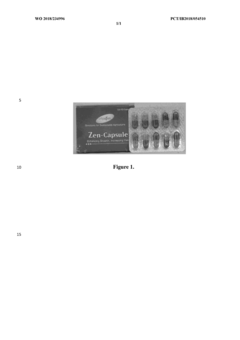
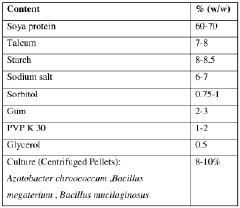
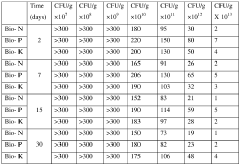
- Development of biofertilizer capsules with a microbial consortium encapsulated in a blister pack using carrier materials like soya protein, talcum, and glycerol, providing a stable and user-friendly delivery system with a shelf life of at least 24 months and high CFU count, ensuring effective nutrient availability and reduced contamination.
Environmental Impact of Biofertilizers in Arid Ecosystems
The environmental impact of biofertilizers in arid ecosystems is a critical consideration in the context of sustainable agriculture and ecological preservation. Biofertilizers, which are composed of living microorganisms, offer a promising alternative to chemical fertilizers in drought-prone regions. These natural fertilizers can significantly enhance soil fertility and plant growth while minimizing negative environmental consequences.
In arid ecosystems, the application of biofertilizers has shown remarkable potential in improving soil structure and water retention capacity. By increasing the organic matter content in the soil, biofertilizers help create a more favorable environment for plant growth, even under water-scarce conditions. This improvement in soil quality can lead to reduced soil erosion and increased resistance to desertification, which are common challenges in arid regions.
One of the most significant environmental benefits of biofertilizers in arid ecosystems is their role in enhancing nutrient cycling. Unlike chemical fertilizers, which can lead to nutrient leaching and groundwater contamination, biofertilizers promote the efficient use of nutrients already present in the soil. This not only reduces the risk of water pollution but also helps maintain the delicate balance of soil ecosystems.
Biofertilizers also contribute to carbon sequestration in arid soils. By promoting plant growth and increasing biomass production, these natural fertilizers help capture atmospheric carbon dioxide and store it in the soil. This process not only mitigates climate change but also improves soil fertility and structure over time, creating a positive feedback loop for ecosystem health.
The use of biofertilizers in arid regions can also lead to a reduction in greenhouse gas emissions associated with agriculture. Chemical fertilizer production and application are energy-intensive processes that contribute significantly to agricultural carbon footprints. In contrast, biofertilizers require less energy to produce and apply, resulting in lower overall emissions.
Furthermore, biofertilizers play a crucial role in maintaining and enhancing biodiversity in arid ecosystems. By promoting a healthy soil microbiome, these natural fertilizers support a diverse range of soil organisms, which in turn contribute to improved plant health and ecosystem resilience. This increased biodiversity can help arid ecosystems better withstand environmental stresses and disturbances.
However, it is important to note that the environmental impact of biofertilizers in arid ecosystems is not uniformly positive. Careful management and application practices are necessary to maximize benefits while minimizing potential risks. For instance, over-application of biofertilizers could lead to imbalances in soil microbial communities or unexpected interactions with native flora and fauna.
In arid ecosystems, the application of biofertilizers has shown remarkable potential in improving soil structure and water retention capacity. By increasing the organic matter content in the soil, biofertilizers help create a more favorable environment for plant growth, even under water-scarce conditions. This improvement in soil quality can lead to reduced soil erosion and increased resistance to desertification, which are common challenges in arid regions.
One of the most significant environmental benefits of biofertilizers in arid ecosystems is their role in enhancing nutrient cycling. Unlike chemical fertilizers, which can lead to nutrient leaching and groundwater contamination, biofertilizers promote the efficient use of nutrients already present in the soil. This not only reduces the risk of water pollution but also helps maintain the delicate balance of soil ecosystems.
Biofertilizers also contribute to carbon sequestration in arid soils. By promoting plant growth and increasing biomass production, these natural fertilizers help capture atmospheric carbon dioxide and store it in the soil. This process not only mitigates climate change but also improves soil fertility and structure over time, creating a positive feedback loop for ecosystem health.
The use of biofertilizers in arid regions can also lead to a reduction in greenhouse gas emissions associated with agriculture. Chemical fertilizer production and application are energy-intensive processes that contribute significantly to agricultural carbon footprints. In contrast, biofertilizers require less energy to produce and apply, resulting in lower overall emissions.
Furthermore, biofertilizers play a crucial role in maintaining and enhancing biodiversity in arid ecosystems. By promoting a healthy soil microbiome, these natural fertilizers support a diverse range of soil organisms, which in turn contribute to improved plant health and ecosystem resilience. This increased biodiversity can help arid ecosystems better withstand environmental stresses and disturbances.
However, it is important to note that the environmental impact of biofertilizers in arid ecosystems is not uniformly positive. Careful management and application practices are necessary to maximize benefits while minimizing potential risks. For instance, over-application of biofertilizers could lead to imbalances in soil microbial communities or unexpected interactions with native flora and fauna.
Policy Framework for Biofertilizer Use in Drought-Prone Areas
The development of a comprehensive policy framework is crucial for promoting the effective use of biofertilizers in drought-prone areas. Such a framework should address multiple aspects, including regulatory measures, financial incentives, and educational initiatives, to create an enabling environment for the adoption of biofertilizer technologies.
Regulatory measures should focus on establishing quality standards for biofertilizer products, ensuring their safety and efficacy. This may include mandatory testing and certification processes, as well as guidelines for proper storage, handling, and application. Additionally, regulations should be put in place to monitor and control the environmental impact of biofertilizer use, particularly in sensitive ecosystems.
Financial incentives play a vital role in encouraging farmers to adopt biofertilizer technologies. Governments can implement subsidies or tax breaks for the purchase and use of biofertilizers, making them more accessible to smallholder farmers. Grant programs or low-interest loans can also be offered to support the development and commercialization of innovative biofertilizer products tailored for drought-prone regions.
Educational initiatives are essential for raising awareness about the benefits of biofertilizers and promoting their proper use. This can include training programs for farmers, agricultural extension services, and demonstration projects showcasing the effectiveness of biofertilizers in drought-prone areas. Collaboration between research institutions, agricultural universities, and local farming communities should be encouraged to facilitate knowledge transfer and adaptation of biofertilizer technologies to local conditions.
The policy framework should also address the need for infrastructure development to support the production, distribution, and application of biofertilizers. This may involve investments in research facilities, quality control laboratories, and supply chain logistics to ensure the timely delivery of biofertilizer products to farmers in drought-prone regions.
Furthermore, the framework should promote the integration of biofertilizer use with other sustainable agricultural practices, such as conservation tillage, crop rotation, and water management techniques. This holistic approach can maximize the benefits of biofertilizers while enhancing overall agricultural resilience in drought-prone areas.
Lastly, the policy framework should include mechanisms for monitoring and evaluation, allowing for continuous improvement and adaptation of biofertilizer strategies based on real-world outcomes and emerging scientific evidence. Regular assessments of the environmental, economic, and social impacts of biofertilizer use in drought-prone regions can inform future policy decisions and guide research priorities.
Regulatory measures should focus on establishing quality standards for biofertilizer products, ensuring their safety and efficacy. This may include mandatory testing and certification processes, as well as guidelines for proper storage, handling, and application. Additionally, regulations should be put in place to monitor and control the environmental impact of biofertilizer use, particularly in sensitive ecosystems.
Financial incentives play a vital role in encouraging farmers to adopt biofertilizer technologies. Governments can implement subsidies or tax breaks for the purchase and use of biofertilizers, making them more accessible to smallholder farmers. Grant programs or low-interest loans can also be offered to support the development and commercialization of innovative biofertilizer products tailored for drought-prone regions.
Educational initiatives are essential for raising awareness about the benefits of biofertilizers and promoting their proper use. This can include training programs for farmers, agricultural extension services, and demonstration projects showcasing the effectiveness of biofertilizers in drought-prone areas. Collaboration between research institutions, agricultural universities, and local farming communities should be encouraged to facilitate knowledge transfer and adaptation of biofertilizer technologies to local conditions.
The policy framework should also address the need for infrastructure development to support the production, distribution, and application of biofertilizers. This may involve investments in research facilities, quality control laboratories, and supply chain logistics to ensure the timely delivery of biofertilizer products to farmers in drought-prone regions.
Furthermore, the framework should promote the integration of biofertilizer use with other sustainable agricultural practices, such as conservation tillage, crop rotation, and water management techniques. This holistic approach can maximize the benefits of biofertilizers while enhancing overall agricultural resilience in drought-prone areas.
Lastly, the policy framework should include mechanisms for monitoring and evaluation, allowing for continuous improvement and adaptation of biofertilizer strategies based on real-world outcomes and emerging scientific evidence. Regular assessments of the environmental, economic, and social impacts of biofertilizer use in drought-prone regions can inform future policy decisions and guide research priorities.
Unlock deeper insights with PatSnap Eureka Quick Research — get a full tech report to explore trends and direct your research. Try now!
Generate Your Research Report Instantly with AI Agent
Supercharge your innovation with PatSnap Eureka AI Agent Platform!