Biofertilizers: Pathways to Optimized Biological Activity
JUL 15, 20259 MIN READ
Generate Your Research Report Instantly with AI Agent
PatSnap Eureka helps you evaluate technical feasibility & market potential.
Biofertilizer Evolution and Objectives
Biofertilizers have emerged as a sustainable alternative to chemical fertilizers, marking a significant shift in agricultural practices over the past few decades. The evolution of biofertilizers can be traced back to the early 20th century when the concept of using beneficial microorganisms to enhance soil fertility was first introduced. However, it wasn't until the late 1970s and early 1980s that biofertilizers gained substantial attention due to growing environmental concerns and the need for sustainable agriculture.
The development of biofertilizers has been driven by advancements in microbiology, biotechnology, and soil science. Initially, research focused on nitrogen-fixing bacteria such as Rhizobium for legumes. As understanding of plant-microbe interactions deepened, the scope expanded to include phosphate solubilizing bacteria, potassium mobilizing microorganisms, and mycorrhizal fungi. This diversification has led to the creation of multi-strain biofertilizers capable of addressing multiple nutrient deficiencies simultaneously.
In recent years, the objectives of biofertilizer research and development have become more sophisticated. The primary goal is to optimize the biological activity of these microbial inoculants to enhance their efficacy in various soil types and environmental conditions. This involves improving the survival rate of beneficial microorganisms, enhancing their colonization abilities, and increasing their nutrient mobilization capacities.
Another key objective is to develop formulations that are stable during storage and transportation, ensuring that the microorganisms remain viable until application. This has led to innovations in carrier materials and encapsulation technologies, which protect the microbes from environmental stresses and extend shelf life.
The integration of biofertilizers with precision agriculture techniques is an emerging trend. This involves developing smart delivery systems that can release microorganisms in response to specific soil conditions or plant growth stages. Additionally, there is a growing focus on tailoring biofertilizer formulations to specific crops and regional soil characteristics, moving away from one-size-fits-all approaches.
As climate change poses new challenges to agriculture, biofertilizer research is also aimed at developing strains that can enhance plant resilience to abiotic stresses such as drought, salinity, and extreme temperatures. This aligns with the broader objective of creating sustainable agricultural systems that can adapt to changing environmental conditions while maintaining productivity.
The future objectives of biofertilizer development include harnessing the power of synthetic biology and genetic engineering to create super-strains with enhanced capabilities. There is also a growing interest in understanding and manipulating the plant microbiome as a whole, rather than focusing on individual microbial species. This holistic approach aims to create balanced and resilient soil ecosystems that can sustainably support crop growth and yield.
The development of biofertilizers has been driven by advancements in microbiology, biotechnology, and soil science. Initially, research focused on nitrogen-fixing bacteria such as Rhizobium for legumes. As understanding of plant-microbe interactions deepened, the scope expanded to include phosphate solubilizing bacteria, potassium mobilizing microorganisms, and mycorrhizal fungi. This diversification has led to the creation of multi-strain biofertilizers capable of addressing multiple nutrient deficiencies simultaneously.
In recent years, the objectives of biofertilizer research and development have become more sophisticated. The primary goal is to optimize the biological activity of these microbial inoculants to enhance their efficacy in various soil types and environmental conditions. This involves improving the survival rate of beneficial microorganisms, enhancing their colonization abilities, and increasing their nutrient mobilization capacities.
Another key objective is to develop formulations that are stable during storage and transportation, ensuring that the microorganisms remain viable until application. This has led to innovations in carrier materials and encapsulation technologies, which protect the microbes from environmental stresses and extend shelf life.
The integration of biofertilizers with precision agriculture techniques is an emerging trend. This involves developing smart delivery systems that can release microorganisms in response to specific soil conditions or plant growth stages. Additionally, there is a growing focus on tailoring biofertilizer formulations to specific crops and regional soil characteristics, moving away from one-size-fits-all approaches.
As climate change poses new challenges to agriculture, biofertilizer research is also aimed at developing strains that can enhance plant resilience to abiotic stresses such as drought, salinity, and extreme temperatures. This aligns with the broader objective of creating sustainable agricultural systems that can adapt to changing environmental conditions while maintaining productivity.
The future objectives of biofertilizer development include harnessing the power of synthetic biology and genetic engineering to create super-strains with enhanced capabilities. There is also a growing interest in understanding and manipulating the plant microbiome as a whole, rather than focusing on individual microbial species. This holistic approach aims to create balanced and resilient soil ecosystems that can sustainably support crop growth and yield.
Sustainable Agriculture Market Analysis
The sustainable agriculture market has been experiencing significant growth in recent years, driven by increasing consumer awareness of environmental issues and the demand for healthier food options. This trend is particularly evident in the biofertilizer sector, which plays a crucial role in promoting sustainable farming practices. The global biofertilizer market is projected to expand rapidly, with a compound annual growth rate (CAGR) exceeding 10% over the next five years.
Several factors contribute to this market growth. Firstly, there is a growing recognition of the negative environmental impacts associated with conventional chemical fertilizers, including soil degradation and water pollution. This has led to a shift towards more sustainable alternatives, with biofertilizers emerging as a key solution. Secondly, government initiatives and regulations promoting organic farming and sustainable agriculture practices have created a favorable environment for biofertilizer adoption.
The market for biofertilizers is segmented based on type, application, and geography. Nitrogen-fixing biofertilizers currently dominate the market, accounting for the largest share due to their widespread use in various crops. However, phosphate-solubilizing biofertilizers are expected to witness the highest growth rate in the coming years, driven by increasing awareness of phosphorus deficiency in soils and the need for sustainable phosphorus management.
In terms of application, cereals and grains represent the largest segment for biofertilizers, followed by fruits and vegetables. The increasing demand for organic produce and the adoption of precision farming techniques are driving the use of biofertilizers in these crop categories. Geographically, Asia-Pacific leads the biofertilizer market, with countries like India and China at the forefront of adoption. North America and Europe are also significant markets, driven by stringent regulations on chemical fertilizer use and growing organic farming sectors.
Despite the positive outlook, the biofertilizer market faces several challenges. These include limited awareness among farmers in developing regions, the need for proper storage and handling infrastructure, and the relatively slower action of biofertilizers compared to chemical alternatives. Addressing these challenges will be crucial for realizing the full potential of the biofertilizer market and advancing sustainable agriculture practices globally.
Looking ahead, technological advancements in biofertilizer production and application methods are expected to further boost market growth. Innovations such as nanotechnology-based biofertilizers and the development of consortia-based products that combine multiple beneficial microorganisms are likely to enhance the efficacy and appeal of biofertilizers. Additionally, the integration of biofertilizers with precision agriculture technologies and smart farming practices presents significant opportunities for market expansion and improved agricultural sustainability.
Several factors contribute to this market growth. Firstly, there is a growing recognition of the negative environmental impacts associated with conventional chemical fertilizers, including soil degradation and water pollution. This has led to a shift towards more sustainable alternatives, with biofertilizers emerging as a key solution. Secondly, government initiatives and regulations promoting organic farming and sustainable agriculture practices have created a favorable environment for biofertilizer adoption.
The market for biofertilizers is segmented based on type, application, and geography. Nitrogen-fixing biofertilizers currently dominate the market, accounting for the largest share due to their widespread use in various crops. However, phosphate-solubilizing biofertilizers are expected to witness the highest growth rate in the coming years, driven by increasing awareness of phosphorus deficiency in soils and the need for sustainable phosphorus management.
In terms of application, cereals and grains represent the largest segment for biofertilizers, followed by fruits and vegetables. The increasing demand for organic produce and the adoption of precision farming techniques are driving the use of biofertilizers in these crop categories. Geographically, Asia-Pacific leads the biofertilizer market, with countries like India and China at the forefront of adoption. North America and Europe are also significant markets, driven by stringent regulations on chemical fertilizer use and growing organic farming sectors.
Despite the positive outlook, the biofertilizer market faces several challenges. These include limited awareness among farmers in developing regions, the need for proper storage and handling infrastructure, and the relatively slower action of biofertilizers compared to chemical alternatives. Addressing these challenges will be crucial for realizing the full potential of the biofertilizer market and advancing sustainable agriculture practices globally.
Looking ahead, technological advancements in biofertilizer production and application methods are expected to further boost market growth. Innovations such as nanotechnology-based biofertilizers and the development of consortia-based products that combine multiple beneficial microorganisms are likely to enhance the efficacy and appeal of biofertilizers. Additionally, the integration of biofertilizers with precision agriculture technologies and smart farming practices presents significant opportunities for market expansion and improved agricultural sustainability.
Biofertilizer Challenges and Limitations
Despite the promising potential of biofertilizers, their widespread adoption and effectiveness face several significant challenges and limitations. One of the primary obstacles is the variability in performance across different environmental conditions. Biofertilizers are highly sensitive to soil pH, temperature, moisture, and other abiotic factors, which can significantly impact their efficacy and survival in the field. This inconsistency in performance makes it difficult for farmers to rely on biofertilizers as a sole nutrient source.
Another major challenge is the short shelf life of many biofertilizer products. The living microorganisms in these formulations can rapidly lose viability during storage and transportation, especially under non-optimal conditions. This issue not only affects the product's effectiveness but also complicates logistics and distribution, particularly in regions with limited cold storage facilities.
The competition between introduced biofertilizer strains and native soil microorganisms presents another hurdle. Often, the beneficial microbes in biofertilizers struggle to establish themselves in the soil ecosystem, facing competition for resources and space from indigenous microflora. This can result in reduced colonization and, consequently, diminished benefits to the host plants.
Regulatory challenges also pose significant limitations to the biofertilizer industry. The lack of standardized quality control measures and efficacy testing protocols across different countries makes it difficult to ensure consistent product quality and performance. This regulatory uncertainty can hinder investment in research and development, as well as market expansion for biofertilizer products.
Furthermore, there is a knowledge gap among farmers regarding the proper application and management of biofertilizers. Unlike chemical fertilizers, biofertilizers require specific handling and application techniques to maximize their effectiveness. The lack of awareness and training in these areas can lead to suboptimal results and discourage continued use.
Scaling up production while maintaining quality and genetic stability of microbial strains is another technical challenge. As demand for biofertilizers grows, manufacturers face difficulties in producing large quantities of high-quality inoculants without compromising the beneficial traits of the microorganisms.
Lastly, the slow-acting nature of many biofertilizers compared to chemical alternatives can be a deterrent for farmers seeking rapid results. The time required for microorganisms to colonize, multiply, and exert their beneficial effects may not align with the immediate nutrient needs of crops, especially in intensive agricultural systems.
Another major challenge is the short shelf life of many biofertilizer products. The living microorganisms in these formulations can rapidly lose viability during storage and transportation, especially under non-optimal conditions. This issue not only affects the product's effectiveness but also complicates logistics and distribution, particularly in regions with limited cold storage facilities.
The competition between introduced biofertilizer strains and native soil microorganisms presents another hurdle. Often, the beneficial microbes in biofertilizers struggle to establish themselves in the soil ecosystem, facing competition for resources and space from indigenous microflora. This can result in reduced colonization and, consequently, diminished benefits to the host plants.
Regulatory challenges also pose significant limitations to the biofertilizer industry. The lack of standardized quality control measures and efficacy testing protocols across different countries makes it difficult to ensure consistent product quality and performance. This regulatory uncertainty can hinder investment in research and development, as well as market expansion for biofertilizer products.
Furthermore, there is a knowledge gap among farmers regarding the proper application and management of biofertilizers. Unlike chemical fertilizers, biofertilizers require specific handling and application techniques to maximize their effectiveness. The lack of awareness and training in these areas can lead to suboptimal results and discourage continued use.
Scaling up production while maintaining quality and genetic stability of microbial strains is another technical challenge. As demand for biofertilizers grows, manufacturers face difficulties in producing large quantities of high-quality inoculants without compromising the beneficial traits of the microorganisms.
Lastly, the slow-acting nature of many biofertilizers compared to chemical alternatives can be a deterrent for farmers seeking rapid results. The time required for microorganisms to colonize, multiply, and exert their beneficial effects may not align with the immediate nutrient needs of crops, especially in intensive agricultural systems.
Current Biofertilizer Formulations
01 Microbial composition for enhancing plant growth
Biofertilizers containing specific microbial compositions can enhance plant growth and improve soil fertility. These compositions often include beneficial bacteria, fungi, or other microorganisms that can fix nitrogen, solubilize phosphorus, or produce plant growth-promoting substances. The use of such microbial compositions can lead to increased crop yields and improved soil health.- Microbial composition for enhancing plant growth: Biofertilizers containing specific microbial compositions can enhance plant growth and improve soil fertility. These compositions often include beneficial bacteria, fungi, or other microorganisms that can fix nitrogen, solubilize phosphorus, or produce plant growth-promoting substances.
- Formulation techniques for biofertilizers: Various formulation techniques are employed to improve the stability, shelf life, and efficacy of biofertilizers. These may include encapsulation, carrier-based formulations, or liquid formulations that protect the microorganisms and enhance their delivery to the plant roots.
- Synergistic combinations of microorganisms: Combining different types of microorganisms in biofertilizer formulations can lead to synergistic effects, enhancing overall biological activity and plant growth promotion. These combinations may include mixtures of bacteria, fungi, and other beneficial microorganisms.
- Application methods for biofertilizers: Various application methods are used to maximize the effectiveness of biofertilizers, including seed coating, soil application, foliar sprays, and irrigation systems. The choice of application method depends on the type of biofertilizer, crop, and environmental conditions.
- Monitoring and assessing biofertilizer activity: Techniques and methods for monitoring and assessing the biological activity of biofertilizers in the soil and their impact on plant growth are crucial for optimizing their use. These may include molecular techniques, soil enzyme assays, or plant growth measurements.
02 Formulation techniques for biofertilizers
Various formulation techniques are employed to improve the efficacy and shelf-life of biofertilizers. These may include encapsulation, carrier-based formulations, or liquid formulations. The choice of formulation can affect the viability of microorganisms, ease of application, and overall effectiveness of the biofertilizer in field conditions.Expand Specific Solutions03 Synergistic combinations of microorganisms
Biofertilizers can be designed with synergistic combinations of multiple microorganisms to enhance their biological activity. These combinations may include different strains of bacteria, fungi, or a mix of both, working together to provide multiple benefits to plants, such as improved nutrient uptake, disease resistance, and stress tolerance.Expand Specific Solutions04 Application methods for biofertilizers
Various application methods are used to maximize the effectiveness of biofertilizers. These may include seed coating, soil application, foliar sprays, or irrigation systems. The choice of application method can significantly impact the colonization of microorganisms in the rhizosphere and their subsequent biological activity.Expand Specific Solutions05 Integration with organic and inorganic fertilizers
Biofertilizers can be integrated with organic and inorganic fertilizers to create balanced nutrient management systems. This integration can lead to improved nutrient use efficiency, reduced chemical fertilizer requirements, and enhanced soil biological activity. The combination of biofertilizers with other fertilizer types can provide a more comprehensive approach to plant nutrition and soil health.Expand Specific Solutions
Key Biofertilizer Industry Players
The biofertilizer market is in a growth phase, driven by increasing demand for sustainable agricultural practices. The global market size is projected to expand significantly, with estimates ranging from $3-4 billion by 2026. Technological advancements are rapidly improving the efficacy and application of biofertilizers, though maturity varies across different product types. Key players like Danstar Ferment AG, Evonik Operations GmbH, and Valagro SpA are investing heavily in R&D to enhance biological activity and product stability. Academic institutions such as China Agricultural University and the University of the Philippines Los Baños are contributing to fundamental research, while companies like Kula Bio and Biorizon Biotech are focusing on innovative delivery systems and formulations to optimize biofertilizer performance.
Danstar Ferment AG
Technical Solution: Danstar Ferment AG has developed advanced biofertilizer formulations using proprietary microbial strains. Their technology focuses on enhancing nutrient uptake and plant growth through symbiotic relationships between microorganisms and plant roots. The company utilizes a unique fermentation process to produce highly concentrated and stable microbial inoculants [1]. These inoculants contain carefully selected strains of beneficial bacteria and fungi that colonize the rhizosphere, improving soil structure and nutrient availability. Danstar's biofertilizers also incorporate organic carriers that protect the microorganisms during storage and application, ensuring higher survival rates and prolonged efficacy in the field [3].
Strengths: Proprietary microbial strains, advanced fermentation technology, and stable formulations. Weaknesses: May require specific storage conditions and have a limited shelf life compared to chemical fertilizers.
Evonik Operations GmbH
Technical Solution: Evonik has developed a novel biofertilizer technology platform called STOCKOSORB®, which combines microbial inoculants with superabsorbent polymers. This innovative approach addresses both nutrient availability and water retention in the soil. The STOCKOSORB® technology incorporates carefully selected strains of plant growth-promoting bacteria and fungi within a matrix of biodegradable superabsorbent polymers [9]. This formulation allows for controlled release of both microorganisms and water, creating an optimal microenvironment for root colonization and nutrient uptake. Evonik's biofertilizers have shown particular efficacy in water-stressed conditions, improving crop yields by up to 25% while reducing irrigation requirements by 30-50% [10]. The company has also developed specialized formulations for different soil types and crop species, ensuring optimal performance across diverse agricultural systems.
Strengths: Dual functionality addressing both nutrient and water management, improved drought resilience, and adaptability to various soil conditions. Weaknesses: May have higher production costs and could require specialized application equipment.
Microbial Strain Optimization Techniques
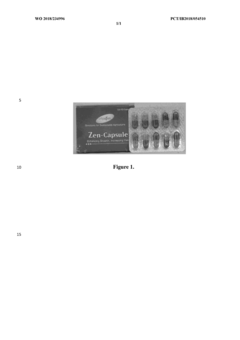
Biofertilizer capsules for integrated nutrient management in crop plants
PatentWO2018234996A1
Innovation
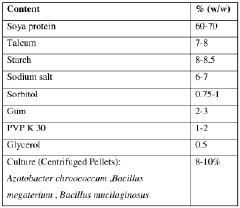
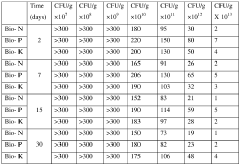
- Development of biofertilizer capsules with a microbial consortium encapsulated in a blister pack using carrier materials like soya protein, talcum, and glycerol, providing a stable and user-friendly delivery system with a shelf life of at least 24 months and high CFU count, ensuring effective nutrient availability and reduced contamination.
Method of producing a biofertilizer comprising fermentation in the solid state, immobilization by means of allophane nanoparticles and renewed fermentation, and biofertilizer
PatentWO2015100513A1
Innovation
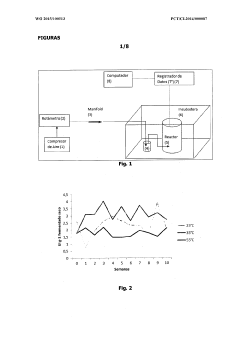
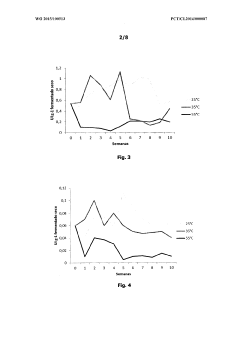
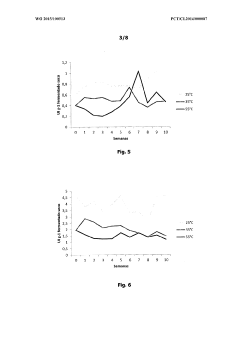
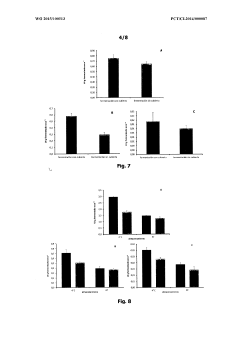
- A biofertilizer process involving solid-state fermentation, enzyme immobilization using allophan nanoparticles, and a second fermentation stage to produce and encapsulate enzymes like phosphatases, sulfastases, and glutaminases, which are then combined with organic substrates and beneficial microorganisms to create a controlled release of nutrients matching plant needs.
Environmental Impact Assessment
The environmental impact assessment of biofertilizers is a critical aspect of their development and implementation. Biofertilizers, as eco-friendly alternatives to chemical fertilizers, offer significant potential for sustainable agriculture. However, their widespread adoption necessitates a comprehensive evaluation of their environmental effects.
One of the primary environmental benefits of biofertilizers is their ability to reduce soil and water pollution. Unlike chemical fertilizers, which can lead to nutrient runoff and eutrophication of water bodies, biofertilizers release nutrients gradually, minimizing leaching and environmental contamination. This characteristic contributes to improved soil and water quality, supporting healthier ecosystems in agricultural landscapes.
Biofertilizers also play a crucial role in enhancing soil structure and fertility. By promoting the growth of beneficial microorganisms, they improve soil aggregation, water retention capacity, and organic matter content. This leads to increased soil biodiversity and resilience, contributing to long-term soil health and productivity.
The use of biofertilizers can significantly reduce greenhouse gas emissions associated with agriculture. Chemical fertilizer production is energy-intensive and contributes to carbon dioxide emissions. In contrast, biofertilizers require less energy for production and application, resulting in a lower carbon footprint. Additionally, some biofertilizers, such as those containing nitrogen-fixing bacteria, can reduce the need for synthetic nitrogen fertilizers, further decreasing greenhouse gas emissions.
However, the environmental impact of biofertilizers is not uniformly positive. The introduction of non-native microorganisms through biofertilizers may potentially disrupt local microbial communities. This risk necessitates careful screening and testing of biofertilizer formulations to ensure they do not negatively impact indigenous soil microbiota or introduce pathogenic organisms.
The production and application methods of biofertilizers also warrant consideration in environmental impact assessments. While generally less resource-intensive than chemical fertilizers, large-scale production of biofertilizers may still have environmental implications, such as energy consumption and waste generation. Optimizing production processes and developing efficient application techniques are essential to maximize environmental benefits.
Long-term studies on the ecological effects of biofertilizers are crucial. While short-term benefits are well-documented, the cumulative impact of prolonged biofertilizer use on soil ecosystems, nutrient cycling, and plant-microbe interactions requires further investigation. Such research is vital for developing sustainable agricultural practices that balance productivity with environmental conservation.
In conclusion, the environmental impact assessment of biofertilizers reveals a predominantly positive outlook, with significant potential for reducing agricultural pollution and enhancing soil health. However, careful consideration of potential risks and ongoing research are necessary to ensure their optimal and sustainable use in diverse agricultural systems.
One of the primary environmental benefits of biofertilizers is their ability to reduce soil and water pollution. Unlike chemical fertilizers, which can lead to nutrient runoff and eutrophication of water bodies, biofertilizers release nutrients gradually, minimizing leaching and environmental contamination. This characteristic contributes to improved soil and water quality, supporting healthier ecosystems in agricultural landscapes.
Biofertilizers also play a crucial role in enhancing soil structure and fertility. By promoting the growth of beneficial microorganisms, they improve soil aggregation, water retention capacity, and organic matter content. This leads to increased soil biodiversity and resilience, contributing to long-term soil health and productivity.
The use of biofertilizers can significantly reduce greenhouse gas emissions associated with agriculture. Chemical fertilizer production is energy-intensive and contributes to carbon dioxide emissions. In contrast, biofertilizers require less energy for production and application, resulting in a lower carbon footprint. Additionally, some biofertilizers, such as those containing nitrogen-fixing bacteria, can reduce the need for synthetic nitrogen fertilizers, further decreasing greenhouse gas emissions.
However, the environmental impact of biofertilizers is not uniformly positive. The introduction of non-native microorganisms through biofertilizers may potentially disrupt local microbial communities. This risk necessitates careful screening and testing of biofertilizer formulations to ensure they do not negatively impact indigenous soil microbiota or introduce pathogenic organisms.
The production and application methods of biofertilizers also warrant consideration in environmental impact assessments. While generally less resource-intensive than chemical fertilizers, large-scale production of biofertilizers may still have environmental implications, such as energy consumption and waste generation. Optimizing production processes and developing efficient application techniques are essential to maximize environmental benefits.
Long-term studies on the ecological effects of biofertilizers are crucial. While short-term benefits are well-documented, the cumulative impact of prolonged biofertilizer use on soil ecosystems, nutrient cycling, and plant-microbe interactions requires further investigation. Such research is vital for developing sustainable agricultural practices that balance productivity with environmental conservation.
In conclusion, the environmental impact assessment of biofertilizers reveals a predominantly positive outlook, with significant potential for reducing agricultural pollution and enhancing soil health. However, careful consideration of potential risks and ongoing research are necessary to ensure their optimal and sustainable use in diverse agricultural systems.
Regulatory Framework for Biofertilizers
The regulatory framework for biofertilizers plays a crucial role in ensuring the safety, efficacy, and sustainable use of these biological products in agriculture. As the global demand for environmentally friendly agricultural practices grows, governments and international organizations are developing comprehensive regulations to govern the production, distribution, and application of biofertilizers.
In many countries, biofertilizers are regulated under broader fertilizer or soil amendment laws. However, there is an increasing trend towards establishing specific regulatory frameworks for biofertilizers due to their unique biological nature. These frameworks typically address product registration, quality control, labeling requirements, and safety assessments.
The registration process for biofertilizers often involves submitting detailed information about the microbial strains used, their genetic stability, production methods, and efficacy data. Regulatory bodies may require field trials to demonstrate the product's effectiveness and environmental impact. Quality control measures are essential to ensure consistent product performance and prevent contamination with harmful microorganisms.
Labeling requirements for biofertilizers are designed to provide farmers with accurate information about the product's composition, application methods, and expected benefits. Many regulatory frameworks mandate that labels include the types and concentrations of beneficial microorganisms, storage conditions, and expiration dates.
Safety assessments for biofertilizers focus on potential risks to human health, non-target organisms, and the environment. Regulators may require data on the persistence of introduced microorganisms in soil and their potential to transfer genetic material to indigenous microbes.
International harmonization of biofertilizer regulations is an ongoing effort to facilitate global trade and ensure consistent standards. Organizations like the Food and Agriculture Organization (FAO) and the International Plant Protection Convention (IPPC) are working to develop guidelines for the safe and effective use of biofertilizers across borders.
Challenges in regulating biofertilizers include the need for standardized testing methods to assess product quality and efficacy, as well as the development of appropriate risk assessment protocols for novel microbial strains. Additionally, regulators must balance the need for rigorous safety evaluations with the desire to promote innovation in this rapidly evolving field.
As the biofertilizer industry continues to grow, regulatory frameworks are likely to evolve to address emerging technologies and new scientific insights. This may include regulations specific to genetically modified microorganisms used in biofertilizers or guidelines for the use of nanotechnology in biofertilizer formulations.
In many countries, biofertilizers are regulated under broader fertilizer or soil amendment laws. However, there is an increasing trend towards establishing specific regulatory frameworks for biofertilizers due to their unique biological nature. These frameworks typically address product registration, quality control, labeling requirements, and safety assessments.
The registration process for biofertilizers often involves submitting detailed information about the microbial strains used, their genetic stability, production methods, and efficacy data. Regulatory bodies may require field trials to demonstrate the product's effectiveness and environmental impact. Quality control measures are essential to ensure consistent product performance and prevent contamination with harmful microorganisms.
Labeling requirements for biofertilizers are designed to provide farmers with accurate information about the product's composition, application methods, and expected benefits. Many regulatory frameworks mandate that labels include the types and concentrations of beneficial microorganisms, storage conditions, and expiration dates.
Safety assessments for biofertilizers focus on potential risks to human health, non-target organisms, and the environment. Regulators may require data on the persistence of introduced microorganisms in soil and their potential to transfer genetic material to indigenous microbes.
International harmonization of biofertilizer regulations is an ongoing effort to facilitate global trade and ensure consistent standards. Organizations like the Food and Agriculture Organization (FAO) and the International Plant Protection Convention (IPPC) are working to develop guidelines for the safe and effective use of biofertilizers across borders.
Challenges in regulating biofertilizers include the need for standardized testing methods to assess product quality and efficacy, as well as the development of appropriate risk assessment protocols for novel microbial strains. Additionally, regulators must balance the need for rigorous safety evaluations with the desire to promote innovation in this rapidly evolving field.
As the biofertilizer industry continues to grow, regulatory frameworks are likely to evolve to address emerging technologies and new scientific insights. This may include regulations specific to genetically modified microorganisms used in biofertilizers or guidelines for the use of nanotechnology in biofertilizer formulations.
Unlock deeper insights with PatSnap Eureka Quick Research — get a full tech report to explore trends and direct your research. Try now!
Generate Your Research Report Instantly with AI Agent
Supercharge your innovation with PatSnap Eureka AI Agent Platform!