Challenges in Compacted Graphite Iron Alloy Development
APR 2, 20269 MIN READ
Generate Your Research Report Instantly with AI Agent
Patsnap Eureka helps you evaluate technical feasibility & market potential.
CGI Alloy Development Background and Technical Objectives
Compacted Graphite Iron (CGI) represents a critical advancement in cast iron metallurgy, emerging from the need to bridge the performance gap between conventional gray iron and ductile iron. This specialized alloy was first developed in the 1960s as engineers sought materials that could deliver superior mechanical properties while maintaining the excellent thermal conductivity and machinability characteristics inherent to cast iron systems.
The evolution of CGI technology stems from fundamental limitations observed in traditional cast iron applications, particularly in high-stress automotive and industrial components. Gray iron, while offering excellent castability and thermal properties, lacks sufficient tensile strength and fatigue resistance for demanding applications. Conversely, ductile iron provides enhanced mechanical properties but compromises thermal conductivity, creating challenges in applications requiring efficient heat dissipation.
CGI development has been driven by increasingly stringent performance requirements across multiple industries. The automotive sector, in particular, has demanded materials capable of withstanding higher combustion pressures, elevated operating temperatures, and extended service life while maintaining dimensional stability. These requirements have intensified with the push toward more efficient engines and reduced emissions standards.
The primary technical objective in CGI alloy development centers on achieving optimal graphite morphology control. The characteristic vermicular or worm-like graphite structure must be precisely maintained within narrow compositional and processing windows. This requires sophisticated understanding of nucleation and growth mechanisms, as well as precise control of alloying elements and treatment processes.
Current development goals focus on expanding the operational envelope of CGI alloys through enhanced thermal fatigue resistance, improved high-temperature strength retention, and better oxidation resistance. Advanced metallurgical techniques aim to optimize the balance between mechanical properties and thermal characteristics while ensuring consistent reproducibility in industrial production environments.
Future technical objectives include developing CGI variants with tailored properties for specific applications, incorporating advanced alloying strategies, and establishing robust quality control methodologies. These efforts target achieving predictable microstructural outcomes while minimizing production variability and enhancing overall material performance reliability.
The evolution of CGI technology stems from fundamental limitations observed in traditional cast iron applications, particularly in high-stress automotive and industrial components. Gray iron, while offering excellent castability and thermal properties, lacks sufficient tensile strength and fatigue resistance for demanding applications. Conversely, ductile iron provides enhanced mechanical properties but compromises thermal conductivity, creating challenges in applications requiring efficient heat dissipation.
CGI development has been driven by increasingly stringent performance requirements across multiple industries. The automotive sector, in particular, has demanded materials capable of withstanding higher combustion pressures, elevated operating temperatures, and extended service life while maintaining dimensional stability. These requirements have intensified with the push toward more efficient engines and reduced emissions standards.
The primary technical objective in CGI alloy development centers on achieving optimal graphite morphology control. The characteristic vermicular or worm-like graphite structure must be precisely maintained within narrow compositional and processing windows. This requires sophisticated understanding of nucleation and growth mechanisms, as well as precise control of alloying elements and treatment processes.
Current development goals focus on expanding the operational envelope of CGI alloys through enhanced thermal fatigue resistance, improved high-temperature strength retention, and better oxidation resistance. Advanced metallurgical techniques aim to optimize the balance between mechanical properties and thermal characteristics while ensuring consistent reproducibility in industrial production environments.
Future technical objectives include developing CGI variants with tailored properties for specific applications, incorporating advanced alloying strategies, and establishing robust quality control methodologies. These efforts target achieving predictable microstructural outcomes while minimizing production variability and enhancing overall material performance reliability.
Market Demand Analysis for Compacted Graphite Iron Applications
The automotive industry represents the largest and most dynamic market segment for compacted graphite iron applications, driven by stringent emission regulations and fuel efficiency requirements. Engine manufacturers increasingly demand materials that can withstand higher combustion pressures and temperatures while maintaining dimensional stability. CGI's superior thermal conductivity and mechanical properties make it particularly suitable for diesel engine blocks, cylinder heads, and exhaust manifolds in heavy-duty vehicles, commercial trucks, and high-performance passenger cars.
Heavy machinery and industrial equipment sectors demonstrate substantial growth potential for CGI applications. Construction equipment manufacturers require materials that can endure extreme operating conditions, including high stress loads, temperature fluctuations, and corrosive environments. CGI's enhanced fatigue resistance and thermal shock properties address these demanding requirements, particularly in hydraulic components, transmission housings, and structural elements of mining equipment.
The marine and power generation industries present emerging opportunities for CGI adoption. Marine engine manufacturers seek materials capable of withstanding saltwater corrosion while maintaining structural integrity under variable load conditions. Similarly, power generation equipment, including wind turbine components and generator housings, benefits from CGI's superior mechanical properties and vibration damping characteristics.
Market demand patterns reveal regional variations influenced by industrial development levels and regulatory frameworks. European markets show strong preference for CGI in automotive applications due to advanced emission standards, while North American demand focuses on heavy-duty commercial vehicles and industrial machinery. Asian markets, particularly China and India, demonstrate rapidly expanding demand across multiple sectors as manufacturing capabilities mature.
The growing emphasis on lightweight design without compromising strength creates additional market opportunities. CGI enables thinner wall sections compared to conventional gray iron while maintaining structural performance, supporting industry trends toward weight reduction and material efficiency. This characteristic proves particularly valuable in aerospace applications and high-performance automotive components where weight optimization directly impacts operational efficiency.
Supply chain considerations significantly influence market demand dynamics. The specialized production requirements for CGI, including precise alloy composition control and advanced metallurgical processes, create barriers to entry that affect market accessibility and pricing structures across different geographic regions and application sectors.
Heavy machinery and industrial equipment sectors demonstrate substantial growth potential for CGI applications. Construction equipment manufacturers require materials that can endure extreme operating conditions, including high stress loads, temperature fluctuations, and corrosive environments. CGI's enhanced fatigue resistance and thermal shock properties address these demanding requirements, particularly in hydraulic components, transmission housings, and structural elements of mining equipment.
The marine and power generation industries present emerging opportunities for CGI adoption. Marine engine manufacturers seek materials capable of withstanding saltwater corrosion while maintaining structural integrity under variable load conditions. Similarly, power generation equipment, including wind turbine components and generator housings, benefits from CGI's superior mechanical properties and vibration damping characteristics.
Market demand patterns reveal regional variations influenced by industrial development levels and regulatory frameworks. European markets show strong preference for CGI in automotive applications due to advanced emission standards, while North American demand focuses on heavy-duty commercial vehicles and industrial machinery. Asian markets, particularly China and India, demonstrate rapidly expanding demand across multiple sectors as manufacturing capabilities mature.
The growing emphasis on lightweight design without compromising strength creates additional market opportunities. CGI enables thinner wall sections compared to conventional gray iron while maintaining structural performance, supporting industry trends toward weight reduction and material efficiency. This characteristic proves particularly valuable in aerospace applications and high-performance automotive components where weight optimization directly impacts operational efficiency.
Supply chain considerations significantly influence market demand dynamics. The specialized production requirements for CGI, including precise alloy composition control and advanced metallurgical processes, create barriers to entry that affect market accessibility and pricing structures across different geographic regions and application sectors.
Current CGI Technology Status and Manufacturing Challenges
Compacted Graphite Iron (CGI) technology has reached a mature stage in foundry metallurgy, yet significant manufacturing challenges continue to impede widespread industrial adoption. Current CGI production relies on precise control of graphite morphology through carefully managed chemical composition and solidification parameters. The technology demands strict adherence to narrow processing windows, particularly in sulfur and oxygen content management, which directly influences the formation of compacted graphite structures rather than spheroidal or lamellar forms.
Modern CGI manufacturing processes utilize advanced inoculation techniques combined with magnesium treatment protocols. The typical production route involves controlled desulfurization followed by magnesium addition at levels significantly lower than those used in ductile iron production, typically ranging from 0.008% to 0.018%. This precise chemical balance requires sophisticated process control systems and real-time monitoring capabilities that many foundries struggle to implement consistently.
Temperature control represents another critical manufacturing challenge in current CGI production. The narrow solidification window demands maintaining metal temperatures within ±10°C during treatment and pouring operations. Variations beyond this range result in graphite morphology deviations, leading to compromised mechanical properties and increased scrap rates. Many foundries report difficulty achieving consistent temperature control across different casting sizes and geometries.
Quality assurance in CGI manufacturing faces substantial obstacles due to the sensitivity of graphite morphology to minor process variations. Current inspection methods rely heavily on metallographic analysis, which provides only post-production feedback rather than real-time process control. This limitation results in higher rejection rates and increased production costs compared to conventional gray iron manufacturing.
Mold design and gating system optimization present additional manufacturing complexities specific to CGI production. The unique solidification characteristics of compacted graphite iron require modified feeding strategies and riser designs compared to traditional cast iron grades. Current foundry practices often struggle with achieving uniform cooling rates across complex geometries, leading to inconsistent mechanical properties within individual castings.
Raw material consistency emerges as a persistent challenge in CGI manufacturing. The technology's sensitivity to trace elements necessitates stringent control over charge material composition, particularly regarding residual elements that can interfere with graphite compaction. Many suppliers face difficulties maintaining the required material specifications consistently, impacting production reliability and casting quality across different production batches.
Modern CGI manufacturing processes utilize advanced inoculation techniques combined with magnesium treatment protocols. The typical production route involves controlled desulfurization followed by magnesium addition at levels significantly lower than those used in ductile iron production, typically ranging from 0.008% to 0.018%. This precise chemical balance requires sophisticated process control systems and real-time monitoring capabilities that many foundries struggle to implement consistently.
Temperature control represents another critical manufacturing challenge in current CGI production. The narrow solidification window demands maintaining metal temperatures within ±10°C during treatment and pouring operations. Variations beyond this range result in graphite morphology deviations, leading to compromised mechanical properties and increased scrap rates. Many foundries report difficulty achieving consistent temperature control across different casting sizes and geometries.
Quality assurance in CGI manufacturing faces substantial obstacles due to the sensitivity of graphite morphology to minor process variations. Current inspection methods rely heavily on metallographic analysis, which provides only post-production feedback rather than real-time process control. This limitation results in higher rejection rates and increased production costs compared to conventional gray iron manufacturing.
Mold design and gating system optimization present additional manufacturing complexities specific to CGI production. The unique solidification characteristics of compacted graphite iron require modified feeding strategies and riser designs compared to traditional cast iron grades. Current foundry practices often struggle with achieving uniform cooling rates across complex geometries, leading to inconsistent mechanical properties within individual castings.
Raw material consistency emerges as a persistent challenge in CGI manufacturing. The technology's sensitivity to trace elements necessitates stringent control over charge material composition, particularly regarding residual elements that can interfere with graphite compaction. Many suppliers face difficulties maintaining the required material specifications consistently, impacting production reliability and casting quality across different production batches.
Existing CGI Production and Processing Solutions
01 Alloying elements for compacted graphite iron formation
Specific alloying elements are added to iron melts to promote the formation of compacted graphite structure. These elements include magnesium, cerium, calcium, and rare earth metals which act as nodularizing agents. The precise control of these elements' concentration is critical to achieve the desired compacted graphite morphology rather than spheroidal or flake graphite. The alloying composition typically includes controlled amounts of carbon, silicon, and trace elements to optimize the graphite shape and distribution.- Alloying elements for compacted graphite iron formation: Specific alloying elements are added to iron melts to promote the formation of compacted graphite structure. These elements include magnesium, cerium, calcium, and rare earth metals which act as nodularizing agents. The precise control of these elements' concentration is critical to achieve the desired compacted graphite morphology rather than spheroidal or flake graphite. The alloying composition typically includes controlled amounts of carbon, silicon, and trace elements to optimize the graphite shape and distribution.
- Inoculation and treatment methods for compacted graphite iron: Various inoculation and treatment processes are employed to control the graphite morphology in cast iron. These methods involve the addition of specific inoculants containing elements such as ferrosilicon, calcium-silicon, or barium-containing compounds to the molten metal. The treatment process parameters including temperature control, holding time, and addition sequence significantly influence the final graphite structure. Advanced treatment techniques may involve multi-stage inoculation or specialized ladle treatment procedures to ensure consistent compacted graphite formation.
- Mechanical properties enhancement of compacted graphite iron: The mechanical properties of compacted graphite iron can be enhanced through specific alloying strategies and heat treatment processes. Additions of elements such as copper, nickel, molybdenum, and tin can improve strength, hardness, and wear resistance. Heat treatment processes including austempering, quenching, and tempering are applied to achieve desired mechanical characteristics. The compacted graphite structure itself provides superior properties compared to gray iron, including higher tensile strength, improved fatigue resistance, and better thermal conductivity.
- Manufacturing processes for compacted graphite iron castings: Specialized manufacturing and casting processes are developed for producing compacted graphite iron components. These processes include precise control of melting conditions, pouring temperature, and mold design to ensure proper graphite formation. Advanced techniques involve the use of specific molding materials, gating systems, and cooling rates optimized for compacted graphite iron. Quality control measures including real-time monitoring of melt chemistry and thermal analysis are implemented to maintain consistent production of compacted graphite structure.
- Applications and component design using compacted graphite iron: Compacted graphite iron is utilized in various industrial applications requiring high strength and thermal properties. Common applications include engine blocks, cylinder heads, brake components, and exhaust manifolds where the material's superior thermal conductivity and mechanical strength are advantageous. Design considerations for components made from this material include optimization of section thickness, consideration of solidification characteristics, and exploitation of the material's unique combination of castability and performance properties. The material offers advantages over both gray iron and ductile iron in specific applications.
02 Inoculation and treatment methods for compacted graphite iron
Various inoculation and melt treatment processes are employed to control graphite morphology in cast iron. These methods involve adding specific inoculants containing elements such as ferrosilicon, calcium-silicon, or barium to the molten metal at controlled temperatures and timing. The treatment process may include multiple-stage additions and specific holding times to ensure proper graphite compaction. Post-inoculation techniques and ladle treatment procedures are also utilized to maintain the desired microstructure throughout the casting process.Expand Specific Solutions03 Mechanical properties enhancement through composition control
The mechanical properties of compacted graphite iron, including tensile strength, fatigue resistance, and thermal conductivity, are optimized through precise control of chemical composition. Specific ranges of carbon, silicon, manganese, copper, and other alloying elements are maintained to achieve desired strength levels while preserving machinability. The balance between these elements affects the matrix structure, which can be ferritic, pearlitic, or mixed, thereby influencing the final mechanical performance of the alloy.Expand Specific Solutions04 Manufacturing processes and casting techniques
Specialized manufacturing processes are developed for producing compacted graphite iron components with consistent quality. These include controlled melting practices, specific pouring temperatures, and mold design considerations. The casting process parameters such as cooling rate, section thickness, and solidification time are optimized to prevent defects and ensure uniform graphite distribution. Advanced techniques may involve continuous monitoring of melt chemistry and automated control systems to maintain process stability.Expand Specific Solutions05 Applications and performance characteristics in engine components
Compacted graphite iron alloys are specifically designed for high-performance applications, particularly in automotive engine blocks and cylinder heads. The material offers superior thermal fatigue resistance, higher strength-to-weight ratio, and better damping characteristics compared to conventional cast irons. These properties enable thinner wall sections, reduced component weight, and improved engine efficiency. The alloy's thermal conductivity and dimensional stability make it suitable for high-temperature applications where thermal cycling is critical.Expand Specific Solutions
Major Players in CGI Alloy and Foundry Industry
The compacted graphite iron (CGI) alloy development sector represents a mature yet evolving industry driven by automotive lightweighting demands and stringent emission regulations. The market demonstrates significant growth potential, particularly in diesel engine applications where CGI offers superior thermal conductivity and strength compared to conventional gray iron. Technology maturity varies considerably across key players, with established automotive suppliers like MAHLE International GmbH and Mercedes-Benz Group AG leading advanced CGI implementation in engine blocks and components. Traditional foundry specialists such as Magotteaux International SA and casting-focused companies like Changzhou Langrui Casting Co. Ltd. provide manufacturing expertise, while materials technology firms including JFE Steel Corp. and Wacker Chemie AG contribute metallurgical innovations. Research institutions like The University of Queensland and Indian Institute of Technology Bombay drive fundamental CGI science advancement, creating a competitive landscape characterized by vertical integration trends and increasing collaboration between OEMs, foundries, and materials suppliers.
NovaCast Technologies AB
Technical Solution: NovaCast Technologies specializes in advanced casting solutions for compacted graphite iron, developing proprietary techniques to address the critical challenges of melt treatment and process control. Their technology platform focuses on achieving consistent CGI microstructures through precise control of magnesium levels, sulfur content, and cooling rates during solidification. The company has developed specialized equipment and process monitoring systems that help foundries overcome the narrow processing window limitations of CGI, enabling more reliable production of components with the desired combination of strength, thermal conductivity, and machinability characteristics.
Strengths: Specialized casting technology expertise, focus on process optimization, innovative monitoring solutions. Weaknesses: Smaller scale operations, limited global market presence, dependency on foundry industry demand.
MAHLE International GmbH
Technical Solution: MAHLE has developed advanced compacted graphite iron (CGI) solutions specifically for automotive engine applications, focusing on cylinder blocks and heads that require superior thermal conductivity and mechanical strength. Their CGI technology incorporates precise magnesium and cerium treatment processes to achieve optimal graphite morphology, resulting in materials with tensile strengths exceeding 300 MPa while maintaining excellent machinability. The company has implemented specialized casting techniques including controlled cooling rates and inoculation practices to ensure consistent microstructure formation and minimize carbide formation in heavy sections.
Strengths: Extensive automotive industry experience, proven CGI applications in high-performance engines, strong R&D capabilities. Weaknesses: Limited diversification beyond automotive sector, high dependency on traditional combustion engine market.
Core Innovations in CGI Microstructure Control Patents
Process for producton of compacted graphite iron
PatentInactiveUS20120090803A1
Innovation
- Adjusting the cerium level based on sulphur content and adding cerium to the base iron before casting, while using a magnesium-lanthanum alloy in the mould to control graphite structure, reducing the need for magnesium and minimizing defects by late addition of lanthanum.
Process for Production of Compacted Graphite Iron
PatentInactiveUS20090183848A1
Innovation
- Adjusting the cerium level based on sulphur content and adding cerium to the oven or ladle, while using a magnesium alloy with lanthanum in the mould to minimize magnesium addition and reduce defects, with a treatment alloy composition of 3-6% magnesium and 0.5-1.5% lanthanum, and optionally including cerium alloy with rare earth elements.
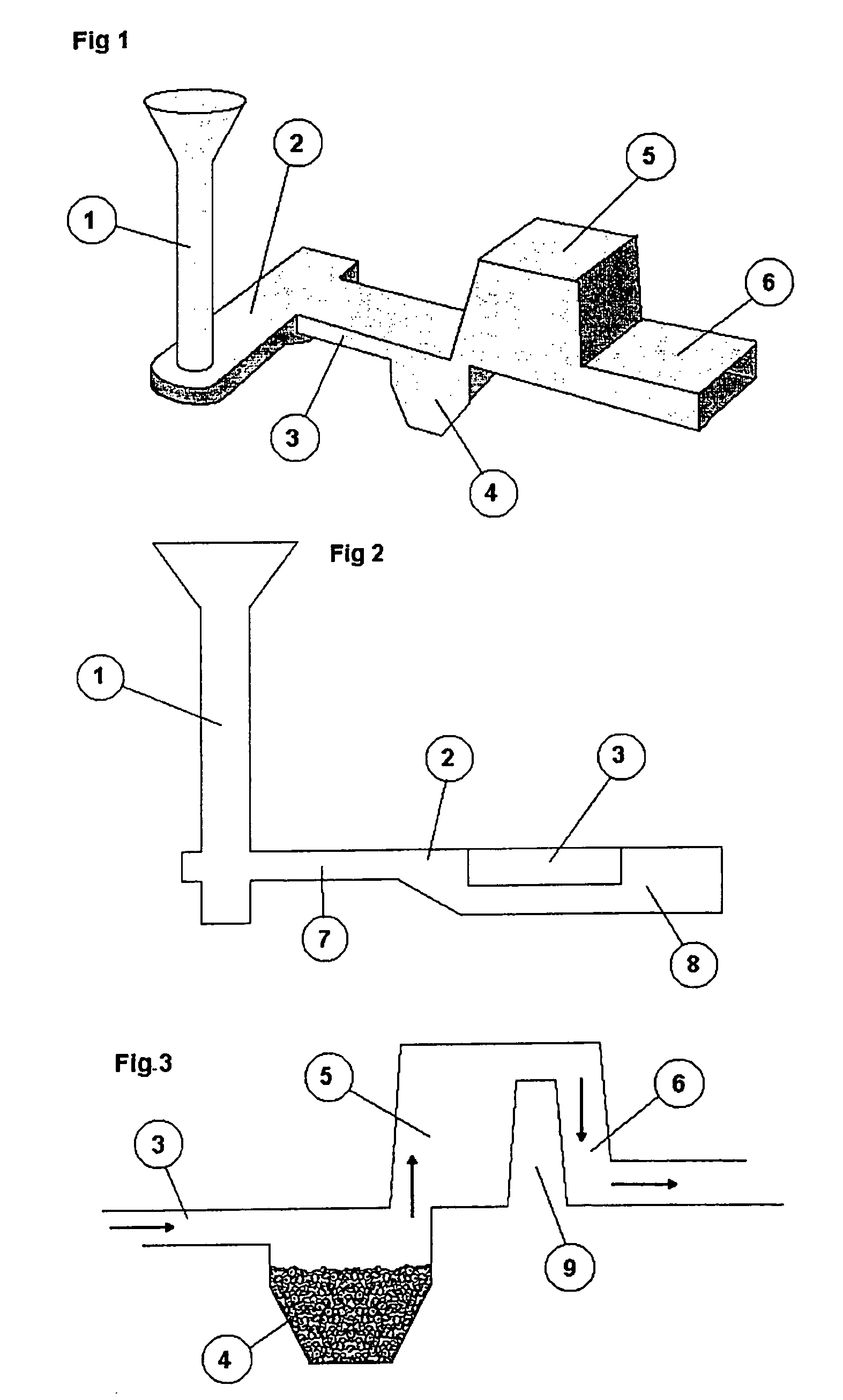
Environmental Regulations Impact on CGI Manufacturing
Environmental regulations have emerged as a critical driving force reshaping the manufacturing landscape for Compacted Graphite Iron (CGI) alloys. The implementation of increasingly stringent emission standards, particularly in automotive and industrial sectors, has fundamentally altered production methodologies and quality requirements for CGI components. These regulatory frameworks primarily focus on reducing greenhouse gas emissions, minimizing particulate matter release, and controlling hazardous substance usage throughout the manufacturing process.
The European Union's REACH regulation and similar frameworks in North America have imposed strict limitations on the use of certain alloying elements and processing chemicals traditionally employed in CGI production. Manufacturers must now navigate complex compliance requirements regarding the handling of magnesium-based nodularizing agents and rare earth elements, which are essential for achieving the desired graphite morphology in CGI alloys. These restrictions have necessitated the development of alternative processing routes and the implementation of advanced containment systems.
Air quality regulations have particularly impacted foundry operations, requiring substantial investments in emission control technologies. Modern CGI manufacturing facilities must incorporate sophisticated filtration systems, thermal oxidizers, and dust collection equipment to meet particulate emission limits. The installation of these systems has increased capital expenditure requirements by approximately 15-25% compared to traditional foundry setups, while also introducing ongoing operational costs for maintenance and energy consumption.
Waste management regulations have transformed material handling practices in CGI production. The classification of foundry sand and slag as potentially hazardous waste has driven the adoption of closed-loop recycling systems and alternative sand reclamation technologies. Manufacturers are increasingly investing in advanced sand regeneration equipment and developing partnerships with specialized waste treatment facilities to ensure compliance while maintaining cost-effectiveness.
The regulatory emphasis on lifecycle assessment and carbon footprint reduction has accelerated the adoption of energy-efficient melting technologies in CGI production. Induction furnaces with advanced power management systems and waste heat recovery mechanisms have become standard equipment, driven by both regulatory compliance and economic incentives. These technological upgrades have resulted in energy consumption reductions of 20-30% while simultaneously improving process control and product consistency.
Regulatory compliance has also influenced supply chain management, with manufacturers requiring detailed environmental certifications from raw material suppliers. This has led to the development of traceability systems that track the environmental impact of each component throughout the production process, ensuring adherence to regulatory requirements while maintaining product quality standards.
The European Union's REACH regulation and similar frameworks in North America have imposed strict limitations on the use of certain alloying elements and processing chemicals traditionally employed in CGI production. Manufacturers must now navigate complex compliance requirements regarding the handling of magnesium-based nodularizing agents and rare earth elements, which are essential for achieving the desired graphite morphology in CGI alloys. These restrictions have necessitated the development of alternative processing routes and the implementation of advanced containment systems.
Air quality regulations have particularly impacted foundry operations, requiring substantial investments in emission control technologies. Modern CGI manufacturing facilities must incorporate sophisticated filtration systems, thermal oxidizers, and dust collection equipment to meet particulate emission limits. The installation of these systems has increased capital expenditure requirements by approximately 15-25% compared to traditional foundry setups, while also introducing ongoing operational costs for maintenance and energy consumption.
Waste management regulations have transformed material handling practices in CGI production. The classification of foundry sand and slag as potentially hazardous waste has driven the adoption of closed-loop recycling systems and alternative sand reclamation technologies. Manufacturers are increasingly investing in advanced sand regeneration equipment and developing partnerships with specialized waste treatment facilities to ensure compliance while maintaining cost-effectiveness.
The regulatory emphasis on lifecycle assessment and carbon footprint reduction has accelerated the adoption of energy-efficient melting technologies in CGI production. Induction furnaces with advanced power management systems and waste heat recovery mechanisms have become standard equipment, driven by both regulatory compliance and economic incentives. These technological upgrades have resulted in energy consumption reductions of 20-30% while simultaneously improving process control and product consistency.
Regulatory compliance has also influenced supply chain management, with manufacturers requiring detailed environmental certifications from raw material suppliers. This has led to the development of traceability systems that track the environmental impact of each component throughout the production process, ensuring adherence to regulatory requirements while maintaining product quality standards.
Quality Standards and Testing Methods for CGI Products
The establishment of comprehensive quality standards for Compacted Graphite Iron (CGI) products represents a critical foundation for ensuring consistent performance and reliability across diverse industrial applications. Current international standards, including ASTM A842 and ISO 16112, provide fundamental frameworks for CGI classification based on tensile strength, elongation, and hardness parameters. These standards typically categorize CGI grades from CGI-300 to CGI-500, with numerical designations indicating minimum tensile strength in MPa.
Microstructural evaluation serves as the cornerstone of CGI quality assessment, requiring specialized metallographic techniques to quantify graphite morphology and matrix characteristics. The vermicular graphite content must typically exceed 80% of total graphite volume, with nodular graphite limited to less than 20% to maintain optimal thermal conductivity properties. Advanced image analysis systems utilizing automated particle counting and shape factor calculations have become essential tools for accurate microstructural characterization.
Mechanical property testing protocols for CGI products encompass tensile testing, fatigue resistance evaluation, and thermal shock assessment. Tensile specimens must conform to standardized geometries, with testing conducted at ambient temperature following ISO 1083 guidelines. Fatigue testing requires specialized procedures due to CGI's unique crack propagation characteristics, often employing rotating bending or axial loading configurations with stress ratios ranging from -1 to 0.1.
Non-destructive testing methods play increasingly important roles in CGI quality assurance, particularly ultrasonic testing for internal defect detection and magnetic particle inspection for surface discontinuities. Thermal conductivity measurement has emerged as a critical quality parameter, typically assessed using laser flash analysis or steady-state comparative methods to verify CGI's enhanced heat dissipation capabilities compared to conventional gray iron.
Quality control sampling strategies must account for CGI's sensitivity to processing variations, requiring representative sampling from different casting sections and heat treatments. Statistical process control implementation helps maintain consistent quality levels while identifying process drift before defective products are produced.
Microstructural evaluation serves as the cornerstone of CGI quality assessment, requiring specialized metallographic techniques to quantify graphite morphology and matrix characteristics. The vermicular graphite content must typically exceed 80% of total graphite volume, with nodular graphite limited to less than 20% to maintain optimal thermal conductivity properties. Advanced image analysis systems utilizing automated particle counting and shape factor calculations have become essential tools for accurate microstructural characterization.
Mechanical property testing protocols for CGI products encompass tensile testing, fatigue resistance evaluation, and thermal shock assessment. Tensile specimens must conform to standardized geometries, with testing conducted at ambient temperature following ISO 1083 guidelines. Fatigue testing requires specialized procedures due to CGI's unique crack propagation characteristics, often employing rotating bending or axial loading configurations with stress ratios ranging from -1 to 0.1.
Non-destructive testing methods play increasingly important roles in CGI quality assurance, particularly ultrasonic testing for internal defect detection and magnetic particle inspection for surface discontinuities. Thermal conductivity measurement has emerged as a critical quality parameter, typically assessed using laser flash analysis or steady-state comparative methods to verify CGI's enhanced heat dissipation capabilities compared to conventional gray iron.
Quality control sampling strategies must account for CGI's sensitivity to processing variations, requiring representative sampling from different casting sections and heat treatments. Statistical process control implementation helps maintain consistent quality levels while identifying process drift before defective products are produced.
Unlock deeper insights with Patsnap Eureka Quick Research — get a full tech report to explore trends and direct your research. Try now!
Generate Your Research Report Instantly with AI Agent
Supercharge your innovation with Patsnap Eureka AI Agent Platform!