Challenges in Pyrolysis for Bulk Material Processing
MAR 9, 20269 MIN READ
Generate Your Research Report Instantly with AI Agent
Patsnap Eureka helps you evaluate technical feasibility & market potential.
Pyrolysis Technology Background and Bulk Processing Goals
Pyrolysis technology represents a thermochemical decomposition process that has evolved significantly since its early applications in charcoal production and wood gasification during the 18th and 19th centuries. The fundamental principle involves heating organic materials in an oxygen-limited or oxygen-free environment, typically at temperatures ranging from 400°C to 800°C, causing molecular breakdown into smaller compounds including gases, liquids, and solid residues.
The historical development of pyrolysis can be traced through several distinct phases. Initial applications focused primarily on small-scale batch processing for producing charcoal and wood tar. The industrial revolution marked a pivotal transition toward larger-scale operations, particularly in coal carbonization for steel production. The 20th century witnessed substantial technological advancement with the introduction of continuous processing systems and improved reactor designs, enabling more efficient heat transfer and product separation.
Modern pyrolysis technology has expanded beyond traditional feedstocks to encompass diverse materials including agricultural residues, municipal solid waste, plastic waste, and biomass. This diversification has driven the development of specialized reactor configurations such as fluidized bed reactors, rotary kilns, and auger reactors, each optimized for specific material characteristics and processing requirements.
The transition toward bulk material processing represents a contemporary evolution driven by increasing waste generation, circular economy principles, and renewable energy demands. Current technological objectives focus on achieving consistent product quality, maximizing energy recovery efficiency, and minimizing environmental impact through advanced process control and emission management systems.
Contemporary bulk processing goals emphasize scalability, economic viability, and environmental sustainability. Key technical targets include achieving processing capacities exceeding 100 tons per day, maintaining product yield consistency within 5% variation, and attaining energy self-sufficiency through integrated heat recovery systems. Additionally, modern pyrolysis systems aim to handle heterogeneous feedstock compositions while maintaining operational stability and product specification compliance.
The integration of digital monitoring systems, advanced materials for reactor construction, and sophisticated gas cleaning technologies represents the current frontier in pyrolysis development. These advancements enable real-time process optimization, extended equipment lifespan, and compliance with increasingly stringent environmental regulations, positioning pyrolysis as a viable solution for large-scale waste-to-energy and resource recovery applications.
The historical development of pyrolysis can be traced through several distinct phases. Initial applications focused primarily on small-scale batch processing for producing charcoal and wood tar. The industrial revolution marked a pivotal transition toward larger-scale operations, particularly in coal carbonization for steel production. The 20th century witnessed substantial technological advancement with the introduction of continuous processing systems and improved reactor designs, enabling more efficient heat transfer and product separation.
Modern pyrolysis technology has expanded beyond traditional feedstocks to encompass diverse materials including agricultural residues, municipal solid waste, plastic waste, and biomass. This diversification has driven the development of specialized reactor configurations such as fluidized bed reactors, rotary kilns, and auger reactors, each optimized for specific material characteristics and processing requirements.
The transition toward bulk material processing represents a contemporary evolution driven by increasing waste generation, circular economy principles, and renewable energy demands. Current technological objectives focus on achieving consistent product quality, maximizing energy recovery efficiency, and minimizing environmental impact through advanced process control and emission management systems.
Contemporary bulk processing goals emphasize scalability, economic viability, and environmental sustainability. Key technical targets include achieving processing capacities exceeding 100 tons per day, maintaining product yield consistency within 5% variation, and attaining energy self-sufficiency through integrated heat recovery systems. Additionally, modern pyrolysis systems aim to handle heterogeneous feedstock compositions while maintaining operational stability and product specification compliance.
The integration of digital monitoring systems, advanced materials for reactor construction, and sophisticated gas cleaning technologies represents the current frontier in pyrolysis development. These advancements enable real-time process optimization, extended equipment lifespan, and compliance with increasingly stringent environmental regulations, positioning pyrolysis as a viable solution for large-scale waste-to-energy and resource recovery applications.
Market Demand for Large-Scale Pyrolysis Applications
The global waste management crisis has created unprecedented demand for large-scale pyrolysis applications across multiple industrial sectors. Municipal solid waste generation continues to escalate worldwide, with traditional disposal methods reaching capacity limits and facing increasing environmental restrictions. This scenario has positioned pyrolysis technology as a critical solution for converting waste streams into valuable products while addressing environmental concerns.
Industrial sectors are driving substantial demand for bulk pyrolysis processing capabilities. The plastics industry faces mounting pressure to address end-of-life plastic waste, creating opportunities for chemical recycling through pyrolysis. Tire manufacturers and automotive companies seek sustainable solutions for managing millions of waste tires annually, while agricultural sectors require efficient processing methods for biomass residues and crop waste.
Energy recovery applications represent a significant market driver for large-scale pyrolysis systems. The technology enables conversion of various organic waste materials into synthetic fuels, biochar, and chemical feedstocks, supporting circular economy initiatives. Power generation companies and fuel producers are increasingly interested in pyrolysis-derived products as alternative energy sources and chemical precursors.
Regulatory frameworks worldwide are accelerating market demand through waste diversion mandates and carbon reduction targets. Extended producer responsibility legislation requires manufacturers to manage product end-of-life, creating market pull for scalable pyrolysis solutions. Environmental regulations limiting landfill disposal and incineration are forcing waste management companies to seek alternative processing technologies.
The chemical industry presents substantial market potential for pyrolysis applications in feedstock recovery and resource optimization. Large-scale operations can process mixed waste streams to recover valuable chemicals and materials, reducing dependence on virgin raw materials. This demand is particularly strong in regions with limited natural resources or high raw material costs.
Economic factors are shaping market demand patterns for bulk pyrolysis processing. Rising landfill costs, carbon pricing mechanisms, and volatile fossil fuel prices make pyrolysis-derived products increasingly competitive. Industrial facilities seek integrated waste-to-energy solutions that can handle large volumes while generating revenue streams from recovered materials and energy products.
Geographic demand varies significantly based on waste generation patterns, regulatory environments, and industrial infrastructure. Developed economies show strong demand for advanced pyrolysis systems capable of processing complex waste streams, while emerging markets focus on cost-effective solutions for managing rapidly growing waste volumes.
Industrial sectors are driving substantial demand for bulk pyrolysis processing capabilities. The plastics industry faces mounting pressure to address end-of-life plastic waste, creating opportunities for chemical recycling through pyrolysis. Tire manufacturers and automotive companies seek sustainable solutions for managing millions of waste tires annually, while agricultural sectors require efficient processing methods for biomass residues and crop waste.
Energy recovery applications represent a significant market driver for large-scale pyrolysis systems. The technology enables conversion of various organic waste materials into synthetic fuels, biochar, and chemical feedstocks, supporting circular economy initiatives. Power generation companies and fuel producers are increasingly interested in pyrolysis-derived products as alternative energy sources and chemical precursors.
Regulatory frameworks worldwide are accelerating market demand through waste diversion mandates and carbon reduction targets. Extended producer responsibility legislation requires manufacturers to manage product end-of-life, creating market pull for scalable pyrolysis solutions. Environmental regulations limiting landfill disposal and incineration are forcing waste management companies to seek alternative processing technologies.
The chemical industry presents substantial market potential for pyrolysis applications in feedstock recovery and resource optimization. Large-scale operations can process mixed waste streams to recover valuable chemicals and materials, reducing dependence on virgin raw materials. This demand is particularly strong in regions with limited natural resources or high raw material costs.
Economic factors are shaping market demand patterns for bulk pyrolysis processing. Rising landfill costs, carbon pricing mechanisms, and volatile fossil fuel prices make pyrolysis-derived products increasingly competitive. Industrial facilities seek integrated waste-to-energy solutions that can handle large volumes while generating revenue streams from recovered materials and energy products.
Geographic demand varies significantly based on waste generation patterns, regulatory environments, and industrial infrastructure. Developed economies show strong demand for advanced pyrolysis systems capable of processing complex waste streams, while emerging markets focus on cost-effective solutions for managing rapidly growing waste volumes.
Current State and Challenges in Bulk Pyrolysis Systems
Bulk pyrolysis systems currently operate across multiple scales, from laboratory-scale reactors processing kilograms per hour to industrial installations handling hundreds of tons daily. The technology has matured significantly in specific applications such as biomass conversion and plastic waste processing, with commercial plants demonstrating consistent operation for feedstock volumes exceeding 50,000 tons annually. However, scaling challenges persist as system complexity increases exponentially with throughput requirements.
Temperature uniformity represents one of the most critical technical barriers in bulk pyrolysis operations. Large-scale reactors struggle to maintain consistent thermal profiles across extensive material beds, leading to incomplete conversion and product quality variations. Current heating systems, including fluidized bed reactors and rotary kilns, face limitations in achieving uniform heat distribution when processing volumes exceed 10 tons per hour, resulting in temperature gradients that can span 50-100°C within the same reactor zone.
Heat transfer efficiency emerges as another fundamental constraint, particularly for heterogeneous feedstock materials with varying thermal conductivities. Bulk materials often exhibit poor heat penetration characteristics, creating hot spots near heating surfaces while leaving core regions underprocessed. This challenge intensifies with particle size variations and moisture content differences, common in waste streams and biomass feedstocks.
Mass transfer limitations significantly impact product yield and quality in large-scale systems. Volatile products generated during pyrolysis must navigate through dense material beds, leading to secondary reactions and tar formation. Current vapor extraction systems struggle with pressure drop management across bulk materials, often requiring compromise between residence time control and efficient product recovery.
Feedstock handling and preparation present substantial operational challenges for bulk processing systems. Material size reduction, moisture control, and contamination removal become increasingly complex and energy-intensive at industrial scales. Existing preprocessing technologies often consume 15-25% of total system energy, significantly impacting overall process economics.
Process control complexity escalates dramatically in bulk systems due to multiple interacting variables including feed rate variations, thermal lag effects, and residence time distributions. Current monitoring technologies provide limited real-time feedback on internal reactor conditions, forcing operators to rely on output quality measurements for process adjustments, resulting in significant material losses during optimization periods.
Economic viability remains constrained by high capital expenditure requirements and operational complexity. Current bulk pyrolysis installations require substantial infrastructure investments, with payback periods often exceeding 8-10 years due to maintenance costs and process inefficiencies inherent in scaling thermal conversion processes.
Temperature uniformity represents one of the most critical technical barriers in bulk pyrolysis operations. Large-scale reactors struggle to maintain consistent thermal profiles across extensive material beds, leading to incomplete conversion and product quality variations. Current heating systems, including fluidized bed reactors and rotary kilns, face limitations in achieving uniform heat distribution when processing volumes exceed 10 tons per hour, resulting in temperature gradients that can span 50-100°C within the same reactor zone.
Heat transfer efficiency emerges as another fundamental constraint, particularly for heterogeneous feedstock materials with varying thermal conductivities. Bulk materials often exhibit poor heat penetration characteristics, creating hot spots near heating surfaces while leaving core regions underprocessed. This challenge intensifies with particle size variations and moisture content differences, common in waste streams and biomass feedstocks.
Mass transfer limitations significantly impact product yield and quality in large-scale systems. Volatile products generated during pyrolysis must navigate through dense material beds, leading to secondary reactions and tar formation. Current vapor extraction systems struggle with pressure drop management across bulk materials, often requiring compromise between residence time control and efficient product recovery.
Feedstock handling and preparation present substantial operational challenges for bulk processing systems. Material size reduction, moisture control, and contamination removal become increasingly complex and energy-intensive at industrial scales. Existing preprocessing technologies often consume 15-25% of total system energy, significantly impacting overall process economics.
Process control complexity escalates dramatically in bulk systems due to multiple interacting variables including feed rate variations, thermal lag effects, and residence time distributions. Current monitoring technologies provide limited real-time feedback on internal reactor conditions, forcing operators to rely on output quality measurements for process adjustments, resulting in significant material losses during optimization periods.
Economic viability remains constrained by high capital expenditure requirements and operational complexity. Current bulk pyrolysis installations require substantial infrastructure investments, with payback periods often exceeding 8-10 years due to maintenance costs and process inefficiencies inherent in scaling thermal conversion processes.
Existing Solutions for Bulk Material Pyrolysis Processing
01 Pyrolysis reactor design and configuration
Various reactor designs and configurations have been developed to optimize pyrolysis processes. These include fluidized bed reactors, rotary kilns, and fixed bed reactors that enable efficient heat transfer and material processing. The reactor design significantly impacts the yield and quality of pyrolysis products by controlling residence time, temperature distribution, and material flow patterns.- Pyrolysis reactor design and configuration: Various reactor designs and configurations have been developed to optimize pyrolysis processes. These include fluidized bed reactors, rotary kilns, and fixed bed reactors that enable efficient heat transfer and material processing. The reactor design significantly impacts the yield and quality of pyrolysis products by controlling residence time, temperature distribution, and material flow patterns.
- Feedstock preparation and processing methods: Effective feedstock preparation is crucial for successful pyrolysis operations. This includes methods for sizing, drying, and pre-treating various materials such as biomass, plastics, or waste materials. Proper feedstock preparation ensures uniform heating, improves conversion efficiency, and enhances the quality of end products. Techniques may involve mechanical processing, thermal pre-treatment, or chemical modification of raw materials.
- Temperature control and heating systems: Precise temperature control is essential for pyrolysis processes to achieve desired product distributions. Advanced heating systems and temperature monitoring technologies enable optimal thermal conditions throughout the reactor. These systems may incorporate multiple heating zones, automated control mechanisms, and heat recovery systems to improve energy efficiency and process stability.
- Product separation and collection systems: Efficient separation and collection of pyrolysis products including gases, liquids, and solids are critical for process economics. Various separation technologies such as condensation systems, filtration units, and fractionation equipment are employed to isolate and purify different product streams. These systems maximize product recovery and enable the production of high-quality outputs suitable for various applications.
- Catalyst systems and process enhancement: Catalytic pyrolysis employs various catalysts to improve product selectivity, reduce operating temperatures, and enhance conversion rates. Catalyst systems can modify reaction pathways to favor specific products and improve overall process efficiency. The selection and application of appropriate catalysts depend on feedstock characteristics and desired product specifications.
02 Feedstock preparation and processing methods
Effective feedstock preparation is crucial for successful pyrolysis operations. This includes methods for sizing, drying, and pre-treating various materials such as biomass, plastics, or waste materials. Proper preparation ensures uniform heating, improved conversion efficiency, and better quality of end products. Techniques may involve grinding, screening, and moisture control to optimize the feedstock characteristics.Expand Specific Solutions03 Temperature control and heating systems
Precise temperature control is essential in pyrolysis processes to achieve desired product distributions. Advanced heating systems and temperature monitoring technologies enable optimal thermal conditions throughout the reactor. These systems may include external heating elements, heat recovery mechanisms, and multi-zone temperature control to maintain specific thermal profiles for different stages of pyrolysis.Expand Specific Solutions04 Product separation and collection systems
Efficient separation and collection of pyrolysis products including gases, liquids, and solids are critical for process economics. Various separation technologies such as condensers, cyclones, and filtration systems are employed to isolate and purify different product fractions. These systems enable the recovery of valuable products while managing by-products and emissions effectively.Expand Specific Solutions05 Catalyst integration and enhancement methods
Catalytic pyrolysis techniques utilize various catalysts to improve product selectivity and quality. Catalysts can be integrated into the reactor system to promote specific reactions, reduce operating temperatures, or enhance the formation of desired products. The selection and application of appropriate catalysts significantly influence the composition and properties of pyrolysis outputs.Expand Specific Solutions
Key Players in Bulk Pyrolysis Equipment Industry
The pyrolysis for bulk material processing sector represents an emerging yet rapidly evolving industry driven by increasing demand for waste-to-energy solutions and circular economy initiatives. The market demonstrates significant growth potential, particularly in chemical recycling and renewable energy applications. Technology maturity varies considerably across players, with established chemical giants like ExxonMobil Chemical Patents, BASF Corp., and Arkema France SA leveraging decades of process engineering expertise, while specialized firms such as Haffner Energy SA and Ensyn Renewables Inc focus on innovative pyrolysis technologies. Research institutions including Technical University of Denmark, Tongji University, and Institute of Process Engineering Chinese Academy of Sciences contribute fundamental research advancements. The competitive landscape shows a hybrid ecosystem where traditional petrochemical companies, emerging cleantech firms, and academic institutions collaborate to overcome technical challenges in scaling pyrolysis processes for commercial bulk material processing applications.
ExxonMobil Chemical Patents, Inc.
Technical Solution: ExxonMobil has developed advanced pyrolysis technologies for processing large volumes of plastic waste into chemical feedstocks. Their approach utilizes high-temperature thermal decomposition in oxygen-free environments, capable of handling mixed plastic streams at industrial scale. The company's pyrolysis process operates at temperatures between 400-900°C and incorporates proprietary catalyst systems to enhance product selectivity and yield. Their technology addresses key challenges in bulk material processing including feedstock preparation, heat transfer optimization, and product separation. The system is designed for continuous operation with automated feeding mechanisms and integrated vapor recovery systems to maximize efficiency in large-scale operations.
Strengths: Extensive industrial experience and proven scalability for bulk processing, strong integration with existing petrochemical infrastructure. Weaknesses: High energy consumption and significant capital investment requirements for large-scale implementation.
BASF Corp.
Technical Solution: BASF has developed ChemCycling technology that utilizes advanced pyrolysis for converting plastic waste into pyrolysis oil, which serves as raw material for new plastic production. Their process handles mixed plastic waste streams and operates at optimized temperature profiles to maximize liquid product yield while minimizing char formation. The technology incorporates sophisticated heat management systems and continuous feeding mechanisms to address bulk processing challenges. BASF's approach includes pre-treatment systems for feedstock preparation and advanced separation technologies for product purification. The process is designed to handle several thousand tons of plastic waste annually, addressing scalability challenges through modular reactor designs and integrated process control systems.
Strengths: Strong chemical expertise and established market presence, proven integration with existing production facilities. Weaknesses: Limited to specific plastic types and requires extensive pre-treatment of feedstock materials.
Core Innovations in Large-Scale Pyrolysis Reactor Design
Pyrolysis reactor with optimized reaction sequencing
PatentInactiveUS20180346817A1
Innovation
- A pyrolysis reactor design that uses heated inorganic heat carrier particles and a multi-layer coating system comprising enamel frit, sodium tetra-borate, titanium dioxide, and fluoroplastic to enhance thermal stability and prevent adhesion, combined with a downdraft gasification process for efficient carbonaceous material processing.
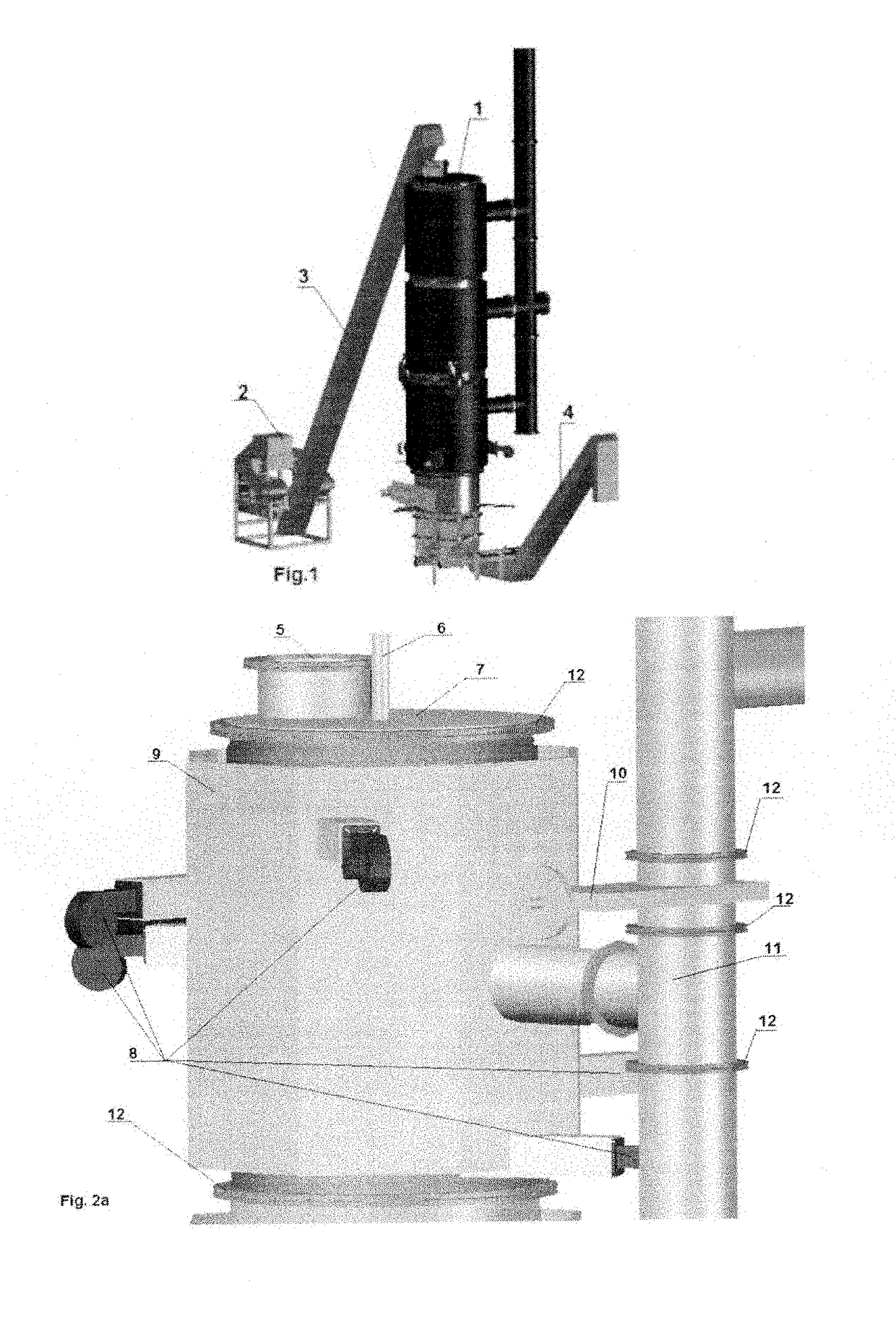
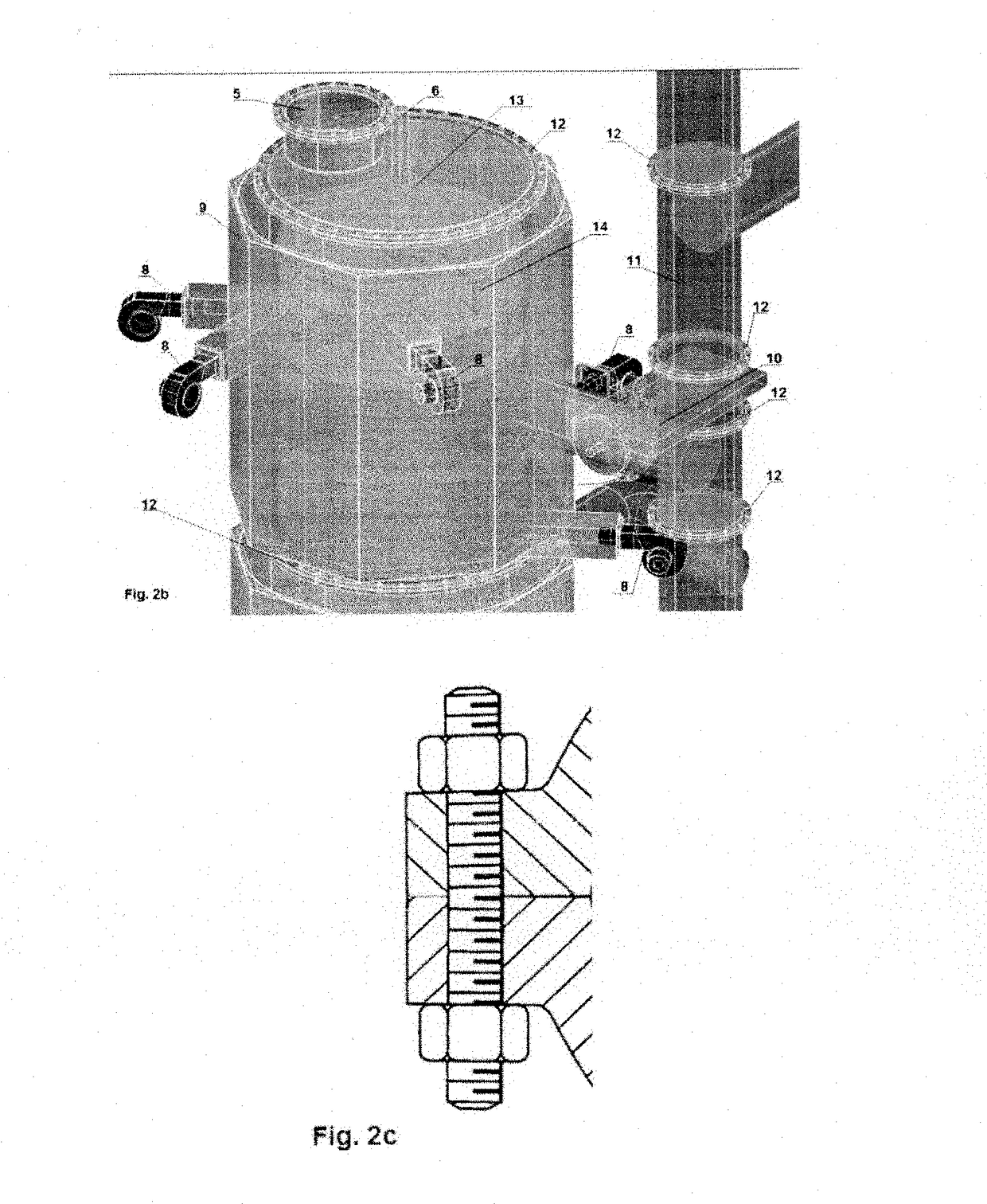
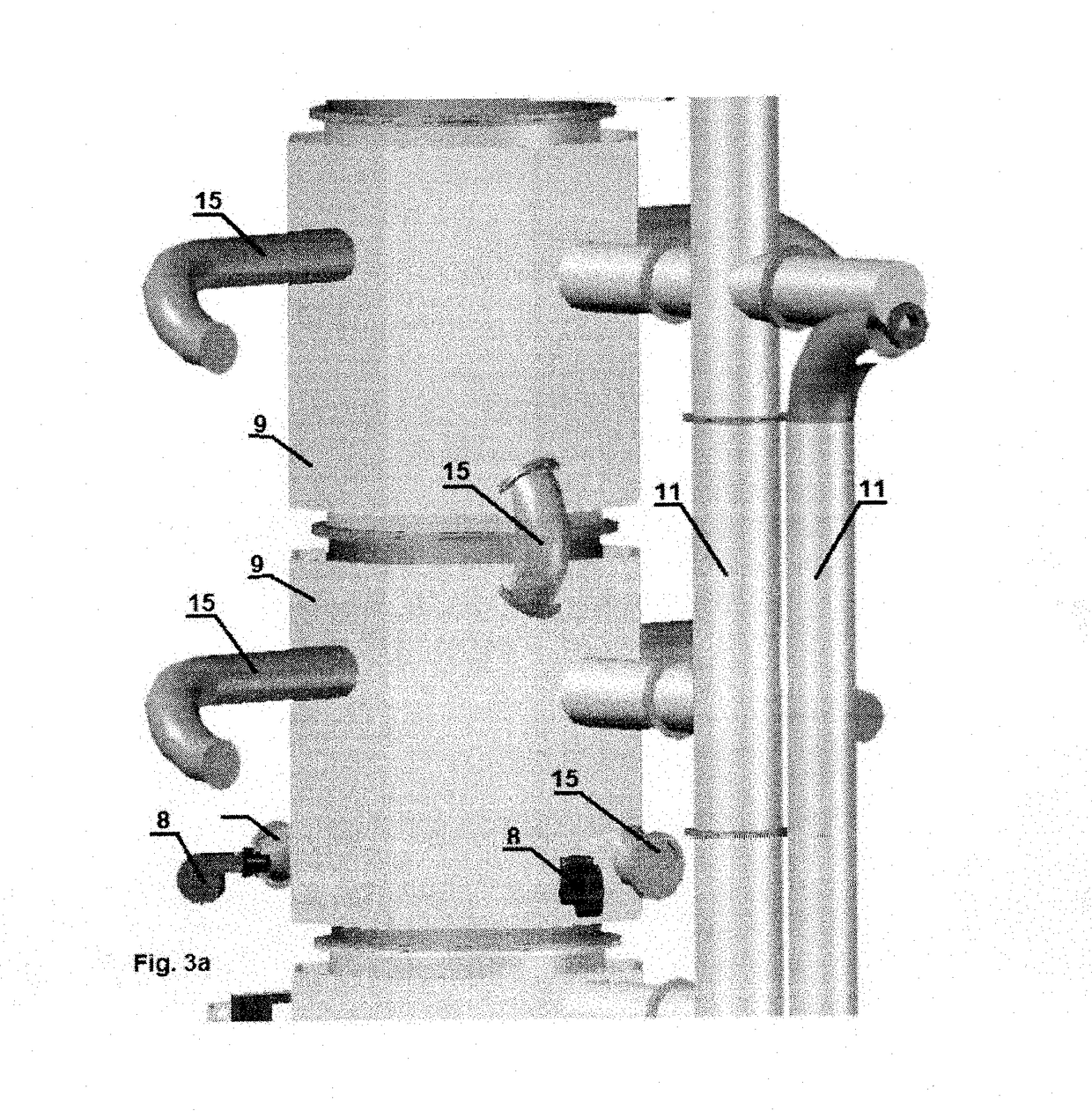

Method and apparatus for the energy densification of a material in the form of divided solids, with a view to obtaining pyrolysis oils for energy purposes
PatentWO2010128055A1
Innovation
- A process involving preconditioning of divided solids to a temperature close to 100°C and low humidity, followed by pyrolysis in a hermetic reactor with a transfer screw or vibrated tube heated by the Joule effect, and rapid condensation of pyrolysis gases to recover pyrolytic oils, while minimizing energy consumption through regulated electric power usage.


Environmental Regulations for Pyrolysis Operations
Environmental regulations governing pyrolysis operations have become increasingly stringent as governments worldwide recognize the need to balance waste management innovation with environmental protection. The regulatory landscape varies significantly across jurisdictions, with the European Union leading through comprehensive frameworks like the Industrial Emissions Directive and Waste Framework Directive, while the United States relies on EPA regulations under the Clean Air Act and Resource Conservation and Recovery Act.
Air quality standards represent the most critical regulatory challenge for bulk material pyrolysis operations. Emissions of volatile organic compounds, particulate matter, nitrogen oxides, and sulfur compounds must comply with strict limits that often require sophisticated pollution control systems. The complexity increases when processing heterogeneous bulk materials, as emission profiles can vary dramatically based on feedstock composition and processing conditions.
Waste classification and permitting requirements create substantial regulatory hurdles for pyrolysis facilities. Materials destined for pyrolysis must often be reclassified from waste to fuel or feedstock, requiring extensive documentation and approval processes. This classification directly impacts facility licensing, with waste treatment facilities facing more stringent requirements than fuel processing operations.
Water discharge regulations pose additional challenges, particularly for operations requiring quench systems or wet scrubbing technologies. Wastewater from pyrolysis operations may contain dissolved organics, heavy metals, and other contaminants requiring treatment before discharge. Many jurisdictions mandate zero liquid discharge for certain pyrolysis applications, necessitating closed-loop water systems.
Product quality and safety standards significantly influence pyrolysis operations, especially when producing fuels or chemicals for commercial use. Regulatory bodies establish specifications for sulfur content, aromatic compounds, and other parameters that directly impact process design and operating conditions. These standards often require continuous monitoring and quality assurance programs.
Emerging regulations focus on carbon accounting and lifecycle assessments, requiring operators to demonstrate environmental benefits compared to alternative waste management approaches. This trend toward comprehensive environmental impact evaluation is reshaping how pyrolysis projects are designed, operated, and economically justified in the current regulatory environment.
Air quality standards represent the most critical regulatory challenge for bulk material pyrolysis operations. Emissions of volatile organic compounds, particulate matter, nitrogen oxides, and sulfur compounds must comply with strict limits that often require sophisticated pollution control systems. The complexity increases when processing heterogeneous bulk materials, as emission profiles can vary dramatically based on feedstock composition and processing conditions.
Waste classification and permitting requirements create substantial regulatory hurdles for pyrolysis facilities. Materials destined for pyrolysis must often be reclassified from waste to fuel or feedstock, requiring extensive documentation and approval processes. This classification directly impacts facility licensing, with waste treatment facilities facing more stringent requirements than fuel processing operations.
Water discharge regulations pose additional challenges, particularly for operations requiring quench systems or wet scrubbing technologies. Wastewater from pyrolysis operations may contain dissolved organics, heavy metals, and other contaminants requiring treatment before discharge. Many jurisdictions mandate zero liquid discharge for certain pyrolysis applications, necessitating closed-loop water systems.
Product quality and safety standards significantly influence pyrolysis operations, especially when producing fuels or chemicals for commercial use. Regulatory bodies establish specifications for sulfur content, aromatic compounds, and other parameters that directly impact process design and operating conditions. These standards often require continuous monitoring and quality assurance programs.
Emerging regulations focus on carbon accounting and lifecycle assessments, requiring operators to demonstrate environmental benefits compared to alternative waste management approaches. This trend toward comprehensive environmental impact evaluation is reshaping how pyrolysis projects are designed, operated, and economically justified in the current regulatory environment.
Energy Integration and Heat Recovery Systems
Energy integration and heat recovery systems represent critical technological solutions for addressing the substantial energy demands inherent in bulk material pyrolysis operations. These systems are designed to capture, redistribute, and reuse thermal energy throughout the pyrolysis process, significantly improving overall energy efficiency and reducing operational costs. The implementation of effective heat recovery mechanisms becomes particularly crucial when processing large volumes of feedstock materials, where energy consumption can account for 40-60% of total operational expenses.
The fundamental principle underlying energy integration in pyrolysis systems involves the strategic utilization of waste heat generated during various process stages. Primary heat recovery opportunities exist in cooling zones where processed materials and product gases release substantial thermal energy. Advanced heat exchanger networks can capture this energy and redirect it to preheating incoming feedstock materials or supporting auxiliary heating requirements. Shell-and-tube heat exchangers, plate heat exchangers, and regenerative thermal oxidizers are commonly employed technologies that demonstrate high thermal efficiency rates exceeding 85% in optimized configurations.
Process integration strategies focus on creating synergistic relationships between different operational units within the pyrolysis facility. Heat pump systems can upgrade low-grade waste heat to higher temperature levels suitable for process heating applications. Combined heat and power systems enable simultaneous electricity generation and thermal energy production, maximizing the utilization of available energy resources. These integrated approaches can reduce external energy requirements by 30-50% compared to conventional standalone pyrolysis operations.
Advanced control systems play a pivotal role in optimizing energy integration performance through real-time monitoring and dynamic adjustment of heat distribution networks. Predictive algorithms analyze process parameters to anticipate energy demands and automatically adjust heat recovery operations accordingly. Smart valve systems and variable-speed pumps enable precise control of thermal fluid circulation, ensuring optimal heat transfer rates while minimizing parasitic energy losses. These automated systems demonstrate response times under five seconds for thermal load adjustments.
Emerging technologies in this domain include thermal energy storage systems that can buffer excess heat during peak production periods and release stored energy during startup or low-production phases. Phase change materials and molten salt storage systems show promising potential for large-scale pyrolysis operations, offering energy storage densities exceeding 200 kWh per cubic meter and operational temperature ranges suitable for most pyrolysis applications.
The fundamental principle underlying energy integration in pyrolysis systems involves the strategic utilization of waste heat generated during various process stages. Primary heat recovery opportunities exist in cooling zones where processed materials and product gases release substantial thermal energy. Advanced heat exchanger networks can capture this energy and redirect it to preheating incoming feedstock materials or supporting auxiliary heating requirements. Shell-and-tube heat exchangers, plate heat exchangers, and regenerative thermal oxidizers are commonly employed technologies that demonstrate high thermal efficiency rates exceeding 85% in optimized configurations.
Process integration strategies focus on creating synergistic relationships between different operational units within the pyrolysis facility. Heat pump systems can upgrade low-grade waste heat to higher temperature levels suitable for process heating applications. Combined heat and power systems enable simultaneous electricity generation and thermal energy production, maximizing the utilization of available energy resources. These integrated approaches can reduce external energy requirements by 30-50% compared to conventional standalone pyrolysis operations.
Advanced control systems play a pivotal role in optimizing energy integration performance through real-time monitoring and dynamic adjustment of heat distribution networks. Predictive algorithms analyze process parameters to anticipate energy demands and automatically adjust heat recovery operations accordingly. Smart valve systems and variable-speed pumps enable precise control of thermal fluid circulation, ensuring optimal heat transfer rates while minimizing parasitic energy losses. These automated systems demonstrate response times under five seconds for thermal load adjustments.
Emerging technologies in this domain include thermal energy storage systems that can buffer excess heat during peak production periods and release stored energy during startup or low-production phases. Phase change materials and molten salt storage systems show promising potential for large-scale pyrolysis operations, offering energy storage densities exceeding 200 kWh per cubic meter and operational temperature ranges suitable for most pyrolysis applications.
Unlock deeper insights with Patsnap Eureka Quick Research — get a full tech report to explore trends and direct your research. Try now!
Generate Your Research Report Instantly with AI Agent
Supercharge your innovation with Patsnap Eureka AI Agent Platform!