

Compare Blue Laser Alignment Systems for Nano-Manufacturing
MAY 21, 20269 MIN READ
Generate Your Research Report Instantly with AI Agent
PatSnap Eureka helps you evaluate technical feasibility & market potential.
Blue Laser Alignment in Nano-Manufacturing Background and Objectives
Blue laser alignment systems have emerged as a critical enabling technology in the rapidly evolving field of nano-manufacturing, where precision requirements have reached unprecedented levels. The transition from traditional manufacturing to nano-scale production demands alignment accuracies in the sub-nanometer range, driving the need for advanced optical positioning solutions that can operate reliably at these extreme scales.
The evolution of laser alignment technology has been marked by significant wavelength optimization, with blue lasers representing a paradigm shift from conventional red and infrared systems. Blue lasers, typically operating at wavelengths between 405-450 nanometers, offer inherently superior resolution capabilities due to their shorter wavelength characteristics. This fundamental optical advantage enables tighter beam focusing and enhanced spatial resolution, making them particularly suitable for nano-manufacturing applications where traditional alignment methods fall short.
Historical development in this field began with basic interferometric systems in the 1980s, progressed through red laser implementations in the 1990s, and has now reached sophisticated blue laser configurations capable of achieving sub-nanometer positioning accuracy. The technological progression has been driven by the semiconductor industry's relentless pursuit of smaller feature sizes and the emergence of new applications in quantum device fabrication, molecular electronics, and advanced materials processing.
Current market drivers include the exponential growth in semiconductor device complexity, the rise of quantum computing hardware requirements, and increasing demand for precision in biotechnology applications. The global nano-manufacturing market, valued at over $15 billion annually, continues to expand as industries recognize the potential of nano-scale production capabilities.
The primary technical objectives for blue laser alignment systems in nano-manufacturing encompass achieving positioning accuracies below 1 nanometer, maintaining thermal stability across varying environmental conditions, and providing real-time feedback for dynamic positioning corrections. These systems must also demonstrate long-term stability, minimal drift characteristics, and compatibility with various substrate materials and manufacturing environments.
Contemporary challenges include managing thermal effects that can cause beam drift, compensating for atmospheric disturbances in non-vacuum environments, and integrating alignment systems with existing manufacturing infrastructure. Additionally, the need for multi-axis alignment capabilities and the requirement to maintain precision while achieving acceptable throughput rates present ongoing technical hurdles that drive continued innovation in this field.
The evolution of laser alignment technology has been marked by significant wavelength optimization, with blue lasers representing a paradigm shift from conventional red and infrared systems. Blue lasers, typically operating at wavelengths between 405-450 nanometers, offer inherently superior resolution capabilities due to their shorter wavelength characteristics. This fundamental optical advantage enables tighter beam focusing and enhanced spatial resolution, making them particularly suitable for nano-manufacturing applications where traditional alignment methods fall short.
Historical development in this field began with basic interferometric systems in the 1980s, progressed through red laser implementations in the 1990s, and has now reached sophisticated blue laser configurations capable of achieving sub-nanometer positioning accuracy. The technological progression has been driven by the semiconductor industry's relentless pursuit of smaller feature sizes and the emergence of new applications in quantum device fabrication, molecular electronics, and advanced materials processing.
Current market drivers include the exponential growth in semiconductor device complexity, the rise of quantum computing hardware requirements, and increasing demand for precision in biotechnology applications. The global nano-manufacturing market, valued at over $15 billion annually, continues to expand as industries recognize the potential of nano-scale production capabilities.
The primary technical objectives for blue laser alignment systems in nano-manufacturing encompass achieving positioning accuracies below 1 nanometer, maintaining thermal stability across varying environmental conditions, and providing real-time feedback for dynamic positioning corrections. These systems must also demonstrate long-term stability, minimal drift characteristics, and compatibility with various substrate materials and manufacturing environments.
Contemporary challenges include managing thermal effects that can cause beam drift, compensating for atmospheric disturbances in non-vacuum environments, and integrating alignment systems with existing manufacturing infrastructure. Additionally, the need for multi-axis alignment capabilities and the requirement to maintain precision while achieving acceptable throughput rates present ongoing technical hurdles that drive continued innovation in this field.
Market Demand for Precision Blue Laser Alignment in Nano-Fabrication
The nano-fabrication industry is experiencing unprecedented growth driven by the miniaturization demands across semiconductor manufacturing, photonics, biotechnology, and advanced materials sectors. This expansion has created substantial market demand for precision blue laser alignment systems, which serve as critical enabling technologies for achieving nanometer-scale positioning accuracy in manufacturing processes.
Semiconductor fabrication represents the largest market segment, where blue laser alignment systems are essential for photolithography, wafer inspection, and die bonding applications. The industry's transition toward smaller node technologies and three-dimensional chip architectures has intensified requirements for sub-nanometer alignment precision, directly driving demand for advanced blue laser solutions.
The photonics manufacturing sector demonstrates rapidly growing adoption of blue laser alignment systems for producing optical components, waveguides, and integrated photonic circuits. Market drivers include the expansion of fiber-optic communications, LiDAR systems for autonomous vehicles, and quantum computing components that require extremely precise optical element positioning.
Biotechnology and life sciences applications constitute an emerging high-growth segment, where blue laser alignment systems enable precise fabrication of microfluidic devices, biosensors, and lab-on-chip platforms. The increasing focus on personalized medicine and point-of-care diagnostics has amplified demand for nano-scale biological device manufacturing capabilities.
Advanced materials processing, including metamaterials and nanostructured surfaces, represents another significant market driver. Industries ranging from aerospace to consumer electronics require precise laser alignment for creating functional nanostructures with specific optical, mechanical, or electrical properties.
Market demand is further accelerated by the convergence of artificial intelligence and manufacturing automation, where blue laser alignment systems integrate with machine learning algorithms to achieve adaptive precision control. This technological integration addresses the industry's need for higher throughput while maintaining nanometer-level accuracy.
Regional demand patterns show concentrated growth in Asia-Pacific semiconductor hubs, North American technology centers, and European precision manufacturing clusters. The market exhibits strong correlation with research and development investments in nanotechnology, indicating sustained long-term growth potential as emerging applications continue to mature.
Semiconductor fabrication represents the largest market segment, where blue laser alignment systems are essential for photolithography, wafer inspection, and die bonding applications. The industry's transition toward smaller node technologies and three-dimensional chip architectures has intensified requirements for sub-nanometer alignment precision, directly driving demand for advanced blue laser solutions.
The photonics manufacturing sector demonstrates rapidly growing adoption of blue laser alignment systems for producing optical components, waveguides, and integrated photonic circuits. Market drivers include the expansion of fiber-optic communications, LiDAR systems for autonomous vehicles, and quantum computing components that require extremely precise optical element positioning.
Biotechnology and life sciences applications constitute an emerging high-growth segment, where blue laser alignment systems enable precise fabrication of microfluidic devices, biosensors, and lab-on-chip platforms. The increasing focus on personalized medicine and point-of-care diagnostics has amplified demand for nano-scale biological device manufacturing capabilities.
Advanced materials processing, including metamaterials and nanostructured surfaces, represents another significant market driver. Industries ranging from aerospace to consumer electronics require precise laser alignment for creating functional nanostructures with specific optical, mechanical, or electrical properties.
Market demand is further accelerated by the convergence of artificial intelligence and manufacturing automation, where blue laser alignment systems integrate with machine learning algorithms to achieve adaptive precision control. This technological integration addresses the industry's need for higher throughput while maintaining nanometer-level accuracy.
Regional demand patterns show concentrated growth in Asia-Pacific semiconductor hubs, North American technology centers, and European precision manufacturing clusters. The market exhibits strong correlation with research and development investments in nanotechnology, indicating sustained long-term growth potential as emerging applications continue to mature.
Current State and Challenges of Blue Laser Alignment Systems
Blue laser alignment systems for nano-manufacturing have reached a significant level of technological maturity, with wavelengths typically ranging from 405nm to 450nm offering superior precision compared to traditional red laser systems. Current implementations demonstrate positioning accuracies within sub-nanometer ranges, making them essential for semiconductor fabrication, MEMS production, and advanced photolithography processes. The technology has evolved from basic beam steering mechanisms to sophisticated multi-axis alignment platforms incorporating real-time feedback control systems.
The global deployment of blue laser alignment systems shows concentrated development in key manufacturing regions, with Japan, South Korea, and Taiwan leading in semiconductor applications, while Germany and the Netherlands excel in precision optics integration. North American facilities focus primarily on research and development applications, particularly in quantum device manufacturing and advanced materials processing.
Despite technological advances, several critical challenges persist in current blue laser alignment systems. Thermal stability remains a primary concern, as blue lasers generate more heat per unit power compared to longer wavelengths, requiring sophisticated cooling systems that add complexity and cost. The shorter wavelength also increases susceptibility to atmospheric disturbances and particulate interference, demanding ultra-clean operating environments with stringent contamination control protocols.
Power stability represents another significant challenge, with blue laser diodes exhibiting higher variability in output power over extended operating periods. This instability directly impacts alignment precision and requires frequent recalibration procedures that can interrupt manufacturing workflows. Additionally, the limited availability of high-quality optical components optimized for blue wavelengths constrains system performance and increases component costs.
Integration complexity poses substantial implementation barriers, particularly when retrofitting existing manufacturing lines. Blue laser systems require specialized optical trains, modified detection systems, and updated control software, often necessitating complete system overhauls rather than incremental upgrades. The higher initial investment costs and extended validation periods further complicate adoption decisions for manufacturers operating on tight margins.
Beam quality degradation over time presents ongoing operational challenges, with blue laser diodes showing accelerated aging characteristics under high-precision operating conditions. This degradation affects both beam profile stability and coherence properties, directly impacting alignment accuracy and requiring more frequent maintenance cycles compared to established red laser systems.
The global deployment of blue laser alignment systems shows concentrated development in key manufacturing regions, with Japan, South Korea, and Taiwan leading in semiconductor applications, while Germany and the Netherlands excel in precision optics integration. North American facilities focus primarily on research and development applications, particularly in quantum device manufacturing and advanced materials processing.
Despite technological advances, several critical challenges persist in current blue laser alignment systems. Thermal stability remains a primary concern, as blue lasers generate more heat per unit power compared to longer wavelengths, requiring sophisticated cooling systems that add complexity and cost. The shorter wavelength also increases susceptibility to atmospheric disturbances and particulate interference, demanding ultra-clean operating environments with stringent contamination control protocols.
Power stability represents another significant challenge, with blue laser diodes exhibiting higher variability in output power over extended operating periods. This instability directly impacts alignment precision and requires frequent recalibration procedures that can interrupt manufacturing workflows. Additionally, the limited availability of high-quality optical components optimized for blue wavelengths constrains system performance and increases component costs.
Integration complexity poses substantial implementation barriers, particularly when retrofitting existing manufacturing lines. Blue laser systems require specialized optical trains, modified detection systems, and updated control software, often necessitating complete system overhauls rather than incremental upgrades. The higher initial investment costs and extended validation periods further complicate adoption decisions for manufacturers operating on tight margins.
Beam quality degradation over time presents ongoing operational challenges, with blue laser diodes showing accelerated aging characteristics under high-precision operating conditions. This degradation affects both beam profile stability and coherence properties, directly impacting alignment accuracy and requiring more frequent maintenance cycles compared to established red laser systems.
Existing Blue Laser Alignment Solutions for Nano-Scale Applications
01 Laser beam positioning and directional control systems
Systems and methods for precisely controlling the position and direction of blue laser beams in alignment applications. These systems utilize various optical components and mechanical adjustments to ensure accurate beam placement and maintain proper alignment throughout operation. The technology focuses on maintaining beam stability and preventing drift during alignment procedures.- Optical beam alignment and positioning systems: Systems and methods for precisely aligning laser beams using optical components such as mirrors, prisms, and beam splitters. These systems enable accurate positioning of laser beams for various applications including measurement, manufacturing, and scientific research. The alignment mechanisms often incorporate feedback systems to maintain beam stability and compensate for environmental factors.
- Automated laser alignment control mechanisms: Automated systems that use sensors and control algorithms to maintain proper laser alignment without manual intervention. These mechanisms typically employ photodetectors, position sensors, and servo motors to continuously monitor and adjust beam position. The systems can compensate for thermal drift, vibrations, and other disturbances that affect alignment accuracy.
- Multi-axis laser positioning and tracking: Advanced systems capable of controlling laser beam position across multiple axes simultaneously. These systems enable complex beam steering and tracking operations for applications requiring dynamic positioning. The technology incorporates sophisticated control algorithms and mechanical actuators to achieve precise multi-dimensional beam control.
- Laser interferometry and measurement alignment: Specialized alignment systems designed for interferometric applications where extremely high precision is required. These systems use laser interferometry principles to achieve nanometer-level positioning accuracy. The technology is commonly used in metrology, semiconductor manufacturing, and precision manufacturing applications.
- Compact and integrated laser alignment modules: Miniaturized laser alignment systems designed for integration into larger equipment or portable applications. These modules combine multiple optical and electronic components into compact packages while maintaining alignment precision. The systems often feature simplified operation and reduced power consumption for embedded applications.
02 Optical feedback and detection mechanisms
Implementation of optical sensors and feedback systems to monitor and detect alignment accuracy in real-time. These mechanisms provide continuous monitoring of laser beam position and automatically adjust system parameters to maintain optimal alignment. The detection systems can identify misalignment conditions and trigger corrective actions.Expand Specific Solutions03 Automated alignment correction algorithms
Advanced control algorithms and software systems that process alignment data and automatically implement corrections to maintain precise laser positioning. These systems utilize computational methods to analyze alignment parameters and execute real-time adjustments without manual intervention. The algorithms can compensate for environmental factors and system variations.Expand Specific Solutions04 Multi-axis positioning and calibration systems
Mechanical and electromechanical systems that provide precise movement and positioning capabilities across multiple axes for comprehensive laser alignment control. These systems enable fine adjustments in various directions and orientations to achieve optimal alignment accuracy. The calibration features ensure consistent performance and repeatability.Expand Specific Solutions05 Environmental compensation and stability enhancement
Technologies designed to compensate for environmental factors such as temperature variations, vibrations, and atmospheric conditions that can affect laser alignment accuracy. These systems incorporate stabilization mechanisms and environmental monitoring to maintain consistent performance under varying operating conditions. The compensation methods help preserve alignment precision over extended periods.Expand Specific Solutions
Key Players in Blue Laser Alignment and Nano-Manufacturing Industry
The blue laser alignment systems market for nano-manufacturing represents an emerging yet rapidly evolving competitive landscape. The industry is transitioning from early development to commercial maturity, driven by increasing demand for precision manufacturing in semiconductors and advanced materials processing. Market growth is substantial, particularly in Asia-Pacific regions where companies like Samsung Electronics, SK Hynix, and Shanghai Microelectronics Equipment are investing heavily in next-generation manufacturing capabilities. Technology maturity varies significantly among players, with established leaders like IPG Photonics and Nuburu demonstrating advanced blue laser capabilities, while traditional giants such as Canon, Sony Group, and Mitsubishi Electric leverage their optical expertise to enter this specialized segment. Research institutions including CEA and South China University of Technology are advancing fundamental technologies, while specialized equipment manufacturers like Gigaphoton and Electro Scientific Industries focus on precision applications, creating a diverse ecosystem spanning from fundamental research to commercial deployment.
Samsung Electronics Co., Ltd.
Technical Solution: Samsung has developed blue laser alignment technology for their advanced semiconductor fabrication processes, particularly for EUV lithography and advanced packaging applications. Their blue laser alignment systems operate at 450nm wavelength with custom-designed optical components that provide high-contrast imaging for nano-scale features. The system incorporates machine learning algorithms for pattern recognition and automated alignment correction, achieving positioning accuracy within 3nm. Samsung's approach combines blue laser illumination with advanced CCD imaging systems and real-time processing capabilities to handle complex multi-layer alignment tasks. Their proprietary alignment algorithms can process alignment marks as small as 50nm with high reliability even in challenging manufacturing environments with varying substrate materials and surface conditions.
Strengths: Cutting-edge semiconductor manufacturing expertise, advanced AI-driven alignment algorithms, high-volume production experience. Weaknesses: Technology primarily developed for internal use, limited commercial availability to external customers.
Gigaphoton, Inc.
Technical Solution: Gigaphoton specializes in blue laser systems for advanced lithography applications, developing high-power blue laser sources specifically for nano-manufacturing alignment processes. Their blue laser alignment systems feature wavelengths at 405nm and 450nm with output powers up to 100W and exceptional beam quality suitable for high-resolution imaging applications. The company's technology incorporates advanced beam homogenization optics and precision wavelength control systems that maintain spectral purity better than 99.5%. Their alignment systems utilize proprietary optical designs that minimize speckle noise and provide uniform illumination across large substrate areas. Gigaphoton's blue laser modules include integrated monitoring systems that continuously track beam parameters and automatically adjust for optimal alignment performance during extended manufacturing runs.
Strengths: Specialized expertise in high-power laser systems for lithography, excellent beam quality and power scaling capabilities, strong partnerships with semiconductor equipment manufacturers. Weaknesses: Limited presence in non-lithography nano-manufacturing applications, high system complexity requiring specialized maintenance.
Core Patents in Blue Laser Alignment for Nano-Manufacturing
Blue Laser Metal Additive Manufacturing System
PatentActiveUS20200094478A1
Innovation
- The use of a spatial light modulator, such as a Digital Micro-Mirror Device (DMD), to create energy patterns on a powder bed with lasers in the blue or green wavelength range, allowing for improved energy efficiency and power density to fuse metals, combined with a gantry system and inert atmosphere for enhanced build quality.


Systems and methods for additive manufacturing in-build assessment and correction of laser pointing accuracy
PatentActiveUS10814427B2
Innovation
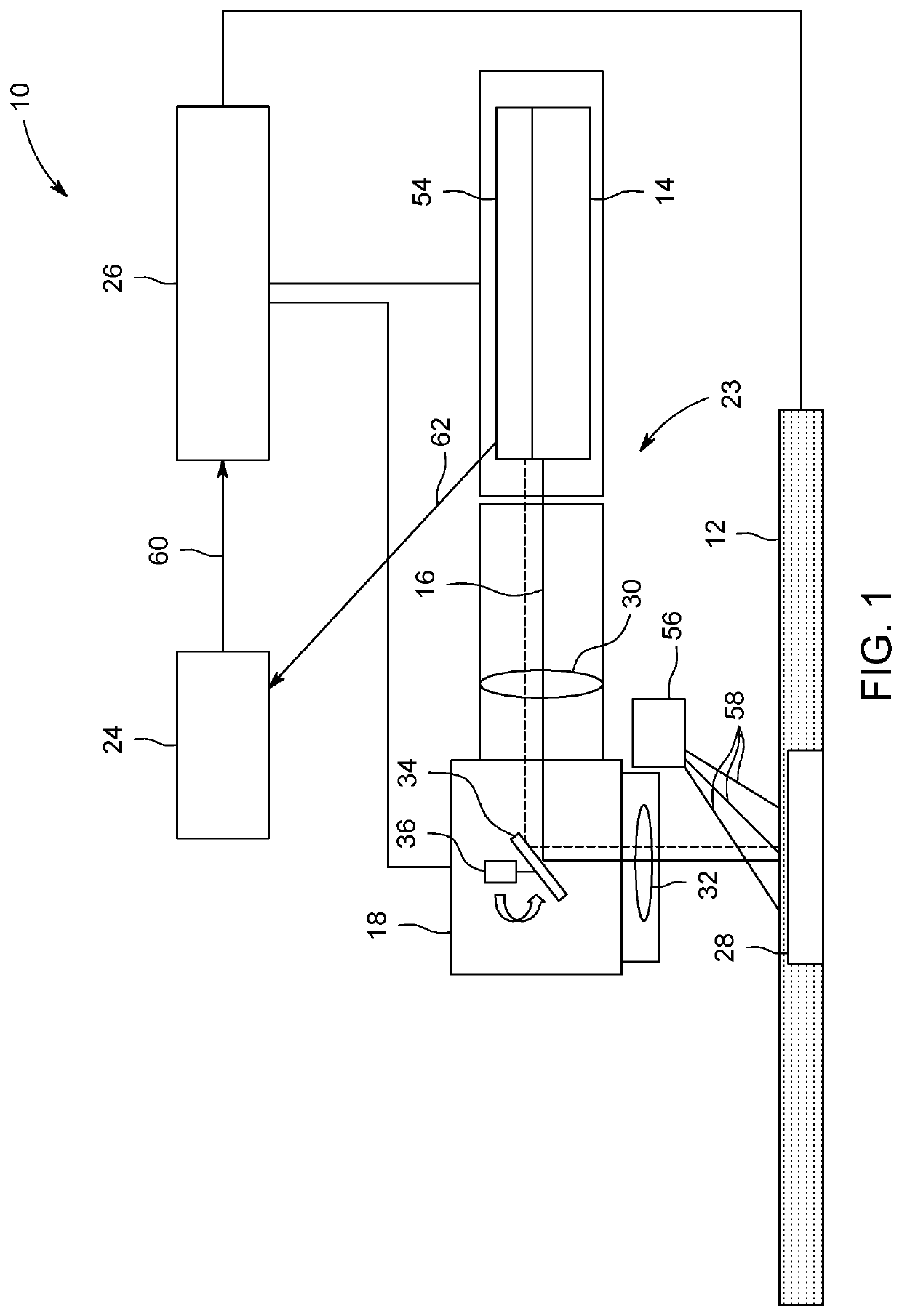
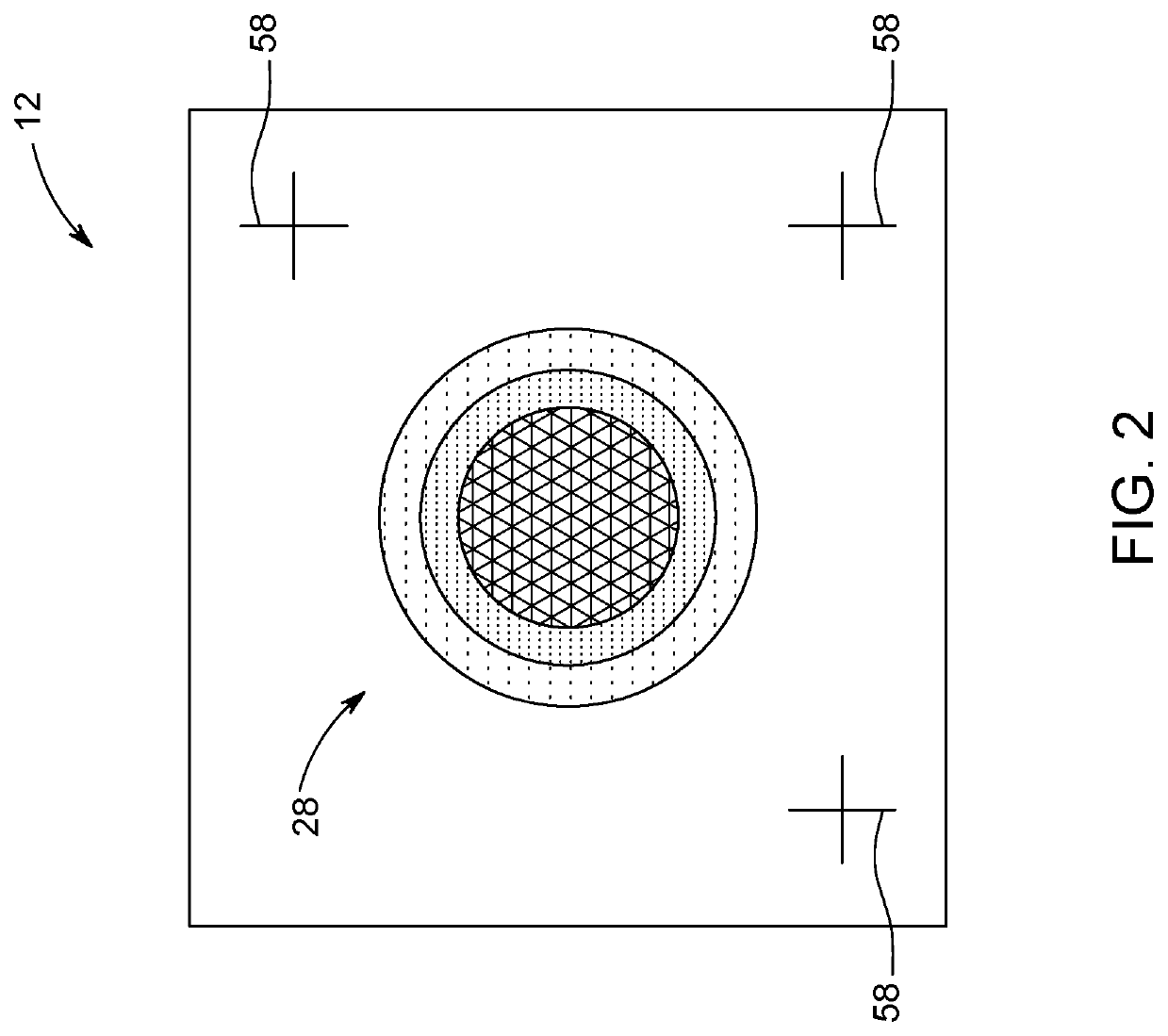
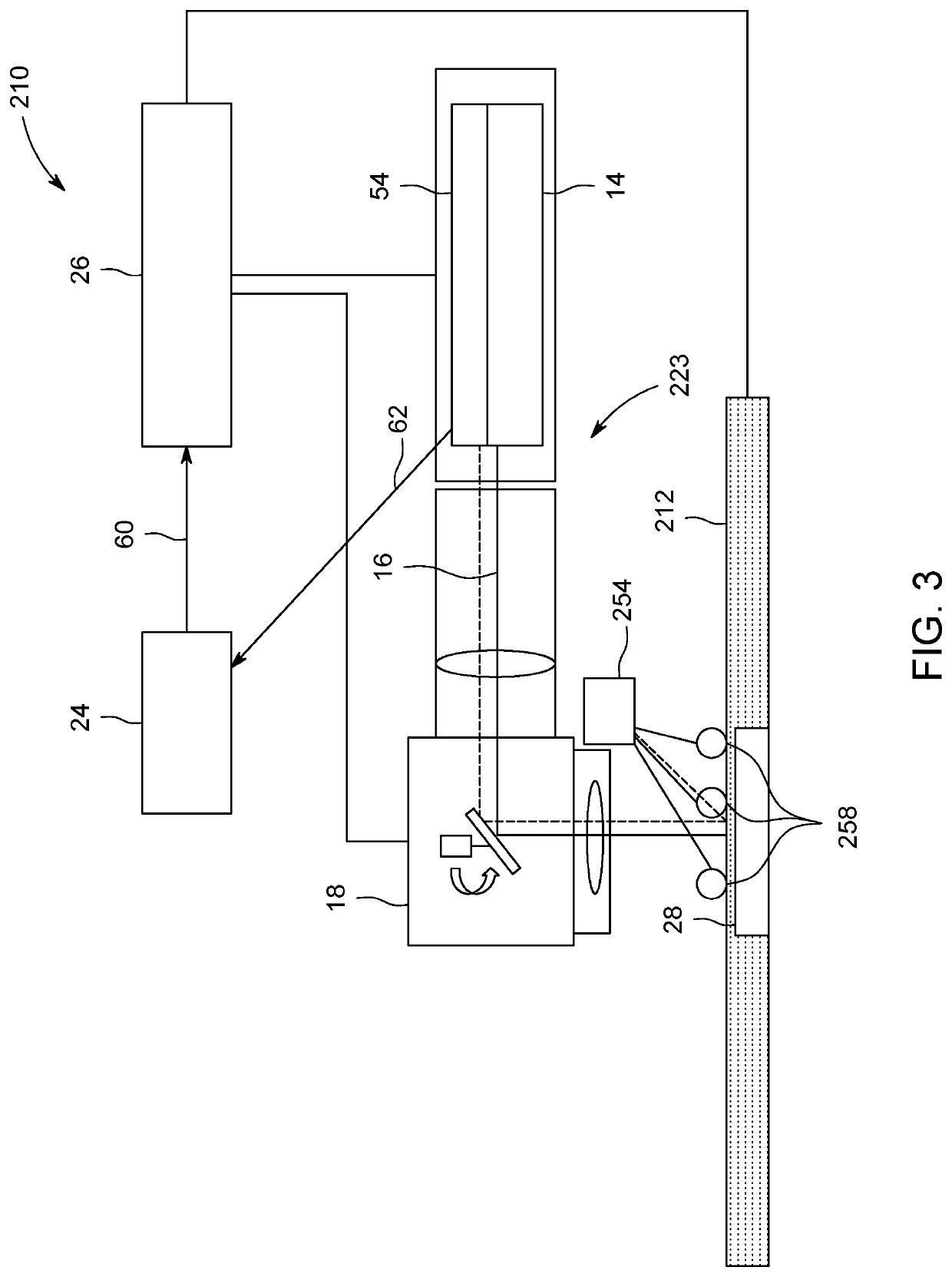
- An alignment system is introduced, featuring a build plate with projected or permanently coupled fiducial marks and an optical detector to detect the marks' position relative to the laser device, allowing for precise alignment across multiple DMLM systems by adjusting the build plate and scanning device positions.

Safety Standards for Blue Laser Systems in Manufacturing
Blue laser systems operating in nano-manufacturing environments present unique safety challenges due to their high-energy output and precision requirements. The wavelength characteristics of blue lasers, typically ranging from 405-450 nanometers, necessitate specialized safety protocols that differ significantly from conventional laser systems. Current international standards, including IEC 60825-1 and ANSI Z136.1, provide foundational frameworks but require specific adaptations for nano-manufacturing applications.
Personnel protection standards mandate the use of specialized optical density filters designed for blue wavelength absorption. Standard safety eyewear must achieve minimum optical density ratings of OD 4+ at 405-450nm wavelengths to ensure adequate protection during alignment procedures. Additionally, skin protection protocols become critical as blue laser wavelengths demonstrate higher absorption rates in biological tissues compared to infrared systems.
Containment requirements for blue laser alignment systems emphasize enclosed beam paths and interlocked safety barriers. Manufacturing facilities must implement Class 1 laser product enclosures wherever possible, with emergency stop mechanisms accessible within 3-meter radius of operator positions. Beam dump materials specifically rated for blue wavelength absorption prevent dangerous reflections that could compromise alignment accuracy and operator safety.
Environmental monitoring standards require continuous measurement of scattered radiation levels, particularly in cleanroom environments where reflective surfaces are prevalent. Photodetector arrays positioned at strategic locations must maintain sensitivity thresholds below 0.25 mW/cm² for extended exposure scenarios. Air filtration systems must account for potential photochemical reactions induced by blue laser interaction with airborne particles.
Training and certification protocols demand specialized competency verification for operators working with blue laser alignment systems. Personnel must demonstrate proficiency in wavelength-specific hazard recognition, emergency response procedures, and proper use of detection equipment. Regular safety audits, conducted quarterly, ensure compliance with evolving standards as blue laser technology advances in nano-manufacturing applications.
Personnel protection standards mandate the use of specialized optical density filters designed for blue wavelength absorption. Standard safety eyewear must achieve minimum optical density ratings of OD 4+ at 405-450nm wavelengths to ensure adequate protection during alignment procedures. Additionally, skin protection protocols become critical as blue laser wavelengths demonstrate higher absorption rates in biological tissues compared to infrared systems.
Containment requirements for blue laser alignment systems emphasize enclosed beam paths and interlocked safety barriers. Manufacturing facilities must implement Class 1 laser product enclosures wherever possible, with emergency stop mechanisms accessible within 3-meter radius of operator positions. Beam dump materials specifically rated for blue wavelength absorption prevent dangerous reflections that could compromise alignment accuracy and operator safety.
Environmental monitoring standards require continuous measurement of scattered radiation levels, particularly in cleanroom environments where reflective surfaces are prevalent. Photodetector arrays positioned at strategic locations must maintain sensitivity thresholds below 0.25 mW/cm² for extended exposure scenarios. Air filtration systems must account for potential photochemical reactions induced by blue laser interaction with airborne particles.
Training and certification protocols demand specialized competency verification for operators working with blue laser alignment systems. Personnel must demonstrate proficiency in wavelength-specific hazard recognition, emergency response procedures, and proper use of detection equipment. Regular safety audits, conducted quarterly, ensure compliance with evolving standards as blue laser technology advances in nano-manufacturing applications.
Cost-Benefit Analysis of Blue Laser Alignment Technologies
The economic evaluation of blue laser alignment technologies in nano-manufacturing reveals significant variations in both initial investment requirements and long-term operational benefits. High-precision blue laser systems typically demand substantial upfront capital, ranging from $150,000 to $500,000 for industrial-grade equipment, depending on accuracy specifications and throughput capabilities. However, these systems demonstrate compelling return on investment through enhanced manufacturing precision and reduced defect rates.
Operational cost analysis indicates that blue laser alignment systems offer superior energy efficiency compared to traditional alignment methods. The typical power consumption ranges from 50-200 watts, significantly lower than conventional laser systems operating at different wavelengths. This translates to annual energy savings of approximately 15-25% in continuous manufacturing environments. Additionally, the extended lifespan of blue laser diodes, averaging 10,000-15,000 operating hours, reduces maintenance frequency and replacement costs.
The productivity benefits justify the initial investment through measurable improvements in manufacturing yield. Blue laser alignment systems achieve positioning accuracies within 10-50 nanometers, resulting in defect reduction rates of 30-40% compared to conventional alignment technologies. This precision enhancement directly correlates to increased product quality and reduced material waste, generating cost savings of $0.05-0.15 per manufactured unit in typical nano-manufacturing applications.
Implementation costs extend beyond equipment acquisition to include system integration, operator training, and facility modifications. Integration expenses typically account for 20-30% of the total system cost, while specialized training programs require additional investment of $10,000-25,000 per facility. However, the reduced complexity of blue laser systems compared to multi-wavelength alternatives minimizes ongoing technical support requirements.
The total cost of ownership analysis over a five-year operational period demonstrates positive returns for facilities processing more than 10,000 units annually. Break-even points typically occur within 18-24 months of implementation, with subsequent years generating net positive cash flows through improved efficiency and quality metrics.
Operational cost analysis indicates that blue laser alignment systems offer superior energy efficiency compared to traditional alignment methods. The typical power consumption ranges from 50-200 watts, significantly lower than conventional laser systems operating at different wavelengths. This translates to annual energy savings of approximately 15-25% in continuous manufacturing environments. Additionally, the extended lifespan of blue laser diodes, averaging 10,000-15,000 operating hours, reduces maintenance frequency and replacement costs.
The productivity benefits justify the initial investment through measurable improvements in manufacturing yield. Blue laser alignment systems achieve positioning accuracies within 10-50 nanometers, resulting in defect reduction rates of 30-40% compared to conventional alignment technologies. This precision enhancement directly correlates to increased product quality and reduced material waste, generating cost savings of $0.05-0.15 per manufactured unit in typical nano-manufacturing applications.
Implementation costs extend beyond equipment acquisition to include system integration, operator training, and facility modifications. Integration expenses typically account for 20-30% of the total system cost, while specialized training programs require additional investment of $10,000-25,000 per facility. However, the reduced complexity of blue laser systems compared to multi-wavelength alternatives minimizes ongoing technical support requirements.
The total cost of ownership analysis over a five-year operational period demonstrates positive returns for facilities processing more than 10,000 units annually. Break-even points typically occur within 18-24 months of implementation, with subsequent years generating net positive cash flows through improved efficiency and quality metrics.
Unlock deeper insights with PatSnap Eureka Quick Research — get a full tech report to explore trends and direct your research. Try now!
Generate Your Research Report Instantly with AI Agent
Supercharge your innovation with PatSnap Eureka AI Agent Platform!