

Compare Open vs Proprietary Building Management System Architectures
AUG 11, 20269 MIN READ
Generate Your Research Report Instantly with AI Agent
Patsnap Eureka helps you evaluate technical feasibility & market potential.
Open vs Proprietary BMS Architecture Background and Objectives
Building Management Systems have evolved significantly since their inception in the 1980s, transitioning from simple standalone controllers to sophisticated networked platforms that integrate HVAC, lighting, security, and energy management functions. This evolution has created a fundamental architectural divide between open and proprietary systems, each representing distinct philosophies regarding interoperability, vendor relationships, and long-term operational flexibility.
Proprietary BMS architectures emerged first, with manufacturers developing closed ecosystems where hardware, software, and communication protocols remained exclusive to their platforms. These systems prioritized tight integration and optimized performance within a single vendor's product line. Major players established dominant market positions by offering comprehensive solutions backed by extensive support networks and proven reliability records.
The open BMS architecture movement gained momentum in the late 1990s with the standardization of protocols like BACnet and LonWorks. This approach emphasized interoperability, allowing components from multiple manufacturers to communicate seamlessly within a unified system. Open architectures promised reduced vendor lock-in, greater flexibility in component selection, and enhanced long-term system adaptability as building requirements evolved.
The primary objective of comparing these architectural approaches is to establish a comprehensive framework for evaluating their respective advantages and limitations across multiple dimensions. This includes assessing initial implementation costs versus lifecycle expenses, examining system scalability and future-proofing capabilities, and analyzing the implications for operational efficiency and maintenance requirements. Understanding these architectural differences enables stakeholders to make informed decisions aligned with specific building requirements, organizational capabilities, and strategic objectives.
Current market dynamics reflect increasing pressure toward open systems driven by sustainability mandates, digital transformation initiatives, and demands for data accessibility. However, proprietary systems continue demonstrating value in specific contexts where integrated performance, simplified procurement, and single-source accountability remain paramount considerations. This comparative analysis aims to clarify the technical, economic, and operational factors that should guide architectural selection decisions in contemporary building automation projects.
Proprietary BMS architectures emerged first, with manufacturers developing closed ecosystems where hardware, software, and communication protocols remained exclusive to their platforms. These systems prioritized tight integration and optimized performance within a single vendor's product line. Major players established dominant market positions by offering comprehensive solutions backed by extensive support networks and proven reliability records.
The open BMS architecture movement gained momentum in the late 1990s with the standardization of protocols like BACnet and LonWorks. This approach emphasized interoperability, allowing components from multiple manufacturers to communicate seamlessly within a unified system. Open architectures promised reduced vendor lock-in, greater flexibility in component selection, and enhanced long-term system adaptability as building requirements evolved.
The primary objective of comparing these architectural approaches is to establish a comprehensive framework for evaluating their respective advantages and limitations across multiple dimensions. This includes assessing initial implementation costs versus lifecycle expenses, examining system scalability and future-proofing capabilities, and analyzing the implications for operational efficiency and maintenance requirements. Understanding these architectural differences enables stakeholders to make informed decisions aligned with specific building requirements, organizational capabilities, and strategic objectives.
Current market dynamics reflect increasing pressure toward open systems driven by sustainability mandates, digital transformation initiatives, and demands for data accessibility. However, proprietary systems continue demonstrating value in specific contexts where integrated performance, simplified procurement, and single-source accountability remain paramount considerations. This comparative analysis aims to clarify the technical, economic, and operational factors that should guide architectural selection decisions in contemporary building automation projects.
Market Demand for Building Management System Solutions
The global building management system market is experiencing robust expansion driven by accelerating urbanization, stringent energy efficiency regulations, and the growing adoption of smart building technologies. Commercial real estate sectors, including office complexes, healthcare facilities, educational institutions, and retail centers, represent the primary demand drivers as building owners seek integrated solutions to optimize operational costs and enhance occupant comfort.
Energy management constitutes the most critical demand factor, with building operators under increasing pressure to reduce carbon footprints and comply with evolving environmental standards. Both open and proprietary BMS architectures address this need, though market preferences vary based on organizational priorities. Large enterprises with diverse building portfolios increasingly favor solutions offering flexibility and interoperability, while smaller facilities often prioritize turnkey implementations with comprehensive vendor support.
The shift toward Internet of Things integration and cloud-based platforms has fundamentally altered market expectations. End users now demand systems capable of aggregating data from heterogeneous devices, enabling predictive maintenance, and supporting advanced analytics. This trend particularly benefits open architecture solutions that facilitate third-party integrations, though proprietary systems counter with enhanced cybersecurity features and streamlined deployment processes.
Retrofit and modernization projects constitute a substantial market segment, as aging infrastructure requires upgrades to meet contemporary performance standards. This segment presents distinct challenges regarding compatibility with legacy systems, where open protocols demonstrate advantages in bridging older equipment with modern control layers. Conversely, complete new construction projects often lean toward proprietary solutions when single-vendor accountability and warranty coverage are prioritized.
Regional variations significantly influence demand patterns. European markets demonstrate strong preference for open standards driven by regulatory frameworks emphasizing interoperability, while North American markets exhibit more balanced adoption. Emerging economies in Asia-Pacific show rapid growth with pragmatic approaches favoring cost-effectiveness and scalability over architectural ideology.
The increasing emphasis on occupant wellness and indoor environmental quality has expanded BMS functional requirements beyond traditional HVAC control. Modern solutions must integrate lighting management, air quality monitoring, and space utilization analytics, creating demand for architectures capable of supporting diverse subsystems while maintaining system coherence and user-friendly interfaces.
Energy management constitutes the most critical demand factor, with building operators under increasing pressure to reduce carbon footprints and comply with evolving environmental standards. Both open and proprietary BMS architectures address this need, though market preferences vary based on organizational priorities. Large enterprises with diverse building portfolios increasingly favor solutions offering flexibility and interoperability, while smaller facilities often prioritize turnkey implementations with comprehensive vendor support.
The shift toward Internet of Things integration and cloud-based platforms has fundamentally altered market expectations. End users now demand systems capable of aggregating data from heterogeneous devices, enabling predictive maintenance, and supporting advanced analytics. This trend particularly benefits open architecture solutions that facilitate third-party integrations, though proprietary systems counter with enhanced cybersecurity features and streamlined deployment processes.
Retrofit and modernization projects constitute a substantial market segment, as aging infrastructure requires upgrades to meet contemporary performance standards. This segment presents distinct challenges regarding compatibility with legacy systems, where open protocols demonstrate advantages in bridging older equipment with modern control layers. Conversely, complete new construction projects often lean toward proprietary solutions when single-vendor accountability and warranty coverage are prioritized.
Regional variations significantly influence demand patterns. European markets demonstrate strong preference for open standards driven by regulatory frameworks emphasizing interoperability, while North American markets exhibit more balanced adoption. Emerging economies in Asia-Pacific show rapid growth with pragmatic approaches favoring cost-effectiveness and scalability over architectural ideology.
The increasing emphasis on occupant wellness and indoor environmental quality has expanded BMS functional requirements beyond traditional HVAC control. Modern solutions must integrate lighting management, air quality monitoring, and space utilization analytics, creating demand for architectures capable of supporting diverse subsystems while maintaining system coherence and user-friendly interfaces.
Current State of Open and Proprietary BMS Technologies
The building management system landscape currently exhibits a clear bifurcation between proprietary and open architectures, each demonstrating distinct technological maturity levels and deployment characteristics. Proprietary systems continue to dominate the commercial building sector, with established vendors maintaining significant market presence through integrated hardware-software ecosystems. These closed systems typically employ vendor-specific communication protocols and require specialized programming tools, creating high switching costs but offering proven reliability and comprehensive technical support.
Open BMS technologies have gained substantial momentum over the past decade, driven by standardization efforts and interoperability demands. Protocols such as BACnet, Modbus, and LonWorks have achieved widespread adoption, enabling multi-vendor integration and reducing vendor lock-in concerns. The emergence of IoT-enabled platforms and cloud-based management solutions has further accelerated open architecture adoption, particularly in new construction and retrofit projects seeking flexibility and scalability.
Current proprietary solutions excel in deep system integration and advanced analytics capabilities, leveraging decades of domain expertise and extensive device libraries. Major vendors offer sophisticated fault detection diagnostics, predictive maintenance algorithms, and energy optimization features that remain challenging to replicate in open environments. However, these advantages come at premium costs and limited customization options, constraining adaptability to unique building requirements.
Open systems demonstrate superior interoperability and cost-effectiveness, allowing building operators to select best-of-breed components from multiple suppliers. Modern open platforms increasingly incorporate machine learning capabilities and API-driven architectures, enabling seamless integration with third-party applications and enterprise systems. The growing ecosystem of open-source tools and community-driven development has narrowed the functionality gap with proprietary alternatives, though challenges persist in achieving comparable out-of-box performance and unified user experiences.
The technological divide is gradually narrowing as proprietary vendors adopt open protocols for peripheral integration while open platforms enhance their core functionality and user interfaces. Hybrid approaches combining proprietary controllers with open communication layers represent an emerging middle ground, attempting to balance system performance with interoperability requirements. This convergence trend reflects market pressure for both technological openness and operational reliability in modern building automation deployments.
Open BMS technologies have gained substantial momentum over the past decade, driven by standardization efforts and interoperability demands. Protocols such as BACnet, Modbus, and LonWorks have achieved widespread adoption, enabling multi-vendor integration and reducing vendor lock-in concerns. The emergence of IoT-enabled platforms and cloud-based management solutions has further accelerated open architecture adoption, particularly in new construction and retrofit projects seeking flexibility and scalability.
Current proprietary solutions excel in deep system integration and advanced analytics capabilities, leveraging decades of domain expertise and extensive device libraries. Major vendors offer sophisticated fault detection diagnostics, predictive maintenance algorithms, and energy optimization features that remain challenging to replicate in open environments. However, these advantages come at premium costs and limited customization options, constraining adaptability to unique building requirements.
Open systems demonstrate superior interoperability and cost-effectiveness, allowing building operators to select best-of-breed components from multiple suppliers. Modern open platforms increasingly incorporate machine learning capabilities and API-driven architectures, enabling seamless integration with third-party applications and enterprise systems. The growing ecosystem of open-source tools and community-driven development has narrowed the functionality gap with proprietary alternatives, though challenges persist in achieving comparable out-of-box performance and unified user experiences.
The technological divide is gradually narrowing as proprietary vendors adopt open protocols for peripheral integration while open platforms enhance their core functionality and user interfaces. Hybrid approaches combining proprietary controllers with open communication layers represent an emerging middle ground, attempting to balance system performance with interoperability requirements. This convergence trend reflects market pressure for both technological openness and operational reliability in modern building automation deployments.
Mainstream BMS Architecture Solutions
01 Centralized control and monitoring architecture
Building management systems utilize centralized architectures where a central controller or server manages and monitors various building subsystems. This architecture enables unified control of HVAC, lighting, security, and other building systems through a single platform. The centralized approach facilitates data collection, analysis, and decision-making for optimal building performance and energy efficiency.- Centralized control and monitoring architecture: Building management systems utilize centralized architectures where a central controller or server manages and monitors various building subsystems. This architecture enables unified control of HVAC, lighting, security, and other building systems through a single interface. The centralized approach facilitates data collection, analysis, and decision-making for optimal building performance and energy efficiency.
- Distributed and hierarchical system architecture: Modern building management systems employ distributed architectures with hierarchical layers of controllers and devices. This structure includes field-level controllers, area controllers, and supervisory management levels that communicate through standardized protocols. The distributed approach enhances system scalability, reliability, and allows for localized control while maintaining overall system coordination.
- Integration of IoT and cloud-based architecture: Building management systems increasingly incorporate Internet of Things devices and cloud computing platforms to enable remote monitoring and control. This architecture leverages wireless sensors, smart devices, and cloud services to provide real-time data access, analytics, and system management from anywhere. The integration supports advanced features such as predictive maintenance and machine learning-based optimization.
- Open protocol and interoperability framework: System architectures are designed with open communication protocols and standardized interfaces to ensure interoperability between different manufacturers' equipment and subsystems. This framework allows seamless integration of diverse building automation components and facilitates system expansion and upgrades. The architecture supports multiple protocol standards to accommodate legacy systems and new technologies.
- Security and access control architecture: Building management system architectures incorporate robust security layers and access control mechanisms to protect against cyber threats and unauthorized access. The architecture includes authentication systems, encrypted communications, and role-based access controls to ensure data integrity and system security. Multiple security zones and firewalls are implemented to isolate critical building systems from external networks.
02 Distributed and hierarchical system architecture
Modern building management systems employ distributed architectures with hierarchical layers of controllers and devices. This structure includes field-level controllers, area controllers, and supervisory systems that communicate through standardized protocols. The distributed approach enhances system reliability, scalability, and allows for localized control while maintaining overall system coordination.Expand Specific Solutions03 Network communication and integration protocols
Building management system architectures incorporate various communication protocols and network infrastructures to enable interoperability between different subsystems and devices. These systems support both wired and wireless communication methods, allowing seamless integration of diverse building automation components. The architecture ensures data exchange and coordination across multiple platforms and vendor systems.Expand Specific Solutions04 Cloud-based and IoT-enabled architecture
Contemporary building management systems leverage cloud computing and Internet of Things technologies to create flexible and remotely accessible architectures. These systems enable real-time monitoring, data analytics, and remote management capabilities through cloud platforms. The architecture supports integration with mobile devices and web-based interfaces for enhanced accessibility and control.Expand Specific Solutions05 Modular and scalable system design
Building management system architectures are designed with modular components that allow for flexible configuration and easy expansion. This approach enables systems to adapt to different building sizes and requirements while supporting incremental upgrades and additions. The modular design facilitates maintenance, reduces implementation costs, and allows for customization based on specific building needs.Expand Specific Solutions
Major BMS Vendors and Market Competition
The Building Management System (BMS) architecture landscape is experiencing a transformative shift from proprietary to open systems, driven by increasing demand for interoperability and IoT integration. The market, valued at billions globally, is expanding rapidly as smart building adoption accelerates across commercial and industrial sectors. Technology maturity varies significantly: established players like Johnson Controls Technology Co., Honeywell International Technologies, and Trane International dominate with mature proprietary solutions offering deep integration but limited flexibility. Meanwhile, emerging innovators such as Candela IoT with their GeoBMS platform and technology giants like Microsoft Technology Licensing, IBM, and Oracle are advancing open architecture approaches leveraging cloud computing, APIs, and standardized protocols. IT consultancies including Infosys and Wipro are bridging both paradigms through integration services. This competitive dynamic reflects an industry transitioning from closed, vendor-locked ecosystems toward open, interoperable platforms that promise greater scalability, cost efficiency, and future-proofing capabilities.
Trane International, Inc.
Technical Solution: Trane Technologies implements a hybrid BMS architecture through their Tracer platform, balancing open protocols with proprietary optimization technologies. The open architecture foundation utilizes BACnet/IP and supports integration with third-party building automation devices and enterprise systems. Their proprietary Ensemble software provides advanced supervisory control, energy optimization, and fault detection diagnostics. Trane's architecture emphasizes energy efficiency through adaptive control algorithms that continuously learn building behavior patterns and adjust operations accordingly. The system supports distributed intelligence with edge computing capabilities at the controller level, reducing latency and improving reliability. Their cloud-connected services enable remote monitoring, performance benchmarking, and predictive maintenance while maintaining local control autonomy during network disruptions.
Strengths: Excellent energy optimization performance, reliable distributed control architecture, strong HVAC domain expertise, good balance between openness and proprietary value-add. Weaknesses: Primarily focused on HVAC systems with less depth in other building domains, proprietary optimization features require Trane equipment for maximum benefit.
Wipro Ltd.
Technical Solution: Wipro delivers BMS solutions through system integration services that emphasize open architecture principles and vendor-agnostic approaches. Their methodology focuses on implementing standards-based protocols including BACnet, Modbus, MQTT, and OPC-UA to ensure maximum interoperability across building systems from multiple manufacturers. Wipro's architecture framework incorporates IoT platforms, edge computing gateways, and cloud analytics layers to create flexible, scalable building management ecosystems. They leverage open-source technologies and commercial platforms based on client requirements, avoiding proprietary lock-in. Their solutions include custom dashboard development, data integration middleware, and analytics applications tailored to specific building operational needs. Wipro emphasizes total cost of ownership reduction through open standards adoption while providing ongoing system integration and maintenance services to ensure long-term system evolution and adaptability.
Strengths: Vendor-neutral approach maximizes flexibility and cost optimization, strong system integration expertise across diverse technologies, customizable solutions tailored to specific requirements. Weaknesses: Requires ongoing professional services engagement, less standardized product offerings compared to single-vendor solutions, integration complexity may extend implementation timelines.
Core Technical Differences in BMS Protocols
Architecture and method for centrally controlling a plurality of building automation systems
PatentActiveUS20120259466A1
Innovation
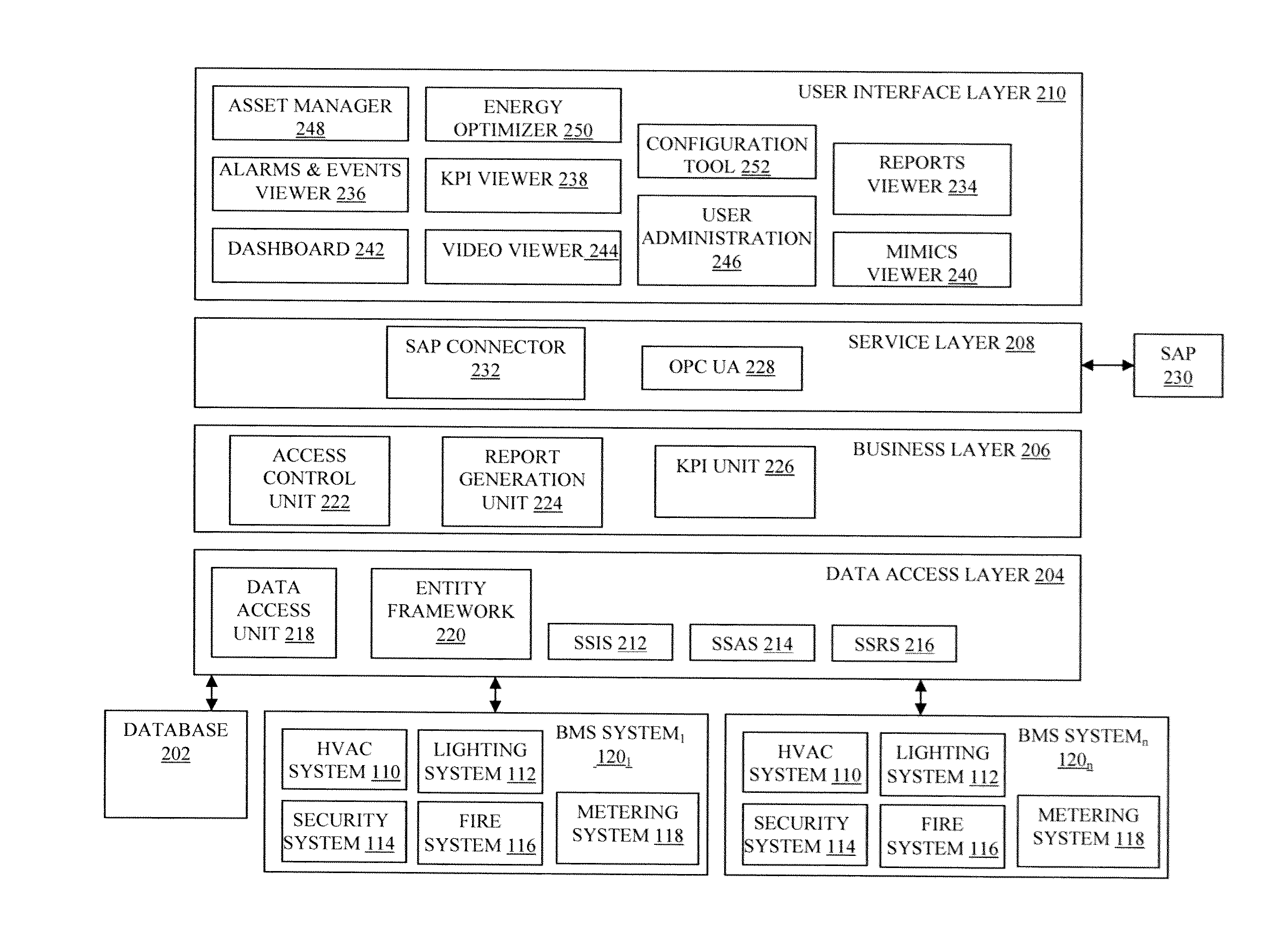
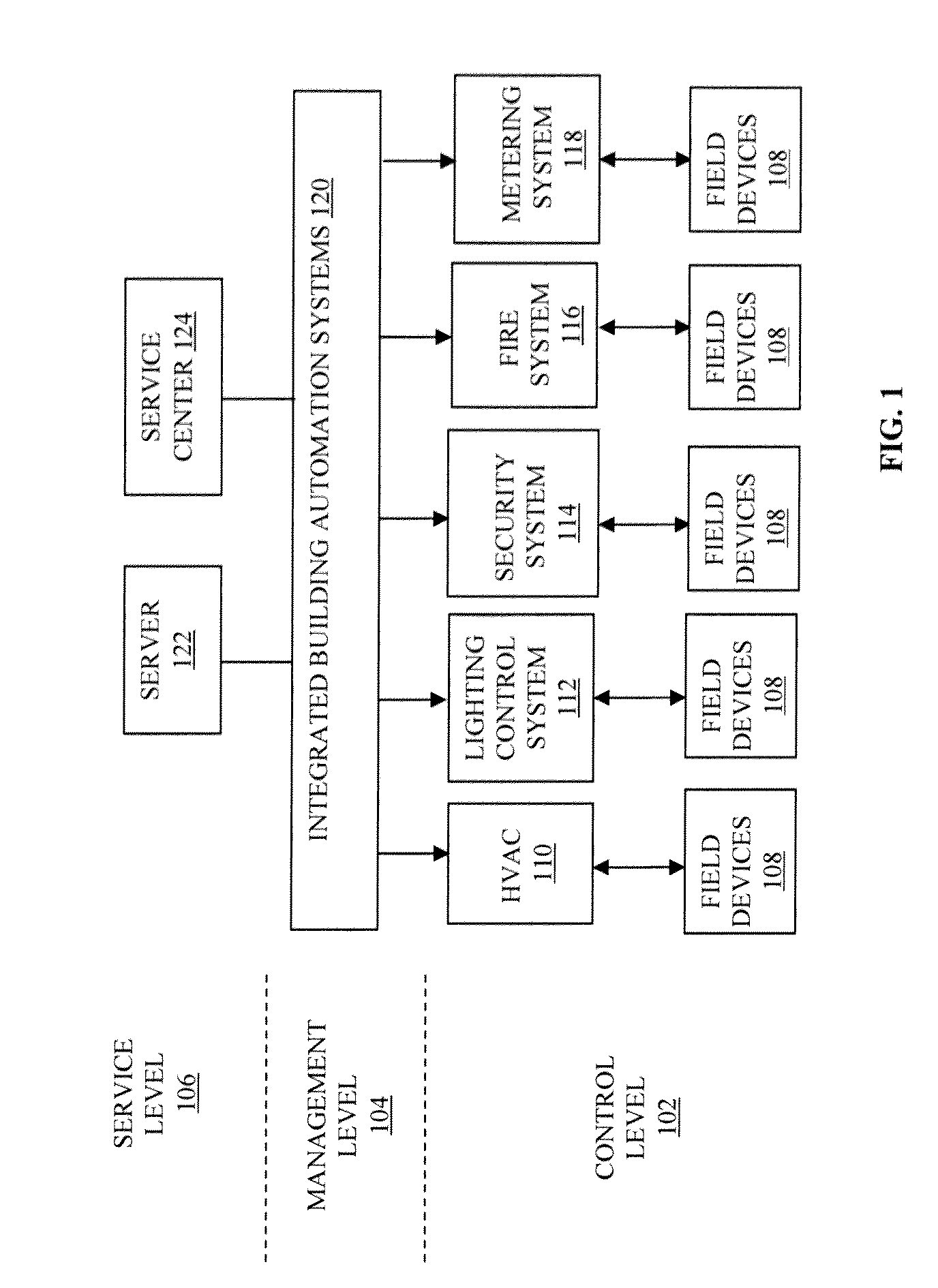
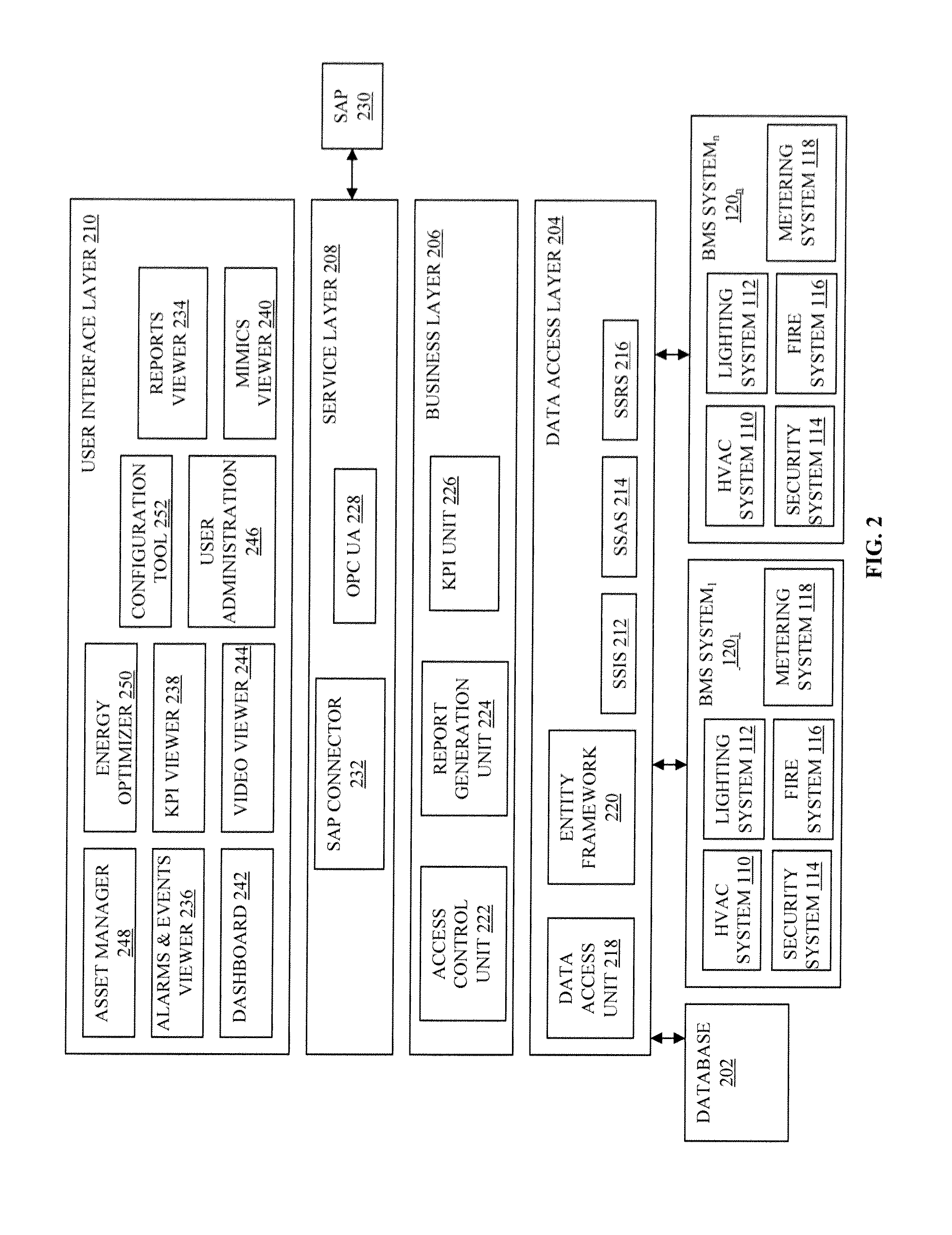
- A framework with a data access layer that extracts and prioritizes data from various building automation systems, storing it in a standard format in a database, and representing it in OPC UA format for processing and user interface access, enabling centralized control and integration across multiple systems.
Building automation system data management
PatentActiveGB2444451B
Innovation
- A dynamically extensible and automatically configurable BAS architecture that uses a communication network with an engine capable of adapting to both known and unknown control devices, allowing for dynamic extension and automatic configuration without recompilation, enabling seamless integration of legacy, current, and next-generation components from various vendors.


Interoperability Standards and Industry Protocols
The fundamental distinction between open and proprietary Building Management System architectures becomes most apparent when examining their approach to interoperability standards and industry protocols. Open BMS architectures are built upon widely adopted communication protocols such as BACnet, LonWorks, Modular Building Automation System (MBAS), and KNX. These protocols enable seamless integration across devices and systems from multiple manufacturers, creating vendor-neutral environments where components can communicate regardless of their origin. BACnet, standardized as ISO 16484-5, has emerged as the dominant protocol in commercial buildings, supporting diverse data exchange mechanisms including BACnet/IP for network communications.
Proprietary systems, conversely, typically employ manufacturer-specific protocols and communication frameworks that restrict interoperability to products within the same ecosystem. While some proprietary platforms offer gateway solutions or protocol translators to interface with standard protocols, these adaptations often introduce latency, data translation errors, and additional points of failure. The closed nature of proprietary protocols also limits third-party integration capabilities, creating dependencies on single vendors for system expansion and maintenance.
The industry has witnessed significant standardization efforts aimed at enhancing interoperability. Project Haystack and Brick Schema represent semantic modeling initiatives that provide standardized metadata frameworks for building systems, enabling more intelligent data interpretation across platforms. ASHRAE's recent developments in BACnet/SC (Secure Connect) address cybersecurity concerns while maintaining protocol openness. Additionally, emerging protocols like Matter for IoT devices and OCPP for electric vehicle charging infrastructure demonstrate the industry's continued commitment to open standards.
The practical implications of protocol selection extend beyond technical compatibility. Open protocols facilitate competitive bidding processes, reduce lifecycle costs through multi-vendor support, and enable future-proof system architectures that can accommodate emerging technologies. Organizations adopting open standards report greater flexibility in system modifications and reduced vendor lock-in risks. However, proprietary systems may offer tighter integration within their ecosystems and potentially faster implementation timelines for single-vendor deployments, though these advantages diminish as building complexity and longevity requirements increase.
Proprietary systems, conversely, typically employ manufacturer-specific protocols and communication frameworks that restrict interoperability to products within the same ecosystem. While some proprietary platforms offer gateway solutions or protocol translators to interface with standard protocols, these adaptations often introduce latency, data translation errors, and additional points of failure. The closed nature of proprietary protocols also limits third-party integration capabilities, creating dependencies on single vendors for system expansion and maintenance.
The industry has witnessed significant standardization efforts aimed at enhancing interoperability. Project Haystack and Brick Schema represent semantic modeling initiatives that provide standardized metadata frameworks for building systems, enabling more intelligent data interpretation across platforms. ASHRAE's recent developments in BACnet/SC (Secure Connect) address cybersecurity concerns while maintaining protocol openness. Additionally, emerging protocols like Matter for IoT devices and OCPP for electric vehicle charging infrastructure demonstrate the industry's continued commitment to open standards.
The practical implications of protocol selection extend beyond technical compatibility. Open protocols facilitate competitive bidding processes, reduce lifecycle costs through multi-vendor support, and enable future-proof system architectures that can accommodate emerging technologies. Organizations adopting open standards report greater flexibility in system modifications and reduced vendor lock-in risks. However, proprietary systems may offer tighter integration within their ecosystems and potentially faster implementation timelines for single-vendor deployments, though these advantages diminish as building complexity and longevity requirements increase.
Total Cost of Ownership Analysis
Total Cost of Ownership (TCO) represents a critical evaluation framework when comparing open and proprietary Building Management System architectures, encompassing both direct and indirect costs throughout the system lifecycle. Initial capital expenditure constitutes the most visible component, where proprietary systems typically demand higher upfront investments due to licensing fees, specialized hardware requirements, and vendor-specific infrastructure. Open architectures generally present lower entry barriers through reduced licensing costs and compatibility with standard hardware platforms, though integration complexity may offset some initial savings.
Operational expenses reveal substantial differences between the two approaches over extended deployment periods. Proprietary systems often incur recurring costs through mandatory maintenance contracts, software upgrade fees, and vendor-imposed service agreements that can escalate significantly over time. These systems may also require specialized training programs for facility management teams, adding to the human resource investment. Conversely, open architectures benefit from community-driven support structures and competitive service markets, enabling organizations to negotiate favorable maintenance terms or develop in-house expertise, thereby reducing long-term operational dependencies.
System scalability and modification costs present another crucial TCO dimension. Proprietary solutions frequently impose substantial charges for capacity expansion, feature additions, or integration with third-party systems, as vendors maintain control over compatibility protocols. Organizations may face vendor lock-in scenarios where switching costs become prohibitively expensive. Open architectures demonstrate superior flexibility, allowing incremental expansion using diverse vendor components and facilitating seamless integration with emerging technologies without proprietary constraints.
Hidden costs warrant careful consideration in comprehensive TCO analysis. Proprietary systems may generate unexpected expenses through forced obsolescence, limited interoperability with legacy equipment, and restricted data portability. Open systems, while offering greater transparency, may require additional investment in cybersecurity measures and system administration capabilities. The total ownership analysis must therefore extend beyond purchase price to encompass lifecycle sustainability, operational flexibility, and strategic alignment with organizational technology roadmaps spanning ten to twenty-year horizons.
Operational expenses reveal substantial differences between the two approaches over extended deployment periods. Proprietary systems often incur recurring costs through mandatory maintenance contracts, software upgrade fees, and vendor-imposed service agreements that can escalate significantly over time. These systems may also require specialized training programs for facility management teams, adding to the human resource investment. Conversely, open architectures benefit from community-driven support structures and competitive service markets, enabling organizations to negotiate favorable maintenance terms or develop in-house expertise, thereby reducing long-term operational dependencies.
System scalability and modification costs present another crucial TCO dimension. Proprietary solutions frequently impose substantial charges for capacity expansion, feature additions, or integration with third-party systems, as vendors maintain control over compatibility protocols. Organizations may face vendor lock-in scenarios where switching costs become prohibitively expensive. Open architectures demonstrate superior flexibility, allowing incremental expansion using diverse vendor components and facilitating seamless integration with emerging technologies without proprietary constraints.
Hidden costs warrant careful consideration in comprehensive TCO analysis. Proprietary systems may generate unexpected expenses through forced obsolescence, limited interoperability with legacy equipment, and restricted data portability. Open systems, while offering greater transparency, may require additional investment in cybersecurity measures and system administration capabilities. The total ownership analysis must therefore extend beyond purchase price to encompass lifecycle sustainability, operational flexibility, and strategic alignment with organizational technology roadmaps spanning ten to twenty-year horizons.
Unlock deeper insights with Patsnap Eureka Quick Research — get a full tech report to explore trends and direct your research. Try now!
Generate Your Research Report Instantly with AI Agent
Supercharge your innovation with Patsnap Eureka AI Agent Platform!