

Compare Retarder Efficiency in Different Propulsion Systems
MAR 10, 20269 MIN READ
Generate Your Research Report Instantly with AI Agent
PatSnap Eureka helps you evaluate technical feasibility & market potential.
Retarder Technology Background and Efficiency Objectives
Retarder technology has evolved significantly since its inception in the early 20th century, initially developed as auxiliary braking systems for heavy-duty vehicles operating in mountainous terrain. The fundamental principle involves converting kinetic energy into heat through electromagnetic, hydraulic, or compression mechanisms, thereby reducing reliance on traditional friction brakes and enhancing vehicle safety during prolonged deceleration phases.
The evolution of retarder systems has been closely intertwined with advancements in propulsion technologies. Early mechanical retarders gave way to more sophisticated electromagnetic and hydraulic variants, each offering distinct advantages depending on the propulsion system architecture. As automotive industries transitioned toward hybrid and electric powertrains, retarder integration became increasingly complex, requiring careful consideration of energy recovery potential and system compatibility.
Modern retarder efficiency objectives center on maximizing energy dissipation or recovery while minimizing parasitic losses during normal operation. In conventional internal combustion engine systems, the primary goal involves effective heat dissipation without compromising engine performance. However, hybrid and electric propulsion systems present opportunities for regenerative braking integration, where retarder efficiency extends beyond mere energy dissipation to include energy recovery and storage capabilities.
The efficiency metrics for retarder systems vary significantly across different propulsion architectures. Traditional diesel powertrains prioritize consistent braking force generation and thermal management, while hybrid systems focus on seamless integration between regenerative and friction-based retarding mechanisms. Electric propulsion systems offer the highest potential for energy recovery, with efficiency objectives targeting maximum kinetic energy conversion back to stored electrical energy.
Contemporary efficiency targets for retarder systems range from 70-85% energy conversion efficiency in electromagnetic systems to over 90% in advanced regenerative braking configurations. These objectives must be balanced against factors including system weight, cost, maintenance requirements, and integration complexity within existing propulsion architectures.
The technological landscape continues evolving toward intelligent retarder systems that adapt their operation based on vehicle load, terrain conditions, and energy management strategies. Future efficiency objectives increasingly emphasize not only peak performance metrics but also adaptive optimization capabilities that maximize overall vehicle energy efficiency across diverse operating conditions and propulsion system configurations.
The evolution of retarder systems has been closely intertwined with advancements in propulsion technologies. Early mechanical retarders gave way to more sophisticated electromagnetic and hydraulic variants, each offering distinct advantages depending on the propulsion system architecture. As automotive industries transitioned toward hybrid and electric powertrains, retarder integration became increasingly complex, requiring careful consideration of energy recovery potential and system compatibility.
Modern retarder efficiency objectives center on maximizing energy dissipation or recovery while minimizing parasitic losses during normal operation. In conventional internal combustion engine systems, the primary goal involves effective heat dissipation without compromising engine performance. However, hybrid and electric propulsion systems present opportunities for regenerative braking integration, where retarder efficiency extends beyond mere energy dissipation to include energy recovery and storage capabilities.
The efficiency metrics for retarder systems vary significantly across different propulsion architectures. Traditional diesel powertrains prioritize consistent braking force generation and thermal management, while hybrid systems focus on seamless integration between regenerative and friction-based retarding mechanisms. Electric propulsion systems offer the highest potential for energy recovery, with efficiency objectives targeting maximum kinetic energy conversion back to stored electrical energy.
Contemporary efficiency targets for retarder systems range from 70-85% energy conversion efficiency in electromagnetic systems to over 90% in advanced regenerative braking configurations. These objectives must be balanced against factors including system weight, cost, maintenance requirements, and integration complexity within existing propulsion architectures.
The technological landscape continues evolving toward intelligent retarder systems that adapt their operation based on vehicle load, terrain conditions, and energy management strategies. Future efficiency objectives increasingly emphasize not only peak performance metrics but also adaptive optimization capabilities that maximize overall vehicle energy efficiency across diverse operating conditions and propulsion system configurations.
Market Demand for Advanced Retarder Systems
The global transportation industry is experiencing unprecedented demand for advanced retarder systems as regulatory pressures intensify and safety standards become more stringent. Commercial vehicle manufacturers are increasingly seeking sophisticated braking solutions that can effectively manage vehicle speed during descent operations while minimizing wear on primary braking systems. This demand is particularly pronounced in heavy-duty trucking, where traditional friction brakes face significant thermal stress during prolonged downhill operations.
Market drivers for advanced retarder systems are multifaceted, encompassing both regulatory compliance and operational efficiency requirements. Environmental regulations across major markets are pushing manufacturers toward cleaner, more efficient propulsion systems, creating corresponding demand for compatible retarder technologies. The transition toward electric and hybrid commercial vehicles has generated specific requirements for regenerative braking systems that can seamlessly integrate with electric powertrains while maximizing energy recovery potential.
The mining and construction sectors represent substantial growth opportunities for retarder system manufacturers. These industries operate heavy machinery in challenging terrain conditions where conventional braking systems prove inadequate. Advanced retarder systems offer enhanced operational safety and reduced maintenance costs, making them attractive investments for fleet operators managing large-scale operations in demanding environments.
Regional market dynamics reveal varying adoption patterns across different geographical areas. European markets demonstrate strong preference for engine-based retarder systems due to established infrastructure and regulatory frameworks favoring integrated solutions. North American markets show growing interest in electromagnetic retarder systems, particularly for long-haul trucking applications where energy efficiency directly impacts operational profitability.
The emergence of autonomous and semi-autonomous commercial vehicles is creating new market segments for intelligent retarder systems. These applications require precise speed control capabilities and seamless integration with vehicle control systems, driving demand for electronically controlled retarder solutions with advanced sensor integration and real-time performance monitoring capabilities.
Fleet management companies are increasingly recognizing the total cost of ownership benefits associated with advanced retarder systems. Reduced brake pad replacement frequency, decreased maintenance downtime, and improved fuel efficiency through optimized speed management contribute to compelling business cases for system adoption across various commercial vehicle applications.
Market drivers for advanced retarder systems are multifaceted, encompassing both regulatory compliance and operational efficiency requirements. Environmental regulations across major markets are pushing manufacturers toward cleaner, more efficient propulsion systems, creating corresponding demand for compatible retarder technologies. The transition toward electric and hybrid commercial vehicles has generated specific requirements for regenerative braking systems that can seamlessly integrate with electric powertrains while maximizing energy recovery potential.
The mining and construction sectors represent substantial growth opportunities for retarder system manufacturers. These industries operate heavy machinery in challenging terrain conditions where conventional braking systems prove inadequate. Advanced retarder systems offer enhanced operational safety and reduced maintenance costs, making them attractive investments for fleet operators managing large-scale operations in demanding environments.
Regional market dynamics reveal varying adoption patterns across different geographical areas. European markets demonstrate strong preference for engine-based retarder systems due to established infrastructure and regulatory frameworks favoring integrated solutions. North American markets show growing interest in electromagnetic retarder systems, particularly for long-haul trucking applications where energy efficiency directly impacts operational profitability.
The emergence of autonomous and semi-autonomous commercial vehicles is creating new market segments for intelligent retarder systems. These applications require precise speed control capabilities and seamless integration with vehicle control systems, driving demand for electronically controlled retarder solutions with advanced sensor integration and real-time performance monitoring capabilities.
Fleet management companies are increasingly recognizing the total cost of ownership benefits associated with advanced retarder systems. Reduced brake pad replacement frequency, decreased maintenance downtime, and improved fuel efficiency through optimized speed management contribute to compelling business cases for system adoption across various commercial vehicle applications.
Current Retarder Performance and Technical Challenges
Current retarder performance across different propulsion systems exhibits significant variations in efficiency, operational characteristics, and technological maturity. In electric propulsion systems, regenerative braking serves as the primary retarding mechanism, achieving efficiency rates of 70-85% by converting kinetic energy back into electrical energy stored in batteries or supercapacitors. This technology demonstrates superior performance in urban driving conditions with frequent stop-and-go scenarios, where energy recovery potential is maximized.
Hydraulic retarders in conventional diesel propulsion systems typically achieve efficiency rates of 60-75%, with performance heavily dependent on fluid temperature and system pressure maintenance. These systems excel in continuous braking applications such as downhill driving, where sustained retarding force is required without brake fade concerns. However, hydraulic retarders face challenges related to heat dissipation and fluid degradation under extreme operating conditions.
Engine compression braking, commonly employed in diesel propulsion systems, demonstrates efficiency levels of 40-60% depending on engine displacement and compression ratio optimization. While this technology offers excellent durability and minimal maintenance requirements, its effectiveness diminishes significantly at lower engine speeds, limiting its utility in urban environments.
Electromagnetic retarders present efficiency ranges of 65-80% across various propulsion platforms, offering consistent performance independent of ambient temperature conditions. These systems provide precise control characteristics and rapid response times, making them suitable for automated braking applications and advanced driver assistance systems.
The primary technical challenges affecting retarder efficiency include thermal management limitations, particularly in hydraulic and electromagnetic systems where excessive heat generation reduces performance and component longevity. Energy dissipation methods remain a critical bottleneck, as most retarding systems convert kinetic energy into waste heat rather than recoverable energy forms.
Integration complexity poses another significant challenge, especially when implementing multiple retarding technologies within hybrid propulsion architectures. System coordination algorithms must balance efficiency optimization with vehicle stability and driver comfort requirements, often resulting in compromised performance outcomes.
Control system sophistication varies considerably across different retarder technologies, with regenerative systems requiring advanced power electronics and battery management systems, while mechanical compression braking relies on relatively simple valve timing mechanisms. This technological disparity creates challenges in developing unified control strategies for multi-modal retarding systems.
Durability and maintenance requirements differ substantially between retarder types, with regenerative systems facing battery degradation issues and hydraulic systems requiring regular fluid replacement and seal maintenance. These factors significantly impact total cost of ownership and operational efficiency over extended service periods.
Hydraulic retarders in conventional diesel propulsion systems typically achieve efficiency rates of 60-75%, with performance heavily dependent on fluid temperature and system pressure maintenance. These systems excel in continuous braking applications such as downhill driving, where sustained retarding force is required without brake fade concerns. However, hydraulic retarders face challenges related to heat dissipation and fluid degradation under extreme operating conditions.
Engine compression braking, commonly employed in diesel propulsion systems, demonstrates efficiency levels of 40-60% depending on engine displacement and compression ratio optimization. While this technology offers excellent durability and minimal maintenance requirements, its effectiveness diminishes significantly at lower engine speeds, limiting its utility in urban environments.
Electromagnetic retarders present efficiency ranges of 65-80% across various propulsion platforms, offering consistent performance independent of ambient temperature conditions. These systems provide precise control characteristics and rapid response times, making them suitable for automated braking applications and advanced driver assistance systems.
The primary technical challenges affecting retarder efficiency include thermal management limitations, particularly in hydraulic and electromagnetic systems where excessive heat generation reduces performance and component longevity. Energy dissipation methods remain a critical bottleneck, as most retarding systems convert kinetic energy into waste heat rather than recoverable energy forms.
Integration complexity poses another significant challenge, especially when implementing multiple retarding technologies within hybrid propulsion architectures. System coordination algorithms must balance efficiency optimization with vehicle stability and driver comfort requirements, often resulting in compromised performance outcomes.
Control system sophistication varies considerably across different retarder technologies, with regenerative systems requiring advanced power electronics and battery management systems, while mechanical compression braking relies on relatively simple valve timing mechanisms. This technological disparity creates challenges in developing unified control strategies for multi-modal retarding systems.
Durability and maintenance requirements differ substantially between retarder types, with regenerative systems facing battery degradation issues and hydraulic systems requiring regular fluid replacement and seal maintenance. These factors significantly impact total cost of ownership and operational efficiency over extended service periods.
Existing Retarder Solutions for Different Propulsion Types
01 Use of sugar-based retarders in cement compositions
Sugar-based compounds and their derivatives can be used as retarders in cement and concrete formulations to control the setting time. These retarders work by interfering with the hydration process of cement, allowing for extended workability and improved placement characteristics. The efficiency of these retarders can be optimized by adjusting their concentration and molecular structure to achieve desired setting time延迟 without compromising final strength properties.- Use of sugar-based retarders in concrete compositions: Sugar-based compounds and their derivatives can be incorporated as retarders in concrete and cement compositions to control the setting time and improve workability. These retarders work by interfering with the hydration process of cement, allowing for extended working time and better placement of concrete. The efficiency of these retarders can be optimized by adjusting their concentration and molecular structure to achieve desired setting characteristics while maintaining final strength properties.
- Phosphonate-based retarding admixtures: Phosphonate compounds serve as effective retarding agents in hydraulic cement compositions. These materials provide controlled retardation of cement setting while maintaining or enhancing other performance characteristics such as strength development and durability. The efficiency of phosphonate-based retarders can be enhanced through specific molecular modifications and optimal dosage levels to achieve precise control over setting times in various temperature and application conditions.
- Combination retarder systems with multiple active components: Synergistic combinations of different retarding agents can provide improved efficiency compared to single-component systems. These multi-component retarder formulations may include organic acids, phosphonates, and other additives that work together to provide enhanced control over setting time, improved workability retention, and optimized strength development. The combination approach allows for fine-tuning of retardation effects across different environmental conditions and cement types.
- Polymer-modified retarder compositions: Polymeric materials can be incorporated into retarder formulations to enhance their efficiency and provide additional benefits such as improved dispersion, water retention, and workability. These polymer-modified systems offer better control over the retardation mechanism and can be tailored to specific application requirements. The polymer component helps stabilize the retarder in the cement matrix and can provide sustained release characteristics for prolonged retardation effects.
- Nano-enhanced retarder systems: Incorporation of nanomaterials and nano-scale additives can significantly improve retarder efficiency by providing better dispersion and interaction with cement particles. These advanced systems utilize nanotechnology to achieve more precise control over hydration kinetics and setting behavior. The nano-enhanced approach allows for reduced dosage requirements while maintaining or improving retardation performance, leading to more cost-effective and environmentally friendly concrete formulations.
02 Phosphonate-based retarder systems
Phosphonate compounds and their salts can be incorporated into cementitious materials as effective retarders. These compounds chelate with calcium ions in the cement matrix, thereby slowing down the hydration reaction. The retarder efficiency can be enhanced by combining phosphonates with other admixtures or by modifying their chemical structure to improve their interaction with cement particles and extend the setting time while maintaining workability.Expand Specific Solutions03 Combination of retarders with superplasticizers
The efficiency of retarders can be significantly improved by combining them with superplasticizers or water-reducing agents. This synergistic approach allows for better dispersion of cement particles while simultaneously controlling the setting time. The combination enables the formulation of high-performance concrete with extended workability, reduced water content, and improved mechanical properties. The ratio and type of retarder to superplasticizer can be optimized for specific application requirements.Expand Specific Solutions04 Organic acid-based retarder formulations
Organic acids and their derivatives, including carboxylic acids and hydroxycarboxylic acids, can be utilized as retarders in cement systems. These compounds adsorb onto cement particle surfaces and modify the hydration kinetics. The retarder efficiency depends on factors such as molecular weight, functional group positioning, and concentration. These formulations can be tailored to provide controlled retardation while ensuring compatibility with other concrete admixtures and maintaining long-term durability.Expand Specific Solutions05 Temperature-responsive retarder systems
Advanced retarder formulations can be designed to respond to temperature variations, providing adaptive control of cement setting time. These systems incorporate compounds that exhibit temperature-dependent solubility or reactivity, allowing for automatic adjustment of retardation efficiency based on ambient conditions. This approach is particularly useful in applications where concrete is placed under varying temperature conditions, ensuring consistent performance and workability across different environmental scenarios.Expand Specific Solutions
Key Players in Retarder and Propulsion System Industry
The retarder efficiency comparison across different propulsion systems represents a mature technology sector experiencing steady evolution driven by electrification and emission regulations. The market demonstrates significant scale with established players like ZF Friedrichshafen AG, Voith Turbo GmbH, and Jacobs Vehicle Systems leading traditional hydraulic and engine brake technologies. Technology maturity varies considerably across segments, with conventional retarder systems from companies like Allison Transmission and Scania CV AB representing well-established solutions, while newer players such as Lantu Automotive Technology focus on electric vehicle integration. Chinese manufacturers including Shaanxi Fast Gear and FAW Jiefang Automotive are rapidly advancing capabilities, particularly in heavy commercial vehicle applications. The competitive landscape shows convergence between traditional automotive suppliers like Robert Bosch GmbH, Dana Belgium NV, and emerging electric propulsion specialists, indicating an industry transition phase where retarder efficiency optimization becomes critical for next-generation propulsion architectures across conventional, hybrid, and fully electric platforms.
ZF Friedrichshafen AG
Technical Solution: ZF develops advanced retarder systems integrated with transmission technology, featuring electromagnetic and hydrodynamic retarders that provide variable braking force control. Their Intarder technology combines primary and secondary retarders within the transmission housing, achieving up to 600 kW braking power while maintaining optimal thermal management through integrated cooling systems. The company's retarder efficiency optimization focuses on reducing parasitic losses during non-braking operation and maximizing energy dissipation during active braking phases.
Strengths: Market-leading integration technology, high braking power capacity, excellent thermal management. Weaknesses: Higher system complexity, increased manufacturing costs, requires specialized maintenance expertise.
Voith Patent GmbH
Technical Solution: Voith specializes in hydrodynamic retarder technology with their Voith Retarder systems offering contactless braking through fluid coupling principles. Their technology achieves consistent braking performance across different propulsion systems including diesel, hybrid, and electric vehicles. The retarder efficiency is optimized through advanced blade geometry and fluid dynamics modeling, providing up to 90% energy conversion efficiency during braking operations. Their systems feature adaptive control algorithms that adjust braking force based on vehicle speed, load conditions, and propulsion system characteristics.
Strengths: Proven hydrodynamic technology, high reliability, excellent modulation capability, maintenance-free operation. Weaknesses: Limited peak braking power compared to electromagnetic systems, requires dedicated cooling circuits.
Core Innovations in Retarder Efficiency Enhancement
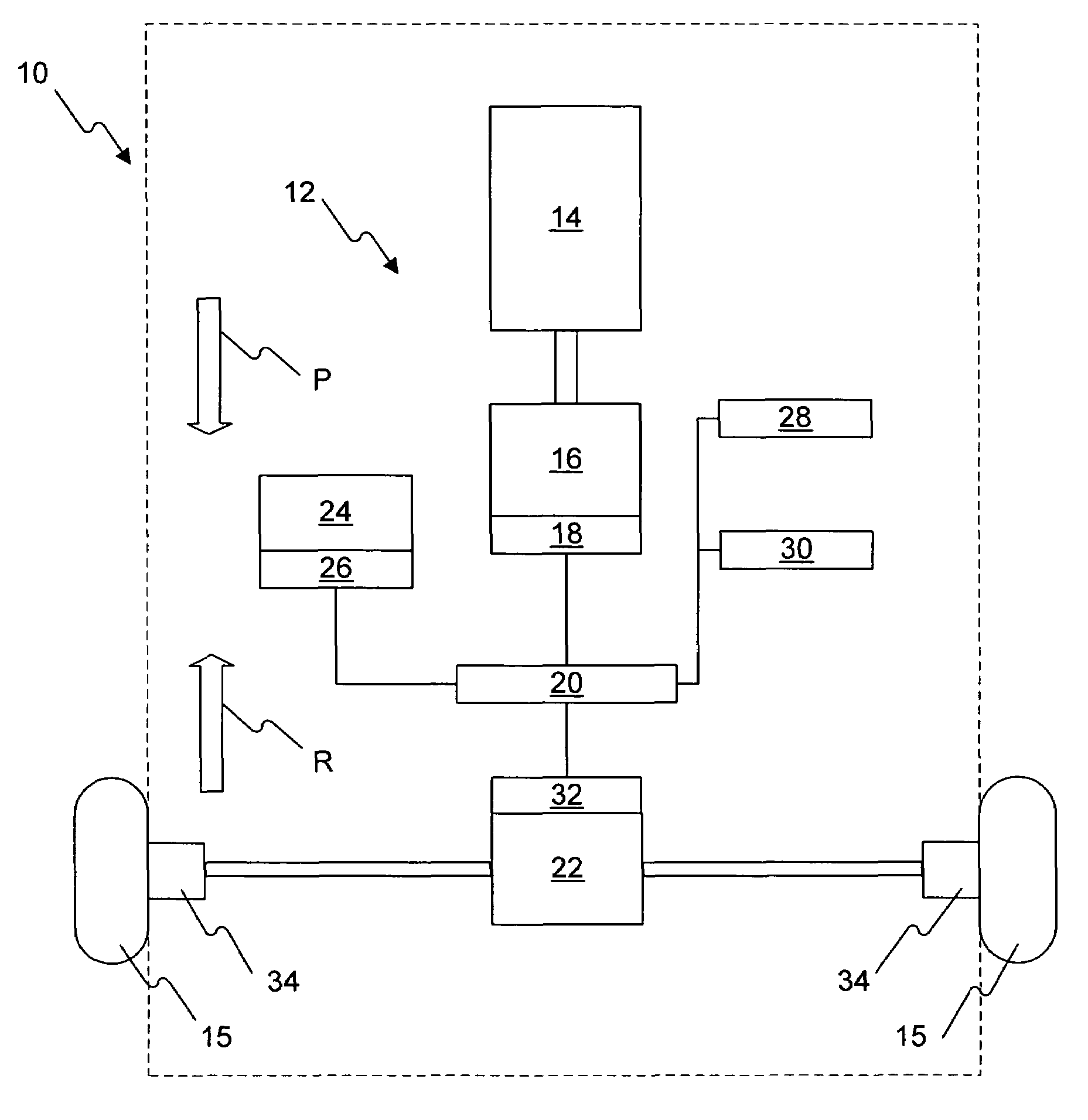
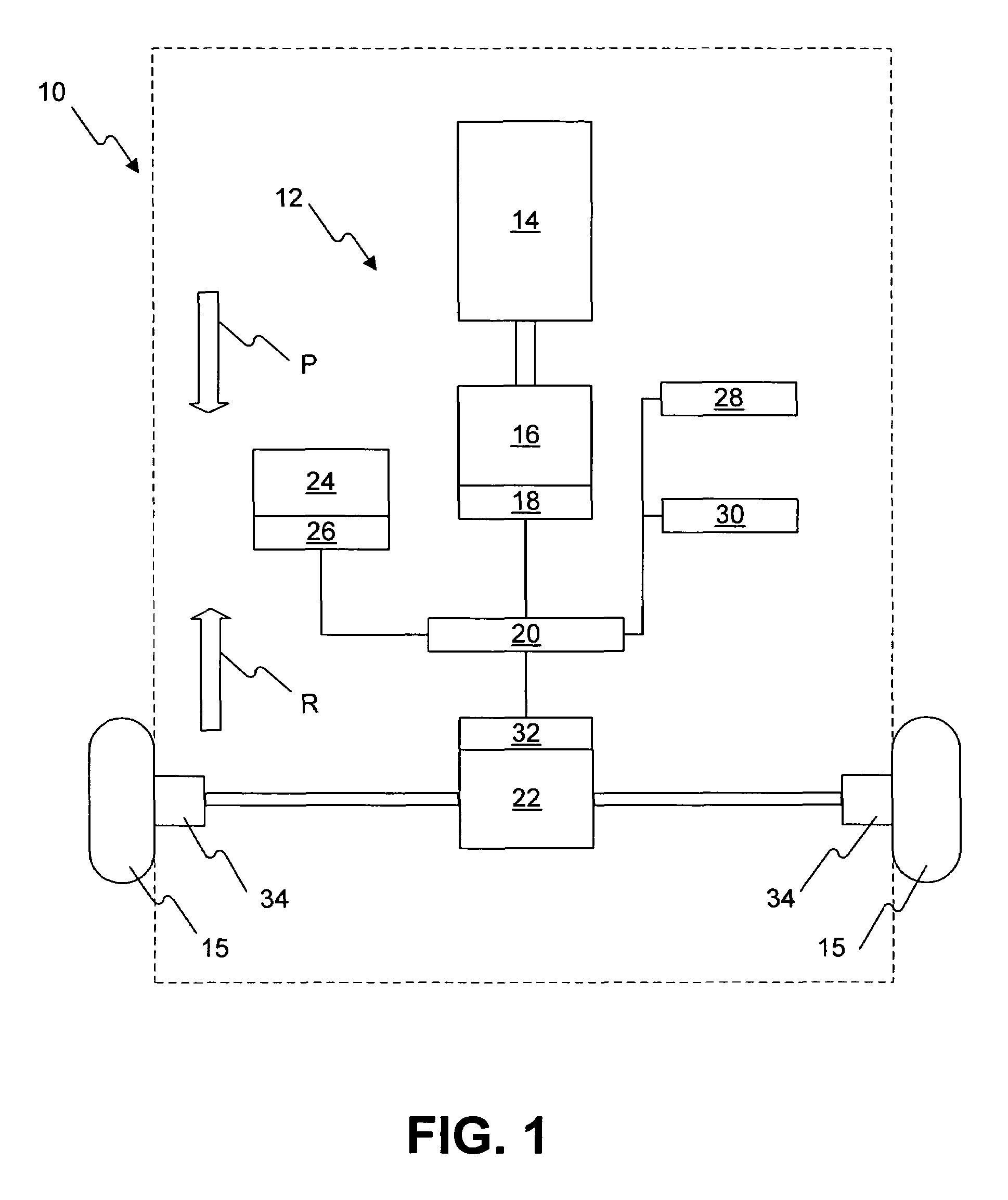
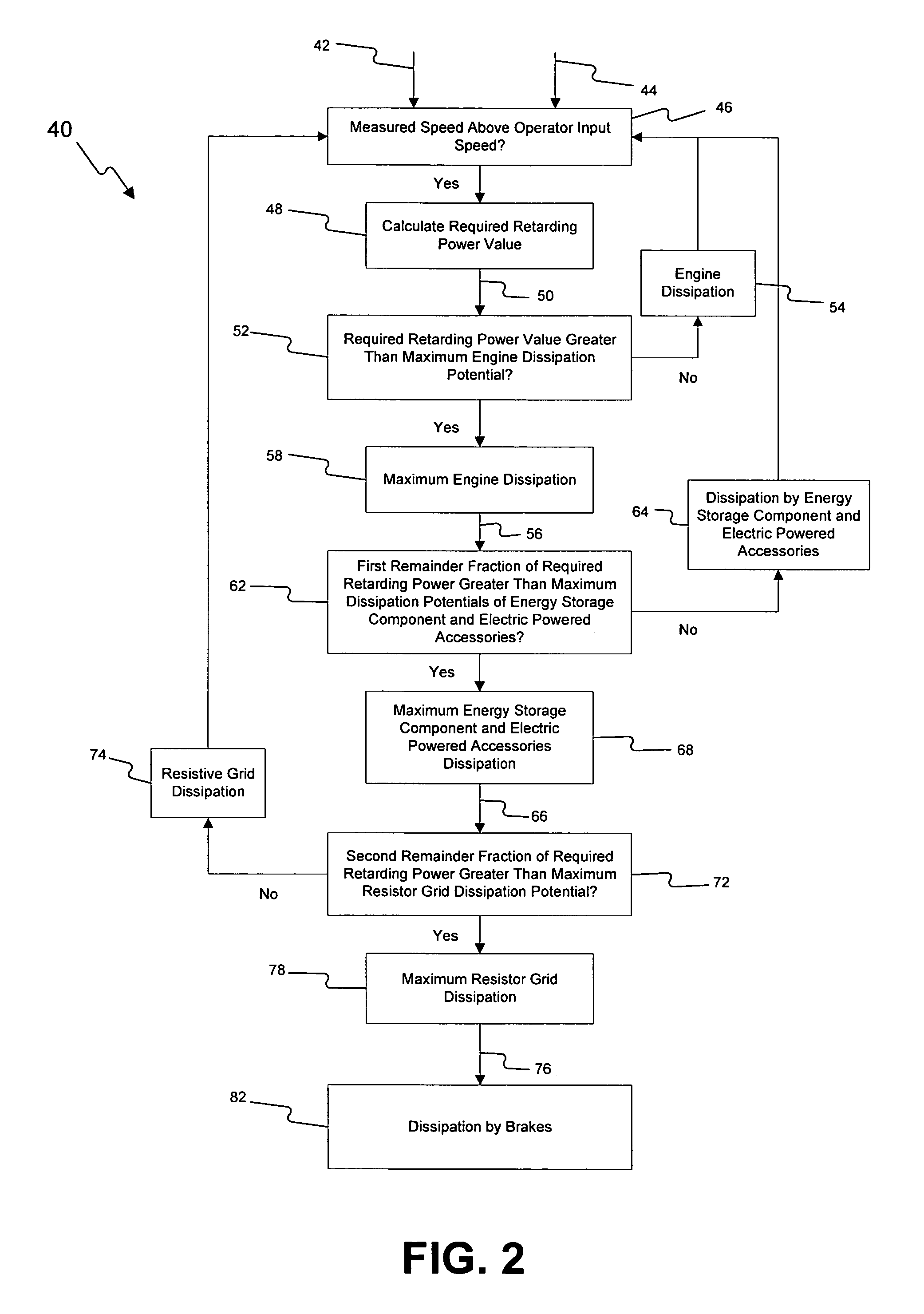
Retarding control for an electric drive machine
PatentInactiveUS6986727B2
Innovation
- A method that converts undesired power into electric power, using it to drive the internal combustion engine, storing excess in energy storage components or powering accessories, and applying brakes to dissipate energy, with a controller prioritizing dissipation through a hierarchy of components including the engine, energy storage, resistive grid, and brakes.

Motor vehicle drivetrain
PatentInactiveEP3080471A1
Innovation
- A motor vehicle drive train incorporating a hydrodynamic retarder and a mechanical separating clutch that decouples the power turbine and hydrodynamic retarder from the drive power flow, utilizing a torsional vibration damping element and spur gear stages to optimize efficiency by switching between different operational modes, thereby minimizing mechanical losses.
Safety Standards and Regulations for Retarder Systems
The regulatory landscape for retarder systems varies significantly across different propulsion technologies, reflecting the unique safety challenges each system presents. Traditional friction-based retarders in conventional vehicles are governed by well-established standards such as ISO 15623 and ECE R13, which define performance requirements, testing procedures, and integration protocols. These regulations emphasize thermal management, structural integrity, and fail-safe mechanisms to prevent brake fade and system overheating.
Electric and hybrid propulsion systems introduce additional complexity to retarder regulations due to their regenerative braking capabilities. The ISO 26262 functional safety standard becomes particularly relevant, requiring comprehensive hazard analysis and risk assessment for electronic control systems. Regulatory bodies mandate specific protocols for energy recovery systems, including battery thermal management during regenerative braking and electromagnetic compatibility requirements to prevent interference with vehicle electronics.
Hydrogen fuel cell vehicles present unique regulatory challenges for retarder systems, as safety standards must address both the high-voltage electrical components and hydrogen storage considerations. The UN GTR No. 13 Global Technical Regulation provides framework requirements, while regional standards like SAE J2578 specify additional safety measures for fuel cell vehicle braking systems, including emergency shutdown procedures and hydrogen leak detection integration.
Commercial vehicle regulations impose stricter requirements across all propulsion types, with the Federal Motor Vehicle Safety Standard (FMVSS) 121 in North America and ECE R13 in Europe mandating specific performance thresholds for heavy-duty applications. These standards require retarder systems to demonstrate consistent performance under extreme operating conditions and maintain effectiveness across extended duty cycles.
Emerging autonomous vehicle technologies are driving new regulatory frameworks that encompass retarder system integration with advanced driver assistance systems. The evolving ISO 21448 standard for Safety of the Intended Functionality addresses the interaction between retarder systems and automated driving functions, requiring validation of system behavior in edge cases and failure scenarios.
Compliance verification processes differ substantially between propulsion systems, with electric vehicles requiring additional electromagnetic emission testing and fuel cell systems necessitating specialized hydrogen safety assessments. These regulatory variations significantly impact development timelines and certification costs across different propulsion technologies.
Electric and hybrid propulsion systems introduce additional complexity to retarder regulations due to their regenerative braking capabilities. The ISO 26262 functional safety standard becomes particularly relevant, requiring comprehensive hazard analysis and risk assessment for electronic control systems. Regulatory bodies mandate specific protocols for energy recovery systems, including battery thermal management during regenerative braking and electromagnetic compatibility requirements to prevent interference with vehicle electronics.
Hydrogen fuel cell vehicles present unique regulatory challenges for retarder systems, as safety standards must address both the high-voltage electrical components and hydrogen storage considerations. The UN GTR No. 13 Global Technical Regulation provides framework requirements, while regional standards like SAE J2578 specify additional safety measures for fuel cell vehicle braking systems, including emergency shutdown procedures and hydrogen leak detection integration.
Commercial vehicle regulations impose stricter requirements across all propulsion types, with the Federal Motor Vehicle Safety Standard (FMVSS) 121 in North America and ECE R13 in Europe mandating specific performance thresholds for heavy-duty applications. These standards require retarder systems to demonstrate consistent performance under extreme operating conditions and maintain effectiveness across extended duty cycles.
Emerging autonomous vehicle technologies are driving new regulatory frameworks that encompass retarder system integration with advanced driver assistance systems. The evolving ISO 21448 standard for Safety of the Intended Functionality addresses the interaction between retarder systems and automated driving functions, requiring validation of system behavior in edge cases and failure scenarios.
Compliance verification processes differ substantially between propulsion systems, with electric vehicles requiring additional electromagnetic emission testing and fuel cell systems necessitating specialized hydrogen safety assessments. These regulatory variations significantly impact development timelines and certification costs across different propulsion technologies.
Environmental Impact Assessment of Retarder Technologies
The environmental implications of retarder technologies across different propulsion systems present a complex landscape of trade-offs between operational efficiency and ecological responsibility. As transportation sectors face increasing pressure to reduce their carbon footprint, the environmental assessment of retarder systems becomes crucial for sustainable mobility solutions.
Electric propulsion systems demonstrate the most favorable environmental profile when integrated with regenerative braking retarders. These systems convert kinetic energy back into electrical energy, reducing overall power consumption and extending vehicle range. The environmental benefit is amplified when the electricity source derives from renewable energy, creating a virtually carbon-neutral braking process. However, the manufacturing of battery systems and rare earth materials for electric motors introduces upstream environmental costs that must be considered in lifecycle assessments.
Hydraulic retarder systems in conventional diesel propulsion present moderate environmental impacts. While these systems reduce brake pad wear and associated particulate emissions, they increase fuel consumption due to parasitic losses in the hydraulic circuit. The environmental burden includes hydraulic fluid production, potential leakage risks, and increased CO2 emissions from higher fuel consumption. Studies indicate a 2-3% increase in fuel consumption when hydraulic retarders are actively engaged, translating to proportional increases in greenhouse gas emissions.
Exhaust brake retarders in diesel engines offer a more environmentally favorable profile compared to hydraulic systems. By utilizing engine compression and exhaust backpressure, these systems generate minimal additional environmental impact while reducing brake wear particles. The primary environmental consideration involves slightly increased exhaust gas temperatures and potential impacts on aftertreatment system efficiency.
Electromagnetic retarders present unique environmental challenges related to electromagnetic field generation and electrical power consumption. While offering precise control and minimal mechanical wear, these systems require continuous electrical input, potentially increasing alternator load and fuel consumption in conventional vehicles.
The lifecycle environmental assessment reveals that regenerative systems in electric vehicles provide the greatest environmental benefits, followed by exhaust brakes in optimized diesel engines. Hydraulic retarders, despite their effectiveness, present the highest environmental impact due to fluid requirements and parasitic losses. Future environmental improvements depend on advancing regenerative technologies and integrating retarder systems with hybrid propulsion architectures to minimize ecological footprints while maintaining operational safety and efficiency standards.
Electric propulsion systems demonstrate the most favorable environmental profile when integrated with regenerative braking retarders. These systems convert kinetic energy back into electrical energy, reducing overall power consumption and extending vehicle range. The environmental benefit is amplified when the electricity source derives from renewable energy, creating a virtually carbon-neutral braking process. However, the manufacturing of battery systems and rare earth materials for electric motors introduces upstream environmental costs that must be considered in lifecycle assessments.
Hydraulic retarder systems in conventional diesel propulsion present moderate environmental impacts. While these systems reduce brake pad wear and associated particulate emissions, they increase fuel consumption due to parasitic losses in the hydraulic circuit. The environmental burden includes hydraulic fluid production, potential leakage risks, and increased CO2 emissions from higher fuel consumption. Studies indicate a 2-3% increase in fuel consumption when hydraulic retarders are actively engaged, translating to proportional increases in greenhouse gas emissions.
Exhaust brake retarders in diesel engines offer a more environmentally favorable profile compared to hydraulic systems. By utilizing engine compression and exhaust backpressure, these systems generate minimal additional environmental impact while reducing brake wear particles. The primary environmental consideration involves slightly increased exhaust gas temperatures and potential impacts on aftertreatment system efficiency.
Electromagnetic retarders present unique environmental challenges related to electromagnetic field generation and electrical power consumption. While offering precise control and minimal mechanical wear, these systems require continuous electrical input, potentially increasing alternator load and fuel consumption in conventional vehicles.
The lifecycle environmental assessment reveals that regenerative systems in electric vehicles provide the greatest environmental benefits, followed by exhaust brakes in optimized diesel engines. Hydraulic retarders, despite their effectiveness, present the highest environmental impact due to fluid requirements and parasitic losses. Future environmental improvements depend on advancing regenerative technologies and integrating retarder systems with hybrid propulsion architectures to minimize ecological footprints while maintaining operational safety and efficiency standards.
Unlock deeper insights with PatSnap Eureka Quick Research — get a full tech report to explore trends and direct your research. Try now!
Generate Your Research Report Instantly with AI Agent
Supercharge your innovation with PatSnap Eureka AI Agent Platform!