

How to Establish Retarder Performance Benchmarks Globally
MAR 10, 20269 MIN READ
Generate Your Research Report Instantly with AI Agent
PatSnap Eureka helps you evaluate technical feasibility & market potential.
Retarder Technology Background and Performance Goals
Retarder technology has evolved significantly since its inception in the early 20th century, transitioning from simple mechanical friction-based systems to sophisticated electromagnetic and hydrodynamic solutions. The fundamental purpose remains consistent: providing auxiliary braking force to reduce wear on primary service brakes while enhancing vehicle safety and operational efficiency. Modern retarders encompass three primary categories: exhaust brakes, electromagnetic retarders, and hydrodynamic retarders, each offering distinct advantages for specific vehicle applications and operating conditions.
The technological evolution has been driven by increasingly stringent safety regulations, environmental concerns, and the growing demand for heavy-duty commercial vehicles capable of handling diverse terrain and load conditions. European markets pioneered advanced retarder integration in the 1970s, followed by widespread adoption in North American and Asian markets. Contemporary systems incorporate sophisticated electronic control units, enabling seamless integration with vehicle stability systems and automated transmission controls.
Current performance objectives center on achieving optimal braking torque delivery across varying operational parameters while maintaining system durability and reliability. Primary goals include maximizing heat dissipation efficiency, minimizing maintenance requirements, and ensuring consistent performance across temperature ranges from -40°C to +120°C. Advanced systems target torque outputs ranging from 1,500 to 4,000 Nm, depending on vehicle class and application requirements.
Integration challenges focus on harmonizing retarder operation with existing vehicle systems, including anti-lock braking systems, electronic stability control, and engine management systems. Modern development emphasizes predictive control algorithms that anticipate braking requirements based on route topology, vehicle load, and driving patterns. These intelligent systems aim to optimize energy recovery potential while maintaining primary safety functions.
Future technological objectives encompass enhanced connectivity features, enabling real-time performance monitoring and predictive maintenance capabilities. The integration of artificial intelligence and machine learning algorithms represents a significant advancement opportunity, allowing systems to adapt performance characteristics based on individual driver behavior and specific operational environments, ultimately establishing more refined and application-specific performance benchmarks.
The technological evolution has been driven by increasingly stringent safety regulations, environmental concerns, and the growing demand for heavy-duty commercial vehicles capable of handling diverse terrain and load conditions. European markets pioneered advanced retarder integration in the 1970s, followed by widespread adoption in North American and Asian markets. Contemporary systems incorporate sophisticated electronic control units, enabling seamless integration with vehicle stability systems and automated transmission controls.
Current performance objectives center on achieving optimal braking torque delivery across varying operational parameters while maintaining system durability and reliability. Primary goals include maximizing heat dissipation efficiency, minimizing maintenance requirements, and ensuring consistent performance across temperature ranges from -40°C to +120°C. Advanced systems target torque outputs ranging from 1,500 to 4,000 Nm, depending on vehicle class and application requirements.
Integration challenges focus on harmonizing retarder operation with existing vehicle systems, including anti-lock braking systems, electronic stability control, and engine management systems. Modern development emphasizes predictive control algorithms that anticipate braking requirements based on route topology, vehicle load, and driving patterns. These intelligent systems aim to optimize energy recovery potential while maintaining primary safety functions.
Future technological objectives encompass enhanced connectivity features, enabling real-time performance monitoring and predictive maintenance capabilities. The integration of artificial intelligence and machine learning algorithms represents a significant advancement opportunity, allowing systems to adapt performance characteristics based on individual driver behavior and specific operational environments, ultimately establishing more refined and application-specific performance benchmarks.
Global Market Demand for Retarder Performance Standards
The global automotive industry is experiencing unprecedented demand for standardized retarder performance benchmarks, driven by increasingly stringent safety regulations and environmental compliance requirements. Commercial vehicle manufacturers worldwide are facing mounting pressure to demonstrate consistent braking performance across diverse operating conditions, creating a substantial market need for unified testing protocols and performance metrics.
Heavy-duty vehicle segments represent the primary demand drivers for retarder performance standards. Long-haul trucking operations require reliable auxiliary braking systems to manage extended downhill descents while preserving primary brake components. The growing emphasis on total cost of ownership has intensified fleet operators' focus on predictable maintenance schedules and component longevity, making standardized performance metrics essential for procurement decisions.
Regional regulatory frameworks are converging toward harmonized safety standards, amplifying market demand for globally applicable benchmarks. European Union regulations emphasizing reduced emissions and enhanced road safety are influencing standards development in emerging markets. Similarly, North American commercial vehicle safety initiatives are driving adoption of performance-based testing methodologies that require consistent measurement approaches.
The electric and hybrid commercial vehicle transition is creating new market dynamics for retarder performance evaluation. Regenerative braking systems integration demands sophisticated performance benchmarks that account for energy recovery efficiency alongside traditional stopping power metrics. This technological shift is expanding the addressable market for comprehensive testing solutions beyond conventional friction-based retarders.
Supply chain globalization has intensified manufacturer requirements for internationally recognized performance certifications. Component suppliers serving multiple geographic markets need standardized testing protocols to streamline product development and regulatory approval processes. This demand extends beyond original equipment manufacturers to aftermarket suppliers seeking competitive differentiation through verified performance claims.
Infrastructure development in emerging economies is generating substantial demand for reliable commercial vehicle braking systems. Mountainous terrain in regions experiencing rapid economic growth requires proven retarder performance capabilities, creating market opportunities for standardized evaluation methodologies that ensure consistent safety outcomes across varied geographical conditions.
Heavy-duty vehicle segments represent the primary demand drivers for retarder performance standards. Long-haul trucking operations require reliable auxiliary braking systems to manage extended downhill descents while preserving primary brake components. The growing emphasis on total cost of ownership has intensified fleet operators' focus on predictable maintenance schedules and component longevity, making standardized performance metrics essential for procurement decisions.
Regional regulatory frameworks are converging toward harmonized safety standards, amplifying market demand for globally applicable benchmarks. European Union regulations emphasizing reduced emissions and enhanced road safety are influencing standards development in emerging markets. Similarly, North American commercial vehicle safety initiatives are driving adoption of performance-based testing methodologies that require consistent measurement approaches.
The electric and hybrid commercial vehicle transition is creating new market dynamics for retarder performance evaluation. Regenerative braking systems integration demands sophisticated performance benchmarks that account for energy recovery efficiency alongside traditional stopping power metrics. This technological shift is expanding the addressable market for comprehensive testing solutions beyond conventional friction-based retarders.
Supply chain globalization has intensified manufacturer requirements for internationally recognized performance certifications. Component suppliers serving multiple geographic markets need standardized testing protocols to streamline product development and regulatory approval processes. This demand extends beyond original equipment manufacturers to aftermarket suppliers seeking competitive differentiation through verified performance claims.
Infrastructure development in emerging economies is generating substantial demand for reliable commercial vehicle braking systems. Mountainous terrain in regions experiencing rapid economic growth requires proven retarder performance capabilities, creating market opportunities for standardized evaluation methodologies that ensure consistent safety outcomes across varied geographical conditions.
Current Retarder Performance Assessment Challenges
The establishment of global retarder performance benchmarks faces significant challenges rooted in the fundamental diversity of testing methodologies and evaluation criteria across different regions and manufacturers. Current assessment approaches vary substantially between North American, European, and Asian markets, with each region employing distinct testing protocols that reflect local regulatory requirements, operational conditions, and safety standards. This fragmentation creates substantial barriers to developing universally applicable performance metrics.
Standardization gaps represent a critical obstacle in contemporary retarder performance evaluation. While organizations such as SAE International, ISO, and various national standards bodies have developed testing procedures, these standards often focus on specific aspects of retarder performance rather than providing comprehensive evaluation frameworks. The absence of harmonized testing conditions, including variations in test vehicle configurations, load specifications, and environmental parameters, makes direct performance comparisons between different retarder systems extremely difficult.
Measurement inconsistencies further complicate the assessment landscape. Different manufacturers and testing facilities employ varying instrumentation accuracy levels, data collection frequencies, and analysis methodologies. Temperature measurement protocols, torque calculation methods, and durability assessment criteria differ significantly across the industry, leading to performance data that cannot be reliably compared or aggregated into meaningful benchmarks.
The complexity of real-world operating conditions presents another substantial challenge. Laboratory testing environments often fail to adequately replicate the diverse operational scenarios that retarders encounter in actual service, including varying ambient temperatures, altitude changes, duty cycles, and vehicle loading conditions. This disconnect between controlled testing environments and practical applications undermines the relevance and applicability of current performance assessments.
Data accessibility and transparency issues hinder comprehensive performance evaluation efforts. Many manufacturers treat detailed performance data as proprietary information, limiting the availability of comprehensive datasets necessary for establishing robust benchmarks. Additionally, the lack of standardized data formats and reporting structures makes it difficult to aggregate and analyze performance information across different sources and testing facilities.
Technological evolution in retarder systems introduces additional assessment challenges. As electromagnetic, hydraulic, and hybrid retarder technologies continue advancing, traditional evaluation methods may not adequately capture the performance characteristics of newer systems. The integration of electronic control systems and adaptive performance features requires more sophisticated assessment approaches that current standardized testing procedures may not fully address.
Standardization gaps represent a critical obstacle in contemporary retarder performance evaluation. While organizations such as SAE International, ISO, and various national standards bodies have developed testing procedures, these standards often focus on specific aspects of retarder performance rather than providing comprehensive evaluation frameworks. The absence of harmonized testing conditions, including variations in test vehicle configurations, load specifications, and environmental parameters, makes direct performance comparisons between different retarder systems extremely difficult.
Measurement inconsistencies further complicate the assessment landscape. Different manufacturers and testing facilities employ varying instrumentation accuracy levels, data collection frequencies, and analysis methodologies. Temperature measurement protocols, torque calculation methods, and durability assessment criteria differ significantly across the industry, leading to performance data that cannot be reliably compared or aggregated into meaningful benchmarks.
The complexity of real-world operating conditions presents another substantial challenge. Laboratory testing environments often fail to adequately replicate the diverse operational scenarios that retarders encounter in actual service, including varying ambient temperatures, altitude changes, duty cycles, and vehicle loading conditions. This disconnect between controlled testing environments and practical applications undermines the relevance and applicability of current performance assessments.
Data accessibility and transparency issues hinder comprehensive performance evaluation efforts. Many manufacturers treat detailed performance data as proprietary information, limiting the availability of comprehensive datasets necessary for establishing robust benchmarks. Additionally, the lack of standardized data formats and reporting structures makes it difficult to aggregate and analyze performance information across different sources and testing facilities.
Technological evolution in retarder systems introduces additional assessment challenges. As electromagnetic, hydraulic, and hybrid retarder technologies continue advancing, traditional evaluation methods may not adequately capture the performance characteristics of newer systems. The integration of electronic control systems and adaptive performance features requires more sophisticated assessment approaches that current standardized testing procedures may not fully address.
Existing Retarder Performance Evaluation Solutions
01 Chemical composition and formulation of retarders
Retarders can be formulated using various chemical compositions to control the setting time of cement and concrete. These formulations may include organic acids, phosphates, sugars, and other compounds that interact with cement hydration. The chemical composition affects the retardation efficiency, compatibility with other admixtures, and overall performance in different environmental conditions.- Chemical composition and formulation of retarders: Retarders can be formulated using various chemical compositions to control the setting time of cement and concrete. These formulations may include organic acids, phosphates, sugars, and other compounds that interact with cement hydration. The chemical composition affects the retardation efficiency, compatibility with other admixtures, and overall performance in different environmental conditions.
- Testing methods and equipment for retarder performance evaluation: Specialized testing equipment and methods are used to evaluate retarder performance, including measurement of setting time, workability retention, and strength development. Testing apparatus may include automated systems for monitoring concrete properties over time, devices for measuring penetration resistance, and equipment for assessing the impact on final concrete properties under various conditions.
- Retarder dosage optimization and application techniques: The performance of retarders depends significantly on proper dosage and application methods. Optimization involves determining the appropriate concentration based on cement type, temperature, desired setting time, and project requirements. Application techniques include mixing procedures, timing of addition, and compatibility with other concrete additives to achieve optimal retardation effects.
- Performance under different environmental conditions: Retarder effectiveness varies with environmental factors such as temperature, humidity, and ambient conditions. Performance evaluation includes testing under hot weather conditions, cold climates, and varying moisture levels. The stability and consistency of retardation effects across different environmental scenarios are critical for reliable application in diverse construction settings.
- Long-term effects and durability impact: The long-term performance of concrete containing retarders includes assessment of strength development over extended periods, durability characteristics, and potential effects on concrete microstructure. Evaluation covers the impact on final compressive strength, resistance to environmental degradation, and compatibility with long-term performance requirements of concrete structures.
02 Testing methods and equipment for retarder performance evaluation
Specialized testing equipment and methods are used to evaluate retarder performance, including measurement of setting time, workability retention, and strength development. Testing apparatus may include automated systems for monitoring concrete properties over time, devices for measuring penetration resistance, and equipment for assessing the impact on final concrete properties under various conditions.Expand Specific Solutions03 Retarder dosage optimization and application techniques
The performance of retarders depends significantly on proper dosage and application methods. Optimization involves determining the appropriate concentration based on cement type, temperature, desired setting time, and project requirements. Application techniques include mixing procedures, timing of addition, and compatibility with other concrete additives to achieve optimal retardation effects.Expand Specific Solutions04 Temperature and environmental effects on retarder performance
Environmental conditions, particularly temperature, significantly influence retarder effectiveness. Performance characteristics vary under different thermal conditions, requiring adjustments in formulation or dosage. Studies focus on maintaining consistent retardation effects across temperature ranges, addressing challenges in hot weather concreting, and ensuring predictable setting times under varying environmental conditions.Expand Specific Solutions05 Long-term effects and compatibility of retarders with concrete properties
Retarders must maintain concrete quality while delaying setting time, including effects on compressive strength, durability, and other long-term properties. Research examines the compatibility of retarders with different cement types, supplementary cementitious materials, and their impact on concrete microstructure. Performance evaluation includes assessment of strength development curves, permeability, and resistance to environmental degradation.Expand Specific Solutions
Key Players in Retarder and Testing Equipment Industry
The global retarder performance benchmarking landscape is in a mature development stage, driven by increasing demand for enhanced vehicle safety and braking efficiency across commercial and passenger vehicle segments. The market demonstrates substantial scale with significant growth potential, particularly in emerging markets and electric vehicle applications. Technology maturity varies considerably among key players, with established automotive suppliers like Shaanxi Fast Gear Co., Ltd. leading in traditional hydraulic retarder systems, while technology giants such as Huawei Technologies, IBM, and Oracle International Corp. contribute advanced data analytics and IoT integration capabilities. Research institutions including Harbin Institute of Technology, Xi'an Jiaotong University, and Wuhan University provide fundamental research support, while automotive manufacturers like China FAW Co., Ltd. drive practical implementation requirements. The competitive landscape shows convergence between traditional mechanical engineering expertise and emerging digital technologies, creating opportunities for comprehensive benchmarking solutions that integrate hardware performance metrics with intelligent monitoring systems.
China FAW Co., Ltd.
Technical Solution: China FAW has developed comprehensive retarder performance benchmarking systems for commercial vehicles, focusing on standardized testing protocols that measure braking torque, thermal management, and durability under various operating conditions. Their approach integrates real-world driving scenarios with laboratory testing to establish baseline performance metrics. The company has implemented automated testing facilities that can simulate different load conditions, road gradients, and environmental factors to create standardized performance benchmarks. Their methodology includes statistical analysis of performance data across different vehicle categories and operational environments, enabling the establishment of globally applicable performance standards.
Strengths: Extensive real-world testing experience and comprehensive vehicle integration knowledge. Weaknesses: Limited global market presence compared to international competitors.
Shaanxi Fast Gear Co., Ltd.
Technical Solution: Shaanxi Fast Gear has developed sophisticated retarder performance evaluation systems that incorporate multi-parameter testing methodologies. Their benchmarking approach utilizes advanced dynamometer testing combined with thermal imaging and vibration analysis to establish comprehensive performance standards. The company has created standardized test procedures that measure retarder effectiveness across different speed ranges, load conditions, and temperature variations. Their system includes automated data collection and analysis tools that generate performance profiles for different retarder configurations, enabling the establishment of industry-wide benchmarks based on statistical performance distributions.
Strengths: Specialized expertise in transmission and retarder systems with advanced testing capabilities. Weaknesses: Primarily focused on Chinese market standards which may not align with global requirements.
Core Innovations in Retarder Performance Measurement
Apparatus and methods of visualizing numerical benchmarks
PatentInactiveUS7571129B2
Innovation
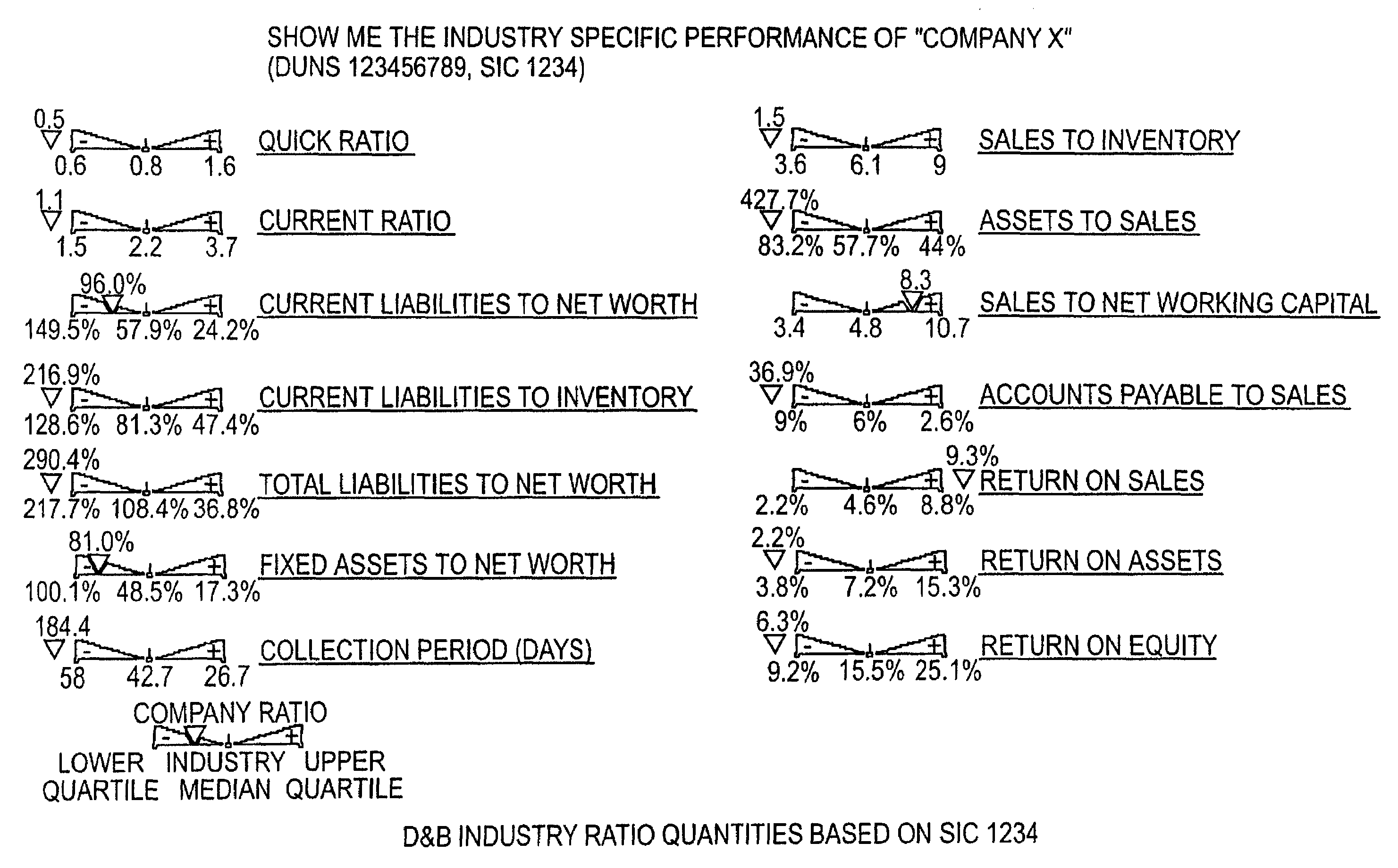
- A system and method for visualizing numerical benchmarks that processes business and industry quartile values to create a display indicating the performance of a business relative to its industry, using reference demarcations to differentiate between good and poor performance, allowing users to efficiently assess business performance without extensive analysis.

Method for the brokerage of benchmarks in healthcare pathways
PatentInactiveUS20070299703A1
Innovation
- A method for monitoring and aggregating event data and status information from healthcare information systems to create process models, which are then compared to peer institutions' data through a central benchmarking service, enabling detailed process analysis and performance evaluation.


International Standards and Regulatory Framework
The establishment of global retarder performance benchmarks requires a comprehensive understanding of the existing international standards and regulatory frameworks that govern vehicle braking systems. Currently, the regulatory landscape is fragmented across different regions, with each jurisdiction maintaining its own set of standards and testing protocols for retarder systems.
The European Union operates under the framework of ECE Regulation No. 13, which provides detailed specifications for braking systems including retarders. This regulation establishes minimum performance requirements, testing procedures, and certification processes that manufacturers must comply with to market their products within EU member states. The regulation covers various aspects including braking efficiency, fade resistance, and durability testing under controlled conditions.
In North America, the Federal Motor Vehicle Safety Standards (FMVSS) govern retarder performance requirements, with FMVSS 121 being particularly relevant for air brake systems. The National Highway Traffic Safety Administration (NHTSA) oversees compliance and enforcement, while the Society of Automotive Engineers (SAE) develops complementary technical standards such as SAE J2432 for retarder performance testing.
Asia-Pacific markets present a more complex regulatory environment, with countries like Japan following their own JIS standards, while China has developed GB national standards that incorporate elements from both European and American frameworks. Australia and New Zealand have adopted modified versions of European regulations adapted to local operating conditions.
The International Organization for Standardization (ISO) has been working to harmonize global standards through ISO 21069 series, which addresses retarder performance testing methodologies. However, adoption remains voluntary and implementation varies significantly across different markets.
A critical challenge in establishing global benchmarks lies in reconciling the differences between these regulatory frameworks, particularly regarding test conditions, performance metrics, and certification procedures. Temperature variations, altitude differences, and varying traffic patterns across global markets necessitate flexible benchmark criteria that can accommodate regional operational requirements while maintaining consistent safety standards.
The European Union operates under the framework of ECE Regulation No. 13, which provides detailed specifications for braking systems including retarders. This regulation establishes minimum performance requirements, testing procedures, and certification processes that manufacturers must comply with to market their products within EU member states. The regulation covers various aspects including braking efficiency, fade resistance, and durability testing under controlled conditions.
In North America, the Federal Motor Vehicle Safety Standards (FMVSS) govern retarder performance requirements, with FMVSS 121 being particularly relevant for air brake systems. The National Highway Traffic Safety Administration (NHTSA) oversees compliance and enforcement, while the Society of Automotive Engineers (SAE) develops complementary technical standards such as SAE J2432 for retarder performance testing.
Asia-Pacific markets present a more complex regulatory environment, with countries like Japan following their own JIS standards, while China has developed GB national standards that incorporate elements from both European and American frameworks. Australia and New Zealand have adopted modified versions of European regulations adapted to local operating conditions.
The International Organization for Standardization (ISO) has been working to harmonize global standards through ISO 21069 series, which addresses retarder performance testing methodologies. However, adoption remains voluntary and implementation varies significantly across different markets.
A critical challenge in establishing global benchmarks lies in reconciling the differences between these regulatory frameworks, particularly regarding test conditions, performance metrics, and certification procedures. Temperature variations, altitude differences, and varying traffic patterns across global markets necessitate flexible benchmark criteria that can accommodate regional operational requirements while maintaining consistent safety standards.
Cross-Regional Performance Validation Protocols
Cross-regional performance validation protocols represent a critical framework for ensuring consistent and reliable retarder performance assessment across diverse geographical markets and operating conditions. These protocols establish standardized methodologies that account for regional variations in climate, terrain, regulatory requirements, and operational practices while maintaining global comparability of performance metrics.
The foundation of effective cross-regional validation lies in developing adaptive testing procedures that can accommodate varying environmental conditions. Temperature extremes, humidity levels, altitude variations, and seasonal changes significantly impact retarder performance characteristics. Validation protocols must incorporate climate-specific testing matrices that reflect real-world operating conditions in different regions, from arctic conditions in northern markets to tropical environments in equatorial zones.
Regional infrastructure differences necessitate flexible validation approaches that consider varying road gradients, traffic patterns, and duty cycles. European mountain passes present different challenges compared to North American interstate highways or Asian urban environments. Protocols must define region-specific test scenarios while maintaining core performance indicators that enable meaningful cross-regional comparisons.
Regulatory harmonization presents both opportunities and challenges for validation protocol development. While some regions emphasize noise reduction standards, others prioritize thermal management or durability requirements. Effective protocols must address these diverse regulatory landscapes by incorporating multi-criteria validation frameworks that satisfy various regional compliance requirements simultaneously.
Data collection and analysis methodologies require standardization to ensure consistent interpretation across different testing facilities and regional teams. This includes establishing common measurement techniques, data sampling rates, statistical analysis methods, and reporting formats. Protocols must define clear procedures for handling data variations that arise from different testing equipment, operator practices, and environmental monitoring capabilities.
Quality assurance mechanisms within validation protocols ensure reproducibility and reliability of results across multiple testing locations. This involves establishing reference standards, conducting inter-laboratory comparisons, and implementing regular calibration procedures. Cross-validation exercises between regional testing centers help identify and correct systematic biases that could compromise global benchmark accuracy.
Communication and knowledge transfer protocols facilitate effective collaboration between regional validation teams. This includes establishing common terminology, documentation standards, and reporting procedures that enable seamless information exchange. Regular technical reviews and best practice sharing sessions ensure continuous improvement of validation methodologies and maintain alignment with evolving industry requirements.
The foundation of effective cross-regional validation lies in developing adaptive testing procedures that can accommodate varying environmental conditions. Temperature extremes, humidity levels, altitude variations, and seasonal changes significantly impact retarder performance characteristics. Validation protocols must incorporate climate-specific testing matrices that reflect real-world operating conditions in different regions, from arctic conditions in northern markets to tropical environments in equatorial zones.
Regional infrastructure differences necessitate flexible validation approaches that consider varying road gradients, traffic patterns, and duty cycles. European mountain passes present different challenges compared to North American interstate highways or Asian urban environments. Protocols must define region-specific test scenarios while maintaining core performance indicators that enable meaningful cross-regional comparisons.
Regulatory harmonization presents both opportunities and challenges for validation protocol development. While some regions emphasize noise reduction standards, others prioritize thermal management or durability requirements. Effective protocols must address these diverse regulatory landscapes by incorporating multi-criteria validation frameworks that satisfy various regional compliance requirements simultaneously.
Data collection and analysis methodologies require standardization to ensure consistent interpretation across different testing facilities and regional teams. This includes establishing common measurement techniques, data sampling rates, statistical analysis methods, and reporting formats. Protocols must define clear procedures for handling data variations that arise from different testing equipment, operator practices, and environmental monitoring capabilities.
Quality assurance mechanisms within validation protocols ensure reproducibility and reliability of results across multiple testing locations. This involves establishing reference standards, conducting inter-laboratory comparisons, and implementing regular calibration procedures. Cross-validation exercises between regional testing centers help identify and correct systematic biases that could compromise global benchmark accuracy.
Communication and knowledge transfer protocols facilitate effective collaboration between regional validation teams. This includes establishing common terminology, documentation standards, and reporting procedures that enable seamless information exchange. Regular technical reviews and best practice sharing sessions ensure continuous improvement of validation methodologies and maintain alignment with evolving industry requirements.
Unlock deeper insights with PatSnap Eureka Quick Research — get a full tech report to explore trends and direct your research. Try now!
Generate Your Research Report Instantly with AI Agent
Supercharge your innovation with PatSnap Eureka AI Agent Platform!