

Compare Thermoelectric Generators in Different Environs
MAR 9, 20269 MIN READ
Generate Your Research Report Instantly with AI Agent
Patsnap Eureka helps you evaluate technical feasibility & market potential.
Thermoelectric Generator Technology Background and Objectives
Thermoelectric generators (TEGs) represent a solid-state energy conversion technology that directly transforms thermal energy into electrical energy through the Seebeck effect, discovered by Thomas Johann Seebeck in 1821. This phenomenon occurs when a temperature gradient is applied across thermoelectric materials, causing charge carriers to diffuse from the hot side to the cold side, thereby generating an electric potential difference.
The historical development of thermoelectric technology can be traced back to the mid-20th century when the first practical applications emerged in space missions, where reliability and maintenance-free operation were paramount. The technology gained significant momentum during the 1960s with NASA's radioisotope thermoelectric generators (RTGs) powering deep space missions. Subsequently, terrestrial applications expanded to include remote power generation, waste heat recovery, and specialized cooling systems.
Modern thermoelectric generators have evolved from simple bismuth telluride-based devices to sophisticated systems incorporating advanced materials such as skutterudites, half-Heusler alloys, and nanostructured materials. The technology progression has focused on improving the dimensionless figure of merit (ZT), which determines the efficiency of thermoelectric conversion and depends on the material's electrical conductivity, thermal conductivity, and Seebeck coefficient.
The fundamental objective of contemporary thermoelectric generator research centers on achieving higher conversion efficiencies while maintaining operational reliability across diverse environmental conditions. Current commercial TEGs typically achieve conversion efficiencies between 3-8%, with research-grade materials demonstrating potential for 15-20% efficiency under optimal conditions.
Environmental adaptability represents a critical technological goal, as TEGs must function effectively across varying temperature ranges, humidity levels, mechanical stresses, and chemical exposures. This requirement drives the development of robust encapsulation techniques, advanced thermal management systems, and materials engineering solutions that maintain performance stability over extended operational periods.
The strategic technological objectives include developing cost-effective manufacturing processes, enhancing power density, improving thermal cycling durability, and creating modular designs that can be scaled for different power requirements. These goals align with the growing demand for sustainable energy harvesting solutions in industrial waste heat recovery, automotive applications, and distributed power generation systems.
The historical development of thermoelectric technology can be traced back to the mid-20th century when the first practical applications emerged in space missions, where reliability and maintenance-free operation were paramount. The technology gained significant momentum during the 1960s with NASA's radioisotope thermoelectric generators (RTGs) powering deep space missions. Subsequently, terrestrial applications expanded to include remote power generation, waste heat recovery, and specialized cooling systems.
Modern thermoelectric generators have evolved from simple bismuth telluride-based devices to sophisticated systems incorporating advanced materials such as skutterudites, half-Heusler alloys, and nanostructured materials. The technology progression has focused on improving the dimensionless figure of merit (ZT), which determines the efficiency of thermoelectric conversion and depends on the material's electrical conductivity, thermal conductivity, and Seebeck coefficient.
The fundamental objective of contemporary thermoelectric generator research centers on achieving higher conversion efficiencies while maintaining operational reliability across diverse environmental conditions. Current commercial TEGs typically achieve conversion efficiencies between 3-8%, with research-grade materials demonstrating potential for 15-20% efficiency under optimal conditions.
Environmental adaptability represents a critical technological goal, as TEGs must function effectively across varying temperature ranges, humidity levels, mechanical stresses, and chemical exposures. This requirement drives the development of robust encapsulation techniques, advanced thermal management systems, and materials engineering solutions that maintain performance stability over extended operational periods.
The strategic technological objectives include developing cost-effective manufacturing processes, enhancing power density, improving thermal cycling durability, and creating modular designs that can be scaled for different power requirements. These goals align with the growing demand for sustainable energy harvesting solutions in industrial waste heat recovery, automotive applications, and distributed power generation systems.
Market Demand Analysis for TEG Applications
The global thermoelectric generator market demonstrates significant growth potential driven by increasing demand for sustainable energy solutions and waste heat recovery applications. Industrial sectors represent the largest market segment, where TEGs capitalize on abundant waste heat from manufacturing processes, steel production, and chemical plants. The automotive industry shows particularly strong adoption rates as manufacturers seek to improve fuel efficiency through exhaust heat recovery systems.
Remote and off-grid applications constitute another substantial market segment, encompassing telecommunications infrastructure, remote monitoring systems, and IoT devices. These applications benefit from TEGs' ability to operate autonomously without external power sources, making them ideal for locations where traditional power infrastructure is impractical or cost-prohibitive.
The aerospace and defense sectors present high-value niche markets for specialized TEG applications. Space missions require reliable power generation in extreme environments, while military applications demand robust, maintenance-free power sources for remote operations and surveillance equipment.
Consumer electronics and wearable technology markets are emerging as promising growth areas. The miniaturization of TEG technology enables integration into smartwatches, fitness trackers, and medical devices, where body heat can provide continuous power generation.
Geographically, North America and Europe lead market adoption due to stringent energy efficiency regulations and substantial industrial infrastructure. Asia-Pacific regions show rapid growth potential, particularly in China and Japan, driven by large-scale industrial operations and government initiatives promoting clean energy technologies.
Market barriers include high initial costs compared to conventional power sources and limited efficiency in low-temperature differential environments. However, technological advances in materials science and manufacturing processes are gradually addressing these challenges, expanding the viable application range for TEG systems across diverse environmental conditions.
Remote and off-grid applications constitute another substantial market segment, encompassing telecommunications infrastructure, remote monitoring systems, and IoT devices. These applications benefit from TEGs' ability to operate autonomously without external power sources, making them ideal for locations where traditional power infrastructure is impractical or cost-prohibitive.
The aerospace and defense sectors present high-value niche markets for specialized TEG applications. Space missions require reliable power generation in extreme environments, while military applications demand robust, maintenance-free power sources for remote operations and surveillance equipment.
Consumer electronics and wearable technology markets are emerging as promising growth areas. The miniaturization of TEG technology enables integration into smartwatches, fitness trackers, and medical devices, where body heat can provide continuous power generation.
Geographically, North America and Europe lead market adoption due to stringent energy efficiency regulations and substantial industrial infrastructure. Asia-Pacific regions show rapid growth potential, particularly in China and Japan, driven by large-scale industrial operations and government initiatives promoting clean energy technologies.
Market barriers include high initial costs compared to conventional power sources and limited efficiency in low-temperature differential environments. However, technological advances in materials science and manufacturing processes are gradually addressing these challenges, expanding the viable application range for TEG systems across diverse environmental conditions.
Current TEG Performance Status and Environmental Challenges
Thermoelectric generators currently demonstrate varying performance levels across different environmental conditions, with efficiency rates typically ranging from 5% to 12% in commercial applications. The most advanced TEG systems achieve peak performance in controlled laboratory environments, where temperature differentials can be precisely maintained and optimized. However, real-world deployment scenarios present significantly more complex challenges that substantially impact overall system effectiveness.
Temperature differential management remains the primary performance determinant for TEG systems. In high-temperature industrial environments such as steel manufacturing or automotive exhaust systems, TEGs can achieve temperature differences exceeding 200°C, potentially delivering power densities of 1-3 W/cm². Conversely, in moderate temperature applications like building energy harvesting or wearable devices, temperature differentials rarely exceed 20-30°C, resulting in power outputs measured in milliwatts per square centimeter.
Environmental stability poses critical challenges for sustained TEG operation. Thermal cycling in automotive applications subjects TEG materials to repeated expansion and contraction, leading to mechanical stress and potential failure of thermoelectric elements. Marine environments introduce corrosion concerns, while aerospace applications demand materials capable of withstanding extreme temperature variations and radiation exposure without performance degradation.
Material degradation represents a significant long-term challenge across all deployment environments. Bismuth telluride-based TEGs, while offering excellent performance at moderate temperatures, suffer from sublimation and oxidation when exposed to high-temperature environments for extended periods. Silicon-germanium alloys demonstrate superior high-temperature stability but exhibit lower efficiency and higher manufacturing costs.
Thermal interface management continues to limit practical TEG implementation across diverse environments. Heat sink design, thermal contact resistance, and thermal interface materials significantly influence overall system performance. In space applications, radiative heat rejection becomes the primary cooling mechanism, while terrestrial applications can leverage convective and conductive cooling strategies.
Environmental contamination and fouling present ongoing operational challenges. Dust accumulation in desert installations, salt spray in marine environments, and chemical exposure in industrial settings can degrade thermal interfaces and reduce heat transfer efficiency. These factors necessitate protective enclosures and maintenance protocols that add complexity and cost to TEG systems.
Current commercial TEG modules typically operate with figure-of-merit values (ZT) between 0.8 and 1.2, though laboratory demonstrations have achieved ZT values exceeding 2.0 under specific conditions. The gap between laboratory performance and field deployment remains substantial, primarily due to environmental factors that cannot be fully replicated in controlled testing environments.
Temperature differential management remains the primary performance determinant for TEG systems. In high-temperature industrial environments such as steel manufacturing or automotive exhaust systems, TEGs can achieve temperature differences exceeding 200°C, potentially delivering power densities of 1-3 W/cm². Conversely, in moderate temperature applications like building energy harvesting or wearable devices, temperature differentials rarely exceed 20-30°C, resulting in power outputs measured in milliwatts per square centimeter.
Environmental stability poses critical challenges for sustained TEG operation. Thermal cycling in automotive applications subjects TEG materials to repeated expansion and contraction, leading to mechanical stress and potential failure of thermoelectric elements. Marine environments introduce corrosion concerns, while aerospace applications demand materials capable of withstanding extreme temperature variations and radiation exposure without performance degradation.
Material degradation represents a significant long-term challenge across all deployment environments. Bismuth telluride-based TEGs, while offering excellent performance at moderate temperatures, suffer from sublimation and oxidation when exposed to high-temperature environments for extended periods. Silicon-germanium alloys demonstrate superior high-temperature stability but exhibit lower efficiency and higher manufacturing costs.
Thermal interface management continues to limit practical TEG implementation across diverse environments. Heat sink design, thermal contact resistance, and thermal interface materials significantly influence overall system performance. In space applications, radiative heat rejection becomes the primary cooling mechanism, while terrestrial applications can leverage convective and conductive cooling strategies.
Environmental contamination and fouling present ongoing operational challenges. Dust accumulation in desert installations, salt spray in marine environments, and chemical exposure in industrial settings can degrade thermal interfaces and reduce heat transfer efficiency. These factors necessitate protective enclosures and maintenance protocols that add complexity and cost to TEG systems.
Current commercial TEG modules typically operate with figure-of-merit values (ZT) between 0.8 and 1.2, though laboratory demonstrations have achieved ZT values exceeding 2.0 under specific conditions. The gap between laboratory performance and field deployment remains substantial, primarily due to environmental factors that cannot be fully replicated in controlled testing environments.
Existing TEG Solutions for Various Environments
01 Thermoelectric material composition and structure
Thermoelectric generators utilize specific material compositions and structures to enhance conversion efficiency. Advanced materials including semiconductor compounds, nanostructured materials, and composite structures are employed to optimize the Seebeck coefficient and electrical conductivity. The selection and arrangement of thermoelectric materials significantly impacts the overall performance and power output of the generator system.- Thermoelectric material composition and structure: Thermoelectric generators utilize specific material compositions and structures to enhance conversion efficiency. Advanced materials including semiconductors, nanostructured materials, and composite materials are employed to optimize the Seebeck coefficient and electrical conductivity. The selection and arrangement of thermoelectric materials directly impact the performance and efficiency of the generator. Various doping techniques and material processing methods are used to improve the figure of merit (ZT) of thermoelectric materials.
- Heat exchanger and thermal management systems: Effective thermal management is critical for thermoelectric generator performance. Heat exchangers and thermal interface materials are designed to maximize temperature differential across thermoelectric elements. The integration of cooling systems, heat sinks, and thermal conductors ensures optimal heat flow and prevents thermal losses. Advanced designs incorporate fins, channels, and other structures to enhance heat transfer efficiency and maintain stable operating temperatures.
- Module design and electrical configuration: Thermoelectric generator modules are configured with specific electrical connections and geometric arrangements to optimize power output. The design includes series and parallel connections of thermoelectric elements, electrode configurations, and insulation layers. Module architecture considers factors such as internal resistance, voltage output, and current generation. Packaging and encapsulation techniques protect the thermoelectric elements while maintaining electrical performance.
- Waste heat recovery applications: Thermoelectric generators are applied in waste heat recovery systems to convert unused thermal energy into electrical power. Applications include automotive exhaust systems, industrial processes, and power generation facilities. The technology enables energy harvesting from various heat sources that would otherwise be dissipated. System integration considers temperature ranges, power requirements, and environmental conditions specific to each application.
- Manufacturing processes and fabrication methods: Manufacturing techniques for thermoelectric generators include thin film deposition, sintering, and assembly processes. Fabrication methods ensure precise control over material properties, dimensional accuracy, and interface quality. Advanced manufacturing approaches incorporate automation, quality control measures, and scalable production techniques. The processes are designed to maintain consistency in thermoelectric performance while reducing production costs.
02 Heat exchange and thermal management systems
Effective thermal management is critical for thermoelectric generator performance. Heat exchange systems incorporate heat sinks, thermal interfaces, and cooling mechanisms to maintain optimal temperature gradients across thermoelectric elements. Design considerations include thermal conductivity optimization, heat dissipation pathways, and integration of cooling components to maximize energy conversion efficiency.Expand Specific Solutions03 Module design and electrical configuration
Thermoelectric generator modules feature specific electrical configurations and mechanical designs to optimize power generation. Module architectures include series and parallel connections of thermoelectric elements, electrical insulation layers, and contact materials. The geometric arrangement and interconnection methods directly influence voltage output, current capacity, and overall system reliability.Expand Specific Solutions04 Waste heat recovery applications
Thermoelectric generators are integrated into various waste heat recovery systems to convert thermal energy into electrical power. Applications span automotive exhaust systems, industrial processes, and power generation facilities. System designs focus on capturing and utilizing waste heat from high-temperature sources while maintaining durability and long-term operational stability in harsh environments.Expand Specific Solutions05 Manufacturing processes and fabrication methods
Advanced manufacturing techniques are employed to produce thermoelectric generators with improved performance characteristics. Fabrication methods include thin-film deposition, powder metallurgy, additive manufacturing, and precision assembly processes. These manufacturing approaches enable precise control over material properties, dimensional accuracy, and interface quality to enhance device efficiency and reduce production costs.Expand Specific Solutions
Major Players in Thermoelectric Generator Industry
The thermoelectric generator market is experiencing significant growth driven by increasing demand for waste heat recovery and sustainable energy solutions across diverse environments. The industry is in a transitional phase from niche applications to broader commercial adoption, with market expansion fueled by automotive, industrial, and aerospace sectors. Major technology leaders like Toshiba Corp., Sony Group Corp., and Huawei Technologies Co., Ltd. are advancing semiconductor-based thermoelectric solutions, while industrial giants including Boeing Co., GM Global Technology Operations, and Robert Bosch GmbH focus on integration into transportation and aerospace systems. Research institutions such as Technical University of Denmark, California Institute of Technology, and Indian Institute of Science are driving fundamental breakthroughs in materials science and efficiency improvements. The technology maturity varies significantly across applications, with automotive waste heat recovery reaching commercial viability while aerospace and industrial applications remain in advanced development phases, supported by specialized companies like Applied Thermoelectric Solutions and established players like BASF Corp. and Danfoss A/S providing materials and system integration expertise.
Toshiba Corp.
Technical Solution: Develops thermoelectric generators utilizing advanced bismuth telluride and lead telluride materials for applications ranging from automotive waste heat recovery to industrial process optimization. Their TEG systems incorporate proprietary semiconductor fabrication techniques to achieve improved power density and thermal cycling durability. Toshiba's solutions are designed for integration into existing industrial infrastructure with operating temperature ranges from ambient to 400°C, featuring modular designs for scalable power output and enhanced reliability in harsh environmental conditions.
Strengths: Strong semiconductor manufacturing capabilities and established industrial partnerships enabling large-scale deployment. Weaknesses: Conservative approach to emerging materials may limit breakthrough performance improvements.
Robert Bosch GmbH
Technical Solution: Implements thermoelectric generators primarily for automotive applications, focusing on exhaust gas energy recovery systems and cabin climate control optimization. Their TEG technology utilizes silicon-germanium alloys and advanced packaging techniques to withstand automotive environmental stresses including vibration, thermal cycling, and corrosive conditions. Bosch's systems are integrated with vehicle thermal management and feature adaptive control algorithms to maximize energy recovery efficiency across varying driving conditions and ambient temperatures.
Strengths: Extensive automotive industry experience with proven integration capabilities and high-volume manufacturing expertise. Weaknesses: Primary focus on automotive sector limits diversification into other environmental applications.
Core TEG Material and Design Innovations
Thin-film heterostructure thermoelectrics in a group iia and iv-vi materials system
PatentWO2012161794A1
Innovation
- A thin-film heterostructure thermoelectric material is developed in a Group II A and IV-VI materials system with an epitaxial structure that forms potential barriers for hot carrier transport via thermionic emission, optimizing Seebeck coefficient, electrical conductivity, and thermal conductivity through judicious engineering of well and barrier layers, including short period superlattices to scatter phonons and increase effective carrier density transport.

Thermoelectric generator
PatentActiveUS20220263006A1
Innovation
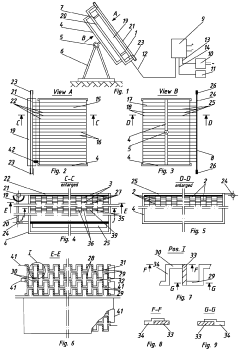
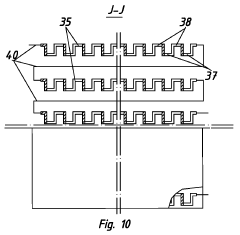
- A thermoelectric generator with a stack of superimposed multistage layers of thermocouples connected in series, featuring alternating rows of hot and cold junctions for enhanced heat exchange and a solar collector for concentrated heat supply, along with a heat removal system to maintain high temperature differences across multiple layers.
Environmental Impact Assessment of TEG Deployment
The deployment of thermoelectric generators across different environmental contexts presents a complex array of environmental implications that require comprehensive assessment. Unlike conventional power generation technologies, TEGs offer unique environmental advantages through their solid-state operation and absence of moving parts, yet their environmental footprint varies significantly depending on deployment scenarios and operational conditions.
Material lifecycle considerations represent a primary environmental concern for TEG deployment. The manufacturing process typically involves rare earth elements and heavy metals such as bismuth, tellurium, and lead-based compounds in traditional modules. Mining and processing of these materials generate substantial environmental impacts, including habitat disruption, water contamination, and carbon emissions. However, the environmental burden per unit of energy generated decreases substantially in high-temperature industrial waste heat recovery applications compared to low-grade heat recovery scenarios.
Waste heat recovery applications demonstrate the most favorable environmental profile among TEG deployment scenarios. Industrial facilities utilizing TEGs for waste heat conversion achieve dual environmental benefits by improving overall energy efficiency while reducing thermal pollution. Steel mills, cement plants, and chemical processing facilities deploying TEG systems report significant reductions in cooling water requirements and thermal discharge to surrounding ecosystems.
Automotive TEG applications present mixed environmental outcomes. While exhaust heat recovery systems contribute to improved fuel efficiency and reduced emissions during vehicle operation, the additional weight and complexity introduce manufacturing burdens. Life cycle assessments indicate positive environmental returns primarily in heavy-duty and long-haul applications where operational benefits outweigh manufacturing impacts.
Remote and off-grid TEG deployments, particularly those utilizing geothermal or solar thermal sources, demonstrate minimal operational environmental impact. These installations avoid transmission infrastructure requirements and associated land use changes while providing reliable power generation with negligible emissions. However, the lower power density of TEGs in these applications may require larger material investments per unit of energy output.
End-of-life considerations favor TEG technology due to the recyclability of semiconductor materials and metallic components. Unlike photovoltaic systems, TEG modules contain no hazardous encapsulants or difficult-to-separate composite materials. The solid-state construction facilitates material recovery and reprocessing, contributing to circular economy principles.
Environmental monitoring of existing TEG installations indicates minimal ecological disruption during operation. The absence of noise, vibration, and chemical emissions makes TEG systems particularly suitable for environmentally sensitive locations. However, thermal management systems associated with large-scale TEG arrays may require careful design to prevent localized temperature effects on surrounding ecosystems.
Material lifecycle considerations represent a primary environmental concern for TEG deployment. The manufacturing process typically involves rare earth elements and heavy metals such as bismuth, tellurium, and lead-based compounds in traditional modules. Mining and processing of these materials generate substantial environmental impacts, including habitat disruption, water contamination, and carbon emissions. However, the environmental burden per unit of energy generated decreases substantially in high-temperature industrial waste heat recovery applications compared to low-grade heat recovery scenarios.
Waste heat recovery applications demonstrate the most favorable environmental profile among TEG deployment scenarios. Industrial facilities utilizing TEGs for waste heat conversion achieve dual environmental benefits by improving overall energy efficiency while reducing thermal pollution. Steel mills, cement plants, and chemical processing facilities deploying TEG systems report significant reductions in cooling water requirements and thermal discharge to surrounding ecosystems.
Automotive TEG applications present mixed environmental outcomes. While exhaust heat recovery systems contribute to improved fuel efficiency and reduced emissions during vehicle operation, the additional weight and complexity introduce manufacturing burdens. Life cycle assessments indicate positive environmental returns primarily in heavy-duty and long-haul applications where operational benefits outweigh manufacturing impacts.
Remote and off-grid TEG deployments, particularly those utilizing geothermal or solar thermal sources, demonstrate minimal operational environmental impact. These installations avoid transmission infrastructure requirements and associated land use changes while providing reliable power generation with negligible emissions. However, the lower power density of TEGs in these applications may require larger material investments per unit of energy output.
End-of-life considerations favor TEG technology due to the recyclability of semiconductor materials and metallic components. Unlike photovoltaic systems, TEG modules contain no hazardous encapsulants or difficult-to-separate composite materials. The solid-state construction facilitates material recovery and reprocessing, contributing to circular economy principles.
Environmental monitoring of existing TEG installations indicates minimal ecological disruption during operation. The absence of noise, vibration, and chemical emissions makes TEG systems particularly suitable for environmentally sensitive locations. However, thermal management systems associated with large-scale TEG arrays may require careful design to prevent localized temperature effects on surrounding ecosystems.
Comparative Performance Metrics Across Environments
Thermoelectric generator performance varies significantly across different environmental conditions, necessitating comprehensive evaluation through standardized metrics. The primary performance indicators include power output density, conversion efficiency, temperature differential response, and operational stability under varying thermal conditions. These metrics provide quantitative frameworks for comparing TEG systems deployed in industrial waste heat recovery, automotive exhaust applications, geothermal installations, and solar thermal environments.
Power output density serves as a fundamental comparative metric, typically measured in watts per square centimeter of active thermoelectric material. High-temperature industrial environments often yield power densities ranging from 0.5 to 2.0 W/cm², while moderate-temperature applications such as building-integrated systems achieve 0.1 to 0.5 W/cm². This variation directly correlates with the available temperature differential and thermal conductivity of the surrounding medium.
Conversion efficiency represents the ratio of electrical power output to thermal power input, with values typically ranging from 3% to 12% depending on environmental conditions. Marine and geothermal applications demonstrate superior efficiency due to consistent temperature differentials and effective heat sink availability. Conversely, fluctuating ambient conditions in automotive applications result in variable efficiency patterns throughout operational cycles.
Temperature differential sustainability emerges as a critical performance determinant across environments. Industrial furnace applications maintain steady differentials exceeding 200°C, enabling consistent power generation. Solar thermal installations experience diurnal variations affecting output stability, while geothermal systems provide the most stable thermal gradients with minimal fluctuation over extended periods.
Environmental durability metrics encompass thermal cycling resistance, corrosion tolerance, and mechanical stability. Marine environments impose severe corrosion challenges requiring specialized protective coatings, while high-temperature industrial settings demand materials capable of withstanding thermal shock and oxidation. These factors significantly influence long-term performance degradation rates and maintenance requirements.
Response time characteristics vary substantially across applications, with rapid thermal transients in automotive exhaust systems requiring fast-responding TEG designs, while steady-state industrial processes accommodate slower thermal response times. This temporal performance aspect directly impacts system integration complexity and control requirements.
Power output density serves as a fundamental comparative metric, typically measured in watts per square centimeter of active thermoelectric material. High-temperature industrial environments often yield power densities ranging from 0.5 to 2.0 W/cm², while moderate-temperature applications such as building-integrated systems achieve 0.1 to 0.5 W/cm². This variation directly correlates with the available temperature differential and thermal conductivity of the surrounding medium.
Conversion efficiency represents the ratio of electrical power output to thermal power input, with values typically ranging from 3% to 12% depending on environmental conditions. Marine and geothermal applications demonstrate superior efficiency due to consistent temperature differentials and effective heat sink availability. Conversely, fluctuating ambient conditions in automotive applications result in variable efficiency patterns throughout operational cycles.
Temperature differential sustainability emerges as a critical performance determinant across environments. Industrial furnace applications maintain steady differentials exceeding 200°C, enabling consistent power generation. Solar thermal installations experience diurnal variations affecting output stability, while geothermal systems provide the most stable thermal gradients with minimal fluctuation over extended periods.
Environmental durability metrics encompass thermal cycling resistance, corrosion tolerance, and mechanical stability. Marine environments impose severe corrosion challenges requiring specialized protective coatings, while high-temperature industrial settings demand materials capable of withstanding thermal shock and oxidation. These factors significantly influence long-term performance degradation rates and maintenance requirements.
Response time characteristics vary substantially across applications, with rapid thermal transients in automotive exhaust systems requiring fast-responding TEG designs, while steady-state industrial processes accommodate slower thermal response times. This temporal performance aspect directly impacts system integration complexity and control requirements.
Unlock deeper insights with Patsnap Eureka Quick Research — get a full tech report to explore trends and direct your research. Try now!
Generate Your Research Report Instantly with AI Agent
Supercharge your innovation with Patsnap Eureka AI Agent Platform!