

Boost Thermoelectric Module Power Density
MAR 9, 20269 MIN READ
Generate Your Research Report Instantly with AI Agent
Patsnap Eureka helps you evaluate technical feasibility & market potential.
Thermoelectric Module Power Density Background and Objectives
Thermoelectric technology has emerged as a critical solution for sustainable energy conversion, offering direct conversion between thermal and electrical energy without moving parts or harmful emissions. The fundamental principle relies on the Seebeck effect, where temperature gradients across semiconductor materials generate electrical voltage, and conversely, the Peltier effect enables active cooling through electrical current application.
The evolution of thermoelectric modules has been driven by increasing demands for energy efficiency and miniaturization across multiple sectors. Early developments focused primarily on niche applications such as space missions and remote sensing, where reliability outweighed efficiency concerns. However, contemporary applications span automotive waste heat recovery, industrial process optimization, portable electronics cooling, and renewable energy harvesting systems.
Power density represents the most critical performance metric for thermoelectric modules, defined as the electrical power output per unit volume or mass. This parameter directly determines the commercial viability and practical implementation potential of thermoelectric systems. Current state-of-the-art modules typically achieve power densities ranging from 1-5 W/cm³, significantly limiting their competitiveness against conventional energy conversion technologies.
The primary technical challenge lies in the inherent trade-off between thermoelectric efficiency and power output. Traditional approaches have focused on optimizing the dimensionless figure of merit (ZT), which emphasizes material properties including Seebeck coefficient, electrical conductivity, and thermal conductivity. However, maximizing ZT does not necessarily translate to optimal power density, particularly under realistic operating conditions with finite heat source temperatures and thermal resistances.
The strategic objective of enhancing thermoelectric module power density encompasses multiple technological dimensions. Material-level innovations target advanced nanostructuring techniques, quantum confinement effects, and novel composite architectures to simultaneously optimize electrical and thermal transport properties. Device-level improvements focus on minimizing parasitic resistances, optimizing geometric configurations, and developing advanced thermal interface materials.
System-level integration represents another crucial objective, involving sophisticated thermal management strategies, dynamic load matching algorithms, and hybrid energy conversion architectures. The ultimate goal is achieving power densities exceeding 10 W/cm³ while maintaining operational reliability and cost-effectiveness for widespread commercial deployment across automotive, industrial, and consumer electronics applications.
The evolution of thermoelectric modules has been driven by increasing demands for energy efficiency and miniaturization across multiple sectors. Early developments focused primarily on niche applications such as space missions and remote sensing, where reliability outweighed efficiency concerns. However, contemporary applications span automotive waste heat recovery, industrial process optimization, portable electronics cooling, and renewable energy harvesting systems.
Power density represents the most critical performance metric for thermoelectric modules, defined as the electrical power output per unit volume or mass. This parameter directly determines the commercial viability and practical implementation potential of thermoelectric systems. Current state-of-the-art modules typically achieve power densities ranging from 1-5 W/cm³, significantly limiting their competitiveness against conventional energy conversion technologies.
The primary technical challenge lies in the inherent trade-off between thermoelectric efficiency and power output. Traditional approaches have focused on optimizing the dimensionless figure of merit (ZT), which emphasizes material properties including Seebeck coefficient, electrical conductivity, and thermal conductivity. However, maximizing ZT does not necessarily translate to optimal power density, particularly under realistic operating conditions with finite heat source temperatures and thermal resistances.
The strategic objective of enhancing thermoelectric module power density encompasses multiple technological dimensions. Material-level innovations target advanced nanostructuring techniques, quantum confinement effects, and novel composite architectures to simultaneously optimize electrical and thermal transport properties. Device-level improvements focus on minimizing parasitic resistances, optimizing geometric configurations, and developing advanced thermal interface materials.
System-level integration represents another crucial objective, involving sophisticated thermal management strategies, dynamic load matching algorithms, and hybrid energy conversion architectures. The ultimate goal is achieving power densities exceeding 10 W/cm³ while maintaining operational reliability and cost-effectiveness for widespread commercial deployment across automotive, industrial, and consumer electronics applications.
Market Demand for High Power Density Thermoelectric Applications
The global thermoelectric market is experiencing unprecedented growth driven by increasing demands for energy efficiency and sustainable power solutions across multiple industrial sectors. High power density thermoelectric modules have emerged as critical components in applications where space constraints and thermal management requirements are paramount.
Automotive industry represents one of the most significant growth drivers for high power density thermoelectric applications. Modern electric vehicles require efficient thermal management systems for battery cooling and cabin climate control, while internal combustion engines present opportunities for waste heat recovery. The automotive sector's push toward electrification and improved fuel efficiency has created substantial demand for compact, high-performance thermoelectric solutions that can operate reliably in harsh environments.
Industrial waste heat recovery applications constitute another major market segment demanding enhanced power density. Manufacturing facilities, power plants, and chemical processing operations generate substantial amounts of waste heat that could be converted to useful electrical energy. High power density thermoelectric modules enable more efficient heat recovery systems with reduced footprint requirements, making them economically viable for industrial implementation.
Consumer electronics and telecommunications infrastructure present rapidly expanding markets for high power density thermoelectric applications. Data centers require sophisticated thermal management solutions to maintain optimal operating temperatures while minimizing energy consumption. Portable electronic devices benefit from compact thermoelectric cooling systems that can maintain performance without compromising device size or battery life.
Aerospace and defense sectors demand thermoelectric solutions with exceptional power-to-weight ratios and reliability under extreme conditions. Satellite systems, unmanned aerial vehicles, and military equipment require compact power generation and thermal management capabilities that can function in challenging environments without maintenance.
Medical device applications increasingly require miniaturized thermoelectric modules for temperature control in diagnostic equipment, therapeutic devices, and laboratory instruments. The precision and reliability demands of medical applications drive requirements for high power density solutions with excellent temperature stability and long operational lifespans.
The renewable energy sector presents emerging opportunities for high power density thermoelectric applications in solar thermal systems, geothermal installations, and hybrid energy systems. These applications require efficient conversion of thermal energy to electrical power in compact form factors suitable for distributed energy generation.
Market growth is further accelerated by regulatory pressures for energy efficiency improvements and carbon emission reductions across industries. Government incentives and environmental regulations are driving adoption of advanced thermoelectric technologies that can contribute to sustainability goals while providing economic benefits through improved energy utilization.
Automotive industry represents one of the most significant growth drivers for high power density thermoelectric applications. Modern electric vehicles require efficient thermal management systems for battery cooling and cabin climate control, while internal combustion engines present opportunities for waste heat recovery. The automotive sector's push toward electrification and improved fuel efficiency has created substantial demand for compact, high-performance thermoelectric solutions that can operate reliably in harsh environments.
Industrial waste heat recovery applications constitute another major market segment demanding enhanced power density. Manufacturing facilities, power plants, and chemical processing operations generate substantial amounts of waste heat that could be converted to useful electrical energy. High power density thermoelectric modules enable more efficient heat recovery systems with reduced footprint requirements, making them economically viable for industrial implementation.
Consumer electronics and telecommunications infrastructure present rapidly expanding markets for high power density thermoelectric applications. Data centers require sophisticated thermal management solutions to maintain optimal operating temperatures while minimizing energy consumption. Portable electronic devices benefit from compact thermoelectric cooling systems that can maintain performance without compromising device size or battery life.
Aerospace and defense sectors demand thermoelectric solutions with exceptional power-to-weight ratios and reliability under extreme conditions. Satellite systems, unmanned aerial vehicles, and military equipment require compact power generation and thermal management capabilities that can function in challenging environments without maintenance.
Medical device applications increasingly require miniaturized thermoelectric modules for temperature control in diagnostic equipment, therapeutic devices, and laboratory instruments. The precision and reliability demands of medical applications drive requirements for high power density solutions with excellent temperature stability and long operational lifespans.
The renewable energy sector presents emerging opportunities for high power density thermoelectric applications in solar thermal systems, geothermal installations, and hybrid energy systems. These applications require efficient conversion of thermal energy to electrical power in compact form factors suitable for distributed energy generation.
Market growth is further accelerated by regulatory pressures for energy efficiency improvements and carbon emission reductions across industries. Government incentives and environmental regulations are driving adoption of advanced thermoelectric technologies that can contribute to sustainability goals while providing economic benefits through improved energy utilization.
Current State and Challenges in Thermoelectric Power Density
Thermoelectric modules currently face significant limitations in achieving high power density, which restricts their widespread adoption in energy harvesting and thermal management applications. The fundamental challenge lies in the inherent trade-off between thermoelectric efficiency and power output, as conventional modules are optimized primarily for maximum efficiency rather than power density.
Current commercial thermoelectric modules typically achieve power densities ranging from 0.1 to 1.0 W/cm², which falls substantially short of requirements for many practical applications. This limitation stems from several interconnected factors, including suboptimal material properties, thermal interface resistances, and geometric constraints that prevent effective heat transfer and electrical conduction.
Material-level challenges represent a primary bottleneck in power density enhancement. Most commercially available thermoelectric materials exhibit relatively low electrical conductivity and thermal conductivity ratios, limiting their ability to generate substantial power output per unit area. The dimensionless figure of merit (ZT) for bulk materials rarely exceeds 1.5 at operating temperatures, constraining the theoretical maximum power density achievable.
Thermal management issues pose another critical challenge, as high power density operation generates substantial heat that must be efficiently dissipated to maintain optimal temperature gradients. Conventional module designs often suffer from thermal bottlenecks at interfaces between thermoelectric elements and heat exchangers, leading to temperature distribution non-uniformities that reduce overall performance.
Manufacturing and integration constraints further limit power density improvements. Traditional fabrication methods struggle to produce ultra-thin thermoelectric elements with high aspect ratios necessary for enhanced power density. Additionally, electrical interconnection schemes in current modules introduce parasitic resistances that become increasingly problematic as power density requirements increase.
Reliability concerns also emerge as significant challenges when pursuing higher power densities. Increased thermal cycling, mechanical stress, and current densities associated with high-power operation can lead to accelerated degradation of thermoelectric materials and solder joints, compromising long-term performance and operational lifetime.
The geographical distribution of advanced thermoelectric research reveals concentration in developed nations, with leading institutions in the United States, Japan, Germany, and South Korea driving innovation. However, the gap between laboratory demonstrations and commercially viable high-power-density modules remains substantial, indicating the need for continued research and development efforts to overcome these fundamental challenges.
Current commercial thermoelectric modules typically achieve power densities ranging from 0.1 to 1.0 W/cm², which falls substantially short of requirements for many practical applications. This limitation stems from several interconnected factors, including suboptimal material properties, thermal interface resistances, and geometric constraints that prevent effective heat transfer and electrical conduction.
Material-level challenges represent a primary bottleneck in power density enhancement. Most commercially available thermoelectric materials exhibit relatively low electrical conductivity and thermal conductivity ratios, limiting their ability to generate substantial power output per unit area. The dimensionless figure of merit (ZT) for bulk materials rarely exceeds 1.5 at operating temperatures, constraining the theoretical maximum power density achievable.
Thermal management issues pose another critical challenge, as high power density operation generates substantial heat that must be efficiently dissipated to maintain optimal temperature gradients. Conventional module designs often suffer from thermal bottlenecks at interfaces between thermoelectric elements and heat exchangers, leading to temperature distribution non-uniformities that reduce overall performance.
Manufacturing and integration constraints further limit power density improvements. Traditional fabrication methods struggle to produce ultra-thin thermoelectric elements with high aspect ratios necessary for enhanced power density. Additionally, electrical interconnection schemes in current modules introduce parasitic resistances that become increasingly problematic as power density requirements increase.
Reliability concerns also emerge as significant challenges when pursuing higher power densities. Increased thermal cycling, mechanical stress, and current densities associated with high-power operation can lead to accelerated degradation of thermoelectric materials and solder joints, compromising long-term performance and operational lifetime.
The geographical distribution of advanced thermoelectric research reveals concentration in developed nations, with leading institutions in the United States, Japan, Germany, and South Korea driving innovation. However, the gap between laboratory demonstrations and commercially viable high-power-density modules remains substantial, indicating the need for continued research and development efforts to overcome these fundamental challenges.
Existing Solutions for Thermoelectric Power Density Optimization
01 Optimization of thermoelectric material composition and structure
Improving power density through the selection and optimization of thermoelectric materials with enhanced Seebeck coefficient, electrical conductivity, and reduced thermal conductivity. This includes the use of nanostructured materials, doping strategies, and composite materials to achieve higher figure of merit (ZT) values, which directly correlates to improved power density in thermoelectric modules.- Optimization of thermoelectric material composition and structure: Improving power density through the selection and optimization of thermoelectric materials with enhanced Seebeck coefficient, electrical conductivity, and reduced thermal conductivity. This includes the use of nanostructured materials, doped semiconductors, and advanced material compositions to maximize the figure of merit (ZT) and overall power output per unit volume.
- Module design and geometric configuration: Enhancement of power density through optimized module architecture, including the arrangement of thermoelectric elements, leg geometry, fill factor optimization, and thermal/electrical contact design. This involves minimizing dead space, reducing parasitic losses, and maximizing the active material utilization within the module footprint to achieve higher power output per unit area or volume.
- Thermal management and heat exchanger integration: Improving power density by optimizing heat transfer mechanisms at hot and cold sides of the module. This includes the integration of advanced heat exchangers, heat spreaders, and thermal interface materials to maintain optimal temperature gradients across the thermoelectric elements, thereby maximizing power generation efficiency and output density.
- Electrical interconnection and contact resistance reduction: Enhancement of power density through improved electrical connections between thermoelectric elements and external circuits. This involves the development of low-resistance contact materials, advanced metallization techniques, and optimized interconnect designs to minimize ohmic losses and maximize the electrical power output relative to module size.
- Multi-stage and cascaded module configurations: Increasing power density through the implementation of multi-stage thermoelectric modules or cascaded arrangements that operate across wider temperature ranges. This approach allows for better utilization of temperature gradients and improved overall conversion efficiency, resulting in higher power output per unit volume compared to single-stage designs.
02 Module design and geometric configuration
Enhancing power density through optimized module architecture, including the arrangement of thermoelectric elements, leg geometry, and spacing between elements. Design considerations include minimizing thermal and electrical contact resistance, optimizing the aspect ratio of thermoelectric legs, and implementing advanced packaging techniques to maximize power output per unit volume.Expand Specific Solutions03 Thermal management and heat exchanger integration
Improving power density by optimizing heat transfer at hot and cold sides of the thermoelectric module through advanced heat exchanger designs, thermal interface materials, and cooling systems. This includes the integration of micro-channel heat sinks, phase change materials, and enhanced surface area designs to maintain optimal temperature gradients across the module.Expand Specific Solutions04 Electrical connection and contact optimization
Maximizing power density through improved electrical interconnections, contact materials, and metallization techniques that reduce parasitic resistance and improve current distribution. This involves the development of low-resistance electrode materials, optimized soldering or bonding methods, and advanced interconnect geometries that minimize power losses while maintaining mechanical stability.Expand Specific Solutions05 Multi-stage and cascaded module configurations
Achieving higher power density through multi-stage thermoelectric module designs and cascaded arrangements that operate across wider temperature ranges. These configurations utilize multiple thermoelectric stages optimized for different temperature zones, enabling improved overall conversion efficiency and power output density compared to single-stage modules.Expand Specific Solutions
Key Players in Thermoelectric Module and Materials Industry
The thermoelectric module power density enhancement field represents an emerging technology sector transitioning from early development to commercialization phases, with significant growth potential driven by increasing demand for energy harvesting and thermal management solutions. The market demonstrates moderate maturity with established players like KELK Ltd., a specialized thermoelectric module manufacturer, alongside diversified electronics giants including Toshiba Corp., Hitachi Ltd., and Samsung Electro-Mechanics Co., Ltd. who leverage their semiconductor and materials expertise. Technology maturity varies considerably across participants, with companies like LG Electronics Inc., Delta Electronics Inc., and MAHLE International GmbH integrating thermoelectric solutions into automotive and consumer applications, while research institutions such as University of Tokyo, Waseda University, and Zhejiang University contribute fundamental breakthroughs. The competitive landscape features both specialized firms like Thermogentech Co and Novus Energy Technologies Inc. focusing exclusively on thermoelectric innovations, and established materials companies including Sumitomo Chemical Co., Ltd. and Furukawa Electric Co., Ltd. developing advanced thermoelectric materials, indicating a maturing ecosystem with diverse technological approaches.
Toshiba Corp.
Technical Solution: Toshiba has developed innovative thermoelectric modules utilizing nanostructured materials and advanced fabrication techniques to boost power density. Their research focuses on skutterudite and half-Heusler compounds that demonstrate superior thermoelectric properties at elevated temperatures. The company's approach involves implementing quantum dot structures and phonon engineering to reduce thermal conductivity while maintaining high electrical conductivity. Their modules achieve power densities up to 3.2 W/cm² through optimized heat exchanger integration and advanced packaging technologies. Toshiba's manufacturing process incorporates spark plasma sintering and hot pressing techniques to create dense, high-performance thermoelectric elements with minimized grain boundaries.
Strengths: Strong R&D capabilities in advanced materials science and established semiconductor manufacturing infrastructure. Weaknesses: Higher production costs due to complex nanostructuring processes and limited commercial deployment.
Kyocera Corp.
Technical Solution: Kyocera focuses on ceramic-based thermoelectric modules with enhanced power density through advanced material engineering and innovative packaging solutions. Their technology utilizes silicon germanium alloys and oxide-based thermoelectric materials optimized for high-temperature applications. The company has developed proprietary sintering processes that create highly dense ceramic structures with improved thermoelectric figure of merit (ZT values exceeding 1.2). Their modules incorporate advanced thermal interface materials and optimized heat sink designs to achieve power densities of 2.8 W/cm². Kyocera's approach emphasizes reliability and longevity through robust ceramic packaging that withstands thermal cycling and mechanical stress in demanding industrial environments.
Strengths: Excellent expertise in ceramic materials and manufacturing with proven reliability in harsh environments. Weaknesses: Limited flexibility in module customization and higher material costs compared to traditional approaches.
Core Innovations in High Performance Thermoelectric Materials
Large footprint, high power density thermoelectric modules for high temperature applications
PatentInactiveUS20160247996A1
Innovation
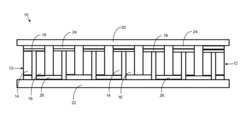
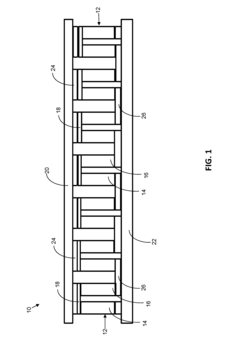
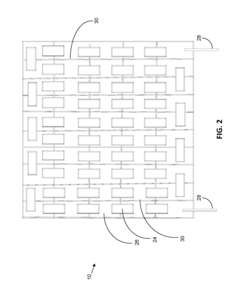
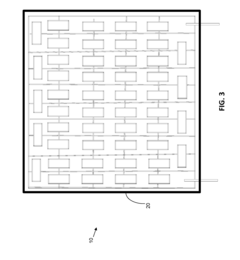
- A thermoelectric module design featuring a compliant thermal interface between a thermally conductive dielectric top common header and subheaders, allowing for larger dimensions and reduced thermal mismatch stress, combined with high-temperature thermoelectric materials and a segmented copper bus for series connection of P-N couples.
Thermoelectric conversion module and heat exchanger and thermoelectric power generator using it
PatentWO2007063755A1
Innovation
- A thermoelectric conversion module design with a high occupied area ratio of thermoelectric elements (69% or more) and the use of half-Heusler materials, along with specific electrode and substrate configurations, to enhance the packing density and reduce heat loss, thereby increasing the electromotive force and output.

Environmental Impact Assessment of Thermoelectric Technologies
The environmental implications of thermoelectric technologies present a complex landscape of both opportunities and challenges in the context of sustainable energy solutions. As research intensifies on boosting thermoelectric module power density, understanding the environmental footprint becomes crucial for responsible technological advancement and market adoption.
Thermoelectric modules offer significant environmental advantages through their solid-state operation and absence of moving parts, eliminating the need for refrigerants or other potentially harmful working fluids. This characteristic positions them as environmentally friendly alternatives to conventional cooling and heating systems, particularly in applications where chemical refrigerants pose environmental risks. The silent operation and vibration-free performance further reduce noise pollution, making them suitable for urban and residential applications.
However, the environmental assessment reveals critical concerns regarding material composition and manufacturing processes. Many high-performance thermoelectric materials rely on rare earth elements and heavy metals such as tellurium, bismuth, and lead-based compounds. The extraction and processing of these materials often involve energy-intensive mining operations and chemical processes that generate significant carbon emissions and potential soil and water contamination.
The manufacturing phase presents additional environmental challenges, particularly in the synthesis of nanostructured materials aimed at enhancing power density. Advanced fabrication techniques, including molecular beam epitaxy and chemical vapor deposition, require substantial energy inputs and specialized facilities with controlled atmospheres, contributing to the overall carbon footprint of thermoelectric devices.
Life cycle assessments indicate that while thermoelectric modules demonstrate excellent durability and longevity, often exceeding 20 years of operation, their end-of-life management requires careful consideration. The recovery and recycling of rare materials become essential for minimizing environmental impact and ensuring sustainable resource utilization. Current recycling technologies for thermoelectric materials remain underdeveloped, presenting opportunities for innovation in circular economy approaches.
The push toward higher power density modules introduces additional environmental considerations, as advanced materials and manufacturing processes may intensify resource consumption and waste generation. Balancing performance improvements with environmental sustainability requires comprehensive assessment frameworks that evaluate the entire product lifecycle from raw material extraction through disposal and recycling phases.
Thermoelectric modules offer significant environmental advantages through their solid-state operation and absence of moving parts, eliminating the need for refrigerants or other potentially harmful working fluids. This characteristic positions them as environmentally friendly alternatives to conventional cooling and heating systems, particularly in applications where chemical refrigerants pose environmental risks. The silent operation and vibration-free performance further reduce noise pollution, making them suitable for urban and residential applications.
However, the environmental assessment reveals critical concerns regarding material composition and manufacturing processes. Many high-performance thermoelectric materials rely on rare earth elements and heavy metals such as tellurium, bismuth, and lead-based compounds. The extraction and processing of these materials often involve energy-intensive mining operations and chemical processes that generate significant carbon emissions and potential soil and water contamination.
The manufacturing phase presents additional environmental challenges, particularly in the synthesis of nanostructured materials aimed at enhancing power density. Advanced fabrication techniques, including molecular beam epitaxy and chemical vapor deposition, require substantial energy inputs and specialized facilities with controlled atmospheres, contributing to the overall carbon footprint of thermoelectric devices.
Life cycle assessments indicate that while thermoelectric modules demonstrate excellent durability and longevity, often exceeding 20 years of operation, their end-of-life management requires careful consideration. The recovery and recycling of rare materials become essential for minimizing environmental impact and ensuring sustainable resource utilization. Current recycling technologies for thermoelectric materials remain underdeveloped, presenting opportunities for innovation in circular economy approaches.
The push toward higher power density modules introduces additional environmental considerations, as advanced materials and manufacturing processes may intensify resource consumption and waste generation. Balancing performance improvements with environmental sustainability requires comprehensive assessment frameworks that evaluate the entire product lifecycle from raw material extraction through disposal and recycling phases.
Thermal Management Strategies for High Power Density Modules
Effective thermal management represents a critical bottleneck in achieving high power density thermoelectric modules. As power output increases, the heat flux through thermoelectric materials intensifies, creating substantial temperature gradients that can compromise both performance and reliability. The fundamental challenge lies in maintaining optimal temperature differentials across the thermoelectric elements while efficiently dissipating waste heat from the system.
Advanced heat sink designs have emerged as primary solutions for managing thermal loads in high-density configurations. Microchannel cooling systems demonstrate superior heat transfer coefficients compared to conventional fin-based designs, enabling more compact module architectures. These systems typically achieve heat transfer rates exceeding 100 W/cm² while maintaining temperature uniformity across the module surface. Liquid cooling implementations using specialized coolants can further enhance thermal performance, particularly in applications requiring sustained high-power operation.
Thermal interface materials play an equally crucial role in power density optimization. Low thermal resistance interfaces between thermoelectric elements and heat exchangers minimize parasitic thermal losses that directly impact module efficiency. Recent developments in graphene-enhanced thermal compounds and phase-change materials offer thermal conductivities approaching 400 W/mK, significantly reducing interface resistance compared to traditional materials.
Module-level thermal design strategies focus on optimizing heat flow paths and minimizing thermal crosstalk between adjacent thermoelectric couples. Segmented thermoelectric architectures allow for tailored thermal management at different temperature zones, while advanced packaging techniques incorporate integrated cooling channels directly within the module structure. These approaches enable power densities exceeding 10 W/cm² while maintaining acceptable junction temperatures.
System integration considerations become paramount when implementing high-density modules in practical applications. Thermal management systems must account for transient thermal responses, particularly during rapid load changes or startup conditions. Predictive thermal control algorithms, coupled with real-time temperature monitoring, ensure optimal performance while preventing thermal runaway conditions that could damage the thermoelectric materials or reduce operational lifetime.
Advanced heat sink designs have emerged as primary solutions for managing thermal loads in high-density configurations. Microchannel cooling systems demonstrate superior heat transfer coefficients compared to conventional fin-based designs, enabling more compact module architectures. These systems typically achieve heat transfer rates exceeding 100 W/cm² while maintaining temperature uniformity across the module surface. Liquid cooling implementations using specialized coolants can further enhance thermal performance, particularly in applications requiring sustained high-power operation.
Thermal interface materials play an equally crucial role in power density optimization. Low thermal resistance interfaces between thermoelectric elements and heat exchangers minimize parasitic thermal losses that directly impact module efficiency. Recent developments in graphene-enhanced thermal compounds and phase-change materials offer thermal conductivities approaching 400 W/mK, significantly reducing interface resistance compared to traditional materials.
Module-level thermal design strategies focus on optimizing heat flow paths and minimizing thermal crosstalk between adjacent thermoelectric couples. Segmented thermoelectric architectures allow for tailored thermal management at different temperature zones, while advanced packaging techniques incorporate integrated cooling channels directly within the module structure. These approaches enable power densities exceeding 10 W/cm² while maintaining acceptable junction temperatures.
System integration considerations become paramount when implementing high-density modules in practical applications. Thermal management systems must account for transient thermal responses, particularly during rapid load changes or startup conditions. Predictive thermal control algorithms, coupled with real-time temperature monitoring, ensure optimal performance while preventing thermal runaway conditions that could damage the thermoelectric materials or reduce operational lifetime.
Unlock deeper insights with Patsnap Eureka Quick Research — get a full tech report to explore trends and direct your research. Try now!
Generate Your Research Report Instantly with AI Agent
Supercharge your innovation with Patsnap Eureka AI Agent Platform!