
Comparing Diesel Generators: Power Efficiency vs Maintenance Cost
JUN 12, 20269 MIN READ
Generate Your Research Report Instantly with AI Agent
Patsnap Eureka helps you evaluate technical feasibility & market potential.
Diesel Generator Technology Background and Efficiency Goals
Diesel generator technology has evolved significantly since its inception in the late 19th century, transforming from rudimentary mechanical systems to sophisticated power generation solutions. The fundamental principle remains unchanged: converting chemical energy stored in diesel fuel into mechanical energy through combustion, which subsequently drives an alternator to produce electrical power. This technology has become indispensable across numerous sectors, from emergency backup systems in hospitals to primary power sources in remote industrial operations.
The historical development trajectory reveals three distinct phases of technological advancement. The early mechanical era focused on basic functionality and reliability, establishing diesel generators as dependable power sources. The subsequent electronic control phase introduced automated monitoring and control systems, significantly improving operational efficiency and reducing human intervention requirements. The current digital integration era emphasizes smart connectivity, predictive maintenance capabilities, and optimized fuel consumption through advanced engine management systems.
Modern diesel generators face increasing pressure to achieve higher efficiency standards while maintaining cost-effectiveness. Contemporary efficiency goals center on maximizing electrical output per unit of fuel consumed, with leading manufacturers targeting thermal efficiencies exceeding 45% in large-scale applications. These objectives directly impact the fundamental trade-off between power efficiency and maintenance costs, as higher efficiency often requires more sophisticated components and control systems.
The technological landscape now prioritizes multi-dimensional optimization approaches. Advanced fuel injection systems, turbocharging technologies, and electronic governor controls contribute to improved power efficiency but introduce complexity that affects maintenance requirements. Variable speed operation capabilities allow generators to adjust engine speed based on load demands, optimizing fuel consumption while potentially increasing wear on mechanical components.
Environmental regulations have become primary drivers of technological advancement, pushing manufacturers toward cleaner combustion technologies and improved emission control systems. These developments align with efficiency goals but create additional maintenance considerations, as emission control equipment requires regular servicing and component replacement. The integration of digital monitoring systems enables real-time performance optimization and predictive maintenance scheduling, representing a convergence of efficiency and maintenance cost management objectives.
Current industry targets focus on achieving 40-50% fuel efficiency improvements compared to legacy systems while maintaining maintenance intervals that ensure economic viability. This balance requires sophisticated engineering solutions that optimize combustion processes, minimize mechanical stress, and provide comprehensive diagnostic capabilities to prevent costly failures and extend operational lifespans.
The historical development trajectory reveals three distinct phases of technological advancement. The early mechanical era focused on basic functionality and reliability, establishing diesel generators as dependable power sources. The subsequent electronic control phase introduced automated monitoring and control systems, significantly improving operational efficiency and reducing human intervention requirements. The current digital integration era emphasizes smart connectivity, predictive maintenance capabilities, and optimized fuel consumption through advanced engine management systems.
Modern diesel generators face increasing pressure to achieve higher efficiency standards while maintaining cost-effectiveness. Contemporary efficiency goals center on maximizing electrical output per unit of fuel consumed, with leading manufacturers targeting thermal efficiencies exceeding 45% in large-scale applications. These objectives directly impact the fundamental trade-off between power efficiency and maintenance costs, as higher efficiency often requires more sophisticated components and control systems.
The technological landscape now prioritizes multi-dimensional optimization approaches. Advanced fuel injection systems, turbocharging technologies, and electronic governor controls contribute to improved power efficiency but introduce complexity that affects maintenance requirements. Variable speed operation capabilities allow generators to adjust engine speed based on load demands, optimizing fuel consumption while potentially increasing wear on mechanical components.
Environmental regulations have become primary drivers of technological advancement, pushing manufacturers toward cleaner combustion technologies and improved emission control systems. These developments align with efficiency goals but create additional maintenance considerations, as emission control equipment requires regular servicing and component replacement. The integration of digital monitoring systems enables real-time performance optimization and predictive maintenance scheduling, representing a convergence of efficiency and maintenance cost management objectives.
Current industry targets focus on achieving 40-50% fuel efficiency improvements compared to legacy systems while maintaining maintenance intervals that ensure economic viability. This balance requires sophisticated engineering solutions that optimize combustion processes, minimize mechanical stress, and provide comprehensive diagnostic capabilities to prevent costly failures and extend operational lifespans.
Market Demand Analysis for Diesel Power Generation Systems
The global diesel generator market demonstrates robust demand driven by multiple sectors requiring reliable backup and primary power solutions. Industrial facilities, healthcare institutions, data centers, and telecommunications infrastructure represent the largest consumer segments, with each prioritizing different aspects of the power efficiency versus maintenance cost equation. Manufacturing plants typically favor high-efficiency units to minimize operational expenses during extended runtime periods, while emergency backup applications may prioritize lower initial investment and maintenance simplicity over peak efficiency ratings.
Emerging markets in Asia-Pacific, Africa, and Latin America continue to drive substantial growth in diesel generator adoption, particularly in regions with unreliable grid infrastructure. These markets often demonstrate price sensitivity that influences the efficiency-maintenance cost balance, with many operators accepting higher fuel consumption in exchange for reduced maintenance complexity and lower skilled labor requirements. Remote mining operations, construction sites, and off-grid communities represent significant demand drivers where maintenance accessibility becomes a critical factor in generator selection.
The commercial and residential backup power segment has expanded significantly following increased frequency of extreme weather events and grid instability concerns. This market segment typically operates generators for limited hours annually, shifting the cost-benefit analysis toward lower maintenance requirements rather than maximum fuel efficiency. Healthcare facilities and critical infrastructure applications maintain steady demand for high-reliability units, often accepting higher maintenance costs to ensure consistent performance during emergency situations.
Data centers and telecommunications facilities represent a growing high-value market segment with stringent efficiency requirements due to continuous or frequent operation cycles. These applications justify premium pricing for advanced diesel generators offering superior fuel efficiency, as operational savings over the equipment lifecycle offset higher initial investment and maintenance costs. The increasing digitalization trend and edge computing deployment continue expanding this market segment.
Rental and temporary power markets show consistent growth, particularly for construction, events, and emergency response applications. This segment often prioritizes durability and maintenance simplicity over peak efficiency, as equipment faces varied operating conditions and may not receive optimal maintenance schedules. The rental market influences manufacturer design priorities toward robust, field-serviceable units that balance performance with operational reliability.
Regulatory trends toward emissions reduction and fuel efficiency standards are reshaping market demand patterns, with end-users increasingly evaluating total cost of ownership including environmental compliance costs. This regulatory environment creates opportunities for advanced diesel generator technologies that optimize both efficiency and maintenance requirements while meeting evolving environmental standards.
Emerging markets in Asia-Pacific, Africa, and Latin America continue to drive substantial growth in diesel generator adoption, particularly in regions with unreliable grid infrastructure. These markets often demonstrate price sensitivity that influences the efficiency-maintenance cost balance, with many operators accepting higher fuel consumption in exchange for reduced maintenance complexity and lower skilled labor requirements. Remote mining operations, construction sites, and off-grid communities represent significant demand drivers where maintenance accessibility becomes a critical factor in generator selection.
The commercial and residential backup power segment has expanded significantly following increased frequency of extreme weather events and grid instability concerns. This market segment typically operates generators for limited hours annually, shifting the cost-benefit analysis toward lower maintenance requirements rather than maximum fuel efficiency. Healthcare facilities and critical infrastructure applications maintain steady demand for high-reliability units, often accepting higher maintenance costs to ensure consistent performance during emergency situations.
Data centers and telecommunications facilities represent a growing high-value market segment with stringent efficiency requirements due to continuous or frequent operation cycles. These applications justify premium pricing for advanced diesel generators offering superior fuel efficiency, as operational savings over the equipment lifecycle offset higher initial investment and maintenance costs. The increasing digitalization trend and edge computing deployment continue expanding this market segment.
Rental and temporary power markets show consistent growth, particularly for construction, events, and emergency response applications. This segment often prioritizes durability and maintenance simplicity over peak efficiency, as equipment faces varied operating conditions and may not receive optimal maintenance schedules. The rental market influences manufacturer design priorities toward robust, field-serviceable units that balance performance with operational reliability.
Regulatory trends toward emissions reduction and fuel efficiency standards are reshaping market demand patterns, with end-users increasingly evaluating total cost of ownership including environmental compliance costs. This regulatory environment creates opportunities for advanced diesel generator technologies that optimize both efficiency and maintenance requirements while meeting evolving environmental standards.
Current Diesel Generator Performance and Maintenance Challenges
Modern diesel generators face significant performance challenges that directly impact the balance between power efficiency and maintenance costs. Current market offerings typically achieve fuel efficiency rates ranging from 35% to 45%, with premium industrial units reaching up to 50% efficiency under optimal conditions. However, these efficiency ratings often decline by 10-15% within the first 2,000 operating hours due to component wear and combustion system degradation.
Engine wear represents the most critical maintenance challenge, particularly in cylinder liners, piston rings, and fuel injection systems. These components experience accelerated deterioration under variable load conditions, leading to increased fuel consumption and reduced power output. Studies indicate that generators operating below 40% of rated capacity for extended periods suffer from wet stacking, causing carbon buildup and further efficiency losses.
Fuel system contamination poses another significant operational challenge. Water ingress, microbial growth, and particulate contamination in fuel tanks can reduce injection system performance by up to 20%. This contamination necessitates frequent fuel filter replacements and periodic fuel system cleaning, adding substantial maintenance overhead while compromising power delivery consistency.
Cooling system inefficiencies create cascading performance issues. Inadequate heat dissipation leads to elevated operating temperatures, accelerating lubricant breakdown and increasing thermal stress on engine components. This thermal cycling contributes to premature gasket failures, head warping, and reduced compression ratios, ultimately impacting both efficiency and reliability.
Control system limitations in older generator models prevent optimal load management and fuel delivery optimization. Many existing units lack sophisticated engine management systems that could adjust fuel injection timing, turbocharger boost pressure, and cooling parameters based on real-time operating conditions. This technological gap results in suboptimal performance across varying load profiles.
Maintenance scheduling challenges compound these technical issues. Traditional time-based maintenance protocols often result in either premature component replacement or unexpected failures. The lack of predictive maintenance capabilities means operators cannot optimize service intervals based on actual component condition, leading to higher overall maintenance costs and potential efficiency degradation between service events.
Environmental factors further complicate performance optimization. Altitude, ambient temperature, and humidity variations can reduce generator output by 15-25% while simultaneously increasing maintenance requirements. High-altitude operations reduce air density, affecting combustion efficiency, while extreme temperatures stress cooling systems and alter fuel characteristics, creating additional maintenance burdens that impact long-term operational economics.
Engine wear represents the most critical maintenance challenge, particularly in cylinder liners, piston rings, and fuel injection systems. These components experience accelerated deterioration under variable load conditions, leading to increased fuel consumption and reduced power output. Studies indicate that generators operating below 40% of rated capacity for extended periods suffer from wet stacking, causing carbon buildup and further efficiency losses.
Fuel system contamination poses another significant operational challenge. Water ingress, microbial growth, and particulate contamination in fuel tanks can reduce injection system performance by up to 20%. This contamination necessitates frequent fuel filter replacements and periodic fuel system cleaning, adding substantial maintenance overhead while compromising power delivery consistency.
Cooling system inefficiencies create cascading performance issues. Inadequate heat dissipation leads to elevated operating temperatures, accelerating lubricant breakdown and increasing thermal stress on engine components. This thermal cycling contributes to premature gasket failures, head warping, and reduced compression ratios, ultimately impacting both efficiency and reliability.
Control system limitations in older generator models prevent optimal load management and fuel delivery optimization. Many existing units lack sophisticated engine management systems that could adjust fuel injection timing, turbocharger boost pressure, and cooling parameters based on real-time operating conditions. This technological gap results in suboptimal performance across varying load profiles.
Maintenance scheduling challenges compound these technical issues. Traditional time-based maintenance protocols often result in either premature component replacement or unexpected failures. The lack of predictive maintenance capabilities means operators cannot optimize service intervals based on actual component condition, leading to higher overall maintenance costs and potential efficiency degradation between service events.
Environmental factors further complicate performance optimization. Altitude, ambient temperature, and humidity variations can reduce generator output by 15-25% while simultaneously increasing maintenance requirements. High-altitude operations reduce air density, affecting combustion efficiency, while extreme temperatures stress cooling systems and alter fuel characteristics, creating additional maintenance burdens that impact long-term operational economics.
Current Solutions for Power Efficiency and Maintenance Optimization
01 Advanced fuel injection and combustion optimization systems
Implementation of sophisticated fuel injection technologies and combustion chamber designs to maximize fuel efficiency in diesel generators. These systems optimize the air-fuel mixture, injection timing, and combustion process to reduce fuel consumption while maintaining power output. Advanced control algorithms monitor engine parameters in real-time to adjust injection patterns for optimal performance under varying load conditions.- Advanced fuel injection and combustion optimization systems: Implementation of sophisticated fuel injection technologies and combustion chamber designs to maximize fuel efficiency in diesel generators. These systems optimize the air-fuel mixture, injection timing, and combustion process to reduce fuel consumption while maintaining power output. Advanced control algorithms monitor engine parameters in real-time to adjust injection patterns for optimal performance under varying load conditions.
- Intelligent monitoring and diagnostic systems for predictive maintenance: Integration of smart sensors and monitoring systems that continuously track engine performance parameters, vibration levels, temperature variations, and other critical indicators. These systems enable predictive maintenance by identifying potential issues before they lead to costly failures, thereby reducing unplanned downtime and maintenance expenses. The diagnostic capabilities help optimize maintenance schedules based on actual equipment condition rather than fixed intervals.
- Hybrid power systems and energy storage integration: Development of hybrid diesel generator systems that incorporate energy storage technologies such as batteries or supercapacitors to improve overall power efficiency. These systems can operate the diesel engine at optimal load points, store excess energy during low demand periods, and provide power during peak demands without running the generator at inefficient partial loads. This approach significantly reduces fuel consumption and operating costs.
- Enhanced cooling and thermal management systems: Advanced cooling technologies and thermal management solutions designed to maintain optimal operating temperatures while reducing parasitic power losses. These systems improve engine efficiency by ensuring consistent operating conditions and reducing the energy required for cooling operations. Improved thermal management also extends component life and reduces maintenance requirements by preventing overheating-related wear and damage.
- Modular design and component standardization for maintenance optimization: Implementation of modular generator designs with standardized components that facilitate easier maintenance, faster repairs, and reduced spare parts inventory costs. These designs allow for quick component replacement and simplified troubleshooting procedures. Standardization across product lines reduces training requirements for maintenance personnel and enables bulk purchasing of common components, leading to significant cost savings in long-term operations.
02 Intelligent monitoring and diagnostic systems for predictive maintenance
Integration of smart sensors and monitoring systems that continuously track engine performance parameters, vibration levels, temperature variations, and other critical indicators. These systems enable predictive maintenance by identifying potential issues before they lead to costly failures, thereby reducing unplanned downtime and maintenance expenses. The diagnostic capabilities help optimize maintenance schedules based on actual equipment condition rather than fixed intervals.Expand Specific Solutions03 Hybrid power systems and energy storage integration
Development of hybrid diesel generator systems that incorporate energy storage technologies such as batteries or supercapacitors to improve overall power efficiency. These systems can operate the diesel engine at optimal load points while using stored energy to handle peak demands or low-load conditions, significantly reducing fuel consumption and engine wear during variable load operations.Expand Specific Solutions04 Enhanced cooling and thermal management systems
Advanced cooling technologies and thermal management solutions designed to maintain optimal operating temperatures while reducing parasitic power losses. These systems improve engine efficiency by ensuring consistent operating conditions and reducing the energy required for cooling operations. Improved thermal management also extends component life and reduces maintenance requirements by preventing overheating-related wear and damage.Expand Specific Solutions05 Modular design and component standardization for maintenance optimization
Implementation of modular generator designs with standardized components that facilitate easier maintenance, faster repairs, and reduced inventory costs. These designs allow for quick component replacement and simplified troubleshooting procedures, minimizing maintenance time and associated labor costs. Standardization also enables bulk purchasing of common parts and reduces the complexity of maintenance training requirements.Expand Specific Solutions
Major Diesel Generator Manufacturers and Market Competition
The diesel generator industry is experiencing a mature growth phase with increasing emphasis on balancing power efficiency against maintenance costs, driven by rising demand for reliable backup power across industrial and commercial sectors. The market demonstrates significant scale with established players like Caterpillar, Cummins Filtration, and Mitsubishi Heavy Industries leading through advanced engine technologies and comprehensive service networks. Technology maturity varies considerably across the competitive landscape, where traditional manufacturers such as Robert Bosch GmbH and DENSO Corp leverage decades of automotive and industrial expertise, while emerging players like Shandong Huaquan Power and Fujian TANG POWER Technology focus on cost-effective solutions for developing markets. The sector shows clear differentiation between premium efficiency-focused offerings from established Western companies and value-oriented products from Asian manufacturers, with filtration specialists like Cummins Filtration driving innovation in maintenance reduction technologies.
GE Vernova Technology GmbH
Technical Solution: GE Vernova develops advanced diesel generator systems with integrated digital monitoring and predictive maintenance capabilities. Their generators feature optimized combustion technology that achieves fuel efficiency rates of up to 45% while maintaining NOx emissions below regulatory limits. The company's digital twin technology enables real-time performance monitoring and predictive analytics to optimize maintenance schedules, reducing unplanned downtime by up to 30%. Their modular design approach allows for scalable power solutions ranging from 100kW to 5MW, with advanced load management systems that automatically adjust engine parameters based on demand patterns to maximize fuel efficiency.
Strengths: Industry-leading fuel efficiency and comprehensive digital monitoring systems. Weaknesses: Higher initial capital investment and complex maintenance requiring specialized technicians.
Mitsubishi Heavy Industries, Ltd.
Technical Solution: Mitsubishi Heavy Industries develops diesel generators with focus on thermal efficiency optimization and low-maintenance operation. Their generators incorporate advanced turbocharging and intercooling systems that achieve power density improvements of 15-20% while maintaining fuel consumption rates below 200g/kWh. The company's maintenance philosophy emphasizes extended overhaul intervals through precision manufacturing and high-quality materials, with major maintenance cycles extending to 8,000-12,000 operating hours. Their generators feature automated monitoring systems that provide real-time efficiency metrics and maintenance alerts.
Strengths: High thermal efficiency and extended maintenance intervals with precision engineering. Weaknesses: Higher initial costs and limited availability in some regional markets.
Key Innovations in Diesel Engine Efficiency and Reliability
Apparatus and method for field modification of a diesel generator to improve efficiency
PatentInactiveUS20100313418A1
Innovation
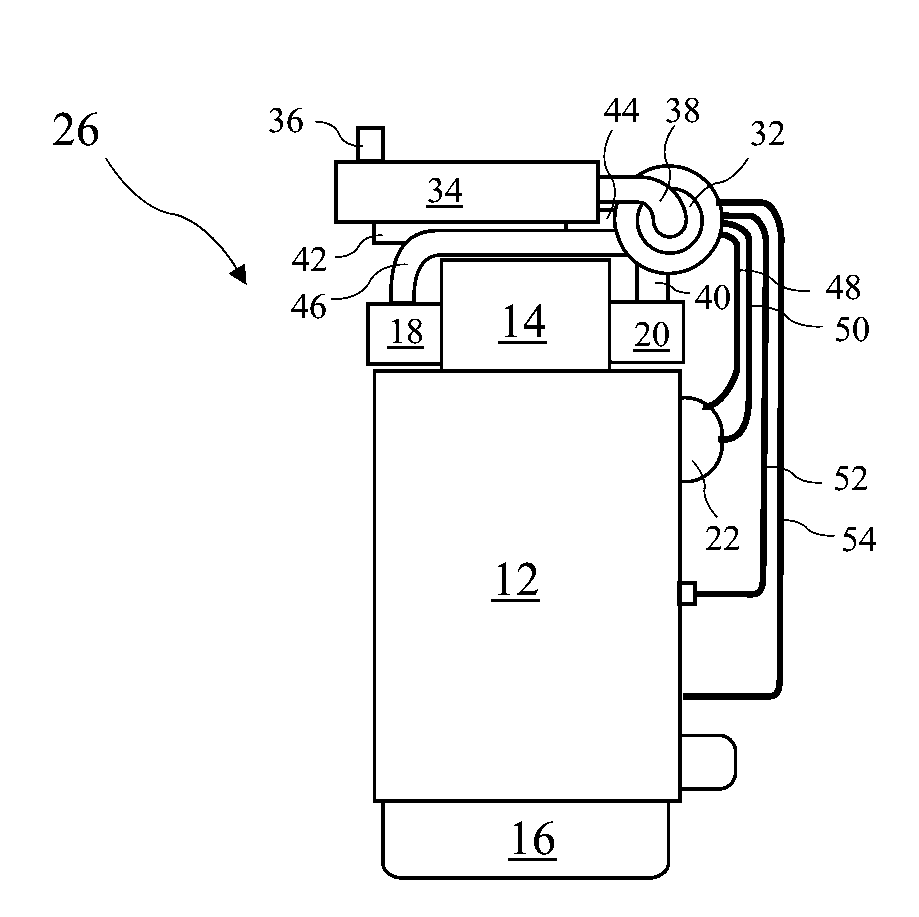
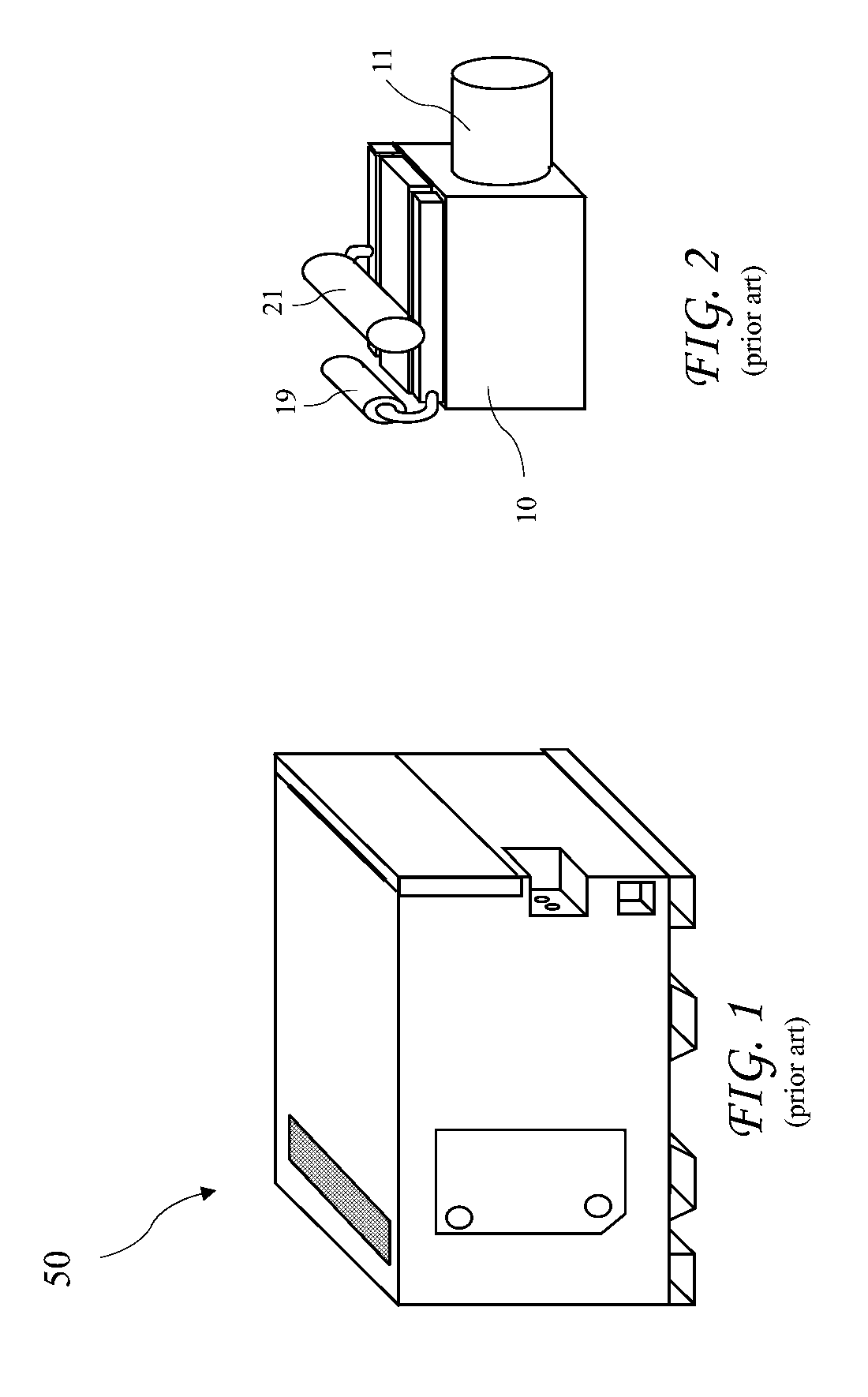
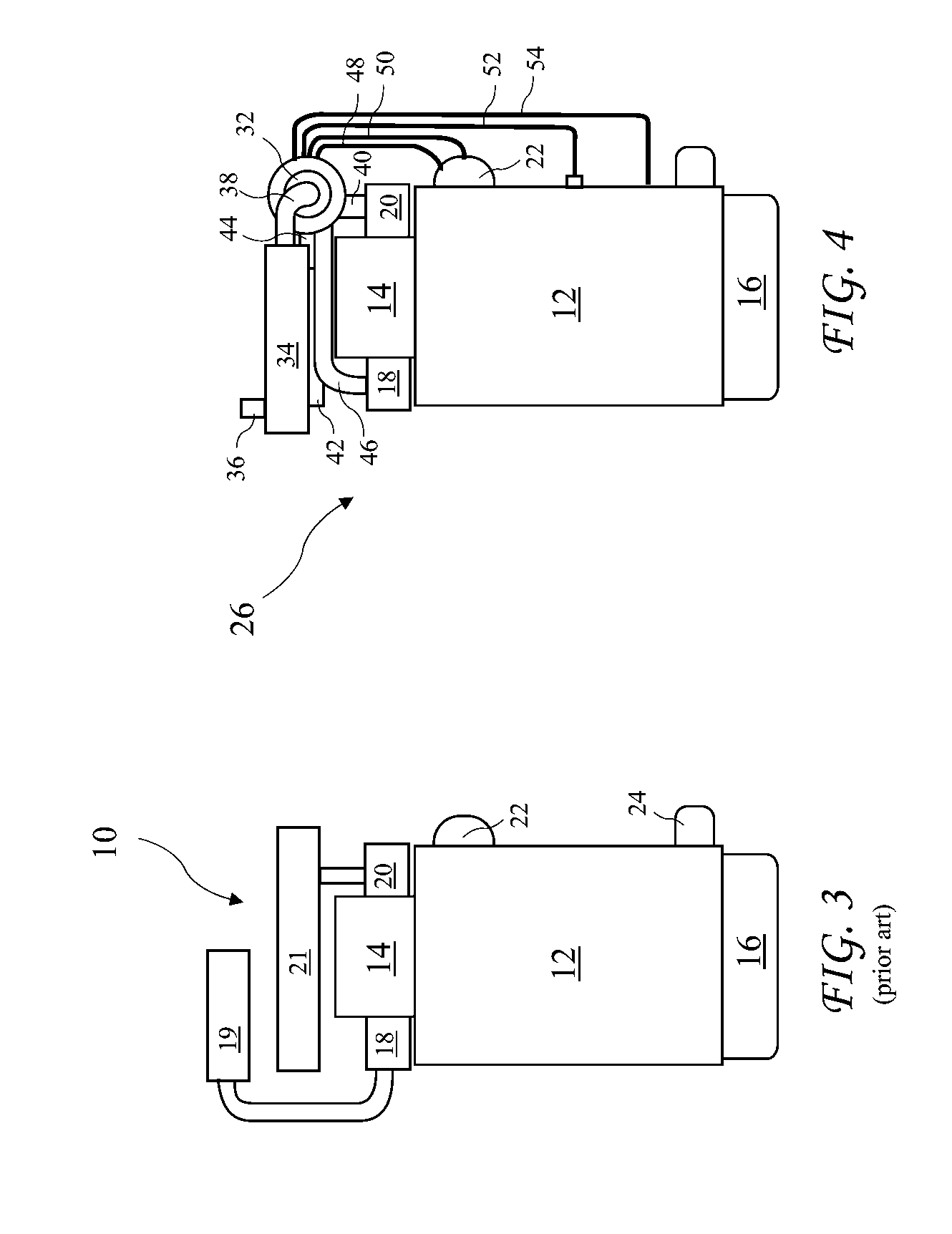
- A field modification kit including a small turbocharger for low boost operation and a low back pressure exhaust system, which provides between 0.5 and 3 pounds of boost, along with an improved air filter and muffler, allowing for field installation by standard personnel without modifying the fuel injection or governor system, addressing both fuel efficiency and wet stack issues.

Environmental Regulations and Emission Standards Impact
Environmental regulations and emission standards have fundamentally transformed the diesel generator industry landscape, creating a complex framework that directly influences both power efficiency optimization and maintenance cost structures. The implementation of stringent emission control requirements has necessitated significant technological adaptations that affect the traditional balance between operational efficiency and maintenance expenses.
The introduction of Tier 4 Final emission standards by the EPA and equivalent Euro Stage V regulations in Europe has mandated the integration of advanced aftertreatment systems including diesel particulate filters, selective catalytic reduction systems, and exhaust gas recirculation technologies. These systems, while effectively reducing nitrogen oxides and particulate matter emissions, introduce additional complexity that impacts both fuel consumption patterns and maintenance requirements.
Compliance with modern emission standards typically results in a 3-8% reduction in fuel efficiency compared to pre-regulation engines, as energy is diverted to power aftertreatment systems and accommodate modified combustion processes. This efficiency penalty directly affects operational costs and must be factored into total cost of ownership calculations when comparing different generator solutions.
The maintenance implications of emission compliance are substantial, with aftertreatment systems requiring specialized maintenance procedures, additional consumables such as diesel exhaust fluid, and more frequent service intervals. Filter regeneration cycles, catalyst replacement schedules, and sensor calibrations add layers of complexity that can increase maintenance costs by 15-25% compared to non-regulated engines.
Regional variations in emission standards create additional complexity for manufacturers and end users. While North American and European markets enforce the most stringent requirements, emerging markets often maintain less restrictive standards, creating a tiered market structure that influences product development strategies and cost structures.
Future regulatory trends indicate continued tightening of emission limits, with potential introduction of real-time emissions monitoring requirements and expanded scope of regulated pollutants. These evolving standards will likely drive further technological innovation in combustion optimization, hybrid power systems, and alternative fuel integration, fundamentally reshaping the efficiency versus maintenance cost equation in diesel generator applications.
The introduction of Tier 4 Final emission standards by the EPA and equivalent Euro Stage V regulations in Europe has mandated the integration of advanced aftertreatment systems including diesel particulate filters, selective catalytic reduction systems, and exhaust gas recirculation technologies. These systems, while effectively reducing nitrogen oxides and particulate matter emissions, introduce additional complexity that impacts both fuel consumption patterns and maintenance requirements.
Compliance with modern emission standards typically results in a 3-8% reduction in fuel efficiency compared to pre-regulation engines, as energy is diverted to power aftertreatment systems and accommodate modified combustion processes. This efficiency penalty directly affects operational costs and must be factored into total cost of ownership calculations when comparing different generator solutions.
The maintenance implications of emission compliance are substantial, with aftertreatment systems requiring specialized maintenance procedures, additional consumables such as diesel exhaust fluid, and more frequent service intervals. Filter regeneration cycles, catalyst replacement schedules, and sensor calibrations add layers of complexity that can increase maintenance costs by 15-25% compared to non-regulated engines.
Regional variations in emission standards create additional complexity for manufacturers and end users. While North American and European markets enforce the most stringent requirements, emerging markets often maintain less restrictive standards, creating a tiered market structure that influences product development strategies and cost structures.
Future regulatory trends indicate continued tightening of emission limits, with potential introduction of real-time emissions monitoring requirements and expanded scope of regulated pollutants. These evolving standards will likely drive further technological innovation in combustion optimization, hybrid power systems, and alternative fuel integration, fundamentally reshaping the efficiency versus maintenance cost equation in diesel generator applications.
Total Cost of Ownership Analysis Framework
The Total Cost of Ownership (TCO) analysis framework for diesel generators represents a comprehensive evaluation methodology that extends beyond initial capital expenditure to encompass all operational expenses throughout the equipment's lifecycle. This framework serves as a critical decision-making tool for organizations seeking to balance power efficiency gains against maintenance cost implications when selecting diesel generator systems.
The TCO framework incorporates multiple cost components that directly influence the power efficiency versus maintenance cost equation. Initial acquisition costs include the generator unit, installation infrastructure, and commissioning expenses. These upfront investments vary significantly based on efficiency ratings, with high-efficiency models typically commanding premium prices but offering superior fuel consumption characteristics that impact long-term operational economics.
Operational expenditures constitute the largest portion of TCO calculations, encompassing fuel consumption costs, scheduled maintenance intervals, unplanned repairs, and component replacements. Power efficiency directly correlates with fuel consumption patterns, where generators achieving higher electrical output per unit of fuel consumed demonstrate superior TCO performance despite potentially higher maintenance requirements for advanced engine technologies.
Maintenance cost structures within the TCO framework differentiate between preventive and corrective maintenance activities. Preventive maintenance includes routine oil changes, filter replacements, and scheduled inspections that maintain optimal efficiency levels. Corrective maintenance addresses unexpected failures that can significantly impact both operational availability and cost projections. High-efficiency generators often require more sophisticated maintenance protocols and specialized technician expertise, increasing per-service costs while potentially extending service intervals.
The framework also integrates indirect costs including downtime expenses, environmental compliance requirements, and end-of-life disposal considerations. Downtime costs become particularly significant in critical applications where power interruptions result in substantial business losses. More efficient generators typically demonstrate improved reliability characteristics, reducing unplanned outage frequency and associated revenue impacts.
Financial modeling within the TCO framework employs net present value calculations to account for the time value of money across typical 15-20 year generator lifecycles. This approach enables accurate comparison between high-efficiency, higher-maintenance-cost units versus standard-efficiency alternatives with lower maintenance requirements, providing quantitative basis for procurement decisions that optimize the power efficiency and maintenance cost balance.
The TCO framework incorporates multiple cost components that directly influence the power efficiency versus maintenance cost equation. Initial acquisition costs include the generator unit, installation infrastructure, and commissioning expenses. These upfront investments vary significantly based on efficiency ratings, with high-efficiency models typically commanding premium prices but offering superior fuel consumption characteristics that impact long-term operational economics.
Operational expenditures constitute the largest portion of TCO calculations, encompassing fuel consumption costs, scheduled maintenance intervals, unplanned repairs, and component replacements. Power efficiency directly correlates with fuel consumption patterns, where generators achieving higher electrical output per unit of fuel consumed demonstrate superior TCO performance despite potentially higher maintenance requirements for advanced engine technologies.
Maintenance cost structures within the TCO framework differentiate between preventive and corrective maintenance activities. Preventive maintenance includes routine oil changes, filter replacements, and scheduled inspections that maintain optimal efficiency levels. Corrective maintenance addresses unexpected failures that can significantly impact both operational availability and cost projections. High-efficiency generators often require more sophisticated maintenance protocols and specialized technician expertise, increasing per-service costs while potentially extending service intervals.
The framework also integrates indirect costs including downtime expenses, environmental compliance requirements, and end-of-life disposal considerations. Downtime costs become particularly significant in critical applications where power interruptions result in substantial business losses. More efficient generators typically demonstrate improved reliability characteristics, reducing unplanned outage frequency and associated revenue impacts.
Financial modeling within the TCO framework employs net present value calculations to account for the time value of money across typical 15-20 year generator lifecycles. This approach enables accurate comparison between high-efficiency, higher-maintenance-cost units versus standard-efficiency alternatives with lower maintenance requirements, providing quantitative basis for procurement decisions that optimize the power efficiency and maintenance cost balance.
Unlock deeper insights with Patsnap Eureka Quick Research — get a full tech report to explore trends and direct your research. Try now!
Generate Your Research Report Instantly with AI Agent
Supercharge your innovation with Patsnap Eureka AI Agent Platform!