

Comparing Disaggregated Memory and DRAM for Cloud Workloads
MAY 12, 20269 MIN READ
Generate Your Research Report Instantly with AI Agent
Patsnap Eureka helps you evaluate technical feasibility & market potential.
Disaggregated Memory Evolution and Cloud Computing Goals
The evolution of disaggregated memory architecture represents a fundamental shift from traditional server-centric computing models to resource-centric paradigms. This transformation began in the early 2010s when cloud providers recognized the limitations of tightly coupled compute and memory resources in conventional servers. The initial phase focused on addressing memory stranding issues, where servers often had either excess compute capacity with insufficient memory or abundant memory with underutilized processors.
The technological foundation for disaggregated memory emerged through advances in high-speed interconnect technologies, particularly Remote Direct Memory Access (RDMA) and emerging protocols like Compute Express Link (CXL). These developments enabled memory resources to be physically separated from compute nodes while maintaining acceptable latency characteristics. Early implementations demonstrated that memory could be accessed across network fabrics with latencies approaching local DRAM access patterns.
The progression toward disaggregated architectures gained momentum as hyperscale cloud providers encountered increasing challenges with resource utilization efficiency. Traditional server configurations typically achieved only 40-60% memory utilization across data center fleets, creating significant economic inefficiencies. This drove the development of memory pooling technologies that could dynamically allocate memory resources based on real-time workload demands rather than static server configurations.
Modern disaggregated memory systems have evolved to support multiple access patterns and consistency models. The architecture now encompasses both volatile and persistent memory technologies, enabling new paradigms for data persistence and recovery. Advanced implementations incorporate intelligent memory controllers that can optimize data placement and migration based on access patterns and thermal characteristics.
The current trajectory points toward fully composable infrastructure where memory, compute, and storage resources can be dynamically assembled into virtual systems tailored to specific workload requirements. This evolution aligns with cloud computing goals of maximizing resource efficiency, reducing total cost of ownership, and enabling more granular scaling capabilities. The technology has progressed from experimental prototypes to production deployments in select hyperscale environments, demonstrating measurable improvements in both resource utilization and operational flexibility.
The technological foundation for disaggregated memory emerged through advances in high-speed interconnect technologies, particularly Remote Direct Memory Access (RDMA) and emerging protocols like Compute Express Link (CXL). These developments enabled memory resources to be physically separated from compute nodes while maintaining acceptable latency characteristics. Early implementations demonstrated that memory could be accessed across network fabrics with latencies approaching local DRAM access patterns.
The progression toward disaggregated architectures gained momentum as hyperscale cloud providers encountered increasing challenges with resource utilization efficiency. Traditional server configurations typically achieved only 40-60% memory utilization across data center fleets, creating significant economic inefficiencies. This drove the development of memory pooling technologies that could dynamically allocate memory resources based on real-time workload demands rather than static server configurations.
Modern disaggregated memory systems have evolved to support multiple access patterns and consistency models. The architecture now encompasses both volatile and persistent memory technologies, enabling new paradigms for data persistence and recovery. Advanced implementations incorporate intelligent memory controllers that can optimize data placement and migration based on access patterns and thermal characteristics.
The current trajectory points toward fully composable infrastructure where memory, compute, and storage resources can be dynamically assembled into virtual systems tailored to specific workload requirements. This evolution aligns with cloud computing goals of maximizing resource efficiency, reducing total cost of ownership, and enabling more granular scaling capabilities. The technology has progressed from experimental prototypes to production deployments in select hyperscale environments, demonstrating measurable improvements in both resource utilization and operational flexibility.
Cloud Workload Memory Demand and Market Analysis
The global cloud computing market continues to experience unprecedented growth, driven by digital transformation initiatives across industries and the increasing adoption of hybrid and multi-cloud strategies. This expansion has fundamentally altered memory consumption patterns, with cloud workloads demonstrating significantly different characteristics compared to traditional on-premises applications. Modern cloud environments host diverse workload types including microservices architectures, containerized applications, big data analytics, artificial intelligence training, and real-time streaming processing, each presenting unique memory access patterns and capacity requirements.
Cloud workloads exhibit highly dynamic memory utilization profiles characterized by unpredictable spikes, varying temporal patterns, and diverse access frequencies. Unlike traditional applications with relatively stable memory footprints, cloud-native applications often experience rapid scaling events, seasonal variations, and workload migrations that create complex memory demand scenarios. These patterns have exposed limitations in conventional memory provisioning approaches, where static DRAM allocation leads to either over-provisioning waste or performance bottlenecks during peak demand periods.
The emergence of memory-intensive applications such as in-memory databases, real-time analytics platforms, and machine learning inference services has created substantial pressure on existing memory architectures. These applications require large memory capacities while maintaining low-latency access, creating a challenging balance between performance requirements and cost optimization. The traditional approach of scaling memory through additional DRAM modules has become increasingly expensive and inefficient for cloud service providers managing thousands of servers.
Market analysis reveals growing interest in alternative memory solutions that can address the economic and technical challenges of cloud memory provisioning. Cloud service providers are actively seeking technologies that enable more flexible memory allocation, improved resource utilization, and cost-effective scaling capabilities. The disaggregated memory approach has emerged as a promising solution, offering the potential to decouple memory resources from compute nodes and enable dynamic allocation based on real-time workload demands.
Enterprise customers are increasingly demanding memory solutions that provide both performance guarantees and cost predictability. The current market trend shows strong preference for consumption-based pricing models and elastic resource allocation, driving cloud providers to explore innovative memory architectures that can deliver these capabilities while maintaining competitive service levels and operational efficiency.
Cloud workloads exhibit highly dynamic memory utilization profiles characterized by unpredictable spikes, varying temporal patterns, and diverse access frequencies. Unlike traditional applications with relatively stable memory footprints, cloud-native applications often experience rapid scaling events, seasonal variations, and workload migrations that create complex memory demand scenarios. These patterns have exposed limitations in conventional memory provisioning approaches, where static DRAM allocation leads to either over-provisioning waste or performance bottlenecks during peak demand periods.
The emergence of memory-intensive applications such as in-memory databases, real-time analytics platforms, and machine learning inference services has created substantial pressure on existing memory architectures. These applications require large memory capacities while maintaining low-latency access, creating a challenging balance between performance requirements and cost optimization. The traditional approach of scaling memory through additional DRAM modules has become increasingly expensive and inefficient for cloud service providers managing thousands of servers.
Market analysis reveals growing interest in alternative memory solutions that can address the economic and technical challenges of cloud memory provisioning. Cloud service providers are actively seeking technologies that enable more flexible memory allocation, improved resource utilization, and cost-effective scaling capabilities. The disaggregated memory approach has emerged as a promising solution, offering the potential to decouple memory resources from compute nodes and enable dynamic allocation based on real-time workload demands.
Enterprise customers are increasingly demanding memory solutions that provide both performance guarantees and cost predictability. The current market trend shows strong preference for consumption-based pricing models and elastic resource allocation, driving cloud providers to explore innovative memory architectures that can deliver these capabilities while maintaining competitive service levels and operational efficiency.
Current DRAM Limitations and Disaggregated Memory Status
Traditional DRAM technology faces significant scalability and efficiency challenges in modern cloud environments. The primary limitation stems from DRAM's tight coupling with CPU sockets, creating memory capacity constraints that scale linearly with processor count rather than actual workload requirements. This architectural dependency forces cloud providers to provision servers based on peak memory demands, leading to substantial resource underutilization during normal operations.
Power consumption represents another critical constraint, as DRAM modules consume considerable energy for data retention and refresh operations. In large-scale data centers, memory subsystems can account for up to 40% of total server power consumption, directly impacting operational costs and environmental sustainability goals. Additionally, DRAM's volatile nature requires continuous power supply, making it vulnerable to data loss during power interruptions.
Cost efficiency challenges emerge from DRAM's manufacturing complexity and limited supplier ecosystem. The technology requires expensive fabrication processes, resulting in high per-gigabyte costs that become prohibitive for memory-intensive cloud workloads. Furthermore, traditional DRAM scaling follows Moore's Law limitations, with diminishing returns in density improvements and increasing manufacturing costs for advanced process nodes.
Disaggregated memory architectures have emerged as a promising solution to address these limitations. Current implementations utilize high-speed interconnects such as RDMA over Ethernet or InfiniBand to separate memory resources from compute nodes, enabling independent scaling of memory and processing capacity. Leading technology companies have deployed early-stage disaggregated memory systems using persistent memory technologies like Intel Optane and emerging CXL-based solutions.
The technology landscape shows rapid evolution in interconnect standards, with Compute Express Link gaining significant industry adoption for memory disaggregation. Major cloud providers are actively piloting disaggregated memory solutions, demonstrating improved resource utilization rates and reduced total cost of ownership for specific workload categories. However, current implementations still face latency penalties compared to local DRAM access, limiting adoption to latency-tolerant applications.
Recent developments in memory fabric technologies and software-defined memory management are addressing performance gaps, with next-generation solutions targeting sub-microsecond access latencies that approach local memory performance characteristics.
Power consumption represents another critical constraint, as DRAM modules consume considerable energy for data retention and refresh operations. In large-scale data centers, memory subsystems can account for up to 40% of total server power consumption, directly impacting operational costs and environmental sustainability goals. Additionally, DRAM's volatile nature requires continuous power supply, making it vulnerable to data loss during power interruptions.
Cost efficiency challenges emerge from DRAM's manufacturing complexity and limited supplier ecosystem. The technology requires expensive fabrication processes, resulting in high per-gigabyte costs that become prohibitive for memory-intensive cloud workloads. Furthermore, traditional DRAM scaling follows Moore's Law limitations, with diminishing returns in density improvements and increasing manufacturing costs for advanced process nodes.
Disaggregated memory architectures have emerged as a promising solution to address these limitations. Current implementations utilize high-speed interconnects such as RDMA over Ethernet or InfiniBand to separate memory resources from compute nodes, enabling independent scaling of memory and processing capacity. Leading technology companies have deployed early-stage disaggregated memory systems using persistent memory technologies like Intel Optane and emerging CXL-based solutions.
The technology landscape shows rapid evolution in interconnect standards, with Compute Express Link gaining significant industry adoption for memory disaggregation. Major cloud providers are actively piloting disaggregated memory solutions, demonstrating improved resource utilization rates and reduced total cost of ownership for specific workload categories. However, current implementations still face latency penalties compared to local DRAM access, limiting adoption to latency-tolerant applications.
Recent developments in memory fabric technologies and software-defined memory management are addressing performance gaps, with next-generation solutions targeting sub-microsecond access latencies that approach local memory performance characteristics.
Existing Disaggregated Memory Implementation Solutions
01 Disaggregated memory architecture and system design
Technologies for implementing disaggregated memory systems that separate memory resources from compute nodes, allowing for flexible allocation and management of memory across distributed computing environments. These architectures enable dynamic memory provisioning and improved resource utilization through network-attached memory pools.- Disaggregated memory architecture and system design: Technologies for implementing disaggregated memory systems that separate memory resources from compute nodes, allowing for flexible allocation and management of memory across distributed computing environments. These architectures enable dynamic memory provisioning and improved resource utilization through network-attached memory pools.
- DRAM performance optimization and access methods: Techniques for enhancing DRAM performance through improved access patterns, memory controllers, and optimization algorithms. These methods focus on reducing latency, increasing bandwidth, and improving overall memory throughput in both traditional and disaggregated memory systems.
- Memory management and allocation strategies: Advanced memory management techniques that optimize allocation, deallocation, and scheduling of memory resources in disaggregated environments. These strategies include intelligent prefetching, caching mechanisms, and dynamic memory mapping to improve system performance and reduce access overhead.
- Network-based memory access and protocols: Communication protocols and network interfaces designed for accessing remote memory in disaggregated systems. These technologies enable efficient data transfer between compute and memory nodes while maintaining low latency and high reliability for memory operations over network connections.
- Performance monitoring and benchmarking frameworks: Systems and methodologies for measuring, comparing, and analyzing the performance characteristics of disaggregated memory versus traditional DRAM configurations. These frameworks provide metrics for latency, throughput, power consumption, and scalability to evaluate system effectiveness.
02 DRAM performance optimization and enhancement techniques
Methods and systems for improving DRAM performance through various optimization techniques including advanced memory controllers, prefetching mechanisms, and bandwidth enhancement strategies. These approaches focus on reducing latency, increasing throughput, and optimizing memory access patterns for better overall system performance.Expand Specific Solutions03 Memory access protocols and interface technologies
Advanced protocols and interface designs for memory access in both traditional and disaggregated memory systems. These technologies include high-speed interconnects, memory fabric protocols, and standardized interfaces that enable efficient communication between processors and memory resources across different system configurations.Expand Specific Solutions04 Performance monitoring and benchmarking systems
Systems and methodologies for measuring, comparing, and analyzing memory performance characteristics in various computing environments. These solutions provide comprehensive performance metrics, real-time monitoring capabilities, and comparative analysis tools for evaluating different memory architectures and configurations.Expand Specific Solutions05 Memory virtualization and resource management
Technologies for virtualizing memory resources and managing memory allocation in distributed and disaggregated computing environments. These systems enable transparent memory sharing, dynamic resource allocation, and efficient memory utilization across multiple compute nodes while maintaining performance and reliability.Expand Specific Solutions
Major Cloud Providers and Memory Technology Vendors
The disaggregated memory versus DRAM comparison for cloud workloads represents an emerging competitive landscape in the mature cloud infrastructure market. The industry is transitioning from traditional DRAM-centric architectures toward more flexible, disaggregated memory solutions to address scalability and cost challenges in hyperscale environments. Major technology incumbents like Intel, IBM, and Samsung lead traditional DRAM innovation, while cloud giants Google and Microsoft drive disaggregated memory adoption. Chinese players including Huawei, Alibaba, and research institutions are advancing both approaches. The technology maturity varies significantly - DRAM represents established, production-ready solutions, whereas disaggregated memory remains largely experimental with companies like HPE and specialized startups exploring software-defined memory architectures. This technological shift reflects the broader industry evolution toward composable infrastructure.
International Business Machines Corp.
Technical Solution: IBM has developed comprehensive disaggregated memory solutions through their Power Systems architecture and OpenCAPI technology. Their approach utilizes high-bandwidth, low-latency interconnects to create memory pools that can be shared across multiple compute nodes. IBM's solution includes advanced memory management algorithms that optimize data placement and migration between local DRAM and remote memory pools. The technology incorporates machine learning-based predictive algorithms to anticipate memory access patterns and pre-position data accordingly. IBM's disaggregated memory architecture supports both volatile and non-volatile memory technologies, providing flexibility for different cloud workload requirements. Their solution also includes comprehensive monitoring and analytics tools for memory utilization optimization.
Strengths: Advanced interconnect technology with OpenCAPI, strong enterprise focus with proven reliability, and sophisticated memory management algorithms. Weaknesses: Limited market presence in cloud infrastructure compared to competitors, higher complexity in deployment and management.
Intel Corp.
Technical Solution: Intel has developed Optane DC Persistent Memory technology that bridges the gap between traditional DRAM and storage, offering memory pooling capabilities for disaggregated architectures. Their solution provides byte-addressable persistent memory with higher capacity than DRAM at lower cost per GB. Intel's approach focuses on memory tiering and caching mechanisms that automatically manage data placement between different memory tiers based on access patterns. The technology supports remote memory access through high-speed interconnects like CXL (Compute Express Link), enabling memory disaggregation across multiple nodes in cloud environments. This allows cloud providers to optimize memory utilization by sharing memory resources across different compute instances dynamically.
Strengths: Proven hardware technology with persistent memory capabilities, strong ecosystem support, and established partnerships with cloud providers. Weaknesses: Higher latency compared to traditional DRAM, limited adoption due to cost considerations and complexity of integration.
Core Patents in Memory Disaggregation Technologies
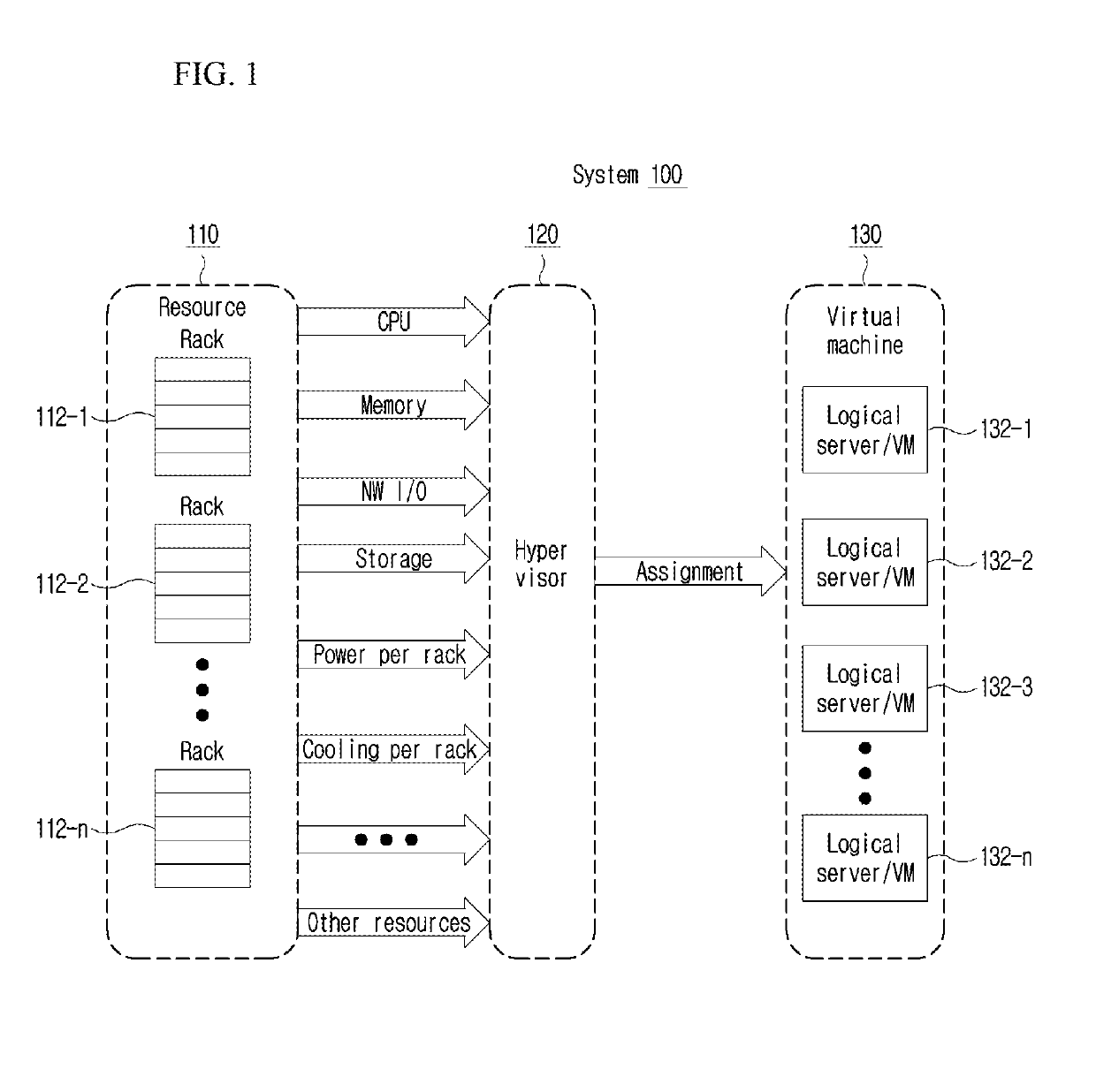
Software drive dynamic memory allocation and address mapping for disaggregated memory pool
PatentActiveUS20220004488A1
Innovation
- Implementing memory pooling circuitries with dynamic scheduling techniques and software-managed registers to dynamically allocate and deallocate memory addresses across multiple CPUs, allowing for efficient memory bandwidth allocation and reducing latency through the Compute Express Link (CXL) protocol.


Apparatus for managing disaggregated memory and method thereof
PatentInactiveUS20190114079A1
Innovation
- A method and apparatus that assign memory pages between local and remote memory, using LRU distance-based performance prediction to reassess and reassign memory resources, ensuring that the target performance ratio is met by dynamically adjusting the local memory size based on access patterns.


Data Center Infrastructure Standards and Compliance
The implementation of disaggregated memory architectures in cloud environments necessitates adherence to stringent data center infrastructure standards and compliance frameworks. Current industry standards such as TIA-942 and ANSI/TIA-568 provide foundational guidelines for data center design, but disaggregated memory systems introduce unique requirements that extend beyond traditional infrastructure specifications. These systems demand enhanced network fabric standards, particularly for low-latency interconnects that support memory disaggregation protocols.
Power and cooling compliance represents a critical consideration when deploying disaggregated memory solutions. The distributed nature of memory resources requires careful adherence to power distribution unit standards and thermal management protocols. Unlike traditional DRAM configurations co-located with compute resources, disaggregated memory pools may exhibit different power consumption patterns and heat dissipation characteristics, necessitating compliance with updated ASHRAE guidelines for optimal thermal zones.
Network infrastructure standards become paramount in disaggregated architectures, where memory access latency directly impacts application performance. Compliance with IEEE 802.3 Ethernet standards and emerging protocols like RDMA over Converged Ethernet ensures reliable memory fabric connectivity. Data center operators must also consider compliance with bandwidth allocation standards to guarantee consistent memory access patterns across diverse cloud workloads.
Security and data protection compliance frameworks require adaptation for disaggregated memory environments. Standards such as FIPS 140-2 and Common Criteria must be evaluated in the context of memory resources that traverse network boundaries. The physical separation of memory from compute introduces new attack vectors that traditional compliance frameworks may not adequately address, requiring enhanced encryption and access control mechanisms.
Regulatory compliance considerations include data sovereignty requirements and industry-specific standards such as HIPAA or PCI-DSS. Disaggregated memory architectures must demonstrate compliance with data residency regulations while maintaining the flexibility to dynamically allocate memory resources across geographically distributed infrastructure. This creates complex compliance scenarios that traditional DRAM deployments do not encounter.
Operational compliance standards encompass monitoring, logging, and audit trail requirements specific to disaggregated memory systems. Infrastructure management standards must evolve to accommodate the distributed nature of memory resources while maintaining comprehensive visibility and control capabilities essential for regulatory compliance and operational excellence.
Power and cooling compliance represents a critical consideration when deploying disaggregated memory solutions. The distributed nature of memory resources requires careful adherence to power distribution unit standards and thermal management protocols. Unlike traditional DRAM configurations co-located with compute resources, disaggregated memory pools may exhibit different power consumption patterns and heat dissipation characteristics, necessitating compliance with updated ASHRAE guidelines for optimal thermal zones.
Network infrastructure standards become paramount in disaggregated architectures, where memory access latency directly impacts application performance. Compliance with IEEE 802.3 Ethernet standards and emerging protocols like RDMA over Converged Ethernet ensures reliable memory fabric connectivity. Data center operators must also consider compliance with bandwidth allocation standards to guarantee consistent memory access patterns across diverse cloud workloads.
Security and data protection compliance frameworks require adaptation for disaggregated memory environments. Standards such as FIPS 140-2 and Common Criteria must be evaluated in the context of memory resources that traverse network boundaries. The physical separation of memory from compute introduces new attack vectors that traditional compliance frameworks may not adequately address, requiring enhanced encryption and access control mechanisms.
Regulatory compliance considerations include data sovereignty requirements and industry-specific standards such as HIPAA or PCI-DSS. Disaggregated memory architectures must demonstrate compliance with data residency regulations while maintaining the flexibility to dynamically allocate memory resources across geographically distributed infrastructure. This creates complex compliance scenarios that traditional DRAM deployments do not encounter.
Operational compliance standards encompass monitoring, logging, and audit trail requirements specific to disaggregated memory systems. Infrastructure management standards must evolve to accommodate the distributed nature of memory resources while maintaining comprehensive visibility and control capabilities essential for regulatory compliance and operational excellence.
Performance Benchmarking Methodologies for Memory Systems
Performance benchmarking methodologies for memory systems require comprehensive evaluation frameworks that can accurately assess the comparative advantages of disaggregated memory architectures versus traditional DRAM configurations in cloud environments. The fundamental challenge lies in establishing standardized metrics that capture both latency characteristics and throughput capabilities across diverse workload patterns.
Traditional benchmarking approaches often rely on synthetic workloads that may not adequately represent real-world cloud application behaviors. Modern methodologies must incorporate workload characterization techniques that analyze memory access patterns, data locality requirements, and temporal usage variations typical of cloud services. This includes evaluating random versus sequential access patterns, read-write ratios, and burst traffic scenarios that commonly occur in virtualized environments.
Latency measurement frameworks constitute a critical component of memory system benchmarking. These methodologies must account for the inherent network overhead in disaggregated memory systems while providing fair comparisons with local DRAM access times. Advanced measurement techniques employ high-resolution timing mechanisms and statistical analysis to capture latency distributions rather than simple average values, revealing performance variability that significantly impacts application responsiveness.
Throughput evaluation methodologies focus on sustained data transfer rates under various load conditions. Effective benchmarking frameworks implement multi-threaded stress testing scenarios that simulate concurrent memory access patterns typical of cloud workloads. These approaches measure aggregate bandwidth utilization while monitoring system resource consumption to identify potential bottlenecks in disaggregated memory architectures.
Scalability assessment methodologies examine how memory system performance characteristics change with increasing workload intensity and system scale. This involves evaluating performance degradation patterns as memory utilization approaches capacity limits and measuring the impact of concurrent access from multiple virtual machines or containers sharing disaggregated memory resources.
Contemporary benchmarking frameworks increasingly incorporate machine learning-based workload generation techniques that create realistic memory access patterns derived from production cloud environments. These methodologies enable more accurate performance predictions and help identify optimization opportunities specific to disaggregated memory deployments in cloud infrastructure.
Traditional benchmarking approaches often rely on synthetic workloads that may not adequately represent real-world cloud application behaviors. Modern methodologies must incorporate workload characterization techniques that analyze memory access patterns, data locality requirements, and temporal usage variations typical of cloud services. This includes evaluating random versus sequential access patterns, read-write ratios, and burst traffic scenarios that commonly occur in virtualized environments.
Latency measurement frameworks constitute a critical component of memory system benchmarking. These methodologies must account for the inherent network overhead in disaggregated memory systems while providing fair comparisons with local DRAM access times. Advanced measurement techniques employ high-resolution timing mechanisms and statistical analysis to capture latency distributions rather than simple average values, revealing performance variability that significantly impacts application responsiveness.
Throughput evaluation methodologies focus on sustained data transfer rates under various load conditions. Effective benchmarking frameworks implement multi-threaded stress testing scenarios that simulate concurrent memory access patterns typical of cloud workloads. These approaches measure aggregate bandwidth utilization while monitoring system resource consumption to identify potential bottlenecks in disaggregated memory architectures.
Scalability assessment methodologies examine how memory system performance characteristics change with increasing workload intensity and system scale. This involves evaluating performance degradation patterns as memory utilization approaches capacity limits and measuring the impact of concurrent access from multiple virtual machines or containers sharing disaggregated memory resources.
Contemporary benchmarking frameworks increasingly incorporate machine learning-based workload generation techniques that create realistic memory access patterns derived from production cloud environments. These methodologies enable more accurate performance predictions and help identify optimization opportunities specific to disaggregated memory deployments in cloud infrastructure.
Unlock deeper insights with Patsnap Eureka Quick Research — get a full tech report to explore trends and direct your research. Try now!
Generate Your Research Report Instantly with AI Agent
Supercharge your innovation with Patsnap Eureka AI Agent Platform!